
Reconciling Divergent Cloud Logs From Terminated Virtual Nodes
Reconciling divergent cloud logs requires comparing central network ingest records against local block storage snapshots to resolve missing final-second execution states.

Origin
A virtual node receives an eviction signal from a cloud control plane, granting running processes a thirty-second window to clean up local resources. During this termination phase, application threads continuously generate diagnostic lines while the hypervisor prepares to detach attached volumes and reclaim allocated memory blocks. Processes attempt to flush stdout streams to remote log aggregators over transient socket connections, while parallel sidecar daemons write directly to ephemeral disk paths.
When the instance shuts down, these two transmission pathways leave behind two distinct runtime histories for the identical final seconds of execution.
Termination Signal Dynamics
The control plane sends a standard interrupt signal to all process groups upon instance preemption. Operating systems handle this signal by notifying registered application handlers, which attempt to drain internal memory buffers. Sockets closing before buffer completion cause uncollected event batches to disappear from remote ingestion pipelines.
Concurrently, block storage mounts continue recording local file append operations until the hypervisor revokes block storage access. Diagnostic teams examining the central dashboard discover a abrupt stop in event streams five seconds before the actual instance shutdown timestamp.
An unbuffered stream writes its last record while the network socket remains open.
The central log endpoint records an incomplete execution termination sequence. The ephemeral block mount retains late-stage application exceptions that never traversed the network interface. System engineers attempting to diagnose a node exit without retrieving the unmapped disk snapshot construct a root cause analysis from a missing timeline.
Relying exclusively on remote aggregation during compute node termination leads to erroneous system fault attribution.
Mirror
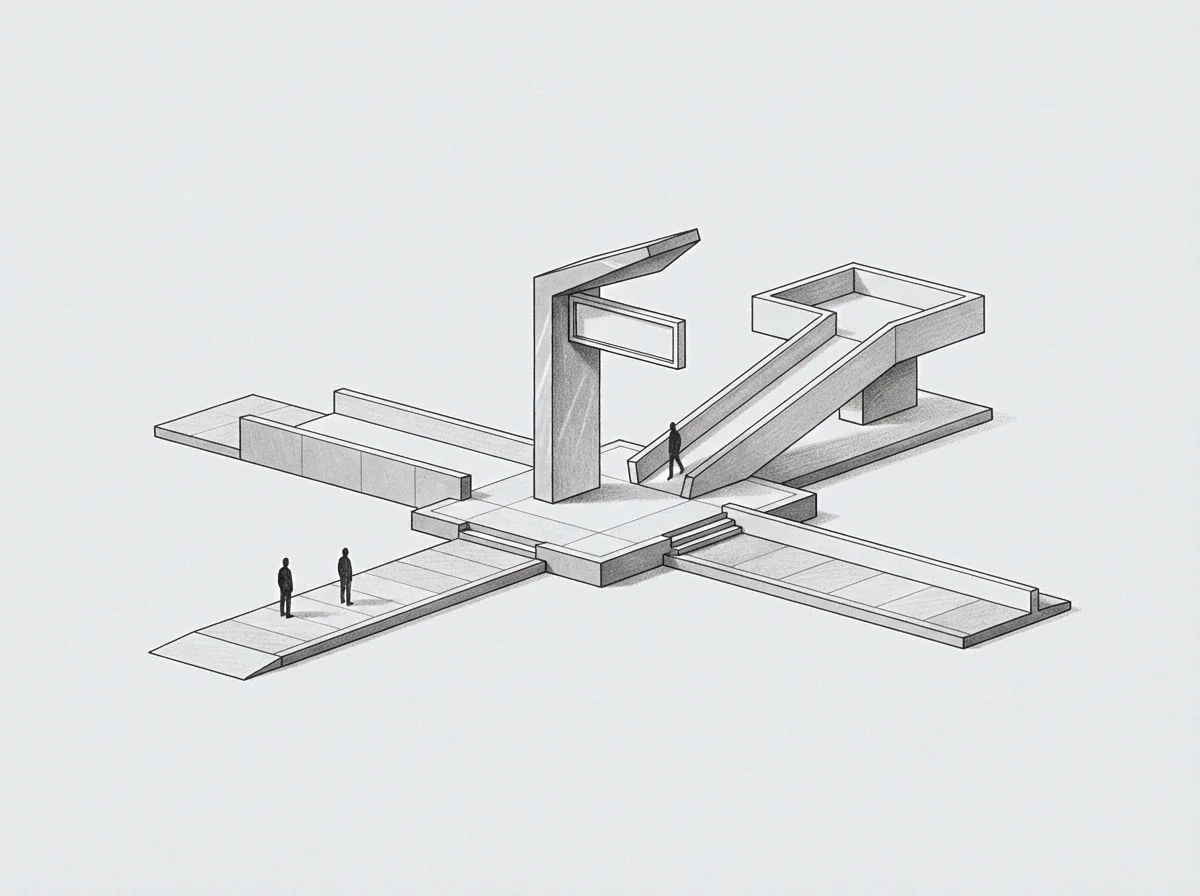
Centralized telemetry repositories and local block devices present conflicting accounts of virtual instance state prior to termination. The central aggregation server operates as an operational mirror, ingesting unstructured telemetry over network protocols. The local disk snapshot functions as an infrastructure mirror, preserving binary raw states directly within file system blocks.
When network queues fill during sudden host termination, these two mirrors diverge.
Asynchronous Transport Discrepancies
Telemetry collectors rely on memory queues to decouple application thread execution from network latency. Under heavy system load or forced node preemption, these queues drop low-priority events or experience transmission timeouts. Local file system appends use kernel file buffers that flush to disk during orderly kernel termination sequences.
The local file system preserves final application state transitions even when network interfaces lose routing paths.
Diagnostic tools reading from central log stores show a service freezing without throwing error frames. Forensic analysis of the persistent volume attached to the terminated host reveals explicit out-of-memory kernel panics written directly to standard system diagnostic paths. The central log record indicates network loss, whereas the physical disk record indicates software memory exhaustion.
The delta between these accounts represents un-ingested telemetry preserved only in local block storage.
The remote dashboard shows normal operations right until connection drops, so the fault sits entirely within the cloud network layer.

Delta
Reconciling divergent telemetry streams requires calculating the timing offset between central ingestion timestamps and local kernel append timestamps. Network log collectors append a server receipt timestamp upon packet arrival. Local logging daemons write high-resolution host timestamps derived from the instance system clock.
When virtual host system clocks drift from central Network Time Protocol servers, identical execution events receive incompatible temporal markers across diagnostic stores.
Clock Drift and Order Inversion
Virtual node clocks suffer from time dilation caused by hypervisor vCPU scheduling pauses. During high physical host contention, a virtual node misses timer interrupts, causing local system time to lag behind real-world clock time. A service executing an outbound API request on Instance A logs the outgoing packet at local time T. The receiving service on Instance B logs packet arrival at local time T minus two milliseconds.
Central aggregators receiving both logs index the response before the request, creating an inverted causal order in forensic traces.
Why Do Ingestion Pipelines Distort Event Order?
Distributed log aggregators process records across scalable parallel worker pools. Log events originating from a single virtual node travel across multiple socket connections to balance network throughput. Parallel ingestion channels insert logs into central database indexes based on ingestion clock time rather than event creation clock time.
During termination spikes, queue processing delays shift late-arriving event batches behind early-arriving batches from adjacent nodes.
- Unflushed Socket Buffers cause late application state changes to disappear entirely from central diagnostic indices.
- Clock Offset Variances invert sequential log records across distributed virtual computing hosts during execution analysis.
- Truncated Disk Writes cause local telemetry sidecars to drop final file frames during unannounced hypervisor host reboots.
Assume two virtual nodes executing a distributed database transaction during an autoscaling scale-down event. Node A receives a termination signal, emits an exit intent event to its local buffer, and closes database connections. Central aggregators ingest Node A exit logs thirty seconds late due to transport queue congestion.
Meanwhile, Node B detects connection drops and logs a peer timeout error immediately to central storage. Forensic analysts reviewing central logs observe Node B reporting a timeout before Node A recorded its termination sequence.
A system recording events without monotonic sequence keys leaves diagnostic teams unable to prove which service failed first.
The sequence imbalance hides the true failure root cause behind transport latency artifacts. Establishing true event ordering demands cross-referencing local monotonic sequence counters embedded directly within structured payload bodies. Incorporating an explicit host sequence counter clause in telemetry standard specifications alters how forensic tools rank event causality during post-mortem audits.

Table
Evaluating log reconciliation paths requires comparing telemetry attributes across distinct storage layer implementations. Central log stores prioritize query accessibility and cross-node correlation, while local node storage prioritizes low-latency write completion and host boundary isolation. Telemetry reliability depends on storage location, transmission protocols, and physical host state during instance teardown events.
| Storage Mechanism | Ingestion Latency | Termination Survival Rate | Timestamp Authority |
|---|---|---|---|
| Central Aggregator | High (100ms – 5s) | Partial (Drops late buffers) | Collector Receipt Time |
| Local Ephemeral Disk | Low (< 1ms) | High (If unmounted cleanly) | Local Host Kernel Clock |
| Persistent Block Snapshot | Medium (1ms – 10ms) | Complete (Retains raw blocks) | Block Volume Commit Time |
| Remote Object Storage Stream | Very High (1s – 30s) | Low (Truncates on socket kill) | Object Creation Header |
Local ephemeral disks retain high fidelity data during soft reboots. Hard hypervisor crashes destroy local ephemeral disk contents instantly. Persistent block storage volumes preserve data across hypervisor failures, provided the kernel completes pending filesystem sync operations before host detachment.
Remote object storage streams offer long-term durability, yet exhibit poor retention rates for events generated in the final seconds of process termination.
Relying on central log collectors for post-mortem forensics requires validating local block store timestamps before establishing sequence authority.
Engineers auditing distributed node failures cross-reference local block snapshots against central records to isolate missing event streams. Data written to persistent storage volumes remains the sole ground truth when network sockets drop during emergency shutdowns. Comparing storage mechanisms on established execution parameters identifies where telemetry loss occurred during system instability.
Always pull persistent disk snapshots before marking an evicted host root cause investigation complete.

Record
Reconciling divergent logs requires establishing an immutable sequence record across transient infrastructure boundaries. Software architectures utilizing distributed virtual nodes depend on structured payload contracts that embed local host execution states, sequence counters, and hypervisor event identifiers into every log entry. Cryptographic hash chains embedded in log blocks prevent tampering and highlight missing log frames when comparing remote aggregates against recovered disk snapshots.

Forensic Data Anchoring
Modern logging pipelines employ daemon processes that register system calls directly with kernel auditing frameworks. Ring buffers managed at the kernel level survive user-space application crashes, preserving raw process failure details. Automatically attaching block storage volumes to secondary recovery nodes upon instance termination enables automated extraction of residual log files.
Rebuilding a unified incident execution timeline relies on linking central network events back to recovered block storage byte offsets.
System reliability improves when infrastructure design accounts for log divergence during host termination. Engineering teams that define automated log recovery mechanisms reduce troubleshooting timelines significantly compared to teams relying solely on remote dashboard queries. Forensic integrity remains tied to raw data recovery techniques applied at the virtual machine exit boundary.
How can cloud telemetry pipelines guarantee complete log delivery when hypervisors terminate compute hosts without warning?