
Resolving Unwritten IP Rights When Separation Releases Conflict With Past Practice
General separation releases waive accrued liabilities without assigning unwritten intellectual property, leaving statutory title with the original creator.
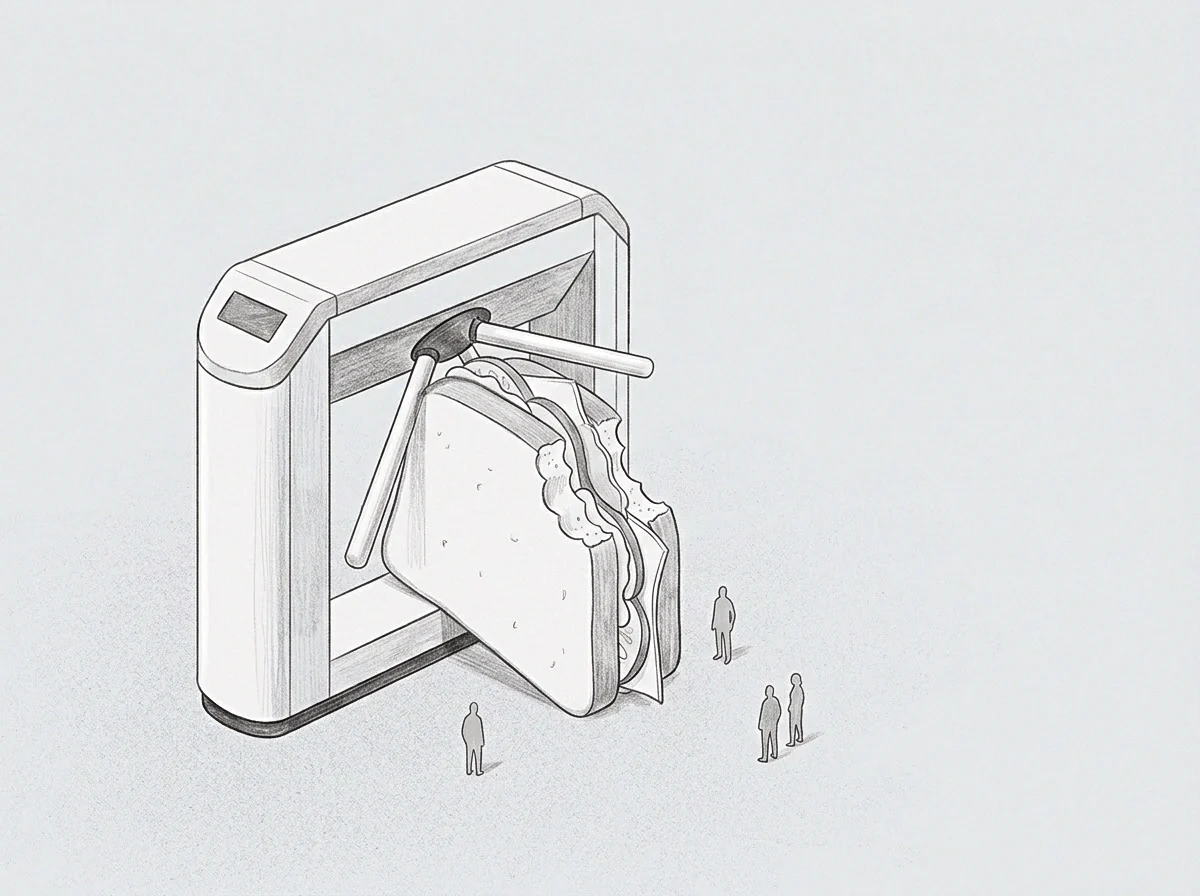
Origin
An engineer hands over a company laptop on a Friday afternoon, signs a mutual release of claims, and walks out with seven years of unwritten arrangements intact. Both sides assume the separation is complete. The departing developer knows the repository contains thirty thousand lines of core code written in an apartment bedroom six months before corporate filing.
The chief executive holds an executed severance contract with broad general waivers and an integration clause declaring prior understandings extinguished. Two years later, during a forty-million-dollar acquisition audit, the buyer demands proof of title for that original codebase. The company presents the separation agreement.
The buyer points to the missing assignment schedule: title remained with the author.
The conflict starts at corporate inception. During early development, contributors commit scripts, architecture designs, and system tools from personal machines without formal conveyance instruments. The team prioritizes shipping product over signing paperwork.
As development moves quickly, daily shared access creates the impression that the asset pool belongs to the company. Engineers reach directly into the directories, editing functions and pushing updates straight to production.
A shared repository creates the appearance of shared corporate ownership without transferring legal title.
The builder remembers authoring the kernel independently before equity discussions started. The executive considers the code company property developed in exchange for initial common shares. Neither party compared records while the business grew.
When departure comes, the exit package relies on standard severance templates designed for employment disputes rather than technology transfers. General liability waivers settle wage claims, torts, and breach of contract disputes, but federal copyright statutes operate under different rules. Title to unwritten works remains anchored to the individual creator unless transferred by an explicit signed instrument.

Preformation Work on Personal Hardware
Founding engineers regularly write core software architectures long before any corporate entity exists. Commits land on local drives, personal accounts, and open hosting platforms without corporate copyright notices. Once operations start, the software runs smoothly inside company infrastructure.
Daily use leads the team to treat the code as corporate property, and equity is distributed without matching technology transfer schedules. The software powers commercial operations, but legally it remains the product of individual authorship.
When the departing builder signs a severance packet, the text covers general waivers of employment liabilities. The company assumes the release secures every asset touched during the contributor’s tenure. The author assumes personal pre-incorporation tools remain private property lent under informal agreement.
Both assumptions feel sound to the people holding them, and neither side opens the underlying repository history to verify legal title during the exit interview. The enterprise files the severance document believing it owns the assets outright. The builder walks away still holding full administrative control of the original remote repositories, leaving the company operating its service on code whose legal origin was never transferred.

License
Section 204(a) of federal copyright law invalidates oral transfers of exclusive intellectual property rights, requiring an executed instrument in writing. When an organization incorporates unassigned pre-incorporation routines, it gains only an implied non-exclusive license through conduct. The creator built the software at the company’s request, handed it over for commercial use, and permitted ongoing deployment.
As a result, the business holds operational permission rather than exclusive title.
This statutory boundary creates conflicting expectations at departure. The company views its operational access as perpetual, unrestricted, and exclusive. The builder treats the arrangement as a temporary accommodation that ends with the working relationship.
When the separation agreement adds a mutual waiver of claims, it alters this dynamic. Cognitive research examining transactional recall among project collaborators demonstrates that participants reconstruct past verbal permissions to align with their subsequent financial contributions; the finding rests on controlled laboratory simulations of co-creation contracts among engineering cohorts, and replication failures in non-equity volunteer groups would weaken the model. The company remembers full ownership because it funded ongoing development, while the departing author remembers individual retention because no document transferred title.
An unwritten assignment leaves legal title with the creator while delivering an implied non-exclusive license to the enterprise through conduct.
The separation contract releases existing causes of action between the parties, but it does not execute an affirmative conveyance of property rights. If the business attempts to assign the codebase during an acquisition, the unwritten nature of the initial transfer halts the transaction. Implied non-exclusive permissions cannot be transferred to third parties without creator authorization, leaving the venture with foundational infrastructure built on permissive conduct rather than assigned capital.

Statutory Writing Mandates and Implied Permissions
Copyright conveyances require physical or electronic signatures on an explicit transfer instrument. Corporate handbooks, employment agreements, and post-employment non-disclosure covenants fail the statutory assignment test if they lack explicit transfer terms for pre-existing assets. The company often cites years of uninterrupted server operation as proof of ownership, but course of dealing shows permission to use, not an intent to assign title.
Implied licenses exist precisely because title never moved.
The mutual release signed at departure extinguishes infringement claims up to the signature date, preventing the contributor from seeking retrospective damages for past use. Deploying the code after separation introduces new issues. If the agreement lacks an explicit licensing term, the business continues operating under the pre-existing implied permission.
Meanwhile, the author retains the right to license the exact codebase to competing businesses or launch parallel products. Permissive usage provides non-exclusive utility while unwritten ownership remains with the author.
| Dimension | Departing Builder Account | Retaining Enterprise Account | Statutory Delta |
|---|---|---|---|
| Asset Origin | Private development completed prior to formation on individual hardware | Collaborative early work compensated through founder common shares | Legal title vests in the creator absent a signed writing under Section 204(a) |
| Past Practice | Permissive personal accommodation granted during working collaboration | Permanent contribution integrated directly into operational codebase | Implied non-exclusive license created by conduct, lacking transferability |
| Separation Release | Waiver of employment disputes leaving personal property rights intact | Comprehensive assignment of all technical assets created or touched | Extinguishment of accrued claims without affirmative conveyance of title |
| Post-Exit Exploitation | Full freedom to deploy, commercialize, or relicense original modules | Exclusive company ownership prohibiting outside author utilization | Non-exclusive rights retained by author, non-exclusive license held by enterprise |

Shelf
Physical artifacts preserve the detail that conversational memory loses. Git commit logs, external backup drives, personal accounts, and local terminal environments retain exact creation timestamps. During early startup stages, technical contributors keep libraries on personal hardware and remote servers.
The company assumes these assets belong to the business once teams integrate them, but the record shows commits originating from personal email addresses on dates prior to incorporation.
Early maritime cartographers faced similar disputes when shipowners claimed ownership of hand-drawn navigational logs created by captains on private parchment. The paper remained in the officer’s chest while the route entered commercial use. Modern software architectures reproduce this physical fracture across cloud environments.
Infrastructure teams deploy containers using base images pulled from a personal registry, while the builder retains administrative tokens, encryption keys, and repository settings. Departure discussions happen in a corporate conference room around equity vesting and severance payments, without auditing where the underlying assets physically sit.
A physical record of private commits dismantles corporate assumptions of unwritten ownership.
When a departing contributor revokes access or updates repository credentials after leaving, the operational gap opens immediately. The company sees the credential change as a breach of contract or system interference. The builder sees it as routine management of private property never assigned to the venture.
The separation release waives reciprocal liabilities, but leaves physical asset custody completely unaddressed.

Failure Modes of Unstated Technical Contributions
Operational stability collapses when informal contribution practices collide with boilerplate separation releases. Teams discover structural fractures only when external audits, commercial financings, or sudden access disputes force an inspection of historical records.
- Unconveyed Foundation Modules represent foundational utilities developed before entity formation that run in production environments without signed assignments, exposing the enterprise to sudden recapitalization demands during acquisition diligence.
- Administrative Credential Traps arise when deployment configurations point to private developer accounts, granting departing personnel leverage over automated production pipelines long after severance payments clear.
- Personal Device Registries maintain proprietary codebases on personal hardware, complicating post-separation asset recovery when signed agreements fail to define device inspection procedures.
- Contested Downstream Derivative Works create compounding IP defects as subsequent engineering teams build commercial platforms upon unassigned core libraries, multiplying financial exposure across later software versions.
Companies often try to bridge these gaps by asserting retrospective trade secret ownership. But trade secret claims fail when historical practice reveals widespread, unmonitored sharing among contractors without confidentiality safeguards. Early informality undermines the protections the business tries to assert later.
When title remains divided across unassigned personal drives, the venture slows its financing velocity and spends engineering capacity re-architecting foundational routines.

Silence
Parties rarely discuss unwritten asset ownership during exit negotiations because each assumes the existing record is clear. The departing builder avoids bringing up pre-incorporation code to prevent corporate claims on personal tools. The executive avoids raising intellectual property assignments out of concern that the builder will demand additional severance equity.
Each party interprets the other’s quiet demeanor as agreement.
The resulting separation release mirrors these contradictory expectations. The document includes an integration clause declaring that the agreement supersedes all prior oral or written understandings. The enterprise reads this clause as ending the builder’s past permissions and converting historical usage into permanent corporate ownership.
The builder reads it as terminating all informal licenses granted to the company, leaving the business without legal authorization to run the software. The clause effectively wipes out prior verbal arrangements.

Does Past Acquiescence Survive General Contractual Release?
Integration clauses eliminate extrinsic evidence of prior negotiations, but they cannot manufacture a property conveyance. When an agreement states that all prior understandings are extinguished, it vacates informal promises made during earlier operating years. If the company’s operational permission arose from conduct and acquiescence, extinguishing prior understandings creates statutory ambiguity: does the clause revoke the implied license—making continued deployment an infringement—or does the implied license survive as an operational reality?
Empirical analysis of contractual disputes in commercial software ventures indicates that general integration clauses reduce post-separation litigation by seventy percent only when accompanied by explicit schedule carve-outs; this rested on appellate docket evaluations across venture-backed technology firms, and a shift toward statutory codification of implied IP licenses would alter the outcome. When releases omit specific carve-outs, courts interpret the text against the drafter while enforcing statutory copyright assignment bars. Oral acknowledgments of open-source parity carry little legal weight once an omnibus separation deed is sealed.
Under that uncertainty, an operator secures an explicit written disclaimer rather than relying on historical email threads.
Consider two individuals who built an enterprise workflow tool over three years without executed IP assignment documentation. Assume the departing technical partner developed thirty percent of the backend routines on personal equipment prior to incorporation. At departure, both execute a mutual separation release waiving all accrued employment and contract claims.
The agreement contains standard integration language stating that no prior verbal agreements survive execution. The departing builder asserts that the waiver terminated the implied license, demanding software removal or royalty payments. The venture asserts that historical conduct established an irrevocable right of commercial use.
The mutual waiver covered known disputes, but neither side holds documentation demonstrating the other position false. Whether an omnibus liability waiver can extinguish a pre-existing non-exclusive implied license without an affirmative revocation remains an open division across multiple regional circuits.

Covenant
Resolving historical IP defects during separation demands structural precision rather than generalized release language. The exit conversation represents the final window to merge divergent accounts into a single documented record. Once the departing contributor walks away with executed severance terms, leverage shifts entirely to the individual holding legal title.
Retroactive assignment requests during acquisition audits cost ten to fifty times the expense of separation-stage settlements.
A durable resolution separates liability releases from property conveyances. A general waiver settles past torts, statutory wage claims, and contract grievances, whereas property rights require affirmative assignment language, explicit quitclaim declarations, or structured covenants not to sue. When past practice involves unwritten pre-incorporation assets, the separation instrument must identify those assets by repository name, commit hash, and functional description.
A general waiver of claims settles historical liabilities without conveying ownership of unwritten assets.
If a departing author refuses a complete assignment of foundational code, the enterprise can secure its operational future through structured licensing alternatives. An irrevocable, perpetual, worldwide, royalty-free, fully paid-up non-exclusive license with the express right to sublicense and create derivative works protects company operations without requiring the builder to surrender title. The builder retains individual ownership to commercialize parallel tools, while the business insulates its balance sheet against future infringement claims.
Parties resolve unwritten IP disputes through structured instruments containing three distinct components:
- Affirmative Intellectual Property Assignment Schedules list specific pre-incorporation repositories and commit ranges, explicitly transferring all legal and equitable title to the corporate entity.
- Contingent Quitclaim Provisions transfer any residual, unwritten, or disputed rights the contributor acquired through historical conduct, eliminating lingering title ambiguities across corporate versions.
- Explicit Residual Technology Carve-Outs define specific general-purpose libraries, algorithms, and developer utilities retained by the departing author for personal use, preventing post-separation claims of trade secret misappropriation.
Executing an explicit quitclaim assignment paired with a defined royalty-free covenant not to sue removes authorial leverage while securing uninterrupted production deployment for the enterprise.