
Tracing Root Authority Through Immutable Infrastructure Telemetry
Infrastructure telemetry identifies root authority by validating cryptographically signed event streams against recorded keypair bindings across system changes.

Origin
Infrastructure telemetry captures cryptographic event streams at the kernel or API gateway level, establishing an immutable baseline of machine operations. System logs record raw execution. When system state changes occur, telemetry records the precise identity token, source network location, timestamp, and signed payload that initiated the state transition.
This machine record operates independently of subjective human memory or subsequent narrative reconstruction.

Cryptographic Signature and Human Intent
Public key infrastructure anchors operational identity by pairing private keys with public certificates. When an operator executes a command through an automated continuous integration pipeline or directly against a cloud control plane, asymmetric cryptography verifies the originating token. The system log records the public fingerprint attached to the payload, creating a persistent attestation of which cryptographic credential authorized the action.
This record proves which key was used, leaving the human motivation behind the command unrecorded in the event stream.
Human authority relies on administrative titles, board allocations, and informal delegation. An executive might verbally instruct an infrastructure lead to bypass deployment checks during an outage. The telemetry records the infrastructure lead’s credential executing the bypass, while the executive’s verbal instruction leaves no cryptographic payload in the stream.
When disputes arrive months later regarding why security controls were disabled, the telemetry attributes sole execution to the credential holder, while the human account asserts executive direction.
An immutable record establishes time sequences without accommodating retrospective interpretation.

The Discrepancy Between Access Keys and Executive Command
Organizational charts assign authority based on operational titles. Machine access controls grant execution rights based on public key infrastructure and token policies. The gap between named executive authority and actual key distribution represents a primary vector for operational divergence.
In many early infrastructure deployments, root credentials, cloud management keys, and domain control tokens are shared informally across founding technical staff or stored in unencrypted secret repositories accessible to multiple operators.
When multiple individuals possess access to the same private key or administrative API token, machine telemetry records actions taken by the token without distinguishing between the physical operators using it. The telemetry proves that root authority was exercised, but cannot attribute that exercise to a specific individual. The cost of this structural ambiguity falls on the organization during compliance audits or partner exits, where unverified operational claims cannot overwrite the physical reality of signed event logs.

Signal
System monitoring platforms ingest continuous telemetry streams, converting raw system calls and API invocations into operational signals. These signals reflect system state transitions, resource provision events, access privilege escalations, and code deployments across distributed production environments.

Telemetry Append Log Structure
Append-only data stores guarantee that historical entries remain unmodified once written to disk. Each incoming event is hashed alongside the hash of the preceding entry, forming an immutable cryptographic chain. This architecture prevents retrospective modification of log records, ensuring that historical execution sequences remain intact even if administrative access is subsequently compromised.
- Ingestion Timestamping verifies the exact microsecond an event payload entered the centralized logging cluster, preventing retroactively dated record injection.
- Cryptographic Hashing binds event content to historical block headers, ensuring that any modification to past telemetry invalidates subsequent validation chains.
- Keypair Attestation ties specific configuration changes to individual developer certificates registered within the hardware security module.
- Immutable Object Storage writes log records to write-once-read-many storage buckets, preventing administrative deletion or alteration during internal disputes.

Why Oral Delegation Leaves No Telemetry Trace?
Verbal instructions given during high-severity operational incidents remain unrecorded within machine databases. An operator instructed to alter firewall rules, dump production database schemas, or issue administrative access tokens acts on human trust. The telemetry captures the operator’s session ID, source IP address, and command payload.
The spoken context, executive pressure, and verbal guarantees given in a private video call exist solely within human memory.
Human memory reconstructs events based on subsequent outcomes, emotional framing, and self-preservation incentives. When two founders recall a critical production incident two years later, the person who issued the verbal instruction often remembers an advisory consultation, while the person who executed the command remembers a direct order. The telemetry records only the technical execution.
The delta between the unrecorded verbal direction and the signed machine event is where accountability claims collapse.
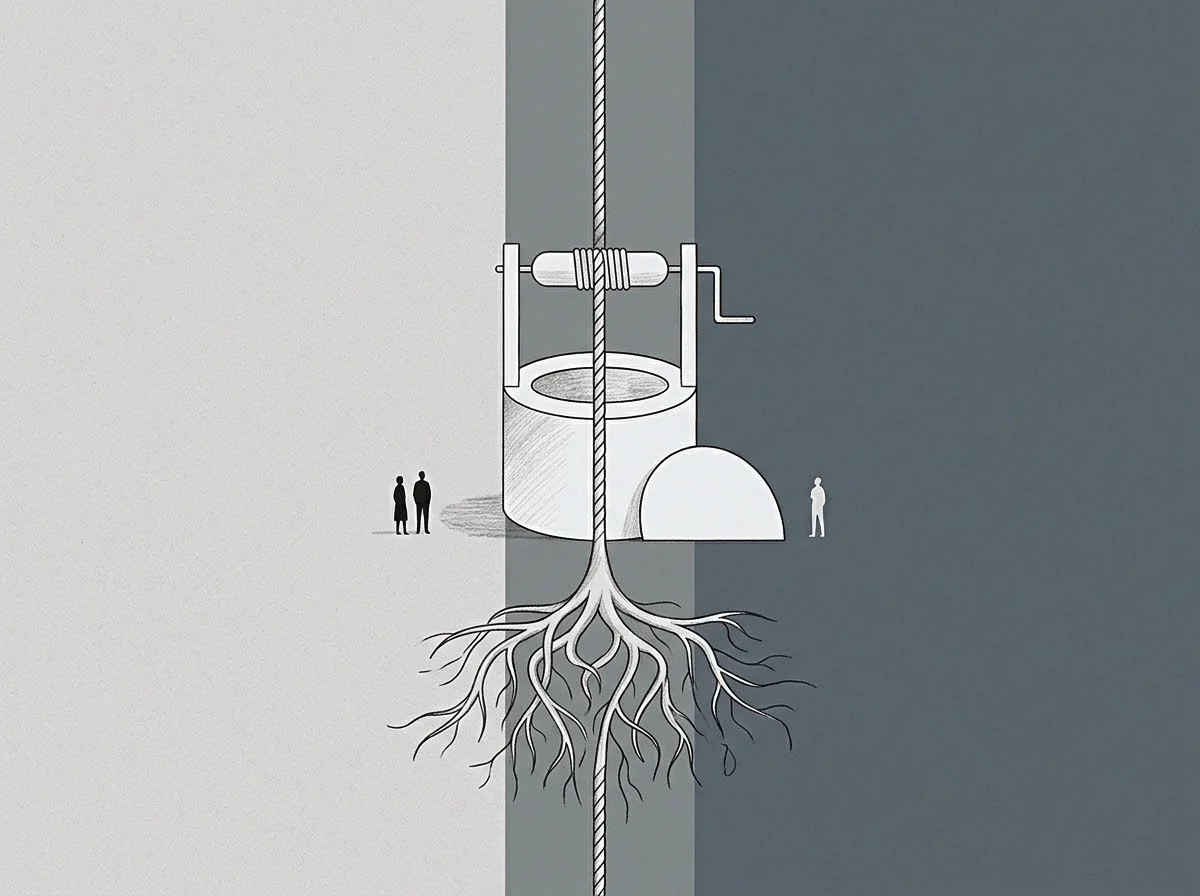
Floor
Establishing a baseline for infrastructure auditability mandates precise alignment between cryptographic identity assertions and administrative governance policies. Without this baseline, telemetry data remains a collection of disconnected machine metrics rather than a legible proof of root authority, as machines verify signed payloads rather than unverified verbal direction.

Evaluating Telemetry Attributes Against Identity Claims
System verification frameworks compare raw machine logs against executive claims regarding operational oversight. When evaluating historical infrastructure modifications, technical auditors examine the cryptographic non-repudiation of event streams, the precision of timestamp sequences, and the clarity of identity bindings within authentication logs.
Cryptographic validation confirms payload integrity only when public keys bind directly to identified individuals.

Structural Mapping of Machine Telemetry to Human Record
A systematic alignment of event logs and written governance terms reveals persistent gaps between machine proof and human recollection. The following table contrasts machine telemetry characteristics against human account assertions across core dispute dimensions.
| Attribute | Machine Telemetry Record | Human Recollection Account | Resolution Delta |
|---|---|---|---|
| Non-repudiation | Cryptographically signed payloads linked to specific private key certificates. | Subjective statements, informal chat messages, and oral promises. | Telemetric proof overrides memory unless credential theft is proven. |
| Sequence Accuracy | Microsecond timestamping ordered within append-only cryptographic blocks. | Approximate memory of day, week, or relative operational order. | Machine timestamp sequence disproves incorrect chronological human claims. |
| Identity Binding | Specific API tokens, key fingerprints, and IAM user role assertions. | Assumed authority derived from executive title or shareholder status. | Title holding does not prove execution if telemetry shows another key. |
| Context Retention | Raw command parameters, environment variables, and execution outputs. | Perceived intent, strategic alignment, and unwritten operational goals. | Telemetry lacks human intent, requiring explicit written context logs. |
A written governance term specifying that infrastructure changes mandate signed commits with registered hardware keys alters legal accountability. If an operator deploys code without a signed commit, the policy condition classifies the deployment as an unauthorized modification, placing full structural liability on the credential holder regardless of underlying operational necessity.

Span
Across multi-year technical operations, infrastructure access patterns expand as teams grow, emergency break-glass procedures run, and legacy deployment scripts persist. The gap between initial structural intent and actual operational execution widens quietly over time.

Walkthrough of Bypassed Pipeline Operations
Take two senior infrastructure engineers managing automated production environments under shared deployment privileges. Assume the infrastructure design mandates that all production deployments pass through a continuous integration pipeline requiring dual-person code review and signed cryptographic commits. Assume an operational outage occurs at night, causing service degradation that threatens client service level agreements.
One engineer contacts the technical director via phone. The technical director verbally authorizes an immediate production database bypass, instructing the engineer to SSH directly into the database primary cluster using a emergency break-glass root credential stored in a shared vault. The engineer executes the override, patches the database schema manually, and restores service within thirty minutes.
- Emergency break-glass access credentials are retrieved from vault storage, generating a generic root session token in the secret store audit log.
- Direct SSH connection opens from the engineer’s personal workstation IP address to the production primary node, bypassing continuous integration controls.
- Manual SQL statements execute directly against the production engine, altering table definitions without generating a signed git commit artifact.
- Service recovers, the outage ticket closes, and no post-incident documentation updates the central repository to record the verbal authorization step.
Unsigned pipeline modifications force security auditors to bill engineering teams for manual reconstruction hours.

The Silent Delta in Emergency System Overrides
Break-glass mechanisms grant elevated root privileges during critical outages. Eighteen months after the incident described above, an investor audit or technical due diligence process examines the production infrastructure history. The auditors flag the manual SSH session and uncommitted database schema change as an unauthorized breach of operational controls.
The technical director denies giving verbal authorization, recalling instead that the engineer was explicitly told to draft a patch for standard pipeline deployment. The engineer asserts that direct verbal instruction was given, citing the recovered client service level as proof of correct action.
The telemetry stream shows only that the engineer’s personal workstation IP address checked out the root credential and executed raw database modifications. The machine telemetry contains no record of the phone call, no record of the technical director’s direction, and no record of executive consent. The engineer holds an account of executive authorization.
The technical director holds an account of rogue operational bypass. The telemetry supports only the technical director’s stance, leaving the engineer to bear the cost of the structural divergence, while policy treats unapproved overrides as operational violations.

Log
Reconciling historical operational authority requires comparing raw event streams against organizational assertions, where infrastructure state reflects executed code rather than informal delegation.

Reconciling Unalterable Audit Trails at Exit
When co-founders or infrastructure partners part ways, disputes regarding root control emerge. One party claims ownership based on original equity splits and executive appointments. The other party claims operational control based on continuous infrastructure maintenance, code authorship, and server ownership credentials.
Comparing human memory against immutable infrastructure logs resolves claims by isolating precise historical acts of control.
Disputes regarding historical system modifications dissolve when raw event hashes match signed commits.
An audit trail that records every code deployment, cloud resource provision, and security policy adjustment provides an objective ledger of operational stewardship. If equity allocations reflect an equal technical partnership, but telemetry demonstrates that one partner executed ninety-eight percent of system modifications over three years using personal signing keys, the account of equal operational contribution fails under telemetric examination.

Boundaries of Machine Attestation
Telemetry streams capture raw API calls without recording external commercial context. To bridge machine attestation and human authority, infrastructure teams implement explicit binding mechanisms that link telemetric records directly to governance terms prior to system deployment.
- Hardware-backed Key Pairs enforce that administrative commands require physical token interaction, preventing credential delegation across unauthorized operators.
- Automated Commit Signing rejects unverified code payloads at the deployment gateway, eliminating unsigned production deployments entirely.
- Structured Incident Logging records verbal authorization tokens inside immutable ticket stores alongside emergency break-glass sessions.
- Multi-party Approval Workflows mandate cryptographic co-signing from distinct administrative accounts before elevated privilege policies activate.
Machine telemetry settles disputes of execution while leaving disputes of context open to external interpretation. The machine proves who turned the key, when the key turned, and what system state resulted from the execution. The human account must supply the governing contract that proves whether turning the key was authorized by the organization.