
Clearing Intellectual Property Cloud In Mergers And Acquisitions
An intellectual property cloud is resolved by auditing commit logs against executed assignment contracts and securing retroactive confirmatory transfers.

Title

Chain of Title and Asserted Ownership
An intellectual property cloud in an acquisition represents a gap between asserted ownership and verifiable chain of title. The target entity presents a portfolio of software repositories, patents, trademarks, or proprietary trade secrets, asserting absolute control over the code and inventions that generate its commercial revenue. The acquiring entity conducts due diligence to establish whether legal ownership actually moved from every natural person who authored a line of code or designed a system component into the corporate structure of the seller.
Where a developer wrote software prior to corporate formation, or where an independent contractor signed an agreement lacking explicit present-assignment language, ownership remains with the author. Title precedes valuation.
In legal doctrine, the creation of patentable subject matter or copyrighted code endows the individual creator with initial ownership. Corporate entities possess no native capacity to invent or author works. Transfer demands explicit written instruments.
When early contributors build proprietary infrastructure on informal understandings, oral assurances, or vague equity commitments, the legal title remains fragmented among those individuals. An acquiring company inspecting the target faces an asset whose economic value relies on software that the corporate target may only hold a non-exclusive implied license to use. Implied licenses do not permit sale, exclusivity, or enforcement against third parties.
Unwritten code belongs nowhere.
Ownership transfers only through executed written instruments containing explicit terms of present assignment.
The distinction between an asset portfolio and an intellectual property cloud sits in the completeness of the documentation chain. Every iteration of product development involves multiple human contributors, including founders, early employees, freelance engineers, external advisory agencies, and university researchers. If a single contributor in that chain executed an agreement with defective assignment language, or failed to sign an agreement entirely, the continuous ownership chain breaks.
The buyer attempting to acquire sole control inherits a vulnerable asset subject to future conversion claims or royalty demands from uncredited authors.
Failure to audit and clear these defects before signing an acquisition agreement transfers the financial liability of outstanding ownership claims directly onto the combined balance sheet post-closing.

File
Documentary Evidence and Forensic Diligence
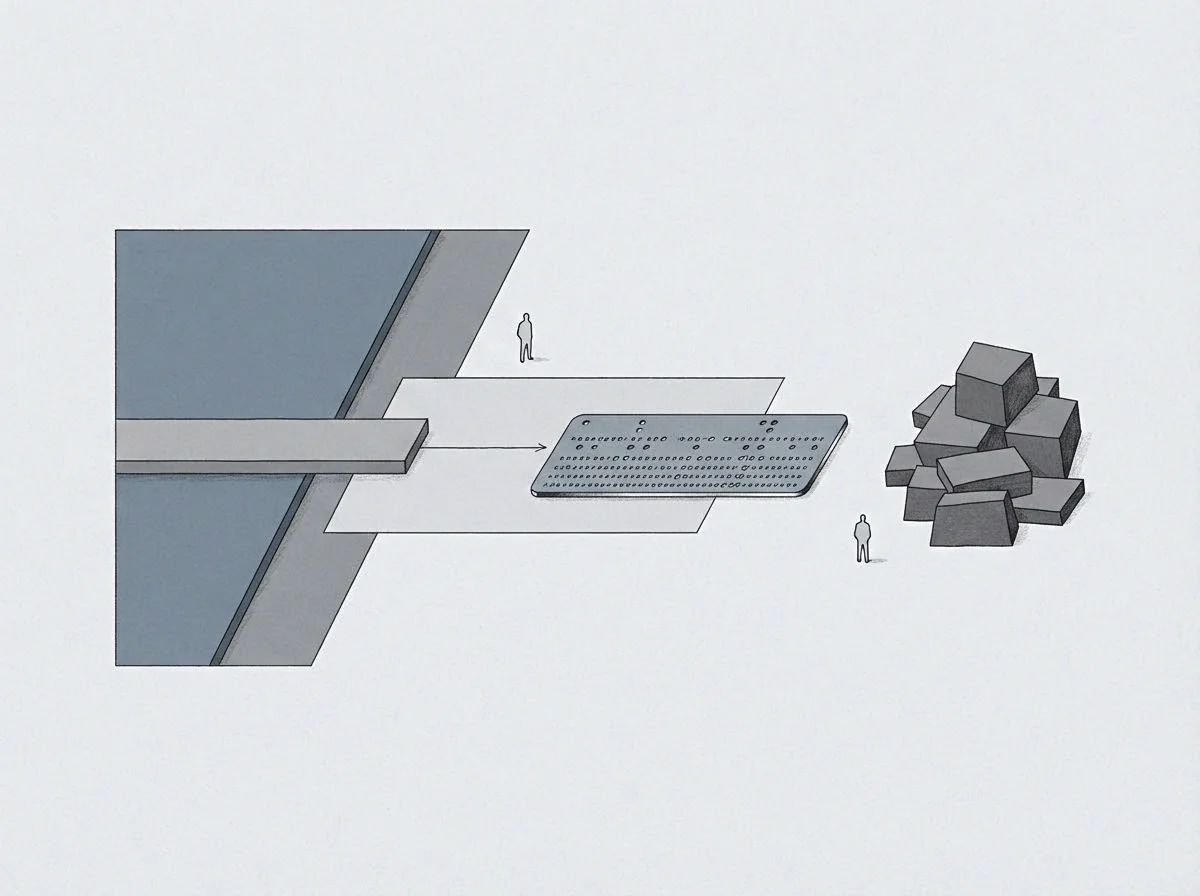
Diligence teams evaluate an acquisition target by examining the physical and digital file of corporate records. The IP cloud becomes visible when repository commit logs, invention disclosure forms, and corporate formation filings diverge from the executed contract binder. Forensic software audits match initial code commits against the dates of corporate incorporation and signed proprietary information and inventions agreements.
Where commit dates precede incorporation dates by months or years, the file must contain assignment documents executed by those authors covering the pre-incorporation period.
Modern software acquisition diligence requires scanning codebases for open-source software licenses and unassigned third-party modules. Copyleft licenses, including the GNU General Public License, impose obligations that compel corporate entities to publish proprietary source code if integrated improperly. An incomplete vendor file that hides open-source dependencies presents the acquirer with a choice between stripping major product features post-closing or releasing proprietary trade secrets to the public domain.
| Defect Category | Origin Mechanism | Legal Property Effect | Remediation Instrument |
|---|---|---|---|
| Unassigned Pre-Incorporation Work | Founders writing initial product software prior to formal corporate registration. | Initial copyright vests in natural persons, granting target only non-exclusive implied license. | Assignment of Pre-Incorporation Inventions with retroactive confirmation. |
| Defective Contractor Agreement | Agreement signed with prospective assignment words without present conveyance language. | Contractor retains legal title while holding equitable obligation to assign upon request. | Confirmatory Intellectual Property Assignment Agreement executed by contractor. |
| Prior Employer Rights Encumbrance | Employee authoring code while bound by broad invention assignment terms with prior employer. | Prior employer holds potential shop rights or cloud over title due to overlapping invention scopes. | Written release and non-assertion agreement from former corporate employer. |
| Open-Source License Contamination | Developer merging copyleft-licensed libraries into core proprietary codebase architecture. | Target faces obligation to disclose proprietary source code under public license conditions. | Code remediation, component replacement, or licensor exemption agreement. |
Ownership demands assignment.
The audit of physical employment files frequently uncovers agreements that use prospective intent language, such as agreeing to assign inventions in the future, rather than present assignment language that immediately transfers rights. Courts interpret agreements to assign as promises to execute future transfers rather than actual transfers. If the target company failed to execute a secondary assignment document upon creation of the specific work, the author retains legal ownership of the intellectual property while the target retains only an equitable right to compel assignment.
The seller cannot grant clean title to an asset held only through an unexercised equitable right.
The presence of an executed agreement containing explicit present-assignment terms transforms an unverified asset assertion into clear corporate title.

Split

Pre-Incorporation Allocations and Founder Divergence
Consider a typical worked situation involving two founders who began developing an enterprise analytics platform twelve months before establishing a corporate entity. Founder A wrote the initial algorithmic core on a personal laptop, while Founder B created the system architecture and customer interface designs. No formal legal entity existed during this twelve-month period, and neither individual signed an invention assignment document.
Upon incorporation, the founders issued equity split equally at fifty percent each, assuming that corporate formation automatically consolidated all prior intellectual property into the enterprise.
Two years later, an enterprise acquirer offers forty million dollars to purchase the company. During diligence, the buyer’s counsel reviews the git repository commit logs and discovers that the core algorithmic engine contains thirty thousand lines of code authored entirely by Founder A prior to incorporation. Founder B left the target company eighteen months prior following a strategic disagreement, retaining their twenty percent vested equity stake but executing no separation agreement or intellectual property quitclaim upon departure.
Silence generates uncertainty.
The record dictates equity.
The acquirer identifies an immediate title cloud. Founder B retains legal co-ownership of the pre-incorporation intellectual property if the pair operated as an informal partnership prior to incorporation, or Founder A individually owns the algorithmic engine in its entirety. The corporate target possesses only an implied non-exclusive license derived from the founders’ historical acquiescence.
If Founder B refuses to execute a retroactive assignment to the corporation prior to closing, the acquirer faces a risk that Founder B will assert direct ownership over the core product engine post-closing or demand an additional payout to clear the title defect.
Unassigned pre-incorporation software remains the personal property of the individual author regardless of subsequent corporate equity distribution.
Under these conditions, the acquisition cannot proceed on the original terms. The buyer reduces the total transaction value or demands an escrow holdback until the seller secures a signed confirmatory assignment and release from the departed co-founder. The departed founder holds complete leverage over the transaction settlement, aware that withholding a signature prevents the closing of the sale.
The code was written before the company existed, so the company cannot sell what it never received from the author.

Cure

Remediation Protocols and Retroactive Assignments
Clearing an intellectual property cloud requires specific legal mechanisms tailored to the nature of the identified title defect. Sellers must audit their legal files well in advance of entering an acquisition process to execute corrective documentation before buyer diligence reveals the vulnerability. Divergence creates cloud.
The primary tool for resolving unassigned rights is the confirmatory intellectual property assignment agreement. This instrument explicitly references the historical creation of works, identifies the consideration previously or currently provided, and applies present-assignment language retroactively to the date of original creation. When dealing with third-party contractors or former employees who signed defective initial agreements, securing a confirmatory assignment resolves the gap in the chain of title.
The file remains clean.

Does Retroactive Assignment Eliminate Buyer Risk?
Retroactive assignments clear title gaps between the author and the target entity, but they do not automatically eliminate third-party claims derived from intervening encumbrances. If an author granted a security interest or an exclusive license to a third party during the period between original creation and the execution of the retroactive assignment, the target entity takes title subject to those intervening third-party rights. Buyers require comprehensive non-encumbrance representations and warranties alongside retroactive assignment instruments to ensure complete risk mitigation.
- Invention Disclosure Audit identifies all proprietary assets, patent filings, domain names, and software repositories created by current and former contributors.
- Chain of Title Reconciliation compares author names from repository logs and patent records against executed corporate assignment contracts.
- Defect Categorization segregates missing documentation issues into curable administrative oversights and high-risk third-party ownership exposure.
- Instrument Execution secures signed confirmatory assignments, quitclaims, and broad release agreements from all uncredited or improperly contracted authors.
- Escrow Structuring allocates specific transaction funds into an indemnity escrow account to cover potential post-closing claims arising from uncurable title gaps.
Proof supersedes intent.
Securing executed confirmatory assignments from every historical author eliminates title ambiguity before public transaction announcement.
When an author refuses to sign a confirmatory assignment or cannot be located, the seller uses special indemnity terms and dedicated escrow holdbacks to isolate the buyer from financial loss. The buyer places a portion of the purchase price in escrow for the duration of the applicable statute of limitations governing copyright or patent infringement claims. If the missing author asserts an ownership claim post-closing, the buyer draws directly from the escrowed funds to cover defense expenses and settlement costs.
Contracts settle memory.
Clear documentation executed at the moment of creation eliminates the need for expensive third-party negotiations during final acquisition talks.

Exit

Transaction Settlement and Indemnity Structuring
The final clearance of an intellectual property cloud occurs through the precise drafting of the definitive acquisition agreement. The purchase contract allocates risk between seller and buyer through fundamental representations, indemnification covenants, and closing conditions. Where a title defect cannot be fully cured prior to closing, the risk allocation structure determines which party bears the financial impact of potential future litigation.
Clear title costs early.
Fundamental representations regarding intellectual property title typically survive the closing for an extended period, often matching the full statute of limitations or remaining open indefinitely. If a target entity breaches its representation of sole and unencumbered ownership, the seller must indemnify the buyer for damages arising from that breach, unconstrained by the standard liability caps that govern general operational representations.
The audit reveals gaps. Assignment requires execution.
- Fundamental IP Representation guarantees that the target entity holds sole, exclusive, and unencumbered title to all proprietary software and inventions used in the business.
- Special Indemnity Covenant obligates the selling equity holders to reimburse the acquirer for defense costs and damages arising from specified identified title clouds.
- Specific Closing Condition mandates the delivery of fully executed quitclaim and confirmatory assignment documents from named key historical contributors prior to funds transfer.
- Escrow Holdback Agreement retains a designated percentage of the purchase price in third-party custody to satisfy potential intellectual property infringement claims.
The resolution of an intellectual property cloud dictates whether an acquisition closes on original valuation terms or collapses under the weight of unquantifiable legal liability. Acquiring entities will not pay full enterprise value for assets burdened by outstanding ownership claims. By systematically identifying title gaps, securing retroactive assignment instruments, and structuring targeted contractual indemnities, transaction parties convert an ambiguous legal standing into a clear corporate asset transfer.