
Mechanisms for Encumbering Clouded Intellectual Property Created Under Unexecuted Founder Agreements
Unexecuted founder agreements leave statutory copyright with individual authors, encumbering corporate technology title until cleared by assignment or clean refactoring.

Stain
A software developer pushes thousands of lines of source code to a repository while a business partner edits pitch decks in an adjacent room, both working under a draft agreement that sits unexecuted in an email thread. Equity splits discussed over dinner remain unratified by signed corporate consents. The business registers its charter six months into development, assuming prior individual contributions transfer automatically to the new company.
Under statutory copyright rules, initial ownership vests exclusively in the individuals who wrote or designed the tangible work unless a signed written instrument conveys those rights elsewhere.
Forming a corporation does not retroactively sweep previously authored code into company hands. Copyright law requires an executed written instrument signed by the author to assign title in software components built prior to legal incorporation. When two co-founders write software before executing assignment agreements, each retains independent title to their own contributions.

Statutory Defaults and the Fallacy of Shared Intent
Without executed founder agreements, individual contributors retain statutory title to distinct modules, base architectures, or interface code. A company operating without signed proprietary information and invention assignment agreements owns none of its core technology. Equity splits mentioned in unexecuted drafts remain non-binding projections.
Any enterprise built on unassigned code carries an ownership defect that surfaces during formal due diligence.
When two contributors write code or build designs without written assignments, the law treats the work as either divided individual property or joint authorship. Joint authorship requires mutual intent at the time of creation to merge contributions into inseparable parts of a unitary whole. Without an executed document establishing joint authorship or an assignment to the company, courts look at commit histories, email threads, and the division of labour to reconstruct title boundaries.
An unexecuted agreement leaves statutory copyright default rules fully intact regardless of joint operational activity.
Failing to secure written assignments before assembling code leaves the business vulnerable to clouded title, asset freezes, and a loss of leverage during commercial financing rounds.

Lien
Unvested contributors who leave an enterprise retain leverage by asserting statutory ownership over the software they wrote. When an informal partnership dissolves, a departing contributor can encumber the codebase simply by claiming an outstanding legal or equitable interest. The company cannot show clean title to prospective acquirers or institutional investors while an unassigned developer asserts rights in the core repository.

Equitable Assignment Claims and Injunction Tactics
Disputes over unassigned technology rely on procedural tools designed to tie up operating code. When formal contracts were never executed, departing contributors fall back on equitable claims. These actions introduce uncertainty into the corporate asset base, stalling debt financing, equity rounds, and asset sales until resolved.
- Equitable Assignment Assertions: The departing contributor argues that emails, unexecuted drafts, and verbal discussions created an enforceable agreement to transfer property, asking the court to enforce specific assignment terms.
- Constructive Trust Petitions: Filings claim the company holds the disputed repositories in trust for the uncompensated contributor, aiming to stop any transfer or licensing of the software.
- Lis Pendens Recordations: Formal notices of pending litigation filed against the corporate entity put potential buyers, licensors, and investors on inquiry notice regarding title disputes, halting transactional diligence.
- Preliminary Injunction Demands: Emergency motions ask the court to stop the company from deploying, updating, or distributing the codebase before ownership is formally decided.

The Mechanics of Title Encumbrance
Title encumbrances carry weight because enterprise software transactions require clear ownership assurances before closing. A cloud on software title keeps a company from making standard intellectual property representations and warranties in vendor agreements, commercial partnerships, or financing contracts. Without signed assignments, founders reconstruct earlier conversations about equity to suit their current financial interests.
A title encumbrance holds commercial leverage whenever the contested software constitutes the sole core asset of the corporate entity.
Without formal documentation, every contributor working on the project prior to incorporation retains an equal claim to the authored work.

Vault
Quarantining disputed technology requires isolating hardware, code repositories, and individual contributions before introducing replacement architecture. Developing or refactoring code inside a contested repository simply extends the cloud to new commits. Securing clean title requires walling off the clouded software, documenting that developers have no access to it, and rebuilding the functional modules through an independent engineering process.

Clean Room Protocol and Code Isolation
A clean-room protocol separates the functional specification of a module from its engineering implementation. One team reviews the clouded software and writes specifications covering inputs, outputs, and business logic without copying underlying code structure. A separate team of developers, who have never had access to the original unassigned repository, uses those specifications to write the replacement code from scratch.

Does Refactoring Eliminate Residual Equitable Claims?
Replacing unassigned code with independently written software eliminates direct copyright claims on the original text. Refactoring alone does not resolve broader equitable claims if trade secrets, system architectures, or proprietary algorithms originated with the departing contributor. Isolating the asset requires strict procedural segregation backed by commit timestamps, engineering logs, and verifiable access controls.
| Strategy | Operational Mechanism | Evidential Footprint | Final Title Posture |
|---|---|---|---|
| Quitclaim Settlement | Negotiated monetary or equity payout in exchange for an executed release and complete IP transfer instrument. | Signed settlement agreement, general releases, explicit statutory assignment deeds. | Clear legal title vested directly in the corporate entity with zero residual exposure. |
| Clean Room Refactoring | Total isolation of original codebase followed by independent specification-driven re-implementation. | Version control logs, clean-team access audits, specification handoffs, commit provenance. | Clean statutory title to new software, with residual risk limited to underlying trade secret claims. |
| Equitable Estoppel Defense | Showing the departing contributor permitted corporate exploitation while accepting indirect value. | Historical email threads, board minutes, bank statements, operational correspondence. | Title remains clouded and subject to judicial discretion through protracted litigation. |
Refactoring clouded software clears statutory title only when clean-room developers work without access to the original unassigned repository.
An invention assignment agreement with explicit present-assignment phrasing converts equitable claims into an immediate legal transfer of title.

Proof
Clearing clouded title requires an unbroken, verifiable record of authorship that holds up under scrutiny. Contemporaneous records provide neutral ground when participants recall events differently. The corporate entity bears the evidentiary burden when establishing that its intellectual property is clear for commercial scale.

Contemporaneous Documentation Versus Reconstructed Memory
Verbal agreements reached during early product development carry little weight against statutory copyright defaults. Courts rely on contemporaneous written records created during development rather than retrospective testimony. Commit histories, technical specifications, chat logs, and bank records provide the primary evidentiary base for assessing ownership.

Git Commits and Cryptographic Timestamps
Version control platforms provide tamper-evident records when properly configured and archived. Cryptographic commit signatures tie specific code changes to individual developer keys at exact timestamps. Reviewing committer metadata across project history allows developers to isolate unassigned contributions with precision.
- Recording initial commit hashes alongside committer metadata establishes baseline dates and authorship.
- Archiving written records that outline project scope, equity terms, and compensation prevents later disputes over original intent.
- Documenting clean-room specifications prepared without reference to unassigned repositories establishes independent provenance.
- Running third-party code provenance scans confirms that replacement code shares no overlap with disputed assets.
Contemporaneous digital logs supersede post-hoc verbal recollections in every title dispute.
A party relying on an unwritten agreement bears the full evidentiary burden and financial expense of proving its terms.

Floor
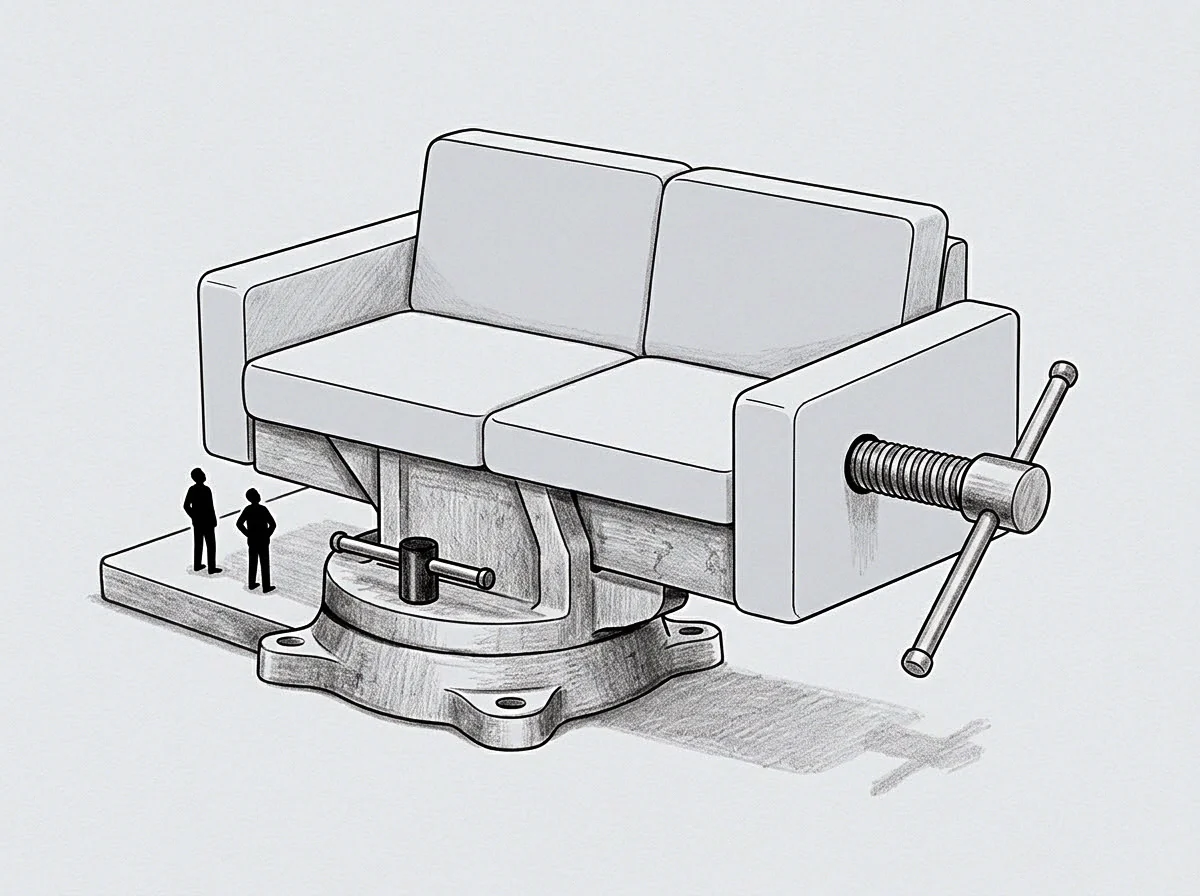
Clearing disputed claims determines whether early code can support independent commercial operations or remains encumbered by founder history. Institutional investors review intellectual property chains of title before committing capital, inspecting founder assignments, contractor consents, and commit logs. An unresolved cloud on primary technology routinely halts financing rounds or forces capital into indemnity escrows.
Institutional Capital Requirements and Title Warranty Cleanups
Venture funds and corporate acquirers expect unqualified title warranties on core software. When diligence reveals unexecuted founder agreements, buyers require complete title remediation before closing. The company must either obtain executed quitclaim assignments from former contributors or demonstrate complete technical replacement through verified clean-room protocols.
Core technology remains encumbered until former contributors sign formal releases or the code is replaced. Companies that postpone basic corporate formalities absorb the cost through delayed financings, higher legal fees, and reduced valuations. Securing executed invention assignment agreements with present-transfer terms at the start of development remains the most direct way to protect company ownership.