
Admissibility of Personal Director Notes in Governance Disputes
Personal director notes are discoverable out-of-court statements admitted under hearsay exceptions like past recollection recorded to rebut official board minutes.

Desk
Three handwritten lines on a legal pad note a dissent during a four-hour board meeting, while the corporate secretary logs only a unanimous resolution in the minute book. Two years later, when liquidators challenge the transaction for breach of fiduciary duty and failure of inquiry, that official minute book stands as the formal account. Yet the uncirculated paper left in a director’s private drawer records an unaddressed valuation gap.
In commercial litigation, courts regularly evaluate whether such informal personal documentation can enter the evidentiary record to rebut official corporate entries.
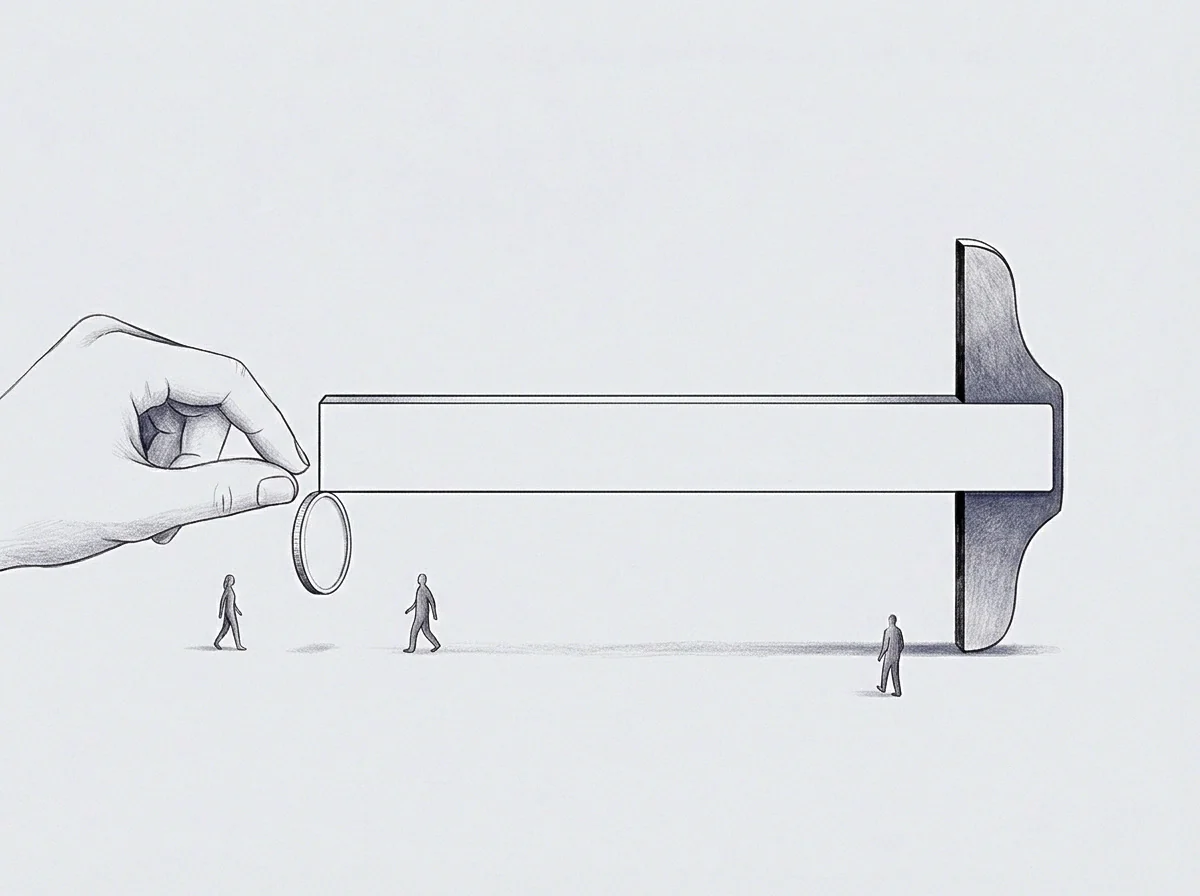
Statutory Minutes and Private Annotations
Corporate statutes generally establish that approved board minutes serve as prima facie evidence of proceedings and corporate decisions. This presumption affords the formal minute book a privileged standing, on the assumption that it reflects the collective intent and actions of the board. The presumption remains rebuttable.
When a director produces contemporaneous notes taken during deliberations, those records do not modify the minute book directly; they function as extrinsic evidence introduced to challenge the completeness, accuracy, or timing of the formal entry.
Personal annotations occupy an evidentiary tier distinct from corporate books. Company minutes represent institutional memory, whereas private notes preserve an individual’s immediate perception. That distinction dictates how counsel handles informal papers during cross-examination.
An entry made on a personal device during a meeting carries no statutory presumption of correctness. Its value turns on the author’s availability to testify, proof of contemporaneous execution, and the absence of subsequent editing.
A private note written during a meeting remains a personal memory aid until litigation pulls it into the evidentiary record.

The Threshold of Private Recordkeeping
Courts examine the physical and digital provenance of personal records before admitting them. A bound notebook containing sequential, dated entries creates a credible inference of contemporaneous recording. Loose sheets, uncirculated text files, or entries altered after a board meeting raise questions about post-hoc drafting.
To cross the threshold of admissibility, the proponent must demonstrate that the writing reflects immediate impressions recorded during the session rather than recollections assembled after a dispute arose.
Corporate governance claims frequently turn on whether a director fulfilled their duty of care or acted in good faith during a contentious transaction. Official minutes often omit granular debate, noting only final votes to preserve confidentiality or project consensus. Personal notes that document specific questions put to management, documents requested, or cautions voiced by legal counsel supply vital factual context.
When admitted, these entries help establish that a director took affirmative steps to investigate a transaction, answering claims of passive acquiescence.

Hearsay
Out-of-court statements committed to paper prior to trial face the threshold obstacle of the hearsay rule. A director’s personal note drafted months or years earlier constitutes an out-of-court assertion. When offered to prove the truth of what is recorded within it, the document is classified as hearsay.
Admission requires satisfying specific statutory exceptions or common law doctrines governing written evidence.

Present Recollection Refreshed
Witnesses testifying on the stand often experience memory decay regarding exchanges from prior years. Under the doctrine of present recollection refreshed, a witness may review notes written during or shortly after a board meeting to revive their independent memory. The document itself does not automatically become an exhibit under this procedure.
The writing functions as an aide-mémoire: the witness reads the passage silently, confirms their memory is refreshed, and then provides independent oral testimony about the event.
Opposing counsel possesses the right to inspect any document handed to a witness to refresh recollection on the stand. Counsel may cross-examine the witness on those notes and tender relevant portions into evidence to test credibility. If the pages contain contradictions, omissions, or subjective commentary, presenting them to refresh recollection leaves the witness vulnerable to immediate impeachment, using the note to challenge reliability rather than corroborate the defense.

Past Recollection Recorded
In some disputes, memory cannot be revived. When a director genuinely fails to recall the details of a board discussion even after reviewing their notes, counsel may seek admission under the exception for past recollection recorded. This mechanism requires establishing four specific factual conditions before the entry can be received.
- Contemporaneous Creation The director wrote or verified the notes while the board meeting occurred or shortly thereafter while memories remained clear.
- Personal Knowledge The recording director possessed direct, firsthand observation of the statements, votes, or presentations described within the written text.
- Accuracy Affirmation The testifying director explicitly confirms on oath that the notes accurately reflected their knowledge and perception at the time of writing.
- Memory Failure The director demonstrates an actual, present inability to recall the specific events without reliance on the written document.
Memory reconstructs past events through the lens of subsequent information and hindsight bias; subjective confidence in an unrecorded recollection correlates poorly with factual accuracy over long spans. Contemporaneous notes fix observations at the moment of perception. When admitted as past recollection recorded, the entry is read into the record as substantive evidence, providing a factual anchor that outlasts fading recollection.
Under the statutory business records exception, private director notes must clear a higher hurdle than corporate books. Formal minutes qualify routinely when maintained in the regular course of business. Personal journals qualify only if the director demonstrates a consistent, systematic habit of maintaining such records across every board meeting.
The precise language of the governing evidence act determines whether an informal personal log meets the definition of a record made in the regular course of business.

Exposure
Litigation transforms private notes into public exhibits. Directors who assume that personal notebooks, margins of board packs, or private messaging threads remain confidential encounter severe procedural vulnerabilities during discovery. Civil disclosure rules mandate the production of all non-privileged documents relevant to the pleaded issues, regardless of where those files reside.

When Does a Director Note Lose Its Privilege?
Legal professional privilege protects confidential communications between a client and legal counsel made for the dominant purpose of seeking or delivering legal advice. Personal notes kept by an individual director rarely qualify for this protection on their own. Annotating a board pack with private thoughts, financial calculations, or strategic doubts does not generate privilege simply because counsel attended the same session.
Mixing legal advice with commercial commentary inside a single journal complicates privilege assertions, often requiring in-camera judicial inspection to redact non-privileged entries.
Privilege fails entirely when a director shares personal notes with third parties, including financial advisors, individual shareholders, or personal mentors. Disclosing an uncirculated page waives confidentiality. In shareholder oppression or derivative actions, claimants frequently subpoena the personal devices and notebooks of individual board members.
Notes that contain emotional reactions, blunt characterizations of colleagues, or colloquial shorthand create immediate cross-examination hazards that distract from substantive technical defenses.
Uncirculated personal scribbles shared with an outside advisor lose their confidential standing and become fully discoverable targets in litigation.

Subpoena Obligations and Electronic Devices
Modern corporate governance operates largely through digital portals, tablets, and mobile applications. Personal notes taken on digital devices generate metadata, including creation timestamps, edit histories, and device identifiers. Discovery orders reach these digital artifacts.
When litigation becomes reasonably foreseeable, preservation obligations attach to all relevant repositories, prohibiting the deletion, modification, or scheduled purging of private director logs.
Spoliation occurs when a director destroys, alters, or discards personal notes after a dispute arises or becomes predictable. Courts impose sanctions for spoliation, including adverse inference instructions where the tribunal assumes the destroyed materials contained findings damaging to the director’s position. The legal cost of losing a personal document through deficient retention practices exceeds the risk of producing an unedited, accurate contemporary log.
Failure to preserve personal notes upon receipt of a litigation hold notice triggers judicial sanctions that undermine the defense of director conduct.

Weight
Admissibility determines only whether a court will look at a document. Weight determines whether the court believes it. A judge or arbitrator may admit a director’s personal note into evidence while ultimately according it minimal probative value when balanced against conflicting corporate records or witness testimony.
Courts measure probative weight through comparative analysis. The table below outlines how different forms of governance documentation perform under judicial scrutiny when disputes arise regarding board actions.
| Documentation Class | Evidentiary Presumption | Hearsay Status | Probative Vulnerability |
|---|---|---|---|
| Approved Board Minutes | High statutory presumption of correctness | Excepted as official business record | Vulnerable to proof of intentional omission or falsification |
| Contemporaneous Director Notes | No statutory presumption; depends on credibility | Requires past recollection recorded exception | Vulnerable to selective recording and subjective bias |
| Post-Meeting Director Memoranda | Low presumption; viewed as self-serving | Inadmissible hearsay unless falling under narrow exceptions | High vulnerability to hindsight bias and litigation framing |
| Draft Unapproved Minutes | Neutral presumption; preliminary record | Admissible to show process and revisions | Vulnerable to ambiguity regarding final board consensus |
A director’s personal notes carry substantial weight when they demonstrate consistency across time and align with objective external data. If a note records specific financial figures discussed during a meeting, and bank records confirm those exact figures were transmitted the following morning, the alignment validates the note’s contemporaneous accuracy. Conversely, notes that consist entirely of subjective characterizations, such as labeling a CEO’s proposal as deceptive, receive lower weight unless backed by factual details.
Selective recording represents the primary argument used to diminish the weight of personal notes. Opposing counsel argues that a director recorded only statements supporting their personal agenda while ignoring counterarguments raised by other board members. Personal notes reflect a single perspective.
Unlike formal minutes, which undergo review and approval by the entire board, private notes lack collective validation. Their probative value depends on demonstrating that the writer recorded events neutrally rather than defensively.
Unapproved personal entries reflect individual observations rather than the collective determination of the corporate board.

Hand
Directors relying on contemporaneous documentation to evidence their diligence must establish systematic recordkeeping routines well before disputes emerge. Sporadic note-taking during contentious meetings suggests preparation for litigation, whereas continuous, structured recording across all board sessions establishes a credible baseline of professional practice.
Sound personal recordkeeping separates objective observations from emotional commentary. Notes should focus on procedural milestones, specific disclosures made by management, advisor recommendations, and the rationale behind individual votes. Writing down the exact questions posed to auditors and the specific answers returned establishes an evidentiary foundation showing the exercise of due diligence.
- Record the precise date, start time, end time, and location of the board session at the top of the entry.
- List all attendees, explicitly noting when individuals enter or leave the room during executive sessions or confidential discussions.
- Document key factual statements, financial projections, and professional advice presented by external consultants, attributing statements to specific individuals.
- Write down personal inquiries made regarding material risks, along with the specific responses provided by corporate officers.
- File the entry in a secure, chronologically ordered repository immediately following the conclusion of the meeting without subsequent editing.
Storage architecture dictates long-term evidentiary utility. Personal notes stored on corporate servers or managed devices present jurisdictional and access challenges if a director leaves the board or faces an adversarial action by the company. Maintaining independent, secure, and timestamped personal archives ensures access when discovery demands arise.
The discipline of immediate, unedited, factual recording transforms a vulnerable personal scribble into an authoritative historical log.
A director who maintains clear boundaries between objective factual entries and speculative commentary preserves the evidentiary integrity of their private log. That log stands ready to support oral testimony when memory fails, providing a reliable record of individual diligence inside the corporate vault.