
Assessing Contemporaneous Digital Artifacts Against Integrated Equity Operating Agreements In Disputes
Integrated equity operating agreements exclude prior informal digital artifacts unless post-signing records strictly meet contractual amendment formalities.

Frame
A dispute often begins when two founders remember an equity discussion one way, while their signed operating agreement contains an integration clause that explicitly bars earlier oral or written terms. One partner points to a Slack thread from three months before execution confirming fifty percent. The other relies on the executed agreement setting equity at forty percent, backed by standard language declaring the document the complete and final expression of their deal.
Paper sits on a desk while thousands of messages remain on remote servers, leaving the formal boundary of the contract at odds with the day-to-day conversation that preceded it.
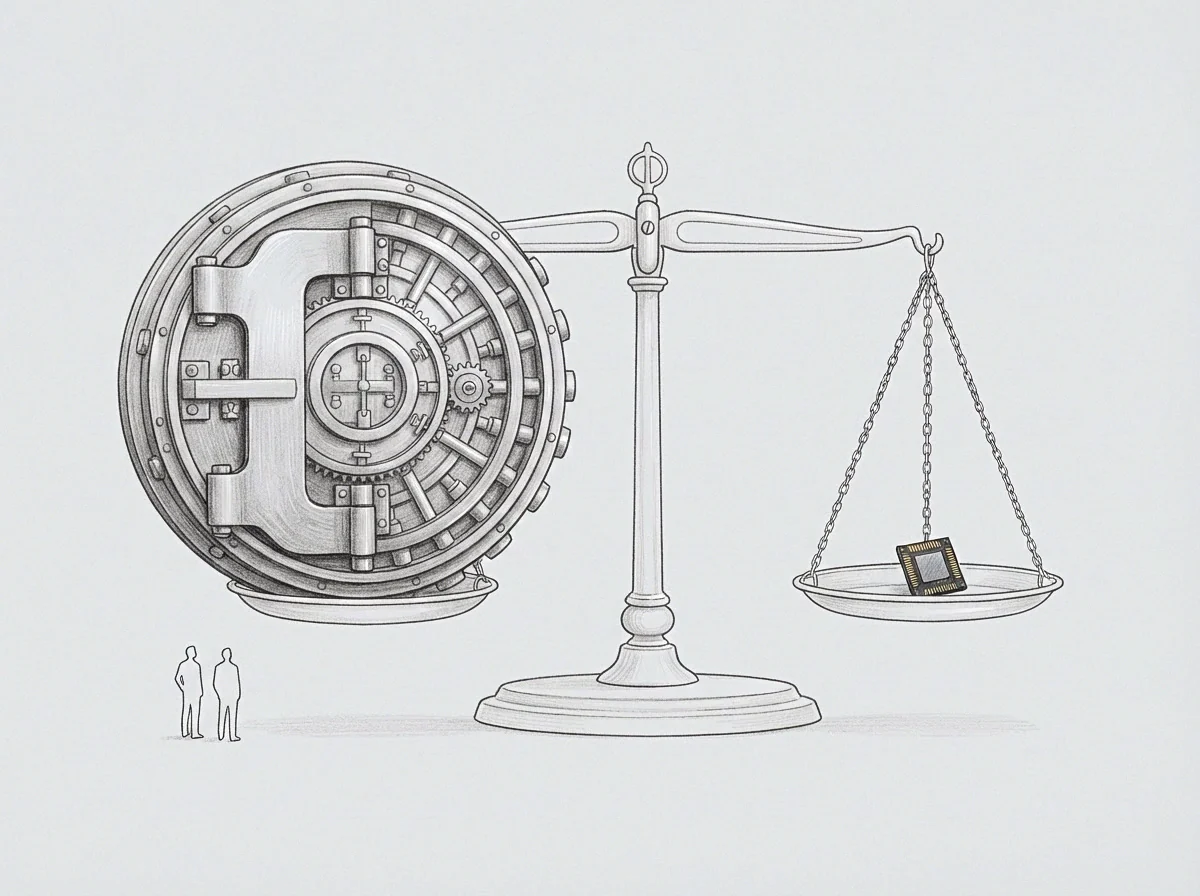
Under the parol evidence rule, integrated equity contracts prevent outside material from modifying, contradicting, or supplementing unambiguous contract language. The merger clause functions as a perimeter: drafts, side discussions, and informal promises are formally folded into the executed instrument. In equity litigation, a complete integration clause establishes a heavy presumption that the written text represents the entire deal.
Early company formation generates an extensive trail of written records. Founders communicate across chat rooms, Git commit logs, issue trackers, and shared financial models, capturing operational compromises and shifting assumptions in real time. Once counsel drafts a formal operating agreement months down the road, its integration language effectively strips that digital paper trail of legal standing.
An integrated merger clause enforces contractual finality by legally nullifying earlier informal equity commitments regardless of their timestamped detail.
Parties frequently confuse the volume and chronological precision of digital messages with enforceability against an integrated contract. A court looks first to the four corners of the document, treating that language as the definitive record of intent. Messages sent prior to execution stay out unless the claimant proves a recognized exception like ambiguity, mutual mistake, or fraud in the inducement.
Assuming an early chat log can override an executed merger clause routinely ends with the loss of contested equity.
Proof
Evaluating evidence in an equity dispute centers on whether a digital record falls inside or outside the contractual integration boundary. When someone introduces timestamped messages or email threads into an ownership dispute, the adjudicator evaluates the material according to when it was created relative to execution and the legal purpose it is intended to serve.

Evidentiary Thresholds and the Four Corners Rule
The four corners doctrine requires the factfinder to determine intent strictly from the contract text itself. Extrinsic evidence cannot be introduced to manufacture ambiguity where the written terms are straightforward. Because a standard merger clause indicates that the parties intended the writing to hold their entire agreement, pre-signing communications cannot pierce that boundary to alter an explicit equity split, no matter how clear or authentic those messages appear.
Judicial interpretation prioritizes the drafted text over subjective intent, treating the filed instrument as definitive.
When analyzing how contemporaneous records interact with integrated agreements, practitioners generally divide the material into three operational categories:
- Pre-Execution Negotiation Logs cover early chat threads, emails, and cap table drafts generated before signing, all of which standard integration clauses exclude when offered to contest explicit equity splits.
- Contemporaneous Technical Artifacts encompass repository commits, pull requests, and task timestamps showing direct development work, which serve as relevant evidence only if the contract explicitly conditions vesting or grants on technical milestones.
- Post-Execution Amendment Drafts comprise communications sent after signing, which sit outside the parol evidence rule entirely but must satisfy the operating agreement’s formal modification rules to carry weight.
Where parties offer contemporaneous material to explain contextual meaning rather than rewrite terms, courts allow narrower exceptions. Extrinsic files can define specialized technical jargon, industry custom, or course of dealing to clarify how a mechanism works in practice. That allowance never extends to admitting an informal message to adjust an equity percentage plainly stated in the agreement.
Extrinsic digital records become admissible in equity disputes only when an integrated clause contains explicit ambiguity or when post-signing modifications meet contractual formality thresholds.
Treating pre-execution digital communications as durable obligations exposes cap tables to substantial risk. A party relying on an email exchange from three weeks prior to an operating agreement will find that the merger clause cleanly extinguishes those earlier understandings.

Table
Distinguishing among categories of digital records clarifies how well they hold up against an integrated operating agreement. Technical media vary widely in metadata integrity, evidentiary standing, and their ability to trigger legal exceptions.

Artifact Classifications and Integration Resistance
Digital files differ in their immutability, authenticity, and legal weight. Assessing them under integration doctrine shows how differently tribunals treat each medium during equity litigation.
| Artifact Category | Primary Medium | Metadata Strength | Parol Evidence Status | Evidentiary Utility |
|---|---|---|---|---|
| Negotiation Chat Threads | Messaging Platforms | Moderate | Fully Excluded | Low for altering percentages; high for showing subjective initial intent under ambiguity claims. |
| Repository Commit History | Version Control Systems | Very High | Not Applicable | High for proving performance milestones under conditional equity vesting schedules. |
| Executable Cap Table Sheets | Cloud Spreadsheets | Low to Moderate | Fully Excluded | Very low against integrated text unless explicitly incorporated by reference inside contract schedules. |
| Signed Digital Amendments | Document Signing Platforms | Very High | Admissible | Complete force to modify integrated terms if executed strictly according to contractual amendment rules. |
Technical metadata strength does not equal contractual enforceability. A cryptographically verified commit log proves code was pushed on a specific date, but it carries no weight against an integrated clause allocating forty percent equity without reference to engineering output. Conversely, an executed digital signature on a one-page amendment modifies the contract immediately, regardless of whether it contains the context of an informal messaging thread.
While the Slack agreement appeared clear during negotiation, the integrated document contained no reference to early chat logs.

Breach
As companies operate under an integrated contract over several years, day-to-day practices around equity distributions, profit shares, or voting arrangements often drift from written terms. These informal departures generate post-execution conflicts when one party claims operational conduct amended the agreement.

Which Digital Records Overcome an Integration Clause?
Communications produced after signing fall outside the parol evidence rule, which applies strictly to prior or contemporaneous negotiations. Subsequent messages and operational habits are judged instead under principles of contract modification, course of performance, and equitable estoppel.
Most operating agreements include explicit anti-waiver language and no-oral-modification clauses, requiring any adjustment to equity, voting rights, or governance to be set down in a formal writing signed by a defined threshold of members. Delaware courts and other common law jurisdictions enforce these terms strictly to preserve commercial certainty.
Informal understandings routinely diverge from contract terms as recollections fade and operational roles evolve.
Consider two founders who execute an integrated operating agreement in January, assigning sixty percent equity to Founder A and forty percent to Founder B, accompanied by a merger clause and a written modification requirement. Eight months later, Founder A takes an unannounced leave. Founder B takes over management and emails that equity is now fifty-fifty to match the workload.
Founder A replies on a messaging platform with a thumbs-up emoji. Founder B spends the next eighteen months operating under the assumption that the split changed.
When an acquisition offer arrives, Founder A claims the original sixty-forty allocation under the contract. Founder B attempts to enter the email thread and emoji response as a written modification. Founder A counters that an informal thread lacks the required drafting structure, explicit amendatory language, and formal execution mandated by the operating agreement.
Informal post-execution digital exchanges rarely satisfy contractual amendment requirements when an operating agreement contains explicit no-oral-modification terms.
Tribunals handling this scenario examine whether Founder B can establish equitable estoppel or detrimental reliance to overcome the modification clause. That inquiry typically follows four steps:
- Reviewing the operating agreement to verify the merger clause and the terms of the no-oral-modification clause.
- Evaluating whether the email and subsequent messaging response satisfy the contractual definition of an instrument signed by the parties.
- Determining whether ongoing performance reflects clear, mutual intent to permanently restructure equity rather than accommodate a short-term operational reality.
- Assessing whether detrimental reliance is sufficient to displace the contract’s written protections on equitable grounds.
In most forums, Founder B fails on the claim. The email and emoji do not satisfy the formal standards required to amend an integrated corporate agreement, and sweat equity alone cannot adjust a capitalization table without strict compliance with contractual amendment procedures.
This divergence highlights an ongoing tension in early-stage ventures: distinguishing between day-to-day operational alignment and legally binding equity adjustments when company roles depart from initial contractual arrangements.

Clock
Preserving the legal enforceability of changes discussed in digital communications requires rigorous corporate housekeeping. Founders must align routine digital agreements with the amendment procedures established in their original governance contracts.

Writing Amendments directly Into the Record
A contemporaneous record affects an integrated contract only when incorporated into the formal instrument. Sound governance requires translating informal agreements into executed written amendments on a regular cadence. Leaving understandings about equity, vesting, or officer compensation inside chat histories invites exposure whenever financing, an acquisition, or an internal dispute arises.
Executed documentation controls contractual obligations, and the effective date written into the instrument governs enforcement.
When adjusting equity or vesting milestones, managers must draft explicit amendments that reference the underlying operating agreement. These instruments need to identify the exact sections being revised, record the effective date, and carry signatures obtained through electronic signature platforms that preserve audit trails.
Corporate modifications documented inside structured legal amendments survive contract integration challenges that destroy informal messaging records.
Maintaining clean corporate records requires turning informal operational agreements into formal governance exhibits. Equity grants, accelerated vesting, and milestone sign-offs belong in board resolutions or member consents rather than team channels. Executing formal instruments maintains contractual certainty and keeps shifting recollections from undermining ownership rights later on.
Formal written amendments take precedence over informal digital exchanges, regardless of how clearly the messaging reflects the parties’ interim discussions.