
Evidentiary Admissibility Of Oral Promises In Commercial Disputes
Written contract integration bars oral promises unless extrinsic evidence proves independent collateral agreements, fraudulent inducement, or estoppel.

Floor
Litigation over verbal assurances during dealmaking turns on a strict divide between legal enforceability and evidentiary admissibility. An unwritten commitment may constitute a valid agreement under substantive contract principles, yet remain completely excluded from judicial consideration by statutory or procedural bars. The legal threshold for presenting unwritten statements to a finder of fact depends on the presence of a fully integrated written instrument, the applicable jurisdiction statutory requirements, and the specific exception claimed by the party seeking enforcement.

Extrinsic Assurances Against Written Formulations
Commercial transactions frequently proceed through months of spoken negotiation before terminating in a executed agreement. When disputes arise concerning unwritten covenants made during those preliminary sessions, tribunals first evaluate whether the written contract was intended as a complete and exclusive statement of terms. The parol evidence rule precludes the introduction of prior or contemporaneous unwritten statements that contradict, vary, or add to the clear language of an integrated writing.
A court evaluates integration by examining the document itself, assessing whether the instrument covers the transaction context entirely.
Contracts that contain comprehensive integration statements create a strong legal presumption against admitting prior unwritten statements. Courts enforce this bar to maintain commercial predictability, forcing enterprise actors to consolidate all binding obligations within the four corners of the final text. Parol evidence rule enforcement restricts litigating parties from introducing pre-execution discussions to alter unambiguous written provisions.
Unwritten assurances exchanged during enterprise structuring or venture operations carry zero evidentiary weight when contradicted by subsequent executed writings.
Admissibility of extrinsic commitments collapses when a written contract contains an explicit clause declaring the text fully integrated.

Integration Provisions And Written Primacy
Drafting practices determine the survival of unwritten deal components. Boilerplate integration terms serve as explicit declarations that prior conversations hold no binding authority. Courts treat these statements as formal expressions of intent to clear all unrecorded terms from the legal record.
When an agreement lacks an explicit integration statement, tribunals examine surrounding commercial circumstances to evaluate finality. Factors include the sophistication of the entities, the duration of negotiations, and whether the disputed unwritten promise involves matters naturally included in the written text. The written line holds.
Partial integration permits extrinsic evidence to supplement consistent additional terms, but strictly bars unwritten assurances that directly conflict with written terms.
Failure to reduce core commercial promises to written form leaves the beneficiary with an unprovable claim once an integrated contract exists.

Memory
Disagreements over unwritten commitments rarely stem from intentional deceit. Cognitive research demonstrates that human memory operates through reconstructive processes rather than precise retrieval mechanisms. Commercial actors routinely reconstruct historical conversations to align with subsequent economic outcomes, personal expectations, or current self-interest.
In multi-year joint ventures, executive turn, cognitive bias, and post-hoc rationalization obscure original intent, rendering unrecorded recollection structurally unreliable.

Reconstructive Drift In Long Negotiating Cycles
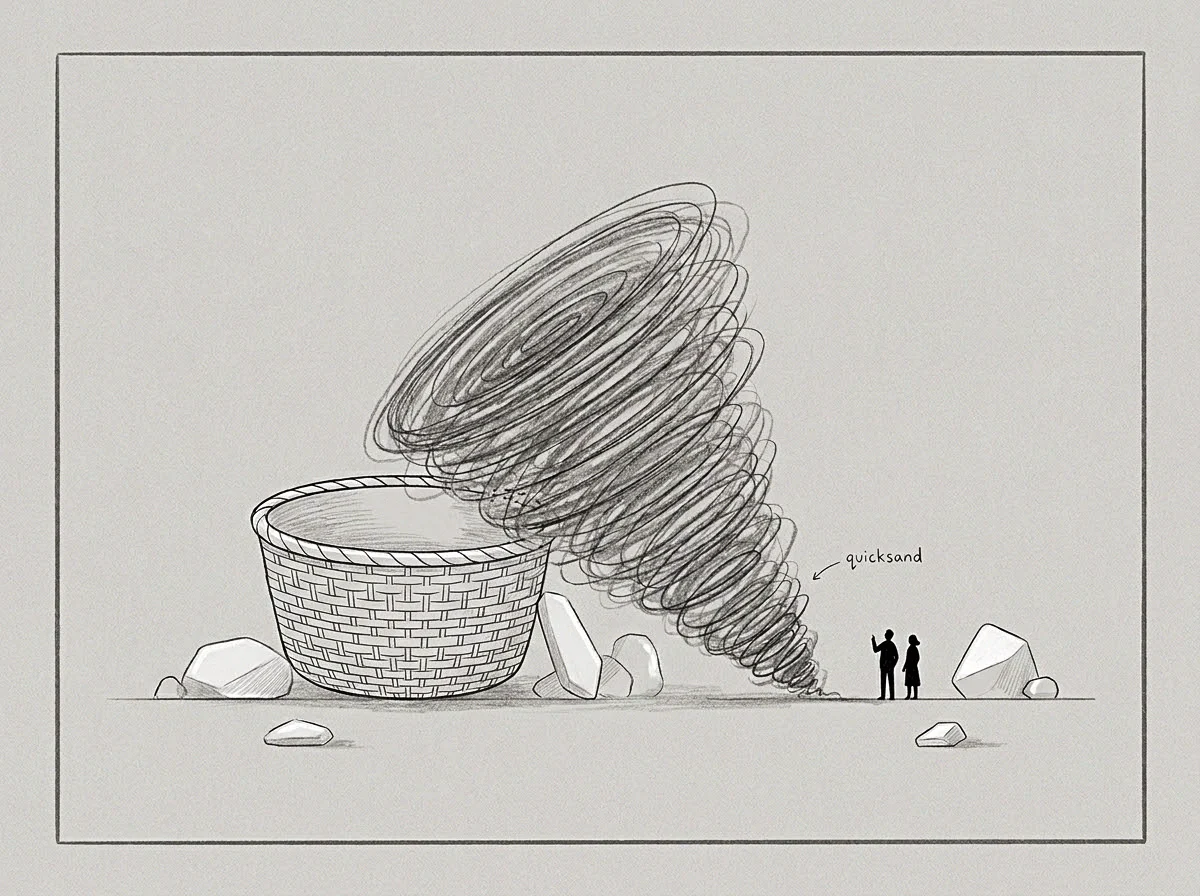
Psychological investigations into business negotiation confirm that recollection of verbal agreements decays rapidly over time. Retrospective recall tests show that participants modify remembered terms within weeks of a discussion, incorporating post-meeting communications and internal assumptions into their memory of the original exchange. Reconstructive memory mechanisms cause individuals to believe firmly in commitments that were never stated out loud.
Unwritten assurances decay rapidly.
Memory drift accelerates during complex deals involving changing economic variables. Negotiators misremember early commitments. When commercial conditions deteriorate, a party projects present expectations backward, misremembering tentative discussions as firm oral agreements.
Witnesses display high subjective confidence when presenting inaccurate accounts of unwritten understandings, proving that confidence correlates poorly with historical accuracy.
Recollection reconstructs past conversations to fit present commercial needs regardless of the original words spoken.
Confidence Calibration Across Divergent Recollections
Tribunals forced to resolve conflicting unwritten testimony face asymmetric subjective certainty. Both sides often testify under oath with absolute conviction regarding mutually exclusive versions of a verbal exchange. Cognitive studies confirm that repeating a remembered event strengthens internal belief without increasing factual accuracy.
Documentary artifacts serve as the sole objective benchmark against which testimony can be tested. Without contemporaneous written records, judicial decision-makers must rely on credibility assessments, cross-examination consistency, and commercial plausibility. These subjective metrics yield unpredictable litigation results, consuming significant enterprise capital.
Divergent memories emerge quickly.
How can commercial tribunals reliably isolate genuine verbal agreements from post-hoc cognitive reconstructions when both witnesses testify with equal conviction?

Exception
The strict exclusion of extrinsic verbal assurances admits specific, narrow exceptions recognized by statutory law and judicial precedent. Litigants attempting to introduce unwritten statements past an integration clause must clear specific legal gateways. These gateways demand clear factual showings that transcend simple breach of promise claims, focusing instead on fraud, collateral agreements, or equitable reliance.

How Do Promissory Estoppel Arguments Breach Integration Bars?
Equitable relief mechanisms permit recovery when reliance on an unwritten promise produces substantial economic detriment. Promissory estoppel doctrines allow tribunals to enforce unwritten commitments when a party reasonably relied on an explicit assurance, provided enforcement is necessary to prevent injustice. Estoppel arguments face strict judicial scrutiny in commercial settings involving sophisticated entities.
Courts reject estoppel claims when the alleged oral promise directly conflicts with an executed agreement. Sophisticated business actors cannot claim reasonable reliance on unwritten representations that contradict express contract terms. Equitable gateways remain viable primarily when unwritten assurances relate to future execution dates, partial performance conditions, or ancillary operational matters not governed by the main written instrument.

Promissory Misrepresentation And Inducement Gateways
Fraud exceptions permit extrinsic evidence to dismantle integrated contracts. The fraud in the inducement doctrine allows parties to introduce prior unwritten representations to prove that agreement consent was procured through deliberate deception. Evidentiary standards for establishing fraudulent inducement remain extremely high, requiring clear proof of intentional misrepresentation rather than mere non-performance of an oral promise.
Legal gateways that admit unwritten commitments require distinct evidentiary foundations:
- Fraudulent inducement showing demands proof of intentional false statements regarding material facts that induced contract entry, bypassing integration bars entirely.
- Collateral agreement doctrine admits oral terms that address distinct matters completely separate from the main contract scope without contradicting written language.
- Subsequent written modification invalidates prior unwritten integration defenses by establishing new post-execution terms through written correspondence or conduct.
- Promissory estoppel proof demands clear evidence of reasonable reliance on unwritten promises resulting in measurable economic injury.
A clause explicitly waiving reliance on extrinsic representations restricts fraud exceptions strictly to express written warranties contained inside the signed contract.

Record
Contemporaneous documentation transforms vulnerable verbal assurances into admissible commercial evidence. Litigants who capture negotiated oral terms in timestamped writings construct evidentiary foundations that survive integration challenges. Enterprise operators reduce litigation exposure by implementing standardized confirmation protocols following every verbal interaction.

Contemporaneous Documentation Protocols
Writing down negotiated terms immediately after a meeting creates high-value evidentiary artifacts. Contemporaneous notes made during or directly following verbal exchanges carry substantial weight in judicial proceedings. Courts evaluate post-meeting email confirmations, internal file memoranda, and timestamped messaging logs as credible evidence of intent, provided those communications occurred prior to dispute onset.
Unanswered post-meeting email summaries function as powerful evidence of acquiescence. When one party emails a written summary of verbal promises and the counterparty proceeds without objection, tribunals view the silence as tacit adoption of the written terms. Dated artifacts settle disputes.
Systematic confirmation discipline turns ambiguous oral promises into actionable records.

Comparative Evidentiary Weight Of Extrinsic Artifacts
Evidentiary instruments vary significantly in their capacity to override integrated written contracts or substantiate unwritten commitments during commercial disputes.
| Evidentiary Instrument | Admissibility Gate | Evidentiary Weight | Litigation Outcome Risk |
|---|---|---|---|
| Uncorroborated Oral Testimony | Parol Evidence Rule Exceptions | Low | High Exclusion Probability |
| Post-Meeting Email Summaries | Tacit Acquiescence / Course of Dealing | Moderate to High | Dependant on Counterparty Response |
| Signed Side Letters | Collateral Agreement Standard | High | Enforceable if Non-Conflicting |
| Integrated Contract Terms | Direct Contractual Enforcement | Absolute | Precludes Extrinsic Claims |
Contemporaneous written confirmations created immediately after verbal negotiations establish durable evidentiary records that resist memory decay.
The unwritten promise was understood differently by our team and was never accepted as a binding obligation.

Table
Negotiation discipline requires tactical measures to manage oral promises during live commercial deals. Enterprise leaders who understand evidentiary rules structure negotiation workflows to prevent unwritten commitments from lingering as unenforceable liabilities. Eliminating ambiguity before signature protects commercial relationships and preserves enterprise value.

Operational Confirmation Cycles
Managing verbal commitments demands continuous documentation discipline throughout the deal lifecycle. Operational teams must reduce every verbal agreement to written form before taking action or incurring capital expenditure. Reservation of rights notices prevent counterparty claims of verbal modification or waiver during ongoing performance.
Written notes preserve intent. Commercial entities maintain clarity by instituting strict operational protocols governing negotiator authority. Disclaiming verbal authority forces counterparties to demand written signatures for every material obligation, insulating the enterprise from unauthorized unwritten commitments made by sales or operational personnel.

Reservation Of Rights Declarations
Preserving legal standing requires clear reservations of rights during preliminary negotiations and contract administration. Unwritten promises made by executive leadership during high-pressure deal closures remain vulnerable to immediate contract preemption upon execution of a standard integrated contract.
- Issue written meeting recaps within twenty-four hours of all substantive verbal negotiations.
- Include explicit disclaimers stating that unwritten representations hold no legal force prior to full contract execution.
- Review final agreement integration terms to verify that all critical verbal assurances appear explicitly in the text.
- Maintain centralized digital archives of all contemporaneous negotiation notes and email threads.
Unwritten promises remain legally invisible until rendered into executed contract text.