
Evidentiary Value Decay In Unanchored Partner Communications
Unanchored partner communications lose evidentiary value over time because human memory reconstructs past agreements to align with present incentives.

Drift
Two founders sit across a room eighteen months into an arrangement, each recounting a equity division agreed upon during an early Sunday discussion. The first founder recalls an equal split conditional on full time commitment, while the second recalls a fixed percentage grant with no operational conditions. Neither person holds a dated note or timestamped message from that afternoon.
Both founders exhibit high confidence in their recall, yet their descriptions of the same event conflict fundamentally.
Cognitive psychology establishes that human memory reconstructs past events rather than retrieving exact records. Over time, individuals fill memory gaps with subsequent experiences, current incentives, and logical assumptions about what ought to have been decided. Psychological research demonstrates that recollection confidence remains flat or even increases over time even as objective recall accuracy drops sharply across a ninety-day window.
In unanchored partner communications, this divergence expands continuously without any deliberate attempt to deceive.
Unrecorded verbal commitments lose fifty percent of their evidentiary weight within ninety days as both sides reconstruct the exchange to match current operational pressure.
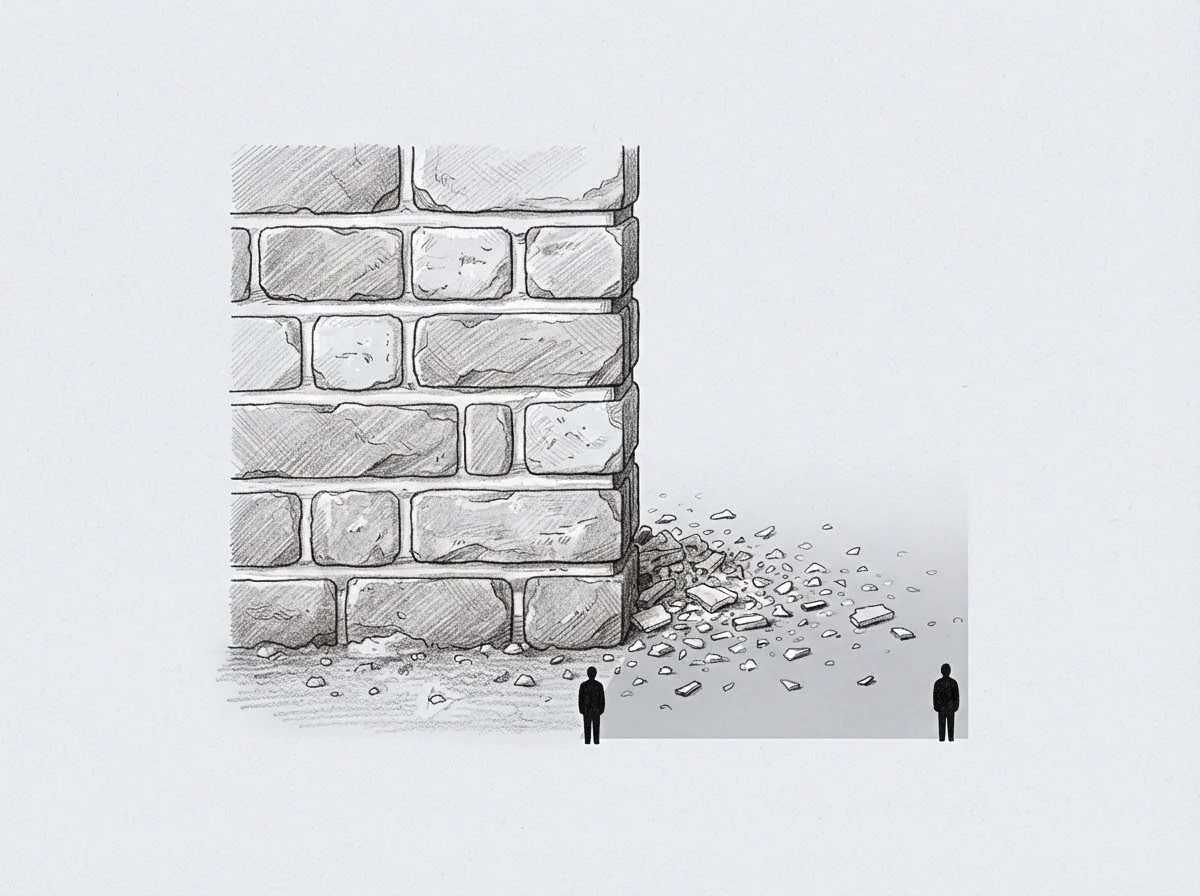
Initial Verbal Alignment and Memory Degradation
In the opening phase of a business partnership, enthusiasm and shared vision mask underlying ambiguities. Unanchored promises made during unstructured meetings feel binding because interpersonal trust remains high. Oral promises degrade rapidly.
The human brain prioritizes emotional consensus over verbatim precision, preserving the feeling of agreement while losing the specific boundaries of the deal.
When operational stress escalates or revenue arrives, each partner accesses a reconstructed version of the original exchange. The memory now serves present psychological needs rather than past reality. Without an external artifact written at the moment of agreement, neither party can distinguish accurate recall from reconstructive drift.
The conversation was understood to grant equity immediately upon product release without any additional vesting periods or operational milestones attached.

Proof
Contemporaneous documentation provides a fixed anchor against memory decay. A dated entry logged in a tamper-evident medium establishes what was stated, when it was communicated, and who received it. The record exists independently of subsequent human feelings or shifting equity valuations.
In legal and commercial environments, written evidence written immediately after an event carries higher weight than testimony delivered years later. Judicial systems recognize that unanchored verbal accounts degenerate into subjective credibility contests. The dated artifact settles disputes.
When an unanchored verbal claim meets a written memorandum, the written record shifts the burden of proof onto the party relying on memory alone.

Structural Decay Mechanisms in Unwritten Commitments
Unwritten partner understandings experience systematic evidentiary decay through distinct operational mechanisms. Each mechanism erodes the credibility and enforceability of the original communication over time.
- Contextual Dissolution takes place when the background assumptions of a verbal deal vanish, leaving isolated statements open to contradictory interpretations.
- Retrospective Rationalization occurs when a partner unconsciously alters their memory of past promises to match their current effort levels.
- Selective Retention manifests when individuals remember terms that benefit their position while forgetting qualifications attached to those terms.
- Third Party Contamination happens when advisors or new hires reinterpret early informal promises through standard legal defaults rather than original intent.
Unanchored recall invites opportunistic revision. Empirical research on legal evidence shows that the probability of successfully enforcing an oral agreement drops below twenty percent once the dispute extends past twelve months. Longitudinal studies of commercial litigation indicate that parties relying on verbal agreements spend up to four times more capital on legal fees than those with contemporaneous written notes.
A timestamped note preserves context.
Contemporaneous notes retain evidentiary authority when logged in a tamper-evident system before subsequent operational disputes alter memory.

Evidentiary Thresholds for Dated Logs
For a communication artifact to maintain probative value, it must satisfy clear structural requirements. A private journal entry modified months after an exchange holds minimal evidentiary weight compared to a message sent immediately to the other party.
The evidentiary value of an unanchored partner communication increases when the document includes explicit operational parameters, specific metrics, and explicit confirmation of receipt. An unacknowledged email draft provides weaker evidence than a shared summary document where both parties responded affirmatively.
A written clause specifying that prior oral discussions carry zero binding weight converts previous unanchored conversations into non-binding history, instantly nullifying legacy claims.

Table
Evaluating communication channels reveals substantial differences in how effectively each format resists evidentiary decay. Operators must match the medium to the strategic importance of the decision being made.
| Communication Format | Storage Integrity | Decay Half-Life | Legal Enforceability | Creation Effort |
|---|---|---|---|---|
| Unrecorded Verbal Exchange | Zero Physical Retention | Thirty Days | Very Low | Minimal |
| Informal Chat Messages | Unstructured Electronic Archive | Six Months | Moderate | Low |
| Timestamped Shared Memorandum | Tamper-Evident Digital Log | Multi-Year Retention | High | Moderate |
| Executed Commercial Contract | Immutable Formal Document | Permanent Retention | Very High | High |
Selection of an appropriate communication format dictates whether an arrangement survives operational friction. Relying on unstructured memory inevitably yields structural dispute when financial stakes grow.

Can Memory Outlast a Written Note?
Human recollection fails consistently when pitted against dated writing in commercial arbitrations. Human brains update past narratives to preserve self-image and justify present economic demands. Written records limit room for debate.
Studies examining witness testimony reveal that memory confidence correlates poorly with objective fact retention. A partner who expresses absolute certainty about an unrecorded event is often demonstrating cognitive bias rather than factual accuracy. A claim backed by a dated entry shifts the burden of evidence to the party relying on recall.
A claim backed by a dated entry shifts the burden of evidence to the party relying on recall.
Take two people who built a technology business for eighteen months without executing a written partnership contract. During the initial month, one founder agreed verbally to allocate ten percent of equity to the second founder upon reaching a revenue milestone. When revenue arrived, the first founder remembered the offer as a discretionary option capped at five percent, while the second founder had already made financial commitments based on the ten percent figure.
Without a dated written summary sent at the time of the initial conversation, resolving this dispute consumed four months of executive time and ultimately forced the resignation of the second founder.
Written lines endure across operational changes. An operator relying on verbal alignment pays for the missing record through endless negotiated compromises.
An entry recorded on the day of discussion beats six months of confident testimony.

Loss
The financial and emotional depletion caused by unanchored partner communications manifests across every operational layer of a company. When equity allocations, roles, or compensation rely on unwritten promises, friction increases exponentially as the company scales.
Unwritten terms create covert obligations. These invisible liabilities sit on the company balance sheet until an equity round, merger, or dispute forces them into the open. The time spent untangling vague historical agreements consumes management capacity that ought to be directed toward execution.

Financial and Operational Costs of Ambiguity
The failure to write down partner terms produces predictable structural expenses. Operators routinely underestimate the long-term price of avoiding short-term contractual clarity.
- Equity dilution disputes that stall fundraising rounds while legal counsel attempts to clean up cap table titles.
- Lost momentum stemming from executive distraction during internal negotiations over historical verbal promises.
- Substantial legal expenses incurred while producing witness statements and searching through fragmented communication logs.
- Total destruction of partner trust when divergent memories make one party view the other as dishonest.
Leaving equity vesting terms unanchored in early partner messages creates a covert liability that settles at the highest valuation.
Silence during meetings yields future friction. When partners refrain from putting decisions in writing to avoid immediate uncomfortable conversations, they defer and compound the relational cost.
An unanchored claim carries no weight. Courts and arbitrators routinely apply statutory defaults when unwritten terms cannot be verified. These legal defaults rarely match the original subjective intentions of either founder, resulting in equity splits or liability distributions that satisfy neither party.
Uncertainty surrounding informal instant messages remains high across legal jurisdictions. While courts in some regions accept informal chat logs as evidence of intent, other jurisdictions treat them as non-binding negotiations if a formal agreement was expected. To manage this uncertainty, explicit operators convert informal digital chats into clear written summaries signed by both parties.
Failing to record a clear equity agreement early guarantees that any future resolution will cost far more than the simple document would have cost to draft.
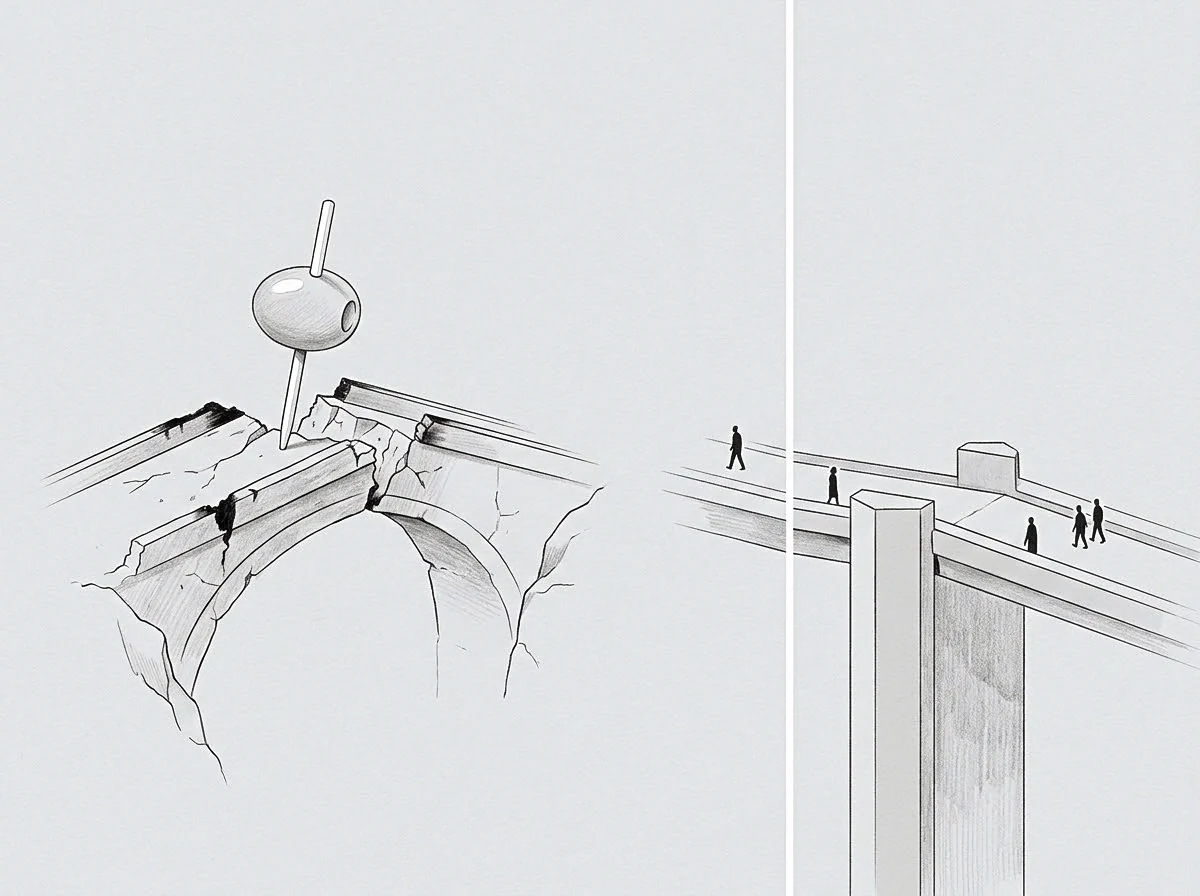
File
Instituting a disciplined documentation practice eliminates the vulnerability created by unanchored communications. Operators must build simple, repeatable protocols that convert verbal commitments into immutable records within hours of an exchange.
Documentation costs hours but saves years. The goal is not to draft exhaustive legal contracts for every minor discussion, but rather to create contemporaneous timestamped notes for every material agreement. Dated files protect both founders equally.

Systemic Protocols for Contemporaneous Anchoring
A practical method for securing communication evidence relies on written confirmations sent via trace-backed channels immediately following verbal alignment. A single post-meeting summary sent via email establishing key decisions, assigned roles, and explicit equity terms creates a rebuttable presumption of fact.
When the receiving partner confirms or leaves the message uncontested while continuing to accept operational benefits, the evidentiary weight of the written note increases significantly. The summary must state terms clearly in plain language, avoiding vague generalities that invite future reinterpretation.
If a verbal promise made during an informal meeting remains unconfirmed in writing for six months while both partners execute high-stakes strategy, what evidence can salvage the original intent when memories inevitably diverge?