
How Unsigned Cap Table Drafts Alter Equity Split Disputes
Unsigned cap table drafts convert informal equity discussions into objective contemporaneous proof, limiting memory drift and enabling detrimental reliance claims.
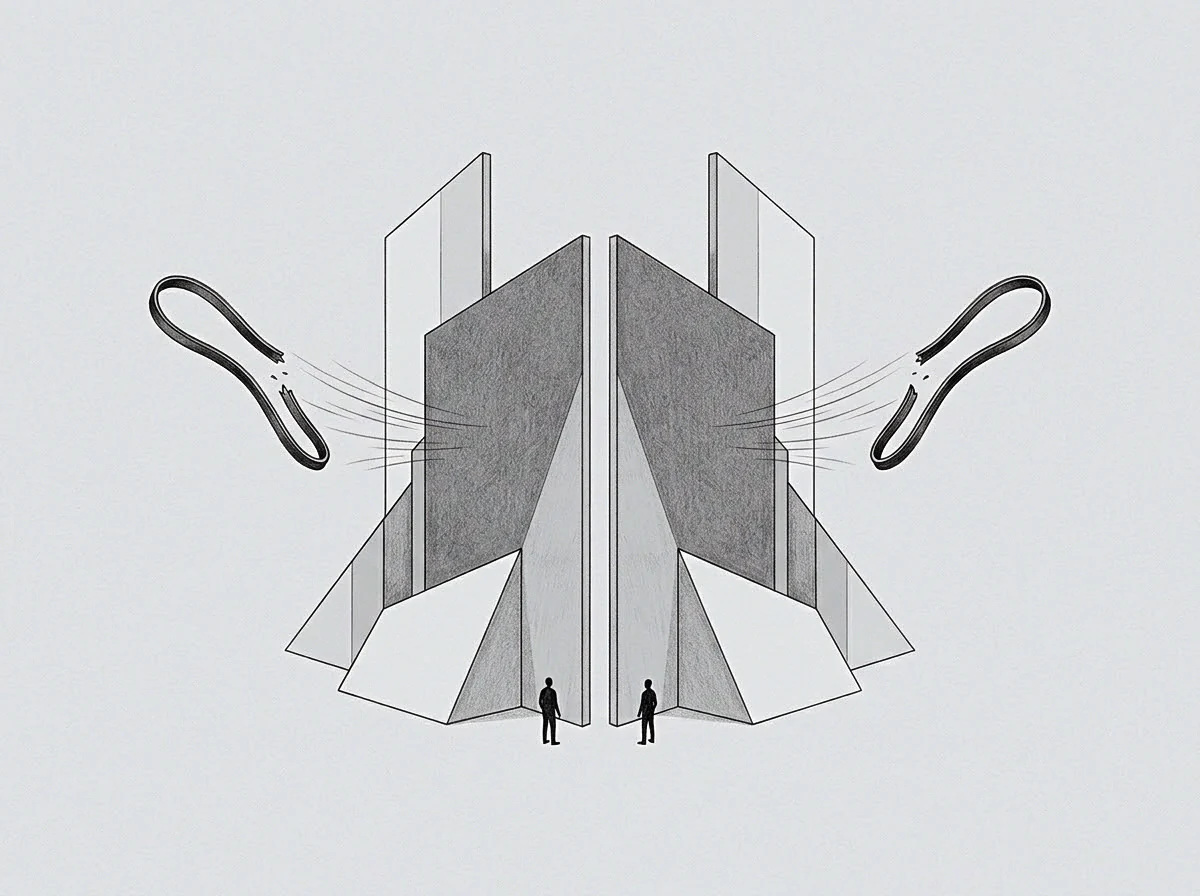
Draft
Two builders sit before a monitor seven months after sending a working spreadsheet to an early advisor. Row twelve displays a forty percent entry beside the lead engineer’s name, while row thirteen shows thirty percent allocated to the commercial partner. No signature appears on the document, and no formal corporate charter existed on the afternoon the file was shared.
The commercial partner views the row as a definitive commitment recorded during early formation. The engineer treats the identical cell as a temporary scenario modeled before product development altered the division of labor. Drafts carry dates.
The spreadsheet sits in an inbox thread as an immutable timestamped artifact, frozen while the commercial venture shifted around it.
In early-stage ventures, capitalization tables exist as working files, email attachments, and presentation slides long before legal counsel drafts definitive equity documents. These unexecuted files capture mathematical models at distinct operational moments. When commercial friction emerges, these working files transform from internal planning instruments into central items of proof.
The dispute turns on whether an unsigned file represents a finalized meeting of minds or a superseded negotiation step.

Working Files as Contemporaneous Records
Courts and arbitration tribunals evaluate informal equity agreements by examining contemporaneous documentation created during product buildout. An unexecuted spreadsheet attached to an email functions as objective proof that the parties discussed specific percentage splits at a known point in time. While an unsigned draft does not form a executed contract on its face, it provides hard evidentiary support for standard contract claims under state law.
Silence breeds dynamic expectations. When a founding team uses a working spreadsheet for months without explicit written qualification, the numbers inside that document shape individual financial behavior. One participant reduces commercial consulting hours based on the expectation set by row twelve.
Another participant declines outside paid work while relying on the same figure. The document, despite lacking formal signatures, becomes the primary baseline against which subsequent equity offers are evaluated.
An unexecuted capitalization file sent over email establishes what one party calculated at a single timestamp.
The core tension arises from divergent interpretations of file sharing. Sharing a working sheet can be interpreted as presenting a binding legal offer or simply circulating a working model for discussion. Without explicit cover language designating the document as a non-binding draft, the receiving party reasonable infers that the stated proportions reflect settled baseline expectations.
The file was circulated as an active working model, yet the receiver stored it as a binding promise of operational ownership.

Memory
Recollection alters historical commitments to match present perception. Cognitive research demonstrates that human memory reconstructs past verbal agreements through the lens of current performance and equity expectations. When an early-stage project achieves initial customer traction, participants reconstruct past equity conversations to reflect their subjective evaluation of recent labor hours.
The physical draft spreadsheet serves as the sole static reference point against which shifting human recollections collide.
Unwritten splits invite litigation. When two co-builders discuss share distribution over drinks or whiteboards without generating an unalterable record, their subsequent recollections diverge predictably. The person managing engineering remembered a discussion about performance vesting tied to launch goals.
The person handling marketing remembered an absolute grant effective from day one. When a draft document surfaces months later, each side extracts specific rows to validate their reconstructed narrative while dismissing contradictory cell notes as temporary assumptions.

Reconstructive Memory and Retroactive Ownership Claims
Human memory functions through reconstructive processes rather than objective video playback. Individuals fill historical factual gaps with logical inferences that align with their self-interest and present emotional state. In early equity splits, this cognitive drift manifests as systematic retrofitting of informal conversations.
A partner who worked sixty hours last week unconsciously inflates their recollection of early equity promises made during initial ideation.
The draft spreadsheet interrupts this cognitive rewrite by introducing an objective chronological entry. If an unexecuted table dated eight months prior lists a twenty percent allocation, the party claiming a historical verbal promise of fifty percent faces an evidentiary obstacle. The document demonstrates that long before the present dispute emerged, the equity baseline was recorded at a lower figure.
Proof outlasts recollection. The written draft limits the plausible range of memory distortion during formal mediation.
Why Do Working Spreadsheets Distort Recollection?
Spreadsheets present numerical data with graphic clarity, inducing a false sense of finality in non-legal readers. A table featuring cleanly formatted numbers, precise sums, and balance columns creates an illusion of legal completion despite lacking signatures, corporate authorization, or explicit vesting parameters.
Ambiguity shifts bargaining power. Working spreadsheets often contain unstated assumptions that allow conflicting interpretations to persist simultaneously. The table below highlights the principal structural defects in working files that trigger equity litigation:
- Unlabeled percentage distributions create structural ambiguity when contributor roles expand over time.
- Version dispersion across threads leaves conflicting files in separate inboxes without a master record.
- Omitted vesting schedules convert total allocation numbers into immediate share grants in the minds of departing contributors.
- Uncalculated cap reserves force retroactive dilution onto non-technical builders during subsequent formal funding rounds.
When these defects remain uncorrected across multiple product development cycles, the initial working draft becomes an active source of friction rather than a operational guide. Each participant references the specific file version that maximizes their prospective ownership stake.
When explicit written terms are absent, present perceived contribution rewrites the recollection of past verbal split promises.
This dynamic leaves open the question of how many months of silent operational reliance on an unexecuted split model are necessary to transform an informal draft into an enforceable promissory agreement under state equity standards.

Board
Corporate directors and formal board structures operate through formal resolutions, written consents, and explicit share issuance entries. Informal equity splits created during early incorporation efforts rarely match these formal governance standards. When a company formalizes its corporate structure, the board must reconcile historical draft capitalization tables with statutory requirements for valid equity grants.
Files record raw numbers. Board minutes record legal authorization.
The transition from informal builder discussions to formal corporate governance creates legal vulnerability for early ventures. A board cannot issue shares based solely on informal spreadsheet rows without running afoul of tax codes, securities laws, and fiduciary duties. If an early contributor holds an unexecuted draft promising thirty percent of initial equity, and the board authorizes a share pool that reduces that stake to ten percent without prior written agreement, litigation frequently follows.

Evidentiary Thresholds in Equity Arbitrations
Arbitrators and judicial officers categorize capitalization artifacts into distinct evidentiary tiers based on executed intent and legal completeness. An unexecuted working sheet occupies a specific position on this spectrum, carrying lower authority than an executed operating agreement but substantially higher authority than pure oral testimony.
| Artifact Type | Binding Status | Evidentiary Role | Divergence Risk |
|---|---|---|---|
| Unsigned Working Spreadsheet | Non-binding negotiation file | Demonstrates proposed splits at a specific date | High risk of conflicting version claims |
| Email Summary with Proposed Split | Incomplete informal agreement | Proves mutual awareness of potential distribution terms | Moderate risk of undefined vesting conditions |
| Signed Term Sheet | Partially binding intent document | Establishes agreed economic parameters prior to formal incorporation | Low risk on baseline percentages, high on mechanics |
| Executed Operating Agreement | Fully binding contract | Governs legal ownership and share issuance conclusively | Zero risk regarding baseline contractual split |
Timestamps establish priority. In formal equity disputes, tribunals examine whether subsequent communications explicitly revoked or updated prior spreadsheet distributions. If a lead founder sends an updated cap table that goes unacknowledged by a co-builder, courts must determine whether silence constituted tacit acceptance or ongoing disagreement.
An unratified share table acts as evidence of ongoing negotiation rather than proof of a final bargain.
Failing to establish formal corporate contracts while circulating unratified equity drafts exposes early ventures to total legal paralysis, blockages during investor due diligence, and costly equity buyouts when early contributors challenge initial option allocations.

Claim
Legal claims built on unsigned capitalization tables rely primarily on equitable doctrines rather than breach of executed contract actions. Promissory estoppel, quantum meruit, and implied-in-fact contract theories allow aggrieved contributors to seek financial compensation or constructive equity trusts based on reasonable reliance. A claim emerges when one party alters their economic position based on the clear representations contained within a shared draft document.
Consider a typical commercial scenario. Two technical builders spend fourteen months developing a software product without executing formal partnership documents or corporate formation papers. Assume a shared spreadsheet sent during month two lists a sixty-forty equity allocation between the primary author and the supporting developer.
Assume the supporting developer declines an outside employment offer paying one hundred forty thousand dollars annually to continue building the codebase while referencing that shared spreadsheet. Assume the lead author subsequently incorporates the entity independently and tenders an operating agreement granting the supporting developer a five percent equity share subject to four-year vesting.

Promissory Estoppel and Detrimental Reliance
Under equitable doctrines, the supporting developer possesses strong grounds to challenge the five percent allocation. The claimant demonstrates a clear representation through the early spreadsheet, reasonable reliance on that representation through declined outside income, and quantifiable financial detriment. The unsigned spreadsheet provides the central documentary pillar supporting the promissory claim.
Unwritten promises fade quickly. Legal claims standardly progress through three distinct procedural phases when based on informal draft distributions:
- One builder accepts below-market compensation based on a shared equity spreadsheet.
- The lead owner issues a formal contract reflecting a reduced percentage split.
- The aggrieved party submits prior email threads and spreadsheet attachments to prove contemporaneous agreement on higher equity percentages.
Signatures seal intent. Without an executed document explicitly stating that preliminary draft sheets are superseded by formal board authorizations, early working tables continue to exert major evidentiary force during legal proceedings.
Accepting lower cash compensation while relying on an unratified equity table converts an informal share draft into grounds for detrimental reliance.
Including an explicit integration clause inside all preliminary equity communications stating that equity allocations are non-binding until ratified by a formal corporate contract immediately eliminates promissory reliance claims.
Vault
Preventing equity split disputes requires establishing an unalterable repository for all ownership allocations. Transitioning from fluid working spreadsheets to dated, immutable files protects early-stage entities from reconstructive memory drift and costly promissory claims. The record holds firm when written choices are secured early in unalterable digital environments.
Draft rows remain proposals until converted into dated corporate records. Early ventures avoid equity paralysis by adopting formal documentation protocols during initial technical buildouts. Every shared calculation sheet must bear clear disclaimers, fixed version identifiers, and explicit expiration parameters to prevent informal drafts from functioning as unintended commercial promises.
Fixing Allocation Terms in Unalterable Records
Securing equity agreements demands immediate, deliberate documentation habits. Founders who rely on informal verbal understandings or circulating working files pay for that convenience through subsequent legal expenses and lost corporate equity during litigation. Establishing clarity requires minimal operational friction when conducted consistently from formation.
A simple operational procedure protects early projects from equity split ambiguity. When sharing initial calculation models, the author includes a standardized header stating that all listed percentages are for modeling purposes only and create no legal rights prior to full contractual execution. When an equity split is agreed upon, that distribution is immediately written into an explicit written agreement signed by all active parties and stored in an immutable corporate record folder.
Dated entries settled early prevent years of destructive shareholder argument.