
Objective Interpretation Standards and the Use of Precontractual Negotiation History
Objective interpretation standards evaluate contracts through plain text and external context, excluding precontractual negotiation history to vary unambiguous terms.

Reading
Two commercial partners complete negotiations for an enterprise software distribution agreement, leaving several verbal promises unwritten. During six months of preliminary discussions, the software owner stated that technical integration support would run without additional charges. The final executed document omitted any mention of ongoing technical services, stating only that software licenses were granted as listed in the fee schedule.
When the distributor requested dedicated engineering hours, the owner presented an invoice. The distributor pointed to three months of email exchanges, asserting that early promises created an ongoing obligation. The owner pointed to the executed text.
An objective construction framework resolves this disagreement by evaluating the written text through an external lens. Private intentions, internal memories, and unstated assumptions carry no legal weight when an external reviewer constructs contract terms.

The Objective Observer Standard
External reviewers determine the legal obligations of a contract by analyzing how a reasonable business entity would understand the explicit text. The language selected by the parties forms the sole boundary of their enforceable arrangement. Written words hold.
This approach prevents one signatory from rewriting a bargain based on undisclosed intentions or forgotten verbal promises.
Contract law establishes that words carry their plain, ordinary meaning within the relevant commercial context. When signatories draft a clear provision, an interpreting body presumes that the written expression captures their complete intent. This standard protects the stability of commercial transactions by ensuring that agreements mean what they say to an uninformed third party.

Exclusion of Subjective Intent
Private expectations held by individual signatories carry zero weight when the text yields an unambiguous meaning. Testimony regarding what a party secretly intended or assumed during negotiations is inadmissible to contradict plain written language. Terms govern outcomes.
A signatory may sincerely remember agreeing to a fee cap during a dinner conversation, yet that memory cannot override a contract that contains no fee cap.
Cognitive research demonstrates that reconstructive memory routinely alters recall of verbal agreements to align with current financial interests. Over time, parties remember preliminary proposals as final commitments. Objective interpretation rules insulate written contracts from this cognitive drift by locking obligations to dated, physical text.
Unwritten expectations vanish when an external reviewer evaluates a clear text through the lens of a reasonable commercial party.
Disregarding the objective standard forces contracting parties into prolonged discovery over conflicting personal memories, inflating dispute expenses while rendering written instruments useless for risk allocation.

Draft
Negotiation history includes early correspondence, exchange files, meeting minutes, and preliminary term sheets generated prior to formal execution. Parties frequently exchange multiple iterations of a contract before reaching agreement, altering clauses and dropping contentious demands. When a dispute arises, one party often attempts to introduce these preliminary records to alter the interpretation of the final text.
Common law systems enforce strict restrictions regarding when preliminary exchanges may inform contract construction. Known historically as the parol evidence rule, this principle holds that earlier drafts and oral exchanges are superseded by the final executed document.

Negotiation History as Contextual Background
Commercial traditions across common law jurisdictions restrict preliminary exchange notes to explaining the surrounding circumstances of an agreement. Negotiation history may reveal the commercial purpose of a transaction or identify the specific factual background known to both parties. Prior notes fade.
It cannot be used to show what a party intended a specific clause to mean, nor to add, subtract, or vary written terms.
Arbitration tribunals and legal reviewers distinguish between using negotiations to establish context and using them to prove subjective intent. If a contract references a specific industrial facility, preliminary drafts may confirm which facility the parties discussed. The same drafts cannot be introduced to prove that one party promised to insure the facility if the written contract places all insurance duties on the other.

Boundaries of the Integration Clause
Complete agreement provisions explicitly bar preliminary statements from becoming enforceable promises. Commonly termed merger clause or integration provisions, these terms state that the written contract contains the entire agreement between the parties. Signed terms bind parties.
A well-constructed merger clause creates a contractual presumption that all prior negotiations, whether written or oral, were deliberately abandoned or merged into the final document.
| Negotiation Artifact | Admissibility Status | Objective Evidentiary Function | Risk of Exposure |
|---|---|---|---|
| Preliminary Term Sheet | Excluded to alter plain text | Identifies commercial background and transaction scope | High risk of misinterpreting discarded proposals as commitments |
| Marked Draft Revisions | Excluded to show subjective intent | Proves knowledge of specific facts or technical definitions | Moderate risk of creating confusion over deleted wording |
| Email Exchange History | Admissible only for latent ambiguity | Clarifies objective meaning of trade terminology | High risk of importing unagreed operational assumptions |
| Signed Minutes of Meeting | Excluded to vary obligations | Establishes date of consensus on factual background | Low risk when explicit integration clause is present |
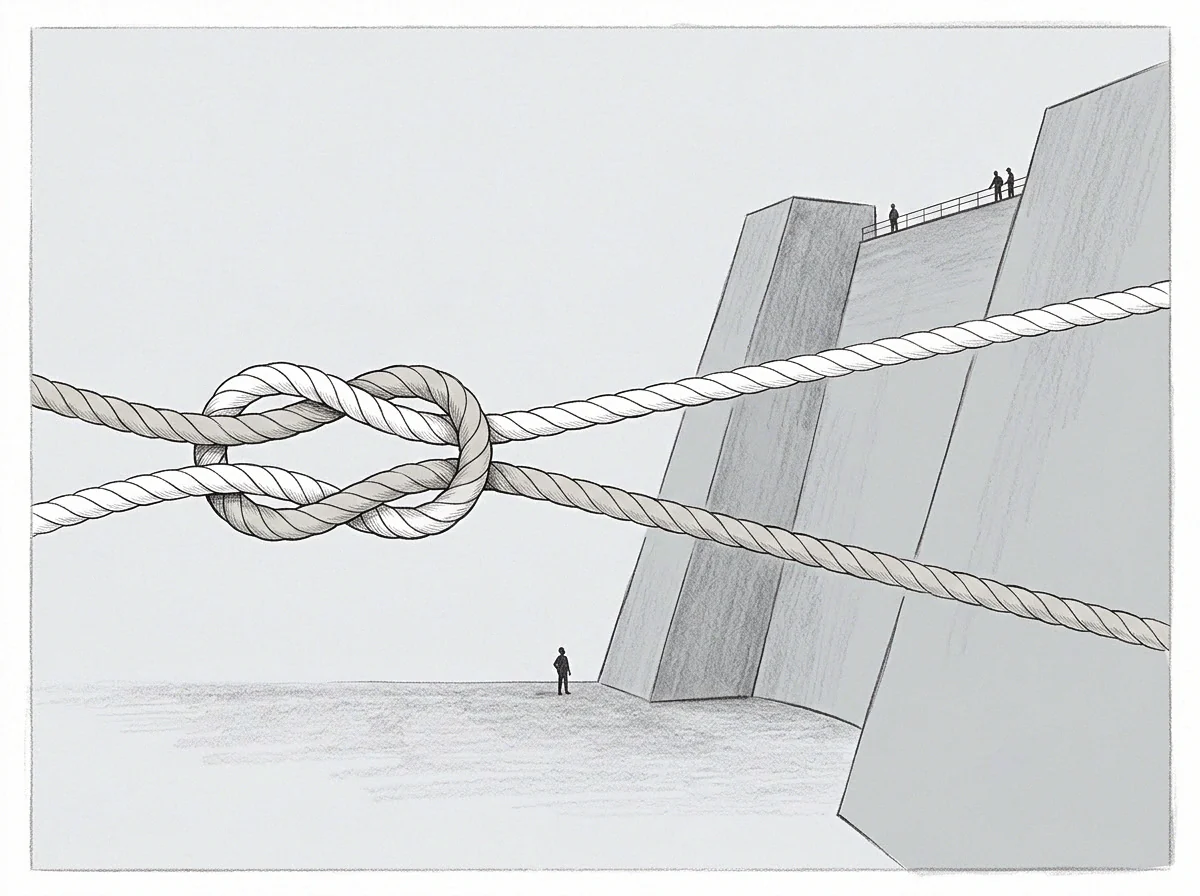
Drafting history records preliminary proposals while the executed text establishes enforceable obligations.
The written deal reflects what was agreed, while prior exchanges reflect what was rejected.
Proof
Human recollection of precontractual conversations degrades rapidly over time, altering key numerical assumptions and responsibility allocations. Memory alters details. When disputes occur two years into an operational partnership, individuals remember the initial negotiations through the lens of their present circumstances.
A participant who conceded a point during early talks often reconstructs their recollection to believe they never yielded.
The reliance on objective interpretation standards exists precisely because human memory is an unreliable record of contractual consensus. Written documentation created at the time of execution provides an unyielding benchmark that withstands memory drift.

What Survived the Drafts?
Verbal concessions made during informal working sessions frequently disappear during final contract assembly. A negotiator might agree to relaxed payment terms during a phone call, yet the subsequent contract draft maintains a strict thirty-day settlement requirement. If the receiving party signs the contract without inserting the relaxed terms, the signed document governs.
Silent terms fail.
The legal system presumes that rational commercial actors read and understand the documents they sign. A party cannot claim that preliminary oral promises survive the execution of an inconsistent written instrument. Proof demands artifacts.

Latent Ambiguity and Commercial Purpose
When language admits two reasonable commercial interpretations, objective review allows reference to surrounding factual context. Latent ambiguity occurs when contract language appears clear on its face but becomes ambiguous when applied to real-world facts. Context alters meaning.
In such instances, external reviewers examine objective negotiation history solely to resolve the specific ambiguity.
Reconstructive memory research confirms that confidence in recall correlates weakly with factual accuracy. Parties frequently exhibit absolute confidence in misremembered negotiation details. The objective standard neutralizes this psychological vulnerability by requiring external, physical proof before modifying the ordinary meaning of written language.
Latent ambiguity permits reference to objective surrounding facts while keeping private intent inadmissible.
Commercial reliance on precontractual notes fails when signatories rely on early working assumptions:
- Unintegrated emails function as informal discussions while executed contracts establish binding terms.
- Deleted draft clauses demonstrate that a specific obligation was considered and deliberately removed from the final instrument.
- Verbal assurances offered by mid-level negotiators lack authority when contradicted by explicit text in the signed agreement.
- Preliminary financial models serve as internal projections prior to formal incorporation.
Rules of construction favor the plain text over remembered conversations in every dispute over performance benchmarks.

File
Take an enterprise dispute where two technology providers structured a revenue-sharing agreement across two years of operation. Assume Party A agreed to supply core infrastructure while Party B managed customer distribution. During eight months of precontractual exchanges, the parties exchanged forty email threads and five draft agreements.
Early email discussions suggested that Party A would receive a sixty percent revenue split if distribution reached ten thousand active corporate accounts within twelve months.
When the final contract was prepared, the revenue split clause was rewritten to state that Party A would receive fifty percent of net revenue derived from corporate accounts, with no reference to the ten thousand account threshold. Party A signed the agreement without requesting a correction. Eighteen months later, corporate accounts reached fifteen thousand.
Party A demanded sixty percent of net revenue, claiming that early email correspondence established the true intent of the parties. Party B refused, standing on the written fifty percent provision.

Walkthrough of the Disputed Milestone
Party A initiated arbitration, seeking to introduce the precontractual email threads as proof that the fifty percent figure in the final contract was a typographical error or an incomplete statement of their bargain. Party A presented detailed internal notes and testimony from their lead negotiator, who swore that neither side intended to abandon the sixty percent benchmark for high-volume distribution. Text governs liability.
The arbitration tribunal applied objective interpretation standards to evaluate the claim. The tribunal first examined the face of the contract, finding that the phrase specifying fifty percent of net revenue derived from corporate accounts was grammatically complete and commercially unambiguous. The contract contained a standard integration clause declaring that the written document superseded all prior negotiations, representations, and draft agreements.
Party A argued that precontractual emails proved a mutual mistake that justified rectifying the written clause. The tribunal rejected the emails as inadmissible to alter the unambiguous text. The tribunal observed that during the final draft exchange, Party B had modified the draft from sixty percent to fifty percent, and Party A had returned the signed signature page without objection.
Intent stays unwritten.
The tribunal determined that whether Party A made a unilateral mistake or overlooked the change during review, the objective interpretation rule barred using early negotiation emails to vary clear written terms. Party A was bound by the fifty percent split, incurring an annual revenue shortfall of four hundred thousand dollars compared to their subjective expectations. Silence carries costs.
A clear integration clause transforms precontractual email chains from binding evidence into historical background.
The contract specified that any modification of payment terms required a formal written amendment executed by authorized representatives of both entities.
Clause
Designing resilient commercial agreements demands clear structural boundaries between preliminary exchanges and enforceable promises. Drafters must manage the transition from informal negotiations to formal execution to prevent unstated assumptions from clouding contract interpretation. Dates fix facts.
Effective contract design incorporates specific drafting mechanisms that reinforce objective interpretation standards. These mechanisms protect the written instrument from subjective claims and reconstructive memory disputes.

Structuring the Primary Record
Formal governance protocols convert ongoing operational adjustments into dated written addenda. When negotiating complex agreements, entities should utilize clear markers on early documentation. Unstated terms vanish.
Marking preliminary documents as subject to contract ensures that draft terms cannot be construed as binding obligations prior to formal execution.
Commercial entities reduce interpretation risk by establishing a structured workflow during contract formation:
- Apply standard subject-to-contract headers on all preliminary term sheets, presentation decks, and email exchanges.
- Maintain a centralized digital repository of all draft iterations with explicit change-tracking records.
- Conduct a dedicated audit comparing preliminary business term sheets against the final written instrument prior to signature.
- Include an explicit merger clause that specifically identifies and revokes all prior drafts, email agreements, and verbal statements.
- Establish an exclusive written amendment procedure requiring formal signatures for any subsequent variation of contractual terms.
The open question remains whether emerging digital negotiation platforms, which index every draft comment and chat message, will lead tribunals to expand contextual admissibility or reinforce strict objective text adherence.