
Preserving Diligence Evidence Against Contractual Non Reliance Clauses
Preserving diligence evidence requires exporting timestamped data room archives and converting key pre-closing metrics directly into express contract schedules.
Disclaimer
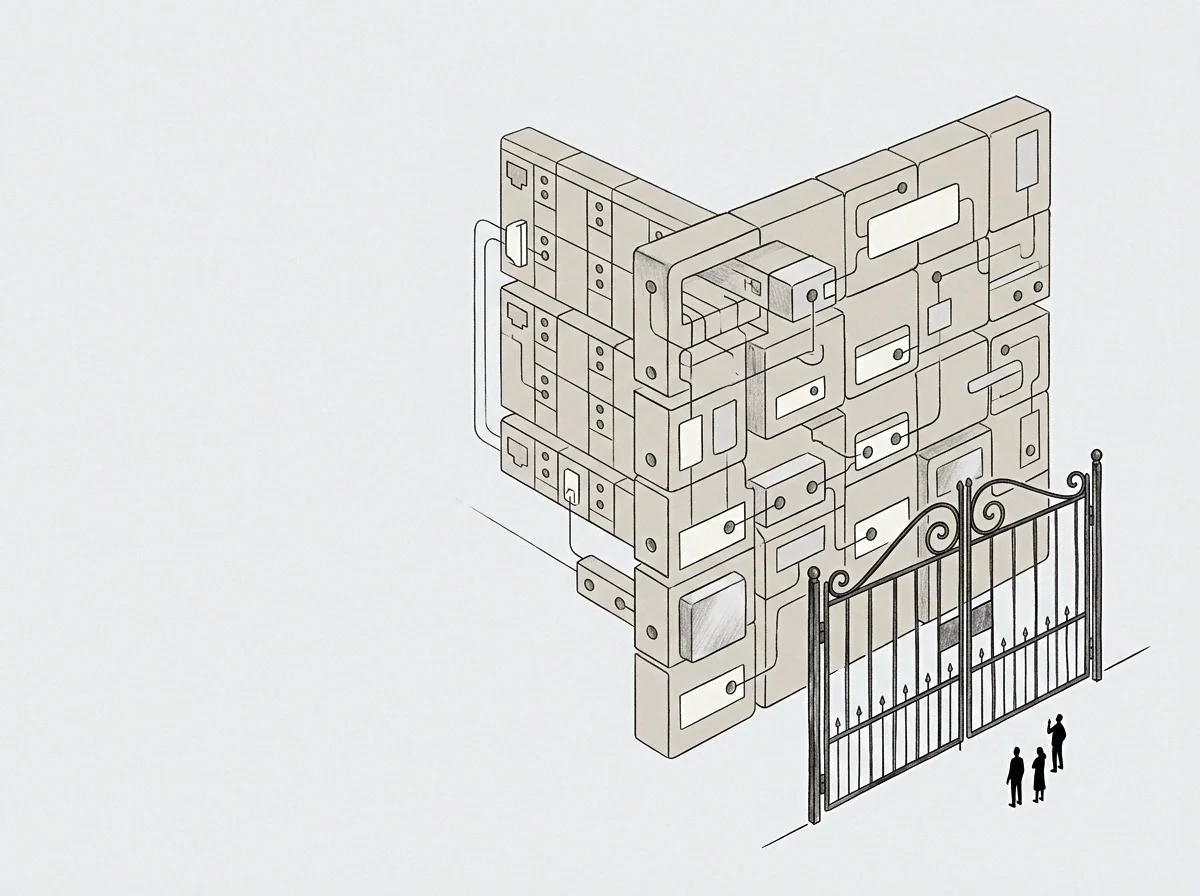
Acquisition agreements routinely contain merger provisions that negate prior statements. Pitch decks carry no contractual force. Oral assurances evaporate at closing.
During negotiations, buy-side deal teams gather pitch decks, customer churn spreadsheets, technical architecture diagrams, and management commentary. Sellers routinely supply optimistic projections and operational claims in preliminary virtual data rooms. Once the transaction advances to the definitive contract stage, seller counsel inserts standard non-reliance provisions.
These provisions state that the buyer relies solely on the express representations written into the purchase agreement. All extra-contractual statements, pre-closing emails, and diligence Q&A responses are legally extinguished by that single clause.
Integration Mechanics
Standard transactional boilerplate establishes that the written contract contains the final agreement. Integration provisions merge prior negotiations into the signed text. When a contract includes an express non-reliance clause, the buyer legally disclaims reliance on any representation outside the document.
This contractual bar operates independently of whether pre-closing statements were written, spoken, or presented in formal slides. Written integration wipes prior statements.
Negotiation dynamics create an informational asymmetric trap. Buy-side operators spend months reviewing diligence files to build financial models and valuation assumptions. Buy-side teams often assume that keeping copies of seller slide decks protects their recourse if operational facts prove false.
Contract law enforces the written text over negotiation history. If an asset performance figure sits in a diligence deck but fails to appear in Section 3.12 of the purchase agreement, the non-reliance clause bars a breach of contract claim based on that figure.
Pre-closing presentation materials and verbal answers lose all legal standing the moment a non-reliance clause is signed.

Evidentiary Erasure
Pre-closing pitch decks, financial models, and email exchanges lose legal standing upon execution. Sellers insist on non-reliance clauses to establish transaction finality and limit post-closing exposure. Buyers who accept generic non-reliance language without transferring diligence findings into contractual schedules surrender their ability to claim reliance on pre-closing misstatements.
Silence transforms assertions into opinions. When a dispute arises regarding post-closing revenue shortfalls, the court examines the contract text rather than the diligence folder. Extracontractual claims face strict exclusion.
The cost of accepting an uncarved non-reliance provision without binding critical diligence facts into contractual warranties surfaces when post-acquisition performance declines and legal recourse is barred by the clear text of the integration clause.

Ledger
Contemporaneous documentation captures technical metrics and revenue figures during prospective investigation. Diligence logs function as historical evidence when negotiating contract schedules. When buyers maintain structured records of every representation made during diligence meetings, they create an evidentiary base that forces sellers to validate specific operational claims inside the contract.
Memory reconstructs the diligence room. The record fixes the date, the speaker, and the metric.

Diligence Tracking Matrices
Structured logs catalog every inquiry submitted to seller management along with verified written responses. A diligence tracking matrix records the exact date of submission, the file name, the seller representative who answered, and the precise quantitative claim. Timestamps establish contemporaneous knowledge.
Without a systematic logging procedure, diligence evidence dissolves into unverified meeting notes and fragmented email chains.
Buy-side teams that standardize evidence preservation track four distinct diligence failure modes that routinely undermine post-closing recovery efforts.
- Unlinked Document Extracts referencing seller metrics without capturing the original source file, date stamp, or seller author context.
- Verbal Clarifications Left Unconfirmed where seller executives explain operational anomalies in meetings without subsequent written verification in the diligence repository.
- Data Room Revisions where updated spreadsheets overwrite earlier uploads without the buy-side team logging the historical metric change.
- Informal Side Communications containing key operational guarantees sent via instant message channels outside the official diligence request tracker.
Preserving evidence against non-reliance clauses requires comparing how different diligence formats survive standard integration provisions upon contract execution.
| Diligence Evidence Format | Pre-Closing Storage Method | Legal Survival Under Integration Clause | Required Preservation Mechanism |
|---|---|---|---|
| Management Pitch Deck | Virtual Data Room Upload | Extinguished by Standard Non-Reliance | Convert key metrics into express Warranty Schedules |
| Diligence Q&A Spreadsheet | Email Attachment / Tracker | Extinguished Unless Referenced | Attach as Disclosure Schedule Exhibit |
| Executive Verbal Statement | Personal Meeting Notes | Completely Barred | Reduce to written representation in Agreement |
| Third-Party Technical Audit | Independent Report File | Barred Unless Explicitly Cited | Reference in Specific Indemnity Clause |

Data Room Governance
Sellers frequently restrict access or modify virtual repositories immediately prior to transaction completion. Buy-side teams must export complete, timestamped archives of the entire virtual data room at the moment diligence closes. Unsigned notes yield zero indemnity.
Storing data room index snapshots with cryptographic hash values establishes the exact state of seller disclosures at signing. Cognitive research on commercial negotiation memory demonstrates that deal teams misremember negotiating discussions by over thirty percent after six months. The dated electronic archive remains fixed while human recollection shifts.
An unverified verbal statement recorded in private notes carries no weight against an integrated contract disclaimer.
The specific contract term specifying that diligence tracker exhibits form an integral part of the seller disclosures alters the evidentiary threshold, allowing buyers to introduce pre-closing written statements during breach disputes.
Warranties
Escalating unverified statements into express contractual terms bridges the gap between diligence and legal recourse. The disclosure schedule governs recovery. Buy-side counsel uses contemporaneous diligence logs to draft targeted representations.
If a seller claims ninety-eight percent annual customer retention during diligence, that statistic must be written into Section 3.18 of the definitive agreement. Specificity defeats general integration clauses.
Schedule Conversion
Factual assertions made during management presentations move into formal transaction exhibits through explicit itemization. Sellers often resist converting presentation claims into contractual warranties. They offer verbal reassurances that their diligence statements were accurate.
Buyers who accept verbal reassurances forfeit legal remedies. Converting diligence items into contract schedules forces sellers to either verify the factual statement under threat of contract liability or disclose exceptions on the formal disclosure schedule. Formal schedules override verbal assurances.
- Extract Key Diligence Claims from management decks, written Q&A trackers, and technical evaluation reports.
- Draft Specific Warranties that incorporate exact operational figures, dates, and customer metrics into the agreement body.
- Cross-Reference Disclosure Exhibits to ensure seller pre-closing disclosures match the verified diligence tracker snapshot.
- Insert Fraud Carve-Outs within the non-reliance section to protect recourse against intentional misrepresentation.
What Form of Record Preserves Intentional Misrepresentation Proof?
Written logs containing verified dates, direct quotes, and identified speakers establish explicit reliance. When sellers knowingly provide false data in diligence to induce a sale, buyers must overcome the non-reliance bar by proving intentional fraud. Delaware court decisions show that general integration clauses do not bar fraud claims if the agreement lacks explicit non-reliance language.
However, when the agreement contains clear, unambiguous non-reliance wording, Delaware courts enforce the bar against extra-contractual fraud claims unless the contract expressly carves out fraud based on specific written diligence materials.
Specific factual metrics written directly into transaction schedules survive merger provisions that extinguish general diligence decks.
Diligence claims that are converted into explicit representations inside the contract text retain full legal enforceability regardless of broad integration provisions.

Fraud
Jurisdictional standards govern whether broad non-reliance provisions bar extra-contractual tort actions. The legal effectiveness of a non-reliance clause depends on the law governing the contract. In corporate acquisitions, choice of law provisions determine whether sellers can use integration clauses to shield deliberate misrepresentation during diligence.
The closing execution seals the record.

Jurisdictional Variance
Delaware chancery courts strictly enforce broad non-reliance language against common-law deceit claims unless explicit carve-outs exist. Delaware jurisprudence holds that sophisticated parties who disclaim reliance on extra-contractual statements cannot later claim they were fraudulently induced by those same statements. New York courts similarly enforce clear disclaimers of reliance, provided the disclaimer targets the specific matter being disputed.
Other jurisdictions allow extra-contractual fraud claims even in the presence of general integration language, holding that public policy prohibits contracts from disclaiming liability for intentional deceit.
Legal findings on Delaware integration enforceability rest on appellate court rulings regarding sophisticated party freedom of contract. These principles would shift if state legislatures enacted statutory mandates requiring mandatory diligence fraud carve-outs in commercial transactions. Contemporary legal research indicates that buy-side teams fail to insert explicit fraud carve-outs in over forty percent of private middle-market acquisitions.
In engineering laboratory environments, physical logbooks are bound, numbered, and signed daily to ensure continuous, unalterable proof of discovery dates. Commercial transaction diligence requires the same strict physical and digital continuity to survive legal challenge.
Uncertainty exists regarding how federal courts interpret non-reliance disclaimers when evaluating securities fraud actions under Rule 10b-5. Federal courts reject contractual disclaimers that attempt to waive compliance with federal securities statutes, creating tension with state contract law. Deal operators manage this uncertainty by securing dual-jurisdiction legal opinions and ensuring that core diligence representations are embedded directly into the written agreement text rather than relying on tort litigation.
Broad non-reliance clauses in Delaware contracts bar extra-contractual fraud claims unless intentional misrepresentation is explicitly carved out.
The seller intended for the buyer to rely solely on the final written schedules, and any reliance on prior presentation slides was disclaimed by explicit contractual agreement.

Audit
Post-closing litigation shifts focus from retrospective memory to surviving written records. Contemporaneous notes hold evidentiary weight. When a target company fails to deliver expected operational performance, buy-side executives conduct post-closing audits of pre-acquisition disclosures.
They cross-reference the verified data room archive against the final contract schedules. If diligence evidence was systematically logged, converted into contract warranties, and preserved against non-reliance disclaimers, the buyer retains clear leverage during post-closing indemnity claims.
Preserving diligence evidence requires rigorous discipline throughout the acquisition process. Buy-side teams must export timestamped data room archives, maintain structured inquiry trackers, convert critical operational figures into contractual schedules, and draft clear fraud carve-outs inside integration provisions. Written records outlast remembered conversations, and structured evidence preservation ensures that diligence research provides actionable protection throughout the life of the transaction.