
Preserving Extrinsic Negotiation Records Across Final Transaction Contracts
Extrinsic negotiation records survive integration clauses only when explicitly incorporated by reference, attached as schedules, or admitted under narrow ambiguity exceptions.

Table
Two negotiating teams spend seven months drafting a fifty-page asset purchase contract, exchanging ninety preliminary email chains, eleven slide decks, and six redlined revisions. The buyer relies on an explicit revenue conversion metric stated in an early technical memorandum, yet the executed agreement contains a standard four-line integration clause stating that the written document contains the entire agreement and supersedes all prior communications. When performance metrics diverge six months post-closing, the buyer attempts to introduce the preliminary technical memorandum to clarify how conversion rates were calculated.
The arbitrator applies the parol evidence rule, treats the integration clause as conclusive evidence of complete integration, and refuses to read the email exchanges. The signature closes the door.

Pre-Contractual Ambiguity and the Consolidation Clause
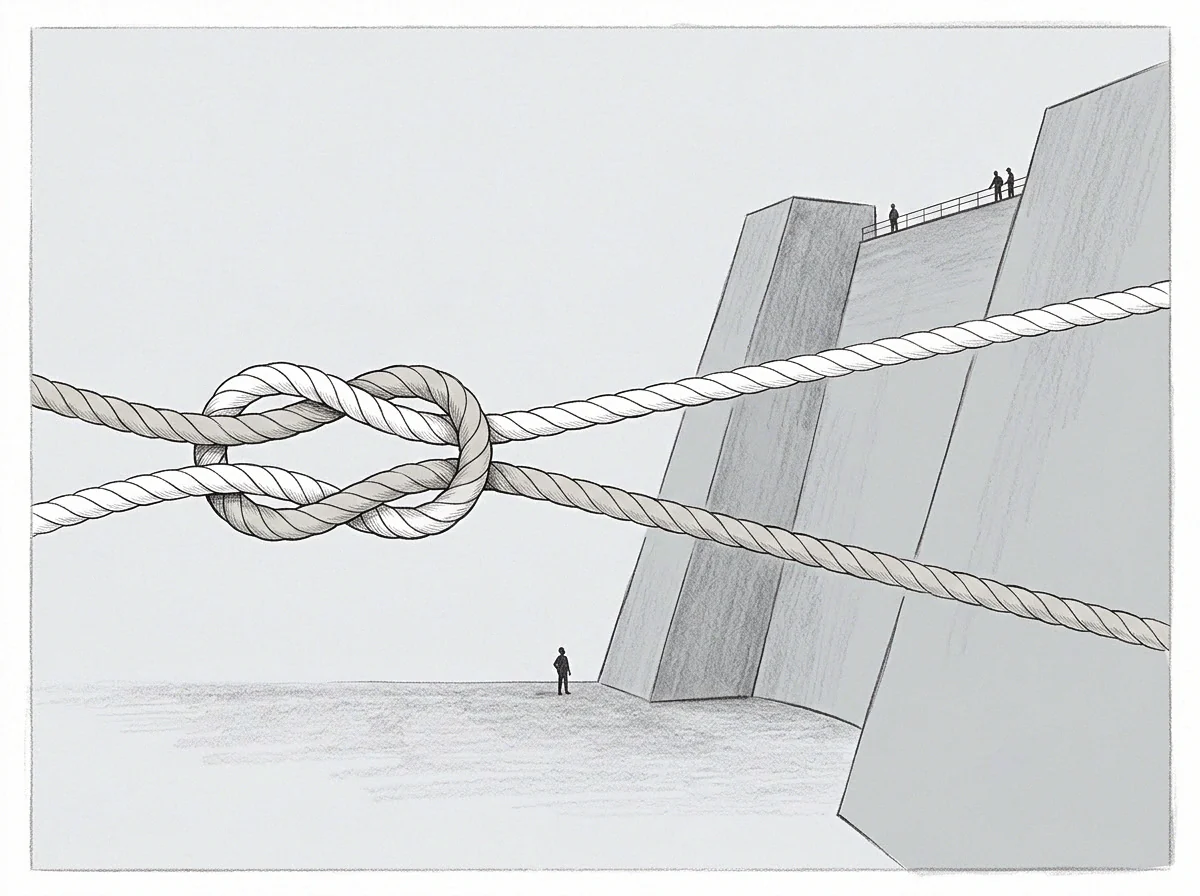
The principal barrier to using extrinsic negotiation records in contract interpretation is the merger clause, an express contractual provision affirming that the written contract embodies the final and complete expression of the terms. Under standard contract law treatises and provisions such as Section 213 of the Restatement Second of Contracts, a completely integrated agreement discharges prior agreements or terms to the extent that they fall within its scope. Courts routinely treat boilerplate merger language as an absolute bar to extrinsic evidence, creating an evidentiary wall between the final contract text and the negotiation notes that generated it.
The legal doctrine assumes that if a term was discussed during preliminary bargaining but omitted from the final instrument, the parties purposefully abandoned that term.
Negotiators frequently misjudge how completely an integration clause wipes out preliminary context. While background discussions clarify technical definitions, baseline assumptions, and operational methodologies, standard integration terms categorize those pre-contractual records as legal irrelevancies once execution occurs. The gap between what negotiators intended to preserve and what the formal text excludes creates immediate vulnerability when disputes emerge over performance standards.
- The initial preliminary negotiation phase generates untracked assumptions, projections, and preliminary commitments across scattered email threads and informal call summaries.
- The active formal drafting phase introduces technical terms that rely implicitly on early background summaries without incorporating those documents into the contract text.
- The execution phase installs a blanket integration clause that legally nullifies all prior unattached representations, warranties, and explanatory communications.
- The post-closing dispute phase reveals that courts and arbitrators exclude pre-contractual evidence unless an explicit structural exception was embedded directly into the instrument.
Unwritten preliminary representations fail to alter integrated contract obligations once formal execution concludes.
When parties leave critical negotiation records unattached to the final contract structure, they exchange enforceable rights for informal memory. The loss of those extrinsic records during litigation leaves judges and arbitrators to interpret ambiguous phrases using only dictionary definitions or adverse inferences. The financial cost of an excluded background memo appears as an unrecoverable operational liability during contract enforcement.

Schedule
Preserving extrinsic context within a fully integrated contract demands deliberate structural design before execution occurs. Contract drafters use several explicit legal channels to bind prior negotiation records to the final transaction instrument, overriding the default exclusionary impact of standard merger clauses.

Technical Attachment Mechanics for Prior Drafts
Incorporation by reference allows parties to identify separate, extrinsic documents within the main contract text and state that those external files form part of the agreement. To survive judicial scrutiny, the referring language must clearly identify the extrinsic document by exact title, date, version number, and physical or digital location. Loose references to prior proposals or generic correspondence fail to meet the specificity required by appellate courts.
When incorporated accurately, the extrinsic record retains its legal standing alongside the primary operational clauses.
Another structural technique uses explanatory addenda and schedules attached directly behind the signature page. Schedules function as functional extensions of the agreement, carrying operational formulas, baseline data, historical accounting practices, and step-by-step methodologies that explain vague contractual terms. Placing explicit definitions inside an attached schedule prevents the parol evidence rule from excluding those historical metrics during subsequent litigation.

Structured Comparison of Preservation Channels
Choosing an appropriate preservation mechanism involves evaluating judicial acceptance against drafting effort and exposure during legal discovery. Each structural tool provides a distinct level of protection against parol evidence preclusion.
| Preservation Channel | Parol Evidence Exclusion Risk | Drafting Effort | Judicial Acceptance Level | Primary Operational Role |
|---|---|---|---|---|
| Recital Incorporation | Moderate | Low | Moderate | Establishing historical intent and underlying deal rationale. |
| Explanatory Addendum | Low | Moderate | High | Defining complex technical metrics and conversion formulas. |
| Referenced Schedule | Very Low | High | Very High | Attaching baseline data sets, technical standards, and blueprints. |
| Side Letter Integration | Low | Moderate | High | Carving out specific non-standard covenants and operational exceptions. |
Side letters present a unique preservation path when parties wish to keep specific preliminary agreements binding without altering the primary transaction contract. To prevent a main contract merger clause from invalidating a side letter, the main contract must explicitly acknowledge the side letter’s existence, or the side letter must contain express language stating its intentional survival alongside the integrated deal. Silence yields no proof.
Incorporating preliminary documentation by explicit reference inside the contract body legally renders those external files integrated context.
Contractual terms that expressly cross-reference external technical memos ensure that subsequent tribunals read those memos as contemporaneous contractual definitions. Executing a contract without explicit references to underlying technical schedules converts background metrics into inadmissible extrinsic chatter. An integration clause containing an explicit exception for designated side letters preserves those external terms while maintaining the main contract’s general merger protection.

Margin
Legal exceptions to the parol evidence rule exist, but relying on judicial discretion during litigation introduces significant uncertainty. Courts permit extrinsic evidence under narrow statutory exceptions, including proving fraud, showing mutual mistake, establishing latent ambiguity, or defining specialized industry custom.

Which Extrinsic Communications Survive an Integration Clause?
Latent ambiguity provides one of the primary legal gateways for extrinsic negotiation records. A latent ambiguity occurs when contract language appears clear on its face but reveals multiple plausible interpretations when applied to real-world performance facts. Under Section 2-202 of the Uniform Commercial Code, extrinsic evidence of course of dealing, usage of trade, or course of performance may explain or supplement contract terms even in integrated writing.
Courts evaluate preliminary drafts, call records, and technical glossaries to determine which interpretation reflects the shared baseline of the contracting parties.
Consider a practical worked situation involving a corporate technology acquisition. Take two companies that negotiated a license for proprietary data management software over nine months. Assume the seller provided a pre-contractual technical specification matrix asserting that the software processes one million transactions per minute.
Assume the final contract contained an integration clause, a generic warranty disclaimer, and a clause stating the software would perform according to specifications attached in Schedule A. However, Schedule A omitted the transaction speed metric entirely, substituting vague language about standard commercial functionality.
When the software achieved only two hundred thousand transactions per minute post-closing, the buyer sued for breach of contract and promissory fraud. The buyer produced the preliminary specification matrix and preliminary email confirmation from the seller’s chief technology officer. The court evaluated whether the pre-contractual specification matrix was admissible under two distinct legal theories:
Under the breach of contract claim, the court applied the parol evidence rule and held that Schedule A fully superseded the preliminary specification matrix. The merger clause precluded using preliminary sales decks to add a specific quantitative performance term that was omitted from the executed agreement. The text rules the dispute.
Under the promissory fraud claim, the buyer argued that the preliminary specification matrix constituted an intentional fraudulent inducement. The court examined whether the fraud exception applied, noting a jurisdictional divide. In strict jurisdictions, extrinsic evidence showing fraud is inadmissible if the alleged pre-contractual representation directly contradicts an express disclaimer or specific term inside the integrated contract.
In broader jurisdictions, pre-contractual written records are admitted solely to prove that one party knowingly made false representations of material fact to induce execution. Context alters every clause.
Extrinsic evidence regarding trade usage or baseline technical definitions remains admissible to interpret ambiguous contract terms when the integrated text contains latent obscurity.
The litigating party attempting to introduce prior negotiation emails must demonstrate that the written term cannot be understood without external context. When the opposing party points to a generic integration clause and argues that the written agreement expresses the absolute end of negotiations, the court defaults to excluding the underlying correspondence.
The contract was drafted by experienced lawyers and contains no mention of that preliminary metric.

Seat
Negotiators and operational leaders require systematic habits to ensure that critical preliminary records survive transaction closing in an organized, legally accessible format. Memory drifts within weeks, making contemporaneous documentation the primary defense against subsequent contract reinterpretation.
Operational Discipline for Deal Negotiators
Maintaining clear records during transaction negotiations prevents the loss of historical context. Deal leads who organize pre-contractual records lower their organization’s litigation exposure by establishing timestamped evidence of shared intent.
- Contemporaneous Deal Log establishing a chronological index of all written proposals, draft versions, call summaries, and formal presentations exchanged across negotiating teams.
- Term Sheet Traceability linking specific final contractual provisions back to early term sheet line items to prove the continuous progression of negotiated terms.
- Version Control Repository storing every redlined draft in an unalterable read-only format with full metadata preservation to show which party modified specific clauses.
- Explanatory Memorandum File capturing internal side discussions and technical clarifications written at the exact moment key provisions were modified during negotiation rounds.
A rigorous version control repository provides historical clarity when contract language undergoes major changes during late-night drafting sessions. Drafts exchanged between counsel show the exact sequence of additions, deletions, and compromises. When an ambiguous phrase survives into the final executed agreement, reviewing the sequence of redlines shows which party introduced the phrasing and which party withdrew competing language.
Courts frequently apply the rule of contra proferentem, interpreting ambiguous language against the drafting party, making draft trail preservation essential.
Unwritten assurances vanish quickly. When a negotiator accepts an oral clarification regarding a complex contract clause, that oral clarification carries minimal legal weight once the contract is signed. Drafting a contemporaneous email confirming the oral clarification, securing a written reply acknowledging the understanding, and embedding that exchange into an attached transaction exhibit converts an unprovable conversation into a permanent record.
What specific administrative steps did the negotiating team execute prior to signing to verify that every critical side agreement was explicitly cross-referenced within the integrated contract?

Archive
Long-term preservation of transaction records requires structural data management that lasts for the entire operational life of the contract. Transactional files stored in personal email accounts or ephemeral chat applications often disappear as personnel change, leaving the organization defenseless when post-closing disputes arise years later.

Long-Term Record Retention Across Transactional Lifecycles
Organizing a permanent contract archive requires securing both the executed contract and its complete negotiation record. Organizations establish digital archives that link the signed contract directly to its corresponding negotiation history, including redline trails, technical attachments, side letters, and formal board approval decks. Preserving metadata, including sender verification, timestamps, and digital signatures, satisfies the authentication standards required under Rules 901 and 902 of the Federal Rules of Evidence.
The timeline holds firm. The legal cost of assembling scattered negotiation records during litigation far exceeds the minor ongoing administrative expense of maintaining structured transactional archives. An organization that systematically archives its preliminary deal records maintains its leverage during post-closing renegotiations, audits, and judicial proceedings.
Preserving timestamped negotiation metadata in a centralized unalterable repository secures contractual context against employee turnover and memory decay.
Digital archive structures must enforce immutable storage conditions, preventing retrospective modification of negotiation records. Maintaining hash-verified file trees establishes that preliminary memos remain in their original form, defeating allegations of post-hoc record tampering. The record outlasted the team.
An organized archive containing full contemporaneous draft histories turns lost negotiation context into verifiable legal evidence.