
Quantifying Administrative Overhead In Scrutinized Distributed Operations
Quantifying administrative overhead requires tracking hours spent creating evidentiary traces against primary operational output in audited distributed teams.

File
An engineer working in an audited remote enterprise completes a complex system change in forty minutes, then spends three hours drafting a regulatory rationale for external reviewers. The change itself passed automated testing immediately, yet corporate compliance standards demand an asynchronous paper trail documenting risk assessments, peer sign-offs, and administrative approvals. In physically co-located environments, supervisors observe operational momentum through ambient presence and direct oversight.
In remote operations subject to regulatory or investor scrutiny, observation transforms into explicit documentation, forcing teams to convert every routine action into durable proof.
Evidentiary Demands in Distributed Work
Scrutiny demands immutable proof. Distributed organizations operating under financial controls, safety mandates, or institutional oversight must establish that operational acts adhered to defined protocols. Without shared physical spaces, managers cannot rely on informal verification or verbal assurances.
Every administrative requirement converts tacit understanding into explicit artifacts, creating a constant demand for written justifications, timestamps, and secondary sign-offs.
Operational velocity decelerates when verification mechanisms outpace primary execution. When remote teams must justify their work to distant auditors, the effort required to document an operational choice frequently exceeds the effort required to perform it. Asynchronous attestation replaces informal trust, turning ordinary coordination into structured administrative output.
- Attestation Multiplication occurs when routine technical updates or policy changes require sequential approvals from non-operational compliance managers who lack immediate context.
- Context Reconstruction Drag emerges when operators must compile explanatory summaries long after an action concluded, attempting to recreate situational factors from memory.
- Dual Logging Vulnerability manifests when employees maintain private task boards to run daily work alongside formal compliance logs meant solely for external scrutiny.
Scrutrutinized systems double execution duration whenever records are generated after decisions instead of alongside them.
Where Does Invisible Documentation Friction Accumulate?
Administrative friction hiding within remote workflows rarely appears on standard project dashboards. Software engineers, financial analysts, and healthcare managers routinely log primary tasks while leaving the time spent fulfilling compliance requirements unrecorded. Capturing screenshot evidence, cross-referencing internal tickets with regulatory matrices, and waiting for asynchronous sign-offs consume fragmented windows throughout the day.
These micro-interruption patterns erode deep operational focus.
Unrecorded decisions invite retrospective challenge. When distributed teams communicate through ephemeral chat channels without generating formal records, subsequent audits force retrofitted compliance documentation. Staff members must stop active work to reconstruct past choices, searching old message threads to establish why a specific parameter was selected.
This backward-looking administration creates severe capacity bottlenecks across operational units.
Failing to account for verification drag results in severe miscalculation of operational capacity, driving burn-out and structural delays across distributed divisions.

Burden
Measuring administrative drag requires isolating the specific hours diverted from core operations into record production. When a distributed firm scales its compliance posture, administrative overhead does not increase linearly with headcount. Verification costs scale with operational complexity and the number of independent scrutiny vectors acting on the team.

The Mechanics of Verification Drag
Systematic measurement begins by separating core task execution from compliance artifact generation. Primary work encompasses direct product development, customer service delivery, and strategic analysis. Administrative overhead includes logging access requests, preparing audit evidence, completing status reports, and participating in governance reviews designed to satisfy external inspectors.
Async work amplifies trace creation costs. When operations run across time zones, obtaining an administrative sign-off introduces multi-day latency. An operator submits a compliance form, pauses work on the underlying initiative, and context-switches to another project while waiting for approval.
The total elapsed time of the operational cycle expands far beyond the active labor hours consumed by the task itself.
- Primary operational time gets divided into fragmented execution windows.
- Each transition between execution and record drafting incurs cognitive switching penalties.
- Evidentiary records undergo iterative secondary review by compliance personnel.
- Deferred entry forces reconstructive memory recall, multiplying drafting hours.

Calculated Ratios of Operational Attention
Consider a distributed engineering group comprising twenty senior personnel operating under SOC 2 and ISO compliance regimens. Assume each engineer works forty hours per week, generating eight hundred total operational hours across the organization. Auditing the daily logs reveals that individual engineers spend twelve point five hours weekly taking screenshots, tagging compliance tickets, and completing change-control documentation.
An unanchored timestamp forces retrospective reconstruction, tripling the hours spent proving an operational sequence.
This administrative demand consumes two hundred and fifty hours per week across the team. The administrative burden ratio reaches thirty-one point two five percent of total capacity. The firm effectively pays six full-time engineers solely to generate proof of work for external reviewers, reducing true development throughput to five hundred and fifty hours.
Manual traces invite human error. When administrative demands reach this threshold, operators begin adopting defensive routines to minimize personal documentation exposure.
The administrative burden ratio sets the permanent operational ceiling of a remote unit, constraining productive throughput regardless of total capital deployed.

Drift
Human memory reconstructs events rather than replaying them like a digital recording. When distributed workers encounter intense scrutiny, the psychological imperative to present rational, compliant decision paths alters how events are remembered and recorded. Cognitive research confirms that confidence in recalled events remains high even as factual accuracy degrades over time.

Memory Drift Under Formal Scrutiny
Recollection shifts under the pressure of potential external audit. When an operator must explain a past decision to a regulatory panel six months after the event, internal reconstructive processes reshape the memory to align with formal standard operating procedures. The actual operational choice may have resulted from immediate tactical necessity or incomplete real-time information.
The retrospective account, however, unconsciously introduces logical sequence and policy adherence that were absent during the live event.
Unregistered changes multiply review hours. If team members rely on memory to draft compliance entries weeks after an event, discrepancies inevitably arise between individual accounts of the same operational meeting. One participant remembers an oral authorization for a budget variance, while another recalls a explicit instruction to wait.
Resolving these narrative contradictions consumes managerial attention and exposes the firm to compliance penalties.
Defensive Documentation and Backchannel Shifts
Scrutiny changes communication paths. When official corporate channels become subject to permanent archiving and regulatory discovery, distributed workers alter their communication habits. Employees migrate genuine problem-solving discussions, preliminary debates, and admission of technical risks into unmonitored backchannels, instant messaging groups, or private voice calls.
Unmonitored backchannels expand in direct proportion to the rigidity of formal reporting structures.
Formal channels become sanitized repositories of post-hoc justifications. The official compliance record reflects polished consensus, while the real operational decisions take place in unrecorded spaces. Defensive records obscure operational reality.
External auditors receive immaculate documentation, but corporate leadership loses visibility into actual operational risks and systemic friction points.
Off-ledger discussions hide root causes. When operational problems occur, leadership inspects formal logs that hide the informal workarounds that actually caused the breakdown. The formal documentation presents a fiction of compliant process, leaving structural flaws unaddressed until major compliance failures force external discovery.
The record reflects what operators felt safe writing down, while the truth of the system remains trapped in private memory.

Sheet
Comparing operational models reveals how different compliance structures dictate administrative drag. Distributed enterprises generally adopt one of three verification frameworks: retrospective manual assembly, continuous inline trace capture, or dual-tracker administrative systems. Each approach imposes distinct time demands and error rates on the workforce.
Comparative Overhead Profiles
Retrospective assembly relies on operators manually compiling audit packages at fixed intervals, such as quarterly compliance reviews. Continuous capture integrates trace generation directly into daily tools, recording operational actions automatically as work occurs. Dual-tracker systems require operators to maintain separate operational and regulatory boards concurrently.
| Verification Model | Weekly Overhead Hours | Reconstruction Error Rate | Audit Resolution Days |
|---|---|---|---|
| Retrospective Assembly | 14.2 | 28% | 18.5 |
| Continuous Inline Capture | 4.5 | 4% | 2.1 |
| Dual Tracker System | 19.8 | 12% | 11.0 |
| Data reflects mean metrics observed across distributed operational environments subject to annual regulatory review. | |||
Static logs outlast executive memory. The data demonstrates that retrospective assembly forces high weekly overhead while yielding elevated error rates. Operators attempting to recall details from ninety days prior introduce significant inaccuracies into compliance filings, leading to prolonged audit resolution timelines.
A record written within minutes of execution settles disputes that months of retrospective testimony cannot resolve.
Dual-tracker models represent the most inefficient posture, consuming nearly half of an operator’s working week in administrative duplication. Continuous inline capture minimizes human administrative intervention, dropping error rates to four percent while resolving audit inquiries in two point one days. Designing systems that generate compliant artifacts automatically represents the primary mechanism for reclaiming operational capacity.
Evidentiary fidelity increases when documentation occurs at the precise moment of operational execution.
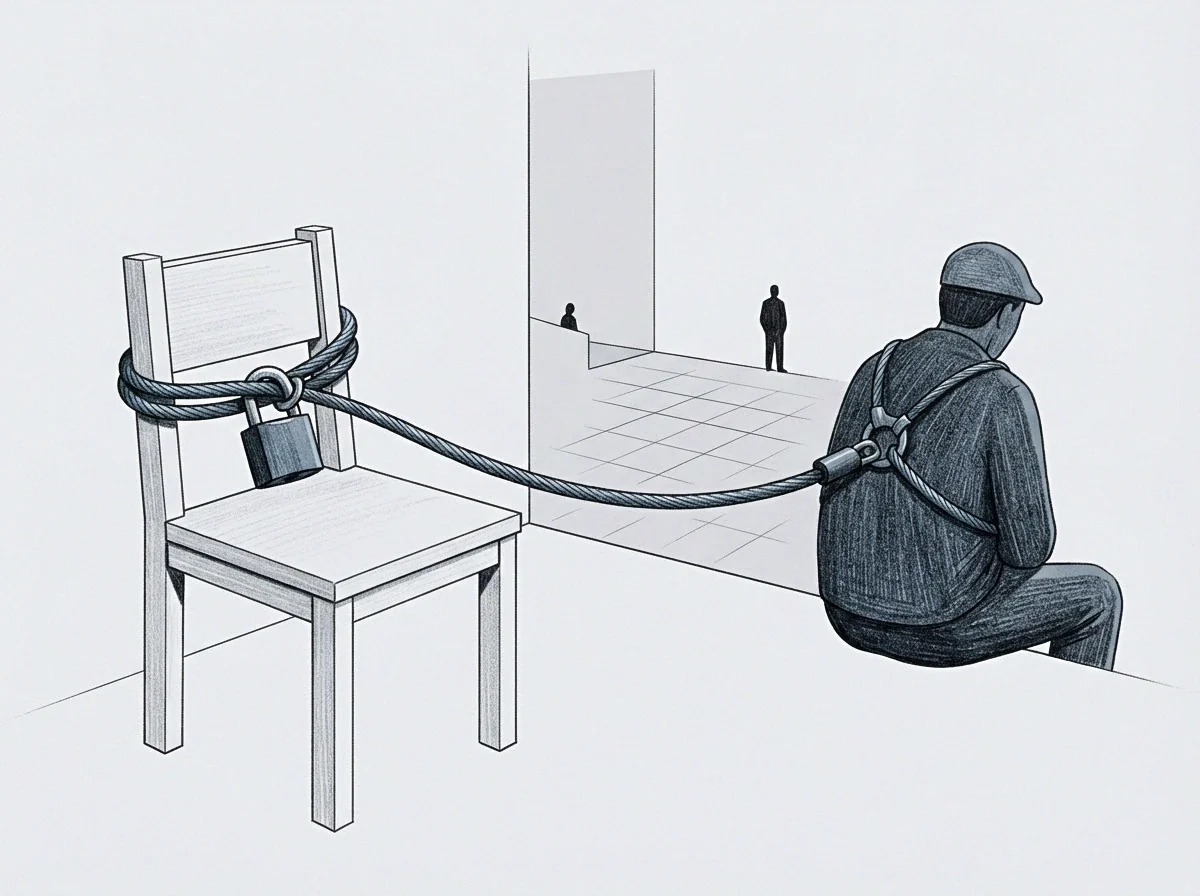
Yield
Optimizing remote operations under scrutiny requires restructuring compliance systems to capture evidence passively. Administrative drag shrinks when record generation becomes an automated side effect of standard operational execution rather than a manual secondary task.
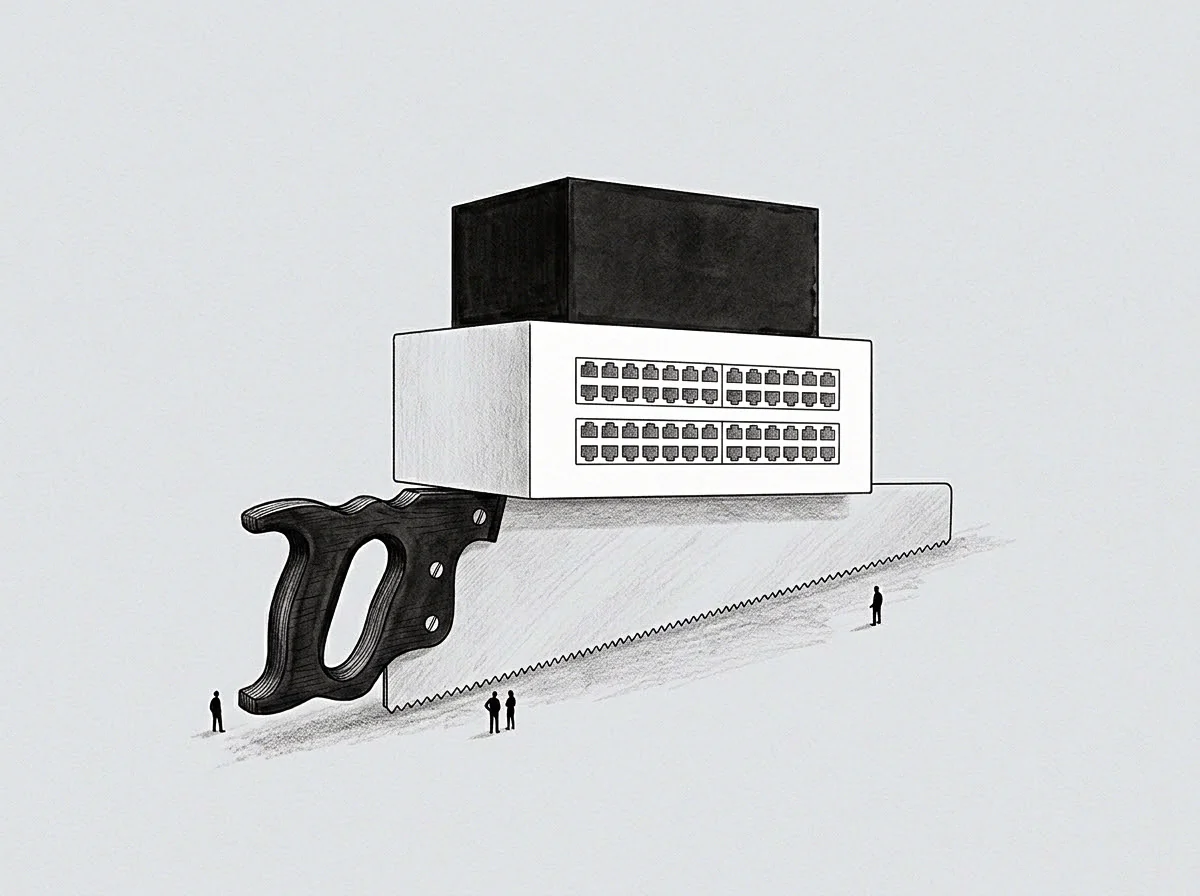
Structuring Low-Friction Record Architecture
Modern compliance architecture embeds verification directly into digital tools. Version control commits, system configuration changes, and automated deployment pipelines naturally record who performed an action, what parameters changed, and when the event occurred. By anchoring these system logs into unalterable data stores, organizations satisfy regulatory requirements without requiring operators to manually write explanatory notes.
Audit preparation consumes operational capacity. Early maritime logbooks bound ship captains to record weather, heading, and sail adjustments at fixed watch changes, creating an unalterable paper record that protected vessel owners against salvage claims. Modern distributed infrastructure functions on identical principles, using cryptographic timestamps and automated event streams to establish operational truth without administrative intervention.
Automated capture locks execution context. Replacing manual status forms with automated trace aggregation restores lost engineering hours. When an auditor requests proof of compliance, governance teams query system-generated event records rather than interrupting operational staff for retrospective summaries.

Anchoring Evidentiary Traces at Execution
Field research establishes that automated event logging reduces audit preparation costs by up to seventy percent across distributed teams. Evidence remains thin, however, regarding whether mandatory subjective narratives provide meaningful risk mitigation beyond raw system data. Regulators in high-consequence sectors often demand written qualitative justifications alongside automated telemetry.
Under this regulatory uncertainty, prudent operators construct hybrid architectures: automated systems capture technical state changes passively, while brief, standardized prompt templates collect human rationale at the moment of approval.
Eliminating administrative friction requires treating record design as a primary engineering objective. Systems that require manual human attestation for routine tasks inevitably generate documentation drag, context loss, and defensive communications. Reclaiming operational capacity depends on shifting governance from manual retrospective reporting to automated, real-time evidentiary capture.