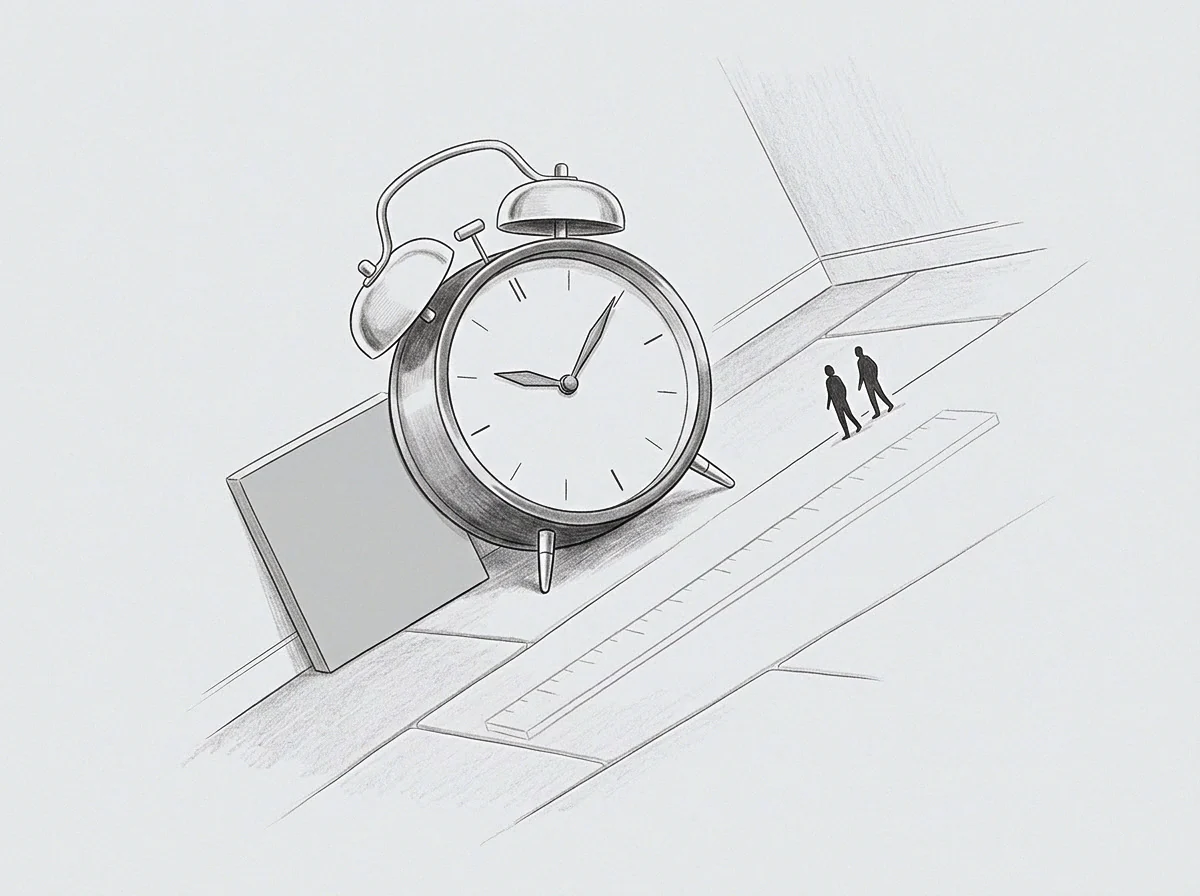
Meaning
Hardware or software registers designed to increment sequentially without ever decreasing, resetting or repeating prior numerical values guarantee strict uniqueness across operational sequence histories. A monotonic counter provides an unalterable scalar baseline that registers every event, transaction or authorization sequentially within isolated computing components or distributed databases. The mechanism governs sequence verification, replay attack prevention, and state progression tracking across secure enterprise environments.
Its utility collapses if a hardware fault allows register overflow, if memory volatility erases current states on power loss, or if unauthorized software layers bypass the sequential increment interface.
Sequential Increment
State progression operates under hard boundaries that accept only upward increment commands through protected register interfaces. When a system issues a state change, the monotonic counter moves strictly forward to the next integer value, immediately committing the update to non-volatile storage before releasing the transaction lock. Because prior numbers are never reissued, an auditor comparing two log entries determines chronological operational sequence by evaluating numerical values alone.
Hardware security modules incorporate these counters inside tamper-resistant silicon to prevent malicious attempts to roll back system software versions.
Replay Resistance
Digital security protocols rely on non-repeating numbers to invalidate captured transmissions broadcast by adversaries. By binding an authorization token to an incremented value from a monotonic counter, the validating engine rejects duplicate requests carrying previously observed sequence identifiers. This approach incurs minor write latencies, as non-volatile hardware writes require milliseconds to ensure registers survive power failures without corruption.
The administrative dividend appears during post-incident investigations, where gaps in sequential numbering expose missing records or unauthorized deletions immediately.
Exhaustion Boundary
Register size limits determine the operational lifespan of high-throughput sequencing systems before value saturation. When a 32-bit monotonic counter approaches its maximum ceiling of approximately four billion increments, systems must migrate to 64-bit architectures or halt processing to avoid integer wrapping failures. Implementing larger register sizes consumes additional persistent memory and cache capacity across millions of discrete transaction threads.
A monotonic counter guarantees unambiguous relative ordering across system events while remaining completely divorced from absolute calendar time measurements.