Meaning
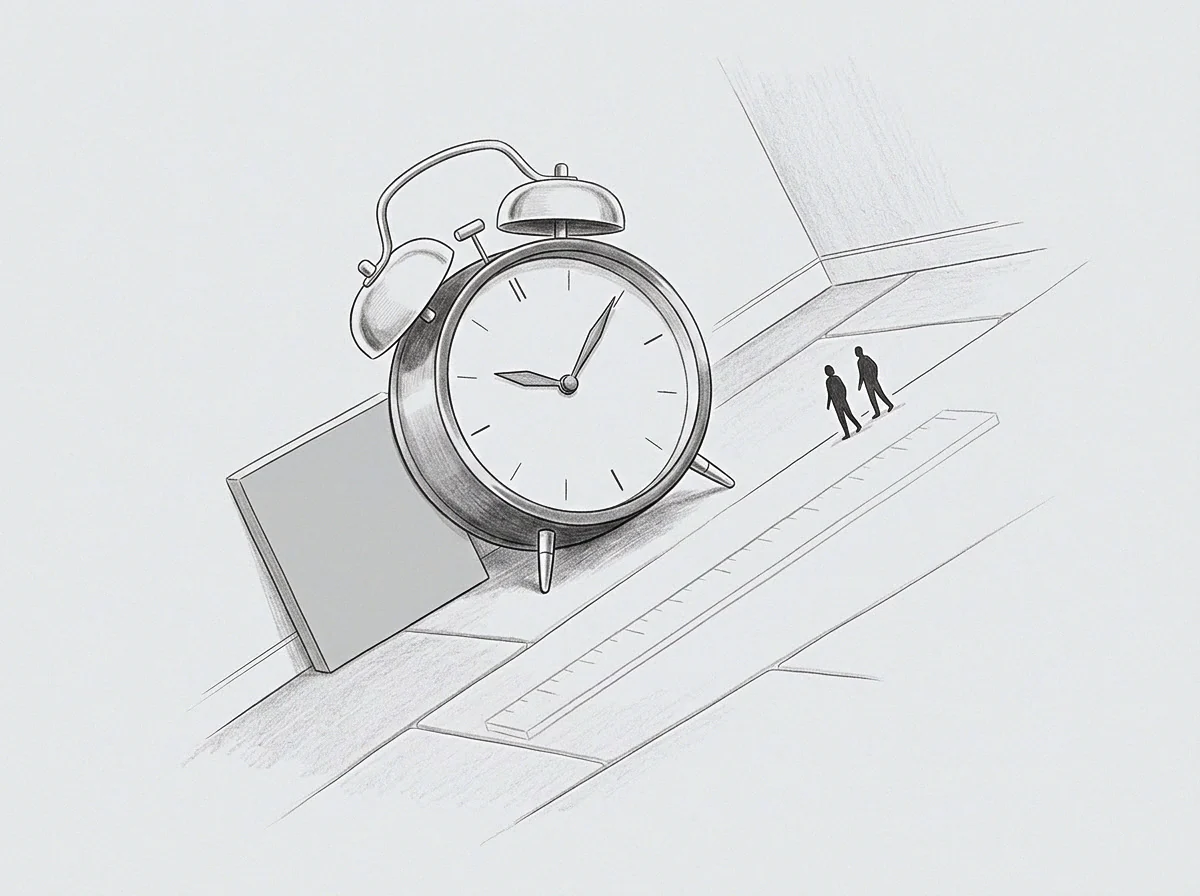
Chronological divergence measured between the internal clocks of two independent network systems operating at the same physical instant quantifies operational drift across distributed environments. Temporal skew arises from temperature variations affecting quartz crystals, asymmetric network transmission delays, and intermittent communication failures with synchronization reference standards. The metric governs transaction sequencing margins, token expiration validity, and distributed ledger consistency across multi-region infrastructure networks.
It stops being a manageable parameter and becomes a systemic operational failure when divergence exceeds protocol-defined consensus thresholds, causing distributed databases to reject valid cross-node transactions.
Drift Acceleration
Silicon hardware oscillators deviate from standard reference time at rates determined by component age, voltage fluctuations and ambient operating temperatures. Uncorrected by network synchronization protocols, temporal skew widens steadily between isolated servers, accumulating deviations of milliseconds every operating day. Network engineers counter this mechanical divergence by deploying background services that query central time pools and gently slew clock rates to match reference signals.
Sudden network congestion disrupts these correction exchanges, allowing servers to drift apart unchecked until network routes clear.
Sequence Disruption
Distributed architectures that rely on physical timestamps to determine transaction priority encounter immediate write anomalies when clocks diverge. If a transaction arrives from a node afflicted by forward temporal skew, downstream databases may log future-dated mutations that block subsequent valid updates from processing. Conversely, negative skew causes nodes to issue transactions that upstream security monitors reject as expired replay attempts.
Mitigating these risks forces software architectures to widen validity windows, which expands the latency period required to finalize distributed operations.
Synchronization Boundary
Resolving clock discrepancies requires financial investment in high-precision hardware clocks and dedicated external satellite feeds. Data center operators reduce temporal skew to sub-microsecond levels by installing atomic rubidium oscillators and localized Global Positioning System antenna arrays. For general cloud infrastructure lacking dedicated timing hardware, organizations accept uncertainty margins of tens of milliseconds and design consensus algorithms around logical sequencing rather than physical timestamps.
Temporal skew highlights the instability of localized physical time across independent operational records, necessitating deliberate error margins within distributed audit trails.