
Arbitrating Hidden Real World Dependencies in Uninstrumented Distributed System Reconstructions
System reconstructions resolve uninstrumented dependencies by arbitrating the delta between static configuration models and kernel-level network execution traces.

Seat
An operator stands before an isolated legacy application node during a scheduled migration window. Architectural documentation accumulated over six years indicates zero active upstream callers for the process running on TCP port 8443. Source code for the service was lost during an infrastructure transition four years prior, preventing recompilation or the insertion of application performance monitoring agents.
The static reconstruction engine, reading configuration repositories and static call graphs, marks the instance safe for decommissioning. The server halted. Within eleven seconds of process termination, a primary transaction gateway in an adjacent availability zone stopped accepting write operations, triggering a cascading backpressure failure across the billing stack.
The uninstrumented binary carried an unmapped real-world dependency. It executed a raw socket broadcast across an unmonitored subnet every fifty milliseconds, heartbeat-locking an implicit leader election protocol inside the database driver of the billing gateway. The static architectural model recorded the application as a standalone reporting worker.
The physical runtime environment treated the node as an essential heartbeat clock. The two versions of system topology existed simultaneously: the documented topology held by the engineering lead, and the physical runtime topology enforced by kernel network traffic.
An unrecorded physical constraint acts silently until runtime isolation forces the discrepancy into public view.
Reconstructing distributed systems without telemetry relies on passive observation rather than internal telemetry logs. When internal code modification is impossible, the delta between inferred logic and operational reality accumulates in unmapped side-channels. These side-channels include shared filesystem locks, ephemeral port allocation limits, wall-clock timing assumptions via NTP, and underlying disk input-output contention.
The operator who relies exclusively on static file analysis inherits the cost of every implicit system dependency when the environment undergoes structural isolation.
Severing an unmapped dependency without prior arbitration forces the downstream consumer into immediate fault recovery. The resulting outage duration measures the speed at which responders discover the missing physical linkage under high operational stress.
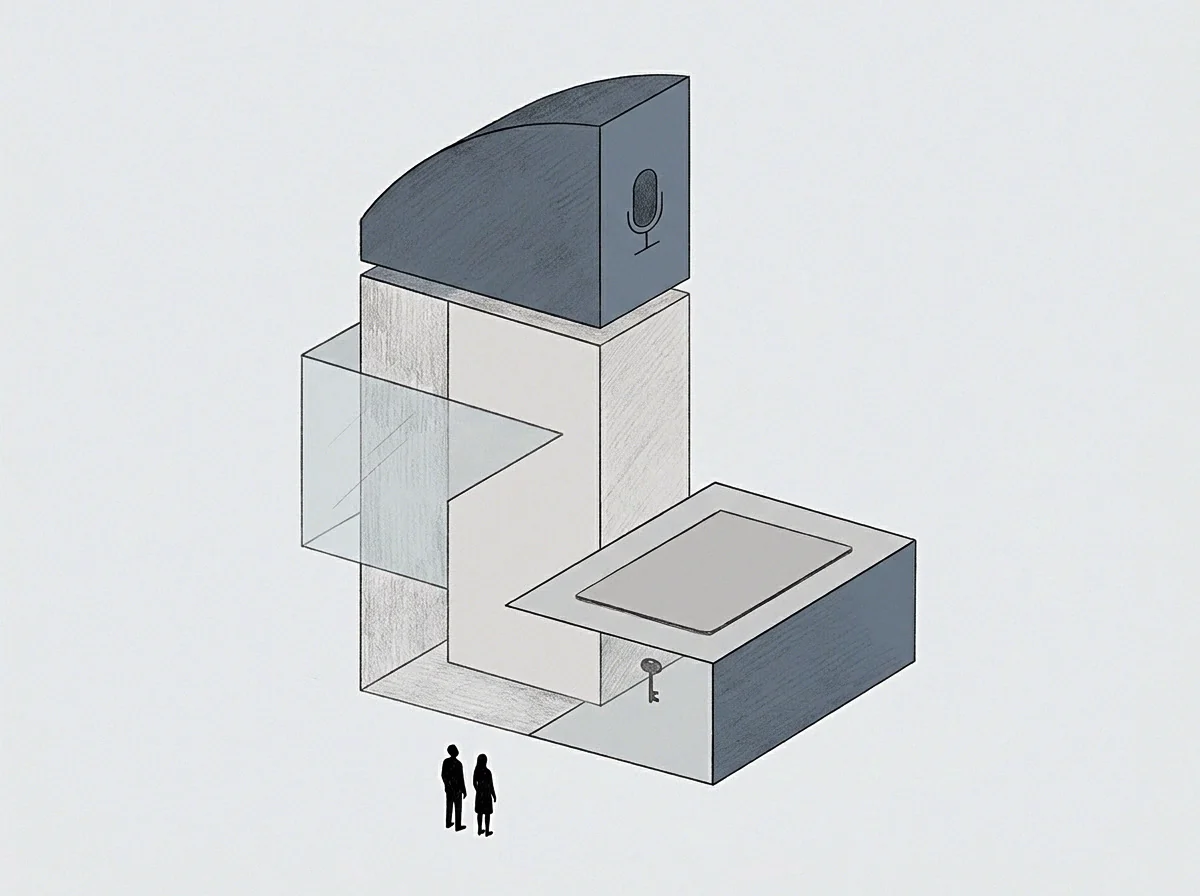
Signal
Kernel-level probe hooks extract physical execution paths without touching application source binaries. By deploying extended Berkeley Packet Filters directly into the network stack, system operators capture ingress and egress socket activity, file descriptor opens, and process inter-communication channels. Telemetry missing entirely from the application layer surfaces inside the operating system event layer.
Packet captures confirmed it.
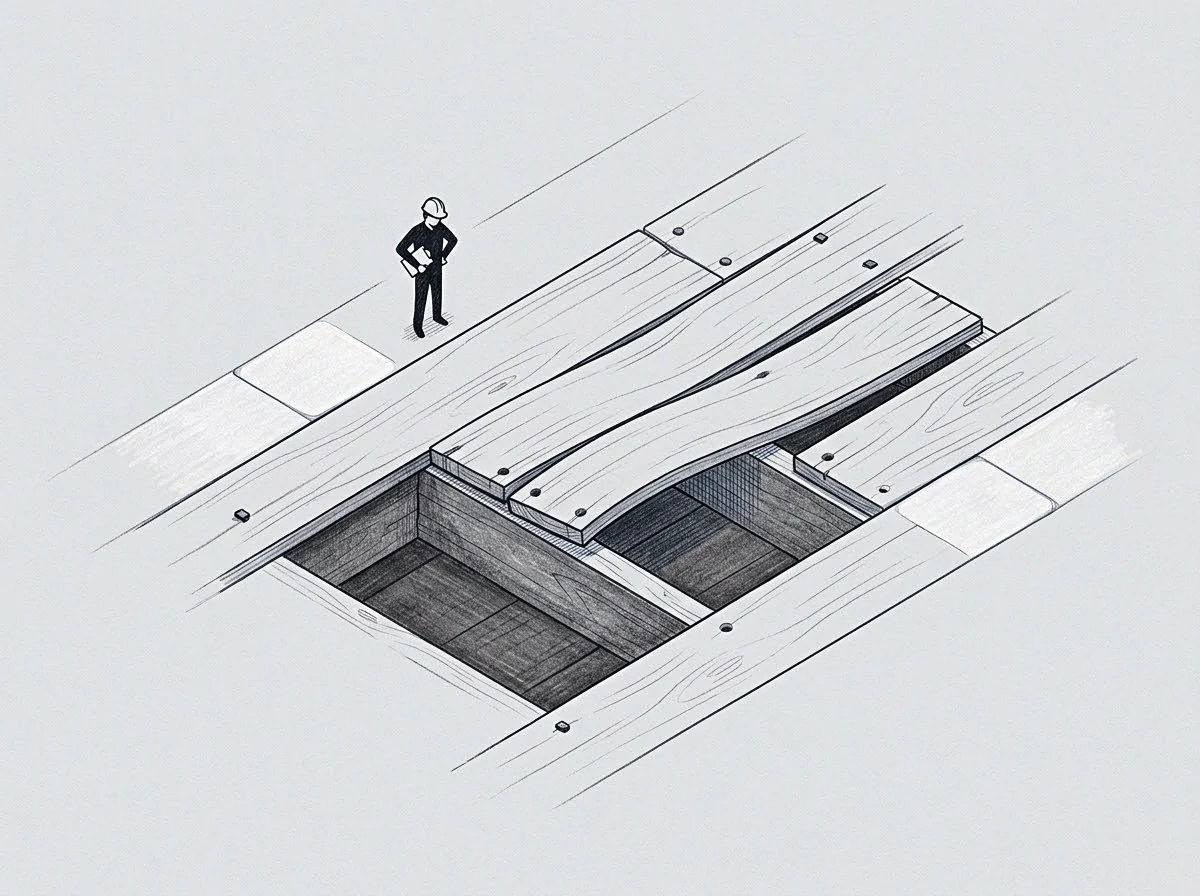
Passive Observability via System Call Interception
Passive tracing isolates network calls down to the exact thread ID and instruction pointer. When two legacy services communicate through shared memory segments or local Unix domain sockets, standard network interface monitoring registers zero bytes transferred. Intercepting the read and write system calls at the virtual file system interface exposes these invisible data pathways.
The record generated by kernel probes forms an empirical baseline that bypasses legacy documentation errors.
Kernel syscall interception exposes hidden socket traffic when binary modification is prohibited by legacy source loss.

Could Passive Observability Miss Temporal Coupling?
Long intervals between execution runs obscure implicit dependencies. A batch script executing once every thirty days to flush an unindexed database table creates a temporal lock on shared disk sectors. Continuous passive monitoring over a seven-day window records zero anomalous socket calls or IOPS spikes during standard traffic shifts.
The dependency remains invisible until the precise calendar moment arrives. Static analysis missed it.
Capturing temporal dependencies demands extended observation windows matched to accounting cycles, alongside synthetic load injection that simulates end-of-month scheduling pressures.
System traffic observed over brief periods yields an incomplete map of physical system interdependencies.

Sieve
Arbitrating conflicting system accounts requires filtering theoretical call paths from physical execution paths. The static dependency graph generated from repository analysis presents one account of reality. The passive packet capture engine presents another.
The delta between these accounts pinpoints hidden real-world dependencies that require manual arbitration.
| Methodology | Granularity Level | Latency Bounds | Hidden Coupling Detection | Instrumentation Burden |
|---|---|---|---|---|
| Static Code Analysis | Function level | None inferred | Zero physical visibility | Zero runtime overhead |
| Kernel Syscall Tracing | Process and socket level | Microsecond accuracy | High for local and network IO | Low probe overhead |
| Passive Packet Analysis | Network payload level | Millisecond accuracy | High for unencrypted sockets | Zero target node overhead |
| Perturbation Probing | System boundary level | Real-time metric variance | Maximum for side-channel contention | High operational exposure |
Discrepancies between the static view and the kernel event log stem from specific operational mechanisms that evade code scanning tools.
- Temporal Contention occurs when independent services contend for shared hardware resources such as disk controller bandwidth or network interface queues without direct network links.
- Shared State Side-Channels develop when uninstrumented processes read from and write to identical database schemas or filesystem locations without formal API contracts.
- External Rate Limits emerge when multiple microservices funnel outbound traffic through a single legacy egress proxy, triggering third-party service throttling.
The unstated dependency converts an isolated deployment into a multi-system outage.
The system operated correctly in production for years without any documented network connection between those two service blocks.
Proof
Consider a practical reconstruction scenario involving an uninstrumented inventory management service built in 2014. Take two systems operating within the same private rack without binary tracing flags enabled. Assume the inventory service handles eight hundred read queries per second from a modern frontend gateway.
Assume further that an unmapped legacy reporting service queries the same underlying physical disk volume once every fifteen minutes to compile warehouse storage metrics. The static call graph indicates the inventory service operates in complete isolation from the reporting cluster.
The delta manifested during a database migration test. When operators moved the inventory database to an isolated cloud instance, read latencies on the primary API jumped from twelve milliseconds to four hundred milliseconds every quarter hour. The missing telemetry concealed a physical dependency on local disk page caches.
The reporting service, by reading raw database files directly off the shared storage volume, invalidated the operating system page cache relied upon by the primary inventory binary.
The log showed nothing. Physical hardware enforces limits regardless of software abstraction layers. Network sockets remained tied.
The delta carried cost.
A dependency unverified by runtime packet inspection remains a hypothesis.
The system migration proceeds only after the explicit resource isolation clause is appended to the operational deployment contract.

Draft
Arbitration resolves the divergence between documented design intent and physical system behavior. Once passive kernel tracing and perturbation analysis reveal an uninstrumented coupling, the operator converts the discovered behavior into a formal system contract. This process requires codifying implicit dependencies into explicit configuration parameters, latency budgets, and network access control rules before any architectural isolation move occurs.
Implicit state creates contention. Converting hidden real-world linkages into declared interfaces transforms an uninstrumented distributed system into a predictable execution topology. Operators document the physical constraints, bind them to runtime health checks, and eliminate the silent assumptions that turn system modernizations into unplanned outages.