
Auditing Historical Creation Custom Against Integrated Written Severance Contracts
Integrated written severance contracts extinguish historical informal creation customs through merger clauses unless explicit written carveouts preserve ownership.
Practice
An engineer finishes four years at a software company and receives a twelve-page separation agreement on a Thursday afternoon. During those four years, the engineer wrote internal build tools on personal hardware, published documentation under an informal agreement with an engineering lead, and maintained an open source utility originally drafted on weekends before the company took institutional financing. The company leadership knew of these side repositories.
The engineering lead approved the habit verbally during an initial onboarding conversation in an office that the company closed two years later. Nothing about those permissions entered the personnel file. The separation agreement now lying on the desk contains a standard integrated intellectual property assignment, a comprehensive general release, and a merger clause extinguishing every prior oral understanding.
Two distinct records of the same tenure exist simultaneously. The departing builder preserves an oral narrative of accepted practice, corroborated by git commit timestamps, shared team communications, and four years of unchallenged conduct. The company presents a fully integrated legal instrument designed to render that entire history legally irrelevant.
What one party remembers as an authorized creation custom, the written instrument classifies as company-owned work product extinguished by contract.
Informal workplace allowances operate on personal recollection until a separation instrument demands their legal verification.
This division between lived convention and documentary integration defines the departure of early personnel. Early employees often operate under informal dispensations granted during periods when operating velocity superseded formal documentation. Founders encourage individuals to build freely, solve problems with whatever libraries lie at hand, and retain personal projects without formal carveouts.
When the business matures or secures outside capital, the institutional tolerance for ambiguous ownership ends. The company issues severance contracts structured around total integration, drafting terms that silence extrinsic history.
The delta between these two accounts measures the exposure each party faces. If the departing employee signs the document without an explicit schedule of excluded inventions, the integration clause legally extinguishes the historical custom. The company obtains clean title on paper, yet remains vulnerable to later claims of unassigned copyright or trade secret misappropriation if the employee continues using tools developed during that tenure.
Both parties act on conflicting premises, deferring comparison until dispute becomes unavoidable.
The company routinely states that all work created during employment belongs exclusively to the enterprise under the four corners of the signed release.
Merger
Where Does Informal Ownership Fail Under Merger?
The legal mechanism that extinguishes historical creation custom is the integration clause, frequently paired with the parol evidence rule. Under standard contract jurisprudence across Delaware, California, and New York, a completely integrated agreement represents the final and exclusive statement of the terms between the parties. Extrinsic evidence, including prior oral agreements, informal emails, or established team practices, cannot introduce new terms, alter explicit language, or preserve unwritten exceptions.
When a severance contract states that it supersedes all prior agreements, discussions, and understandings, it severs the employee from the informal norms governing past creation.
The parol evidence doctrine excludes extrinsic proof offered to contradict or supplement a fully integrated writing. While courts permit extrinsic evidence to interpret ambiguous contractual language, they refuse to admit prior oral understandings to contradict unambiguous covenants. A severance clause declaring that the employee assigns all right, title, and interest in any intellectual property conceived during employment directly contradicts an informal custom permitting personal retention of code.
The written word silences the oral history.
An entire agreement clause extinguishes unwritten creation allowances whenever the contract explicitly claims complete integration.
The audit of historical custom against integrated severance agreements requires tracing how specific severance terms interact with past creation habits:
- Merger declarations invalidate prior informal agreements regarding personal tooling and side projects, transforming tolerated practices into contractual breaches upon execution.
- Broad intellectual property confirmations retroactively transfer copyright and patentable inventions developed on personal time if the subject matter relates to the employer business.
- General releases of claims surrender employee rights to dispute inventorship, moral rights, or unpaid compensation tied to proprietary tools created during tenure.
- No oral modification provisions prevent departing personnel from relying on subsequent verbal assurances given by managers during exit interviews.
Consider the structural asymmetry of the integration transaction. The company drafts the severance agreement using standard corporate forms that prioritize complete finality and risk elimination. The employee reviews the severance payment against immediate financial needs, frequently skimming boilerplate integration clauses.
The employee signs under the assumption that obvious historical realities remain understood. The integration clause operates mechanically, regardless of subjective intent. Once executed, the written contract controls the boundaries of creation rights.
The specific integration provision stating that no prior course of dealing modifies the text explicitly converts all historical tool retention into unassigned corporate property.

Wall

Baseline Protections and Statutory Limits
Contractual integration cannot override nonwaivable statutory baselines that protect employee creations. In jurisdictions such as California under Labor Code Section 2870, Washington under RCW 49.44.140, and Illinois under 765 ILCS 1060/2, statutes limit the enforceability of employer assignment agreements. These statutes void contractual terms requiring an employee to assign inventions developed entirely on personal time without employer equipment, supplies, facilities, or trade secret information.
An integrated severance agreement that attempts to capture inventions protected by these statutory baselines exceeds legal authority.
A rigorous audit evaluates the historical record against both the contract text and the governing statutory floor. A tool created by an employee on personal time that directly relates to the employer current or demonstrably anticipated business falls outside statutory protection, falling squarely within the contract scope. Historical permission granted verbally by a founder does not reposition an invention from unprotected territory to protected status under the statute.
The physical boundary between company resources and personal equipment serves as the primary evidentiary test.
| Dimension | Historical Creation Custom | Integrated Severance Contract |
|---|---|---|
| Evidentiary Basis | Informal chat messages, verbal approvals, git commit histories, unwritten workplace tolerances | Four-corner written text, unambiguous merger clauses, signed intellectual property acknowledgments |
| Treatment of Prior Understandings | Assumes continuity of informal side project permissions and tool retention customs | Explicitly extinguishes all prior oral agreements, discussions, and course of dealing |
| Statutory Alignment | Relies on equitable assumptions regarding personal effort and outside work hours | Constrained only by mandatory employee invention statutes like California Labor Code 2870 |
| Post Departure Enforceability | Vulnerable to immediate dismissal under the parol evidence rule in litigation | Enforceable through injunctive relief, breach of contract remedies, and declaratory orders |
The evidentiary table demonstrates that historical custom lacks durability against written integration. The builder relies on memory, habit, and equitable sentiment. The enterprise relies on formal assent, complete integration, and established doctrines of contract law.
When these two accounts meet in a dispute, the party relying on historical custom must establish that the written contract contains facial ambiguity or violates public policy. Proving facial ambiguity in a modern corporate severance agreement remains an exceptionally steep procedural challenge.
Unscheduled proprietary exceptions vanish the instant an integrated release enters the corporate archive.
A company auditing its position before offering severance verifies whether the employee created core software assets before executing formal assignment paperwork. When gaps appear, the company relies on the comprehensive release and assignment language in the exit agreement to cure historical defects. The severance agreement functions as an intellectual property mop-up operation, pulling past creation into the corporate perimeter.
Unwritten creator permissions dissolve under the pressure of signed integration covenants.
Clock
Timing and Sequence of Creation Records
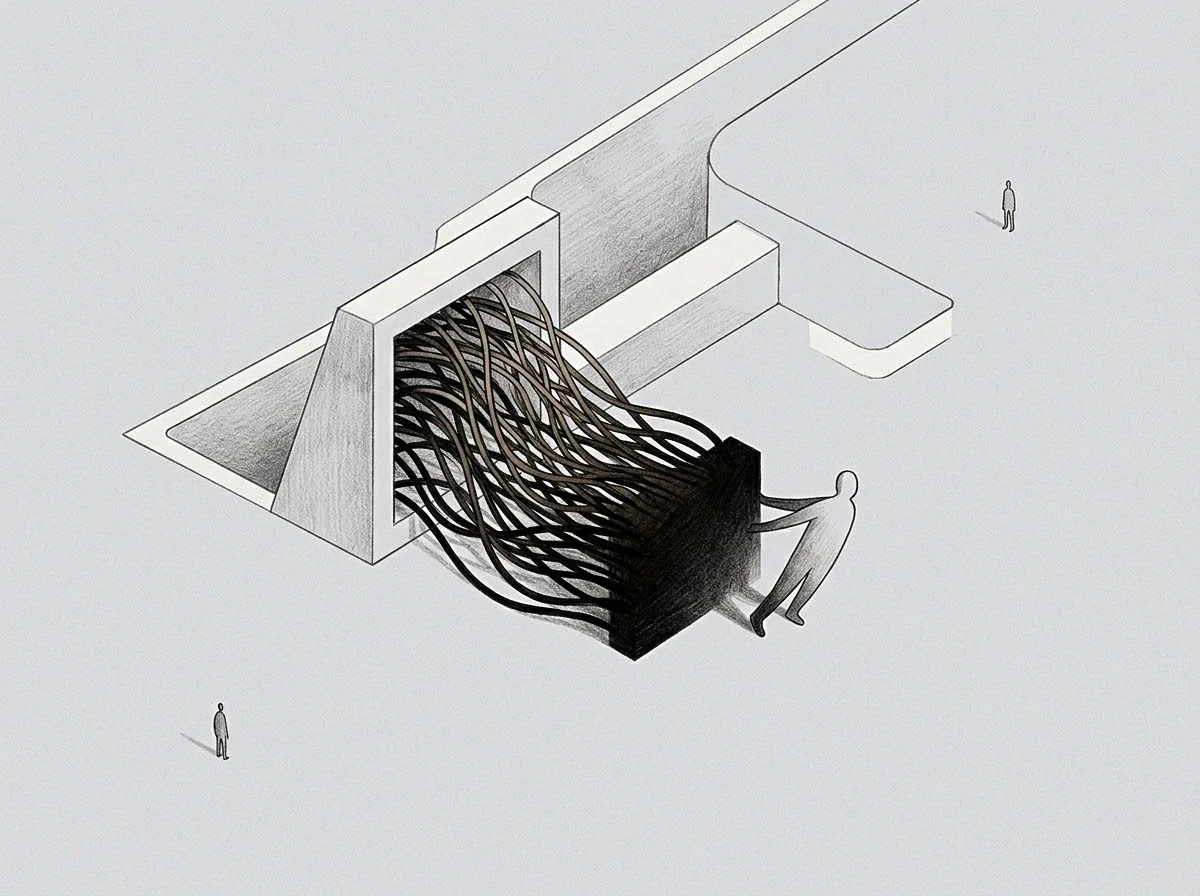
The chronology of creation establishes whether an asset belongs to the worker or the enterprise. When a worker invents software prior to employment, an audit determines whether the creation appeared on an initial schedule of prior inventions. If the worker failed to list the asset on an onboarding schedule, the exit contract integration clause deepens the evidentiary hole.
The company asserts that the asset was developed during employment using enterprise infrastructure, while the worker argues that the asset predated the employment relationship entirely.
The exit timeline accelerates the pressure on both accounts. During normal operations, neither party inspects the boundaries of invention ownership. The worker continues improving utilities, occasionally moving code snippets between personal repositories and corporate builds.
The company pays compensation and accepts the utility benefits without querying title ownership. The severance event halts this informal drift. The clock forces an accounting of creation rights within the standard twenty-one or forty-five day statutory review periods mandated by separation acts.
The sequence of evidentiary review follows a structured chain of discovery:
- Initial assignment verification evaluates original invention agreements against onboarding schedules to isolate pre-existing IP claims.
- Repository audit cross-references repository commit logs, machine hostnames, and time stamps against working hours to identify personal device usage.
- Severance schedule drafting identifies all preserved personal assets and incorporates them directly into the text of the separation agreement before execution.
Take an employee who builds an internal automation script in year two of employment. The direct supervisor offers verbal encouragement and permits the employee to retain an unencumbered copy for personal deployment. The script remains hosted in a company repository for eighteen months.
In year four, restructuring leads to the employee termination. The severance agreement arrives containing a general release and an assignment of all scripts, tools, and technical processes developed during the tenure. If the employee signs the document without negotiating a specific written carveout schedule, the verbal gift from year two is nullified.
Signing an integrated severance contract without auditing past creation history forfeits all legal title to personal tools, leaving the departing creator exposed to immediate copyright infringement claims if those tools are used in subsequent ventures.
Covenant
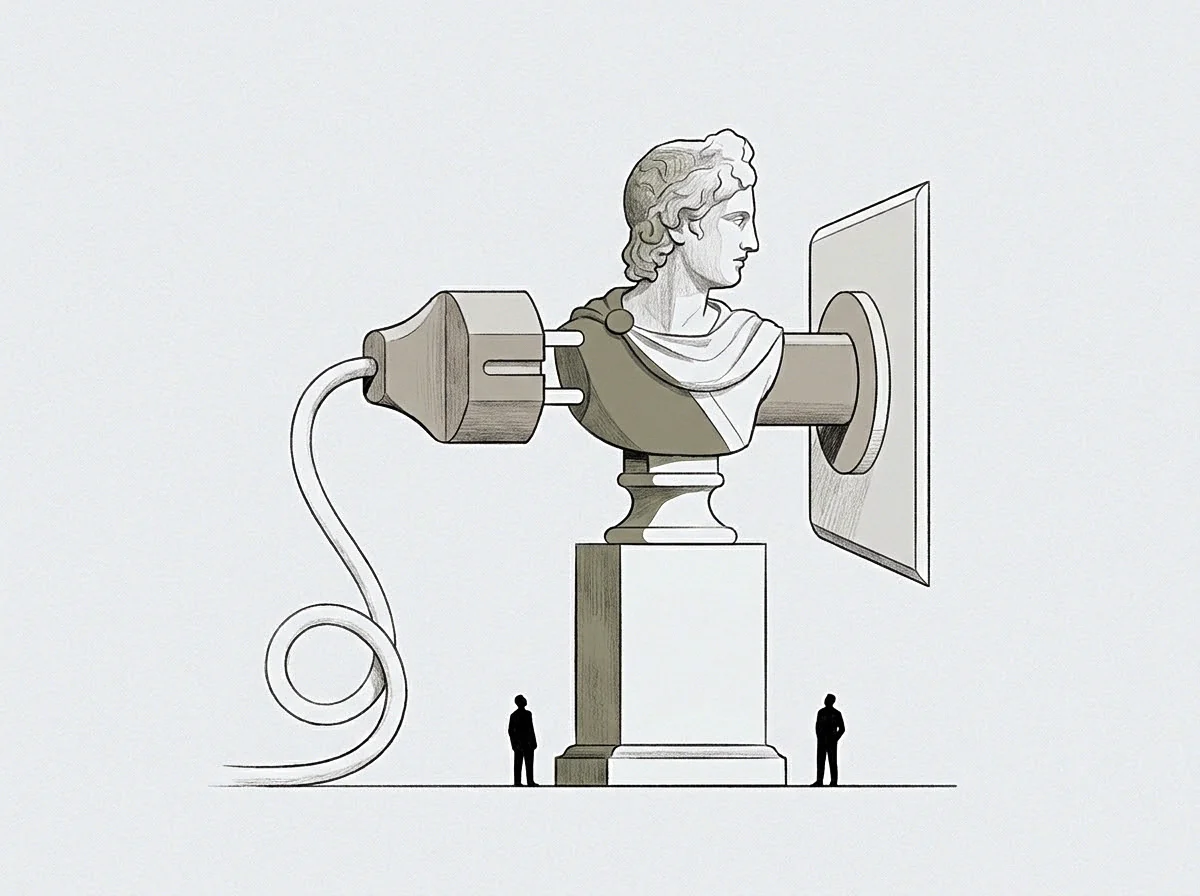
The durable solution to divergent accounts is the explicit written carveout appended to the severance agreement itself. Where an employee built valuable tools or claims personal ownership over side projects, relying on historical creation custom guarantees failure upon departure. The worker must demand an itemized exhibit listing retained inventions, tools, and libraries, formally exempting them from the general release and intellectual property assignment provisions.
This exhibit modifies the integration clause by defining what sits outside the four corners of the transferred assets.
From the institutional seat, the corporate operator manages this friction by insisting on total integration while offering narrow, well-defined carveouts where equity and business strategy permit. Allowing a departing engineer to retain tools that contain corporate trade secrets or duplicate proprietary workflows invites investor concern during subsequent funding rounds or acquisitions. Due diligence teams audit intellectual property chains of title with forensic rigor.
When they identify ambiguous ownership created by informal founder promises, they demand retroactive assignments, escrow holds, or indemnity provisions.
The audit of historical custom against written severance contracts reveals an inescapable structural reality. Custom is informal, reconstructive, and easily obscured by the passage of time. The integrated written contract is rigid, deliberate, and backed by centuries of contract doctrine favoring documentary finality.
When the two clash at the exit, the written document absorbs the custom unless the creator constructs a formal written reservation of rights within the separation instrument itself.
The unresolved question remains whether standard boilerplates in separation instruments will continue to withstand emerging legislative hostility toward overbroad employee post-termination covenants, or whether statutory reform will eventually render unwritten creation norms legally enforceable over signed integration clauses.