
Cryptographic State Attestation Limits Across Ultra High Frequency Microvm Lifecycles Without Shared Clocks
Independent state attestation without shared clocks requires dual cryptographic exit handshakes to resolve temporal drift between microvm logs and host hypervisor records.

Pulse
State attestation in hyper-ephemeral computing environments relies on proving execution integrity within lifecycles measured in microseconds. When microvirtual machines spin up, process a single payload, and collapse back into hypervisor memory pools, traditional network time protocols fail to supply a trustworthy temporal anchor. Hardware roots of trust generate cryptographic signatures over instruction counters and memory snapshots, yet these signatures remain unanchored to wall-clock time.
The host platform holds one ledger of execution durations based on CPU cycle counter increments. The microvirtual machine holds a separate cryptographic digest built from internal instruction sequences.
Without a shared hardware clock or continuous network synchronization, state verification shifts from time-based sequencing to logical causality chains. Cryptographic keys embedded inside secure enclaves sign state transitions at startup and termination. These signatures confirm that a specific binary executed on genuine hardware.
They fail to establish whether two microvirtual machines executed concurrently or sequentially on host nodes whose local timers drift apart by milliseconds.
Hardware registers yield precise cycle counts. Host hypervisors map those counts to local physical ticks. Microvirtual machines retain no access to underlying physical counters to prevent side-channel timing leaks.
The isolated environment reads only a virtualized counter synthesized by the platform monitor. This insulation preserves tenant isolation while stripping the guest OS of any capacity to verify its own absolute placement in time.
Attestation primitives establish execution authenticity under isolated hardware roots while leaving absolute temporal sequence unverified.
The discrepancy manifests when downstream services attempt to reconcile event logs signed by ephemeral guests against hypervisor access records. The guest enclave attests that computation completed cleanly at local sequence tick one hundred. The platform audit log records host memory release at a physical timestamp that conflicts with adjacent node events.
Neither record contains an operational defect. Each account remains cryptographically complete on its own side. The delta between internal guest attestation and external host logging creates a structural gap in state verification.
Attestation protocols attempt to bridge this divergence through recursive cryptographic hash chains. Every execution step appends a SHA-256 digest of current register states to a running accumulator before returning control to the host. The guest hands the accumulated digest back to the platform caller at the exit signal.
The platform signs the outer container digest alongside its local timer snapshot. This dual-signature bundle pairs the internal instruction path with external platform observation without forcing clock synchronization across isolated silicon sockets.
Whether this dual-signature pairing provides sufficient proof for strict multi-tenant state ordering under high clock drift remains uncertain.

Epoch

Local Instruction Counters and Hypervisor Context Switches
Hypervisors manage ephemeral workloads by rapidly switching processor contexts across virtual cores. Each context switch pauses microvirtual machine execution, sweeps register values into physical memory, and restores another workload payload. The guest instruction counter halts during host-level context pauses.
The host platform clock continues ticking uninterrupted throughout the switch.
This structural imbalance creates two incompatible records of workload duration. The microvirtual machine measures operational life purely through executed assembly instructions. Its internal log records two hundred microseconds of active processing.
The host hypervisor records a total elapsed lifetime of twelve milliseconds due to intermediate scheduling pauses and noisy-neighbor queue delays. When external auditors compare the two attestations, the host timeline appears bloated while the guest timeline appears compressed.
- Instruction Accumulator Digest captures internal processor state increments while remaining entirely blind to external hypervisor scheduling pauses.
- Platform Enclave Quote verifies hardware platform authenticity and memory encryption signatures at the precise moment of guest initialization.
- Virtual Interrupt Counter tracks guest-visible device events without providing any absolute correlation to host physical processor cycles.
- Teardown Verification Token seals final register digests immediately before hypervisor memory zeroing sweeps the guest address space.
The delta between active execution time and physical host time determines the validity window of cryptographic attestations. If an attestation quote relies on a time-to-live threshold issued by an external key server, a guest microvirtual machine delayed by host context switching risks presenting expired evidence. The payload executed correctly, the registers remained pristine, yet the attestation payload arrives at the verifier past its accepted temporal window.
Unanchored state hashes paired with host timestamps create expiration window failures during context switches.
Clock drift across multi-tenant hardware clusters compounds the verification failure. A cluster containing two thousand nodes experiences physical crystal oscillator drift of up to fifty microseconds per second under varying thermal loads. Synchronizing physical clocks via Precision Time Protocol consumes network bandwidth and CPU cycles that hyper-ephemeral architectures seek to conserve.
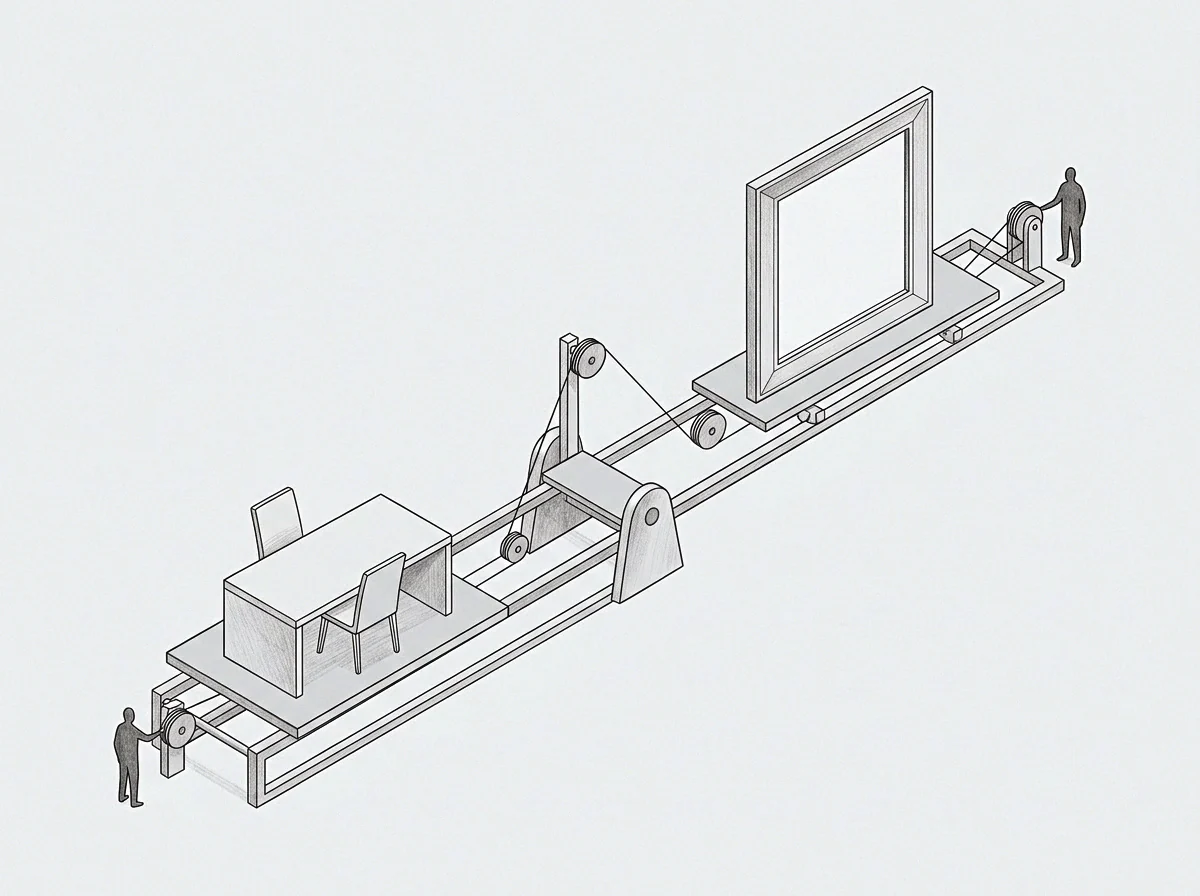
When microvirtual machines migrate or pass signed state tokens across unsynchronized host nodes, the causal order of transactions becomes ambiguous.
Attestation architectures that depend on external clock synchronization degrade when lifecycle durations drop below host clock convergence intervals.
Page

Can Microsecond Attestation Survive Clock Drift?
State verification without clock synchronization forces systems to rely on memory page state hashing and zero-knowledge validity proofs. Instead of asserting that an operation occurred at a specific microsecond, the microvirtual machine produces a cryptographic proof that state transition B followed state transition A cleanly. The root hash of the memory page table enters the attestation quote alongside the program counter snapshot.
Zero-knowledge proofs compress execution verification into compact mathematical assertions. A verifier checks the validity proof without re-executing the workload or inspecting internal memory state. Generating these proofs requires substantial computational capacity.
For microvirtual machines with lifecycles under five milliseconds, generating a ZK-SNARK proof of internal execution state routinely consumes ten times the energy and time of the workload itself.
Engineers manage this overhead by delegating proof generation to off-node hardware accelerators or post-execution batch provers. Offloading proof generation introduces a new verification boundary. The microvirtual machine must emit an unproven intermediate attestation state upon teardown, relying on an external prover node to construct the final proof asynchronously.
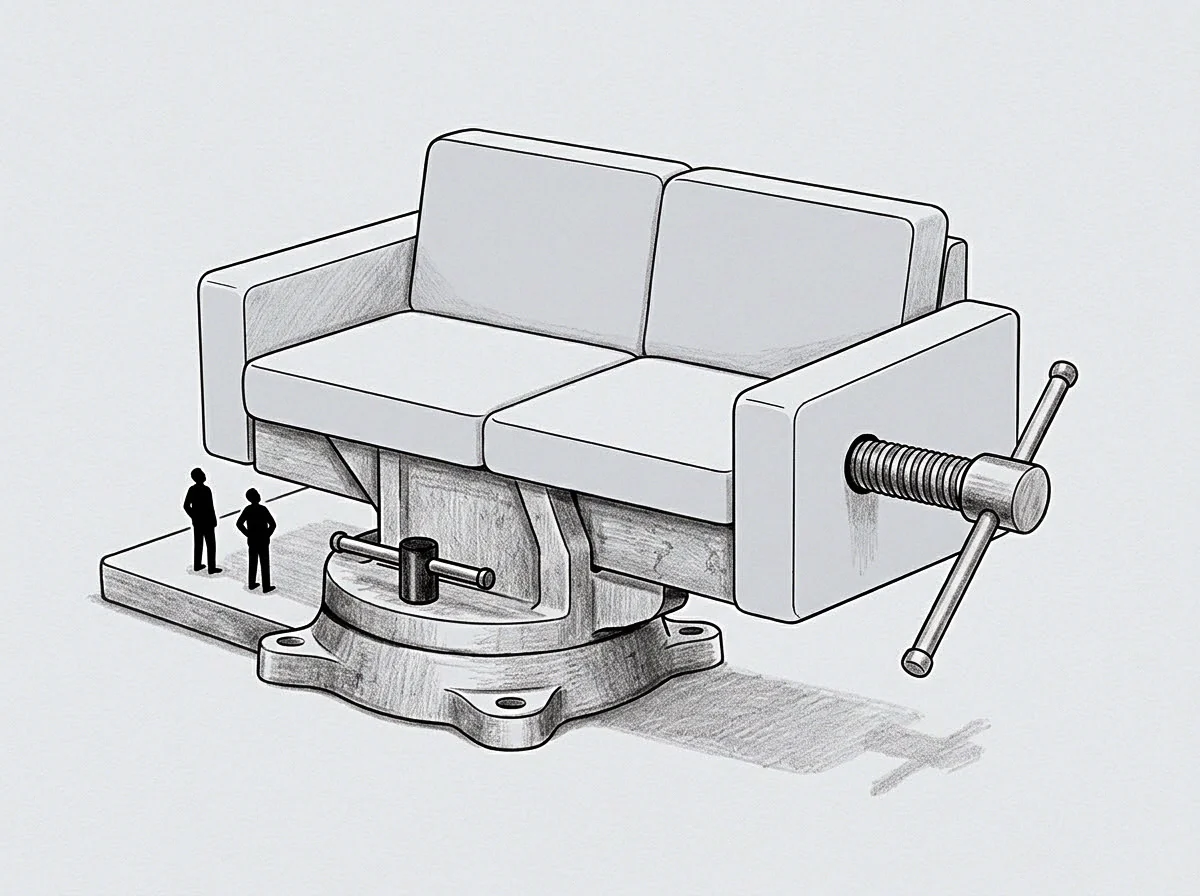
The hypervisor wipes the guest memory page before the external prover completes the verification token.
If the asynchronous prover encounters a hardware fault or memory corruption before finalizing the proof, the original guest execution state vanishes permanently. The host log shows successful guest execution and memory teardown. The cryptographic verifier holds an incomplete state chain with no guest memory image left to inspect.
State settlement halts because the evidence pipeline broke after guest termination.
Relying on asynchronous provers without synchronous guest memory holds leads to unrecoverable state verification gaps whenever proof pipeline failures occur.
Limbo

Structural Comparison of Attestation Methods
Evaluating state attestation mechanisms for clockless ephemeral environments requires balancing cryptographic certainty against microvirtual machine startup latency and host resource consumption. Systems optimize for specific failure modes depending on whether they prioritize execution speed or strict transactional ordering.
| Attestation Primitive | Temporal Anchor | Divergence Resolution Mechanism | Latency Impact |
|---|---|---|---|
| Hardware Enclave Quotes | Host Register Tick | Hypervisor clock overlay signing | Sub-millisecond startup overhead |
| Recursive Hash Accumulators | Logical Instruction Count | Causal vector dependency trees | Zero startup delay, inline CPU cost |
| Asynchronous Zero-Knowledge Proofs | None (Mathematical Proof) | Post-execution proof chain verification | High off-node processing queue delay |
| Merkle Page Root Digest | Guest Allocation Epoch | Deterministic state tree comparison | Moderate memory scan overhead |
Verification protocols process attestation claims through distinct operational steps during ephemeral execution runs.
- Initial state handshake requests an hardware-signed platform quote prior to mounting the guest workload image.
- Guest execution engine appends instruction block digests to the local accumulator register upon completing logical processing bounds.
- Hypervisor platform intercepts guest termination signal and appends physical host interface counters to the attestation container.
- External verification service evaluates the dual-signature payload against independent state transition rules.
Attestation systems frequently encounter edge cases where guest execution logs claim success while platform monitors register memory boundary errors. The host hypervisor sees a memory page access violation during teardown. The guest attestation envelope records clean instruction termination three machine cycles before the violation occurred.
The platform verifier cannot determine whether the memory fault corrupted guest output or occurred post-execution.
The host platform maintained complete isolation throughout the execution window, while the guest environment completed its assigned state transitions cleanly before resource reclamation began.

Terminus

Explicit State Handshakes and Exit Settlement
Eliminating attestation ambiguity across clockless microvirtual machine lifecycles demands explicit exit settlement protocols before platform memory zeroing occurs. Ephemeral systems must treat microvirtual machine termination as an active cryptographic handshake rather than a passive hypervisor teardown event. The guest environment must hold final return values in encrypted registers until the platform monitor returns a signed acknowledgment of receipt.
This exit handshake requires two distinct cryptographic commitments. First, the guest publishes its final instruction state digest to an isolated memory page readable by the platform monitor. Second, the hypervisor signs that digest alongside its current physical cycle counter and writes the signature back into guest-accessible memory.
Only after both parties confirm signature exchange does the hypervisor send the physical reset command to the virtual CPU core.
When platforms implement explicit exit settlement, the delta between guest execution history and host hypervisor monitoring closes. The written verification record contains both internal logical sequence counts and external host cycle markers bound together inside a single cryptographic signature. If either party drops out prior to handshake completion, the entire execution turn is flagged as unverified, preventing corrupted or ambiguous state transitions from committing to downstream databases.
Contractual verification rules specifying mandatory hardware-signed exit handshakes prior to host memory reclamation ensure deterministic state settlement across unsynchronized nodes.