
Drafting Early Commercial Agreements to Protect Working Relationships
Written commercial agreements bind subjective recollections to explicit operating terms, preventing divergent memory from destroying partner relationships.

Room
In month eleven, two operators sit across an oak table with a spreadsheet neither opened over the summer. One counts seventy nights spent answering support calls and patching servers alone. The other points to early cash outlays and distributor introductions that secured the first delivery run.
While the company gained traction, each built an unrecorded tally of personal sacrifice. Equity discussed over dinner months earlier was never committed to paper, left instead to goodwill and memory. Both believe their own hours carried the business through its first quarter.
When they finally discuss permanent ownership, their assumptions differ by thirty percent.
The gap between recollection and documentation widens under commercial pressure. In reconstructive memory research, individuals routinely overstate past contributions to shared work. Across studies tracking collaborative output over twelve months, participants assigned themselves shares that totaled more than one hundred and thirty percent of the work performed.
This distortion occurs without deliberate bad faith. Personal effort registers directly, while a partner’s day-to-day exertion is easily overlooked. Lacking an objective baseline, each partner relies on an internal tally that magnifies personal endurance.
Expectation hardens around these private estimates, and tension follows when an unspoken commitment goes unmet.
A contract written before capital arrives protects partners from the distortions of reconstructive memory.

The Divergence In Stated Expectations
Informal working arrangements survive while capital is scarce and immediate tasks are self-evident. An engineer writes code in a basement while a commercial operator runs supplier calls from a car. They assume alignment simply because neither has forced the conversation.
The engineer expects an equal split alongside technical autonomy; the operator anticipates an equity pool adjusted for future fundraising and commercial milestones. Every undocumented delivery widens that difference. Over months, assumptions turn into expected rights, and once revenue hits the operating account, the unresolved split surfaces immediately.
Written documentation sets a baseline before recollection drifts. Far from signaling distrust, formal contracts record terms before individual memories begin to diverge. By reducing informal understandings to enforceable clauses, partners keep professional operations distinct from subjective renegotiation.
The agreement secures contribution baselines, equity allocations, and voting authority while goodwill is intact. Delaying that paperwork converts administrative reluctance into unaddressed strain, which surfaces the moment an external audit or outside investor demands clean corporate records.
Unrecorded work creates silent leverage. When an operator spends six months building operational infrastructure without a written arrangement for compensation, unpaid invoices generate compounding friction. The contributor treats uncompensated hours as sweat equity warranting a larger ownership position; the partner views those same hours as table stakes for early participants.
That divergence breaks conversations down. Without an authoritative text, planning yields to competing recollections of past sacrifice. In one common sequence, a founder who provided early capital expects full repayment before any operating salary is disbursed, while the technical partner assumed immediate parity.

Term
A written agreement defines operations through explicit rights and procedural limits. Early on, clear decision boundaries matter far more than granular financial models. When two founders operate without defined turf, every strategic call requires tedious consensus, quickly bringing operations to a halt.
Setting explicit domains preserves momentum and working relationships alike. The technical lead chooses the software architecture without board review, while the commercial lead executes distribution agreements within preset budget caps. Stated boundaries remove the need for daily procedural check-ins.
Operating contracts protect relationships by establishing consequences before operational failure occurs. Founders routinely avoid discussing underperformance or sudden departures while early momentum is high. That avoidance leaves the firm exposed if a contributor stops delivering or simply steps away.
A functional operating agreement outlines delivery schedules, key dates, and performance benchmarks in plain terms, pairing missed targets with defined contractual remedies rather than personal confrontation. The agreement absorbs the mechanics of enforcement, keeping day-to-day collaboration functional.
Default statutory provisions divide company assets equally unless a formal commercial instrument specifies different percentages.

Structural Boundaries In Operating Instruments
Operating agreements rely on specific clauses to address recurrent friction points in early operations. These provisions serve as operational baselines against future disputes:
- Capital contribution schedules specify payment dates and determine whether early cash injections function as debt obligations or equity purchases.
- Intellectual property assignment clauses transfer all codebase, product designs, and customer assets to the corporate entity at the moment of creation.
- Decision rights matrices establish which commercial actions require unanimous board consent and which remain within an individual executive’s discretion.
- Time allocation covenants record the weekly hours each partner commits to company operations, alongside explicit limits on outside advisory or consulting work.
Intellectual property disputes become particularly contentious when early arrangements dissolve. If an engineer develops proprietary algorithms on a personal laptop without an assignment deed, ownership remains legally ambiguous. When commercial fractures appear, the engineer asserts title to the codebase, while the commercial partner maintains the software belongs to the firm by implied consent.
Disputes of this kind routinely lead to litigation, frozen accounts, and lost asset value. A straightforward assignment agreement executed at inception avoids the stalemate, giving the entity outright ownership of the work product regardless of leadership changes.

Core Clauses That Preserve Parity
Equity division requires structural logic rather than sentiment. Distributing outright equity on day one rewards initial excitement instead of sustained execution. If a partner leaves after four months without vesting restrictions, they retain an enduring stake while remaining founders work years to increase the value of an idle holding.
That imbalance creates persistent operational friction and alarms institutional investors. Time-based vesting schedules solve this directly: four-year vesting with a one-year cliff guarantees that equity accrues only through sustained contribution.
An acceleration clause within an executive agreement changes equity holdings upon a change of control, releasing unvested shares to the operator under specified sale conditions.

Mirror
Documentation provides an objective record of intent when memories begin to separate. In a disagreement, founders reflexively consult their recollections, only to find their narratives have drifted apart. One partner recalls a verbal commitment of thirty percent equity made during an airport layover; the other remembers a tentative conversation contingent on institutional funding.
Without an executed agreement, both accounts carry personal conviction. Selective recall encourages each side to retain supporting fragments while dropping contradictory details. A contemporaneous contract bypasses that process entirely by establishing what was actually agreed.
The contract reflects original intent when personal memory attempts to rewrite past contributions.

Where Do Informal Assurances Fail?
Informal understandings fail under commercial pressure because casual trust cannot absorb financial volatility. When cash reserves fall short of payroll, unwritten assumptions fracture under stress. When major contracts arrive, the same ambiguities prompt competing claims on the upside.
A defined contract holds through both scenarios, dictating revenue distribution, expense policies, and operational priorities irrespective of external circumstances. By establishing clear administrative rules, founders preserve working rapport and follow an agreed framework rather than managing interpersonal friction.
| Operational Dimension | Informal Working Arrangement | Explicit Commercial Agreement | Relational Consequence |
|---|---|---|---|
| Intellectual Property | Held by individual creator on personal equipment | Assigned irrevocably to the operating entity | Eliminates hostage software assets during exit disputes |
| Departure Terms | Unvested equity retained by departing collaborator | Repurchase rights at nominal value for unvested equity | Prevents dead equity from suffocating ongoing operations |
| Decision Deadlocks | Informal consensus or prolonged executive freeze | Defined casting vote or independent tie-breaker | Avoids operational paralysis during financial stress |
| Capital Commitments | Verbal pledges remembered differently during cash shortfalls | Written funding schedules tied to explicit milestone tranches | Prevents ungrounded accusations of commercial abandonment |
Structured agreements absorb strain that would otherwise fall on personal relationships. When a founder departs an informal partnership, the business inherits unassigned assets alongside ambiguous liabilities. Negotiations turn bitter simply because the exit terms were never set down.
An explicit agreement sets a direct operational path for either dissolution or continuation, outlining the financial and operational consequences of a departure before capital is committed. This shared baseline limits posturing during difficult discussions and allows operators to resolve separations methodically.

The Objective Account Against Reconstruction
Psychological research demonstrates that memory operates by selective reconstruction rather than objective playback. In high-stakes discussions, participants filter exchanges through their own priorities and stress levels. Six months later, both parties can recall specific commitments with complete conviction, yet their recollections directly contradict one another.
Controlled laboratory studies on recall and post-event misinformation document this divergence consistently. In commercial settings, capital constraints intensify selective retention. When founders clash over past promises, both often speak from genuine recollection.
A written contract establishes the factual record that neither party can rewrite.
Failing to document an early arrangement damages both the business and the personal relationship. Capital providers avoid ventures mired in unresolved equity disputes, and operational decisions grind to a halt. The personal relationship fractures as each founder interprets the other’s shifting recollection as bad faith.
Legal expenses quickly consume the capital required to sustain operations, replacing productive work with adversarial correspondence. The eventual loss of professional trust and personal goodwill frequently outlasts the commercial setback.

Severance
Exit mechanics form the foundation of any workable commercial agreement. Founders resist discussing separation while building an early product, when contingency planning can feel cynical or premature. That reluctance creates an operational vulnerability.
Every business arrangement eventually concludes, whether through an acquisition, retirement, or fundamental strategic disagreement. Negotiating separation terms during the founding phase ensures that objective logic governs the exit. When operators set dissolution terms while goodwill is strong, the resulting agreements remain balanced and workable.
A defined exit mechanism protects the business from disruption when a partner departs. Without clear departure terms, a leaving founder can demand immediate equity redemptions that the firm cannot fund, triggering forced asset sales or insolvency. A standard buy-sell agreement establishes clear valuation formulas alongside structured payout schedules, allowing the firm to distribute payments over several years while safeguarding operating liquidity.
The departing partner secures predictable compensation for value built, turning a potentially volatile dispute into an administrative process.
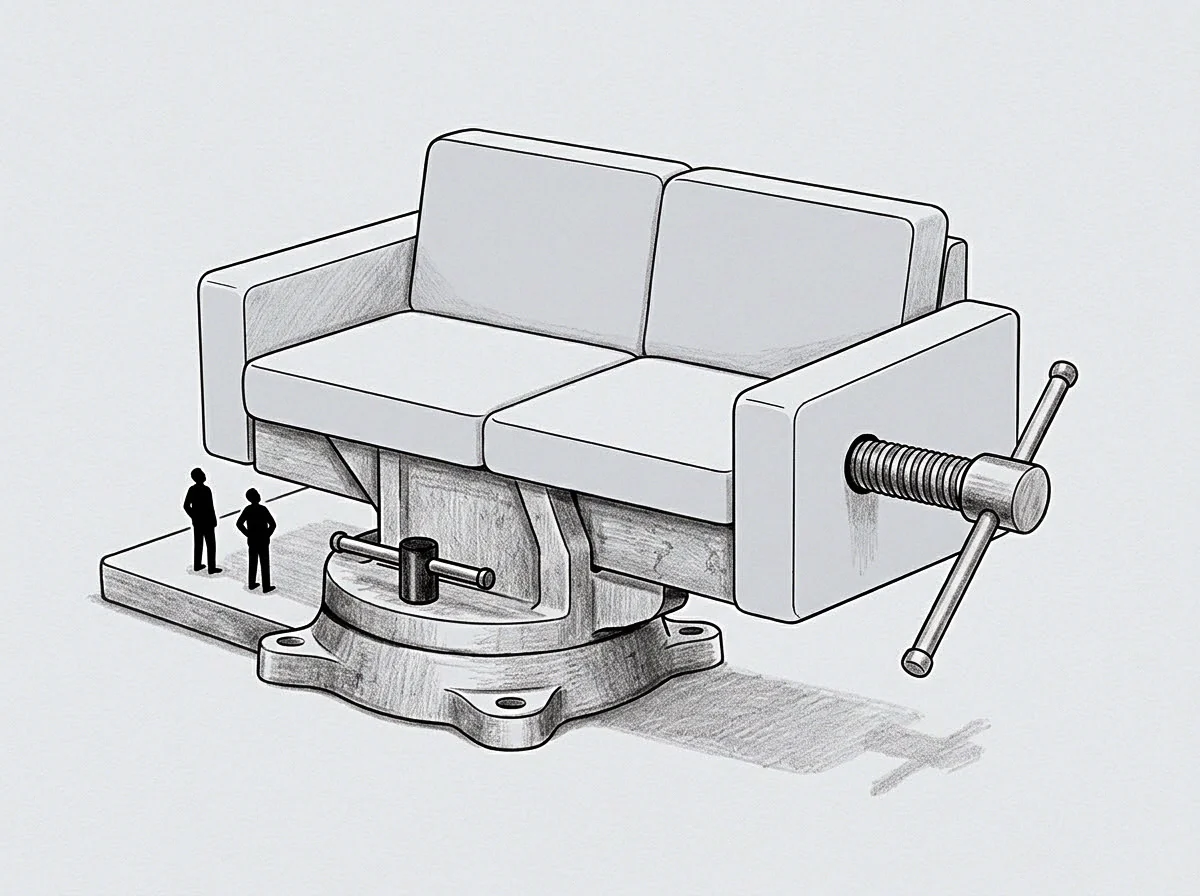
Contractual Off-Ramps And Equity Preservation
Operational deadlocks happen when equal partners split on fundamental strategy. Without an agreed resolution mechanism, a fifty-fifty split turns into an operational trap, stalling the business because neither party holds a deciding vote. A robust commercial agreement incorporates specific mechanisms to break strategic impasses:
- Buy-sell shotgun clauses permit one partner to name a cash price per share, granting the counterparty the immediate choice to buy or sell at that exact valuation.
- Independent advisory votes delegate binding determinations to an agreed industry expert when internal consensus fails entirely.
- Partition agreements divide physical assets or carve out separate product lines between founders when unified operations are no longer possible.
A structured shotgun clause naturally deters trivial disputes. Because the partner who invokes it cannot predict whether they will end up buying or selling, the proposed share valuation stays realistic. That balance prevents either party from exploiting temporary operational leverage, nudging both toward practical compromise before triggering the clause.
In practice, the provision protects the commercial relationship by introducing market discipline to internal disagreements.

The Mechanics Of Silent Exit
A silent withdrawal often precedes any formal separation. An operator begins missing planning meetings, answers communications after days of delay, and handles assignments with minimal effort. This retreat generally indicates underlying dissatisfaction with unstated terms.
The remaining partner observes the shift but delays addressing it, hoping momentum returns on its own. The operational gap widens weekly as the active partner absorbs extra hours to compensate, generating deep resentment. A clear commercial agreement sets explicit cure periods for non-performance, triggering formal notice and remediation steps the moment time commitments lapse.
Founders preserve professional relationships by making departure terms as explicit as founding commitments.

Rehearsal
Commercial agreements remain effective only when treated as operational records that evolve alongside the business. A contract signed at founding often sits untouched in a folder while company operations change. Within six months, a business model can pivot from enterprise software to consumer subscriptions, rendering original roles and equity assumptions obsolete.
One partner finds themselves handling fifty customer support tickets a day while the other runs vendor negotiations. If the instrument is never updated, contract terms and operational facts drift apart once more. Regular administrative reviews prevent that divergence.
Scheduled term reconciliations normalize administrative check-ins and protect working relationships. When founders review their agreements every six months as standard governance, they can measure daily responsibilities directly against the text. Discrepancies get identified early, compensation structures adapt, and newly developed intellectual property is documented.
Because the review is a calendar fixture, raising a contractual issue carries no personal friction. Changes occur by mutual consent rather than emergency negotiation, ensuring the contract reflects operating conditions and maintains alignment.
Agreements maintain relational value through regular administrative updates that reflect shifting operational workloads.

Scheduled Audits Of Operational Reality
An operational audit demands candor regarding contributions and company needs. Partners assess capital contributions, delivery milestones, and hours committed without personal defensiveness. If an operator reduces time to manage family obligations, the team adjusts vesting schedules or compensation openly.
The change reflects operating facts without punitive friction: the stepping-back partner gains flexibility, while the remaining operator receives clear recognition for carrying the operational load. Commercial relationships survive shifting circumstances when governing contracts adapt deliberately.
Administrative discipline takes deliberate effort during early commercial traction. Founders naturally prioritize product builds, marketing campaigns, and customer conversations over corporate governance. Legal housekeeping feels slow and procedural when demand is accelerating.
Yet experienced operators recognize that clear structural boundaries support sustained velocity. A firm built on ambiguous agreements leaves itself vulnerable to internal fractures during market stress. Taking the hours to document operational shifts protects both the business and the people running it.

Living Records Before The Freeze
The enduring utility of a commercial agreement lies in protecting personal relationships when a venture ends. Many businesses fail from market conditions, bad timing, or unforeseen regulatory hurdles. When external forces bring a venture down, founders should be able to walk away with mutual regard intact.
If commercial winding-down degenerates into disputes over unpaid commitments and proprietary ideas, the personal fallout outlasts the financial loss. A clear contract separates commercial failure from personal integrity, closing obligations cleanly so partners can work together again in the future.
Two founders rarely sustain an informal collaboration for long before unstated expectations begin to strain the commercial partnership.