
Establishing Automated Reconciliation Protocols for Silent System Overrides Prior to Formal Governance Audits
Automated reconciliation protocols compare live production state against governance logs to resolve silent overrides before formal audits.

Divergence

Silent Runtime Overrides and Audit Discrepancies
A production service alters a state variable during an operational incident at three in the morning without emitting an event to the authorization log. Engineers encountering an active infrastructure outage often deploy administrative bypass flags to restore throughput. The application log records a successful API response matching policy rules, while the underlying database holds a record changed under elevated execution rights.
Policy engines miss manual bypasses. The split between documented intent and runtime state creates a persistent compliance flaw that remains hidden until external reviewers examine system parameters.
Operational teams frequently prioritize system availability over immediate logging compliance during severity-one events. Direct database writes, temporary permission escalation, and manually altered environment variables resolve immediate bottlenecks. These actions bypass standard message queues and logging proxies.
Silence conceals production execution state. When the incident resolves, engineers clear emergency tickets without documenting the precise parameters modified at the database level.
The record split stays invisible. Administrative access tools routinely grant temporary rights that expire without verifying whether modified parameters returned to baseline configurations. Standard governance monitoring relies on log stream analysis, assuming that every system mutation originates from an audited API gateway.
Direct storage modifications bypass application servers entirely, leaving no record in API access logs or telemetry streams.
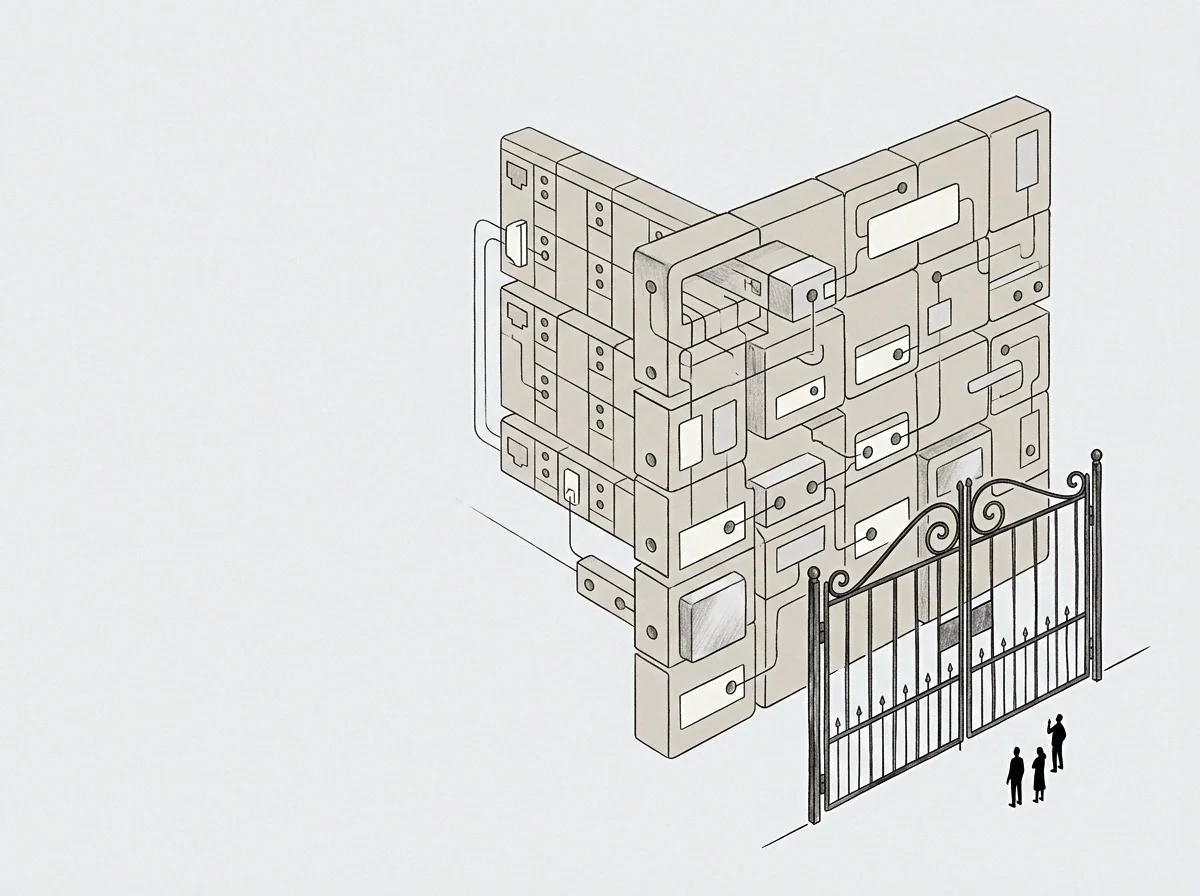
The Latent Exposure Window
Unrecorded mutations remain dormant within production database rows for months. System behavior continues to align with broad operational expectations while quietly violating specific governance constraints. Discrepancies cost operational authority.
A parameter allowing unencrypted data transfer in a staging environment migrates into production databases during an emergency failover, remaining active long after normal operations resume.
The time elapsed between a silent override and its eventual discovery defines the exposure window. During this period, automated governance reports present an inaccurate picture of compliance. The database holds the delta.
Internal compliance reports cite passing log audits while actual system state violates regulatory standards.
System state outlives operational authorizations. When formal governance audits begin, auditors pull static snapshots of production schemas alongside historical access logs. Discrepancies between configuration settings and logged authorizations trigger compliance failures that require manual investigation across months of system history.
Failure to detect unlogged changes before external reviewers inspect system records forces retroactive operational invalidation across all execution windows.

Sensor
Continuous Capture of Bypassed State
Automated verification mechanisms run independent queries directly against relational storage tables and identity provider API records. State drift persists silently. Verification demands independent telemetry sources.
By comparing direct database snapshots against authorized change management logs, automated sensors isolate discrepancies without relying on application-level event streams.
Ingestion daemons poll baseline database indexes on a fixed ten-minute interval. These queries extract active configuration flags, user access tables, and permission sets directly from the storage layer. Automated checks run continuously.
The captured snapshot undergoes immediate schema validation against the official authorization registry.
A continuous verification query catches unrecorded database modifications before static audit snapshots freeze system state.
The detection pipeline operates out-of-band to prevent interference with production execution paths. Read-only replicas serve as the primary data source for verification engines, minimizing query load on primary database clusters. The pipeline identifies untracked mutations by cross-referencing row-level modification timestamps against authorized deployment logs.
- Delta isolation engines isolate unflagged mutations by computing cryptographic hashes across entity attributes every hour.
- Log correlation monitors match raw execution events with formal access requests stored in identity vaults.
- Schema diff checkers identify table modifications that lack associated ticket identifiers or administrative signatures.
- Shadow state registries record true production configurations to detect untracked parameter shifts.

Reconciliation Pipeline Architecture
Event streaming infrastructure compares incoming data payloads against authorized policy schemas. When a storage parameter diverges from documented approvals, the sensor flags the delta as an unverified override. The bypass leaves no log.
The pipeline isolates the affected record, cataloging the timestamp, modified attributes, and execution context.
Unlogged modifications accumulate rapidly. Early detection enables automated triage before unrecorded changes compound across interdependent services. The reconciliation architecture categorizes discrepancies based on risk severity, distinguishing between structural schema drifts and temporary operational flags.
State verification that occurs directly against production databases isolates unlogged changes faster than log file inspection.

Table

Override Detection Methodologies Compared
System evaluation relies on distinct analytical techniques to surface discrepancies between application logs and underlying data stores. Evaluating operational validation paths reveals clear trade-offs between computational overhead and reporting fidelity. Log parsing offers minimal performance impact but fails to detect direct database modifications.
State diffing provides complete visibility into storage changes at the cost of increased database query load.
Unlinked database modifications trigger automated remediation workflows when reconciliation frequencies exceed mutation rates.
| Scope | Latency | Overhead | Fidelity |
|---|---|---|---|
| Log Stream Ingestion | Low | Minimal | Incomplete state coverage |
| Direct Storage Diffing | Medium | Moderate | Full mutation visibility |
| Cryptographic Trace Attestation | High | High | Immutable record verification |
Selecting an appropriate reconciliation strategy depends on system performance boundaries and regulatory scrutiny levels. High-throughput transactional databases often combine continuous log stream filtering with scheduled storage diffing to balance resource consumption against detection speed. Cryptographic trace attestation provides absolute verification for critical compliance parameters, creating verifiable execution histories that withstand formal regulatory audits.
Enforcing mandatory cryptographic trace signatures on direct database access paths converts untracked operational changes into immediately verifiable compliance events.

Rule

Synthesizing Retrospective Governance Policies
Formal compliance standards demand clear operational protocols to convert discovered discrepancies into structured tickets. Operators encountering an emergency override create an ex-post approval record within twelve hours of incident containment. The reconciliation system generates a synthetic ticket containing the observed state delta, affected database tables, and estimated execution window.
Logs reflect authorized intent. The synthetic record prompts engineering leads to review the emergency bypass, evaluate operational necessity, and assign formal approval retroactively. State outlives operational authorizations.
This process bridges the gap between emergency operational reality and strict governance logging requirements.

Automated Remediations and Governance Exception Escalations
When an unlogged change remains unapproved past the established operational window, execution protocols automatically trigger rollbacks. Automated remediation engines pull baseline configurations from version-controlled policy repositories and apply correction patches directly to production databases. Audit freezes lock in errors.
- Detect state mismatch between storage layer and authorization logs.
- Flag untracked mutations inside the reconciliation queue within fifteen minutes.
- Notify the designated system owner and request retroactive approval documentation.
- Roll back unauthorized parameter modifications if approval remains missing at the twenty-four-hour threshold.
Unsigned operational changes degrade system compliance faster than unpatched software vulnerabilities.
Automated rollbacks prevent unauthorized temporary modifications from becoming permanent operational defaults. Escalation protocols notify compliance officers when an unapproved change involves security-critical identity flags or encryption keys. The reconciliation protocol logs all remediation actions, generating a complete chain of custody for both the initial bypass and its subsequent resolution.
The database update resolved the outage immediately, so formal ticketing could wait until the maintenance window ended.

Proof

Pre-Audit Cryptographic State Attestation
Attestation infrastructure generates immutable cryptographic records of system state before formal auditor access opens. Hash trees anchor relational database snapshots to a public ledger every twenty-four hours. Memory yields to cryptographic hashes.
This cryptographic linkage proves that database configurations matched approved governance states at specific points in time.
Attestation secures audit integrity. When internal teams run reconciliation protocols prior to formal audits, they compare live state trees against historical ledger anchors. Any unrecorded modification breaks the cryptographic hash chain, highlighting the precise table and row where unauthorized state changes occurred.
Audits measure the discrepancy between declared policy and execution records rather than operational intent.
Pre-audit verification creates a clean execution record for external compliance officers. Automated protocols generate mathematical proof that all operational overrides were identified, reviewed, and resolved prior to the formal audit snapshot. This verification eliminates manual sample testing and reduces auditor reliance on unverified application logs.

Residual Gap Boundaries
Unchecked system paths inevitably preserve small windows of unmonitored execution. High-frequency ephemeral processes running inside isolated memory buffers may execute overrides that dissolve before scheduled database queries execute. Identifying these micro-exposure windows requires low-level kernel tracing and continuous memory profiling.
Bounding residual governance risk involves establishing acceptable thresholds for unmonitored execution time. Systems operating under strict regulatory frameworks set reconciliation intervals below the minimum duration required to complete an unauthorized data extraction. Automated protocols quantify residual exposure by calculating the total duration of all unmonitored state changes across the evaluation period.
Whether automated reconciliation protocols can eliminate human discretionary bypasses entirely remains an open question for zero-trust infrastructure design.