
Resolving Irreconcilable Recollections of Unwritten Partner Promises When Contemporaneous Corporate Records Remain Silent
When corporate records stay silent, irreconcilable partner recollections resolve only through negotiated releases or restructuring claims under objective documentary proxies.

Trace
Two operators sit opposite each other in a room, examining a cap table that lists one of them as sole shareholder and the other as an employee drawing a deferred wage. Both built the enterprise across thirty-six months. One recalls an explicit spoken commitment made in a kitchen during incorporation, granting forty percent of the common stock upon the completion of a client platform.
The other recalls a conditional arrangement where forty percent remained contingent on outside funding that never arrived. The minute books contain zero resolutions, the certificate of incorporation shows authorized shares unissued, and the bank signature cards name both as signers without specifying ownership.
Each party treats their own recollection as an obvious reality. The person claiming forty percent spent nights writing production code under the impression that sweat equity was securing enterprise value. The person holding title funded initial server costs, filed corporate formation documents, and viewed the equity grant as an unearned incentive.
The documentary silence forces the dispute onto memory alone. When corporate filings omit equity agreements, early promises decay into competing oral accounts. The paper establishes formal ownership, while the spoken exchanges established early labor.
A silent corporate record leaves the unwritten equity promise entirely at the mercy of subsequent self-interest.
The gap between the accounts emerges when cash flow arrives or an outside investor seeks ownership diligence. During the lean period, neither partner demanded a signature because ambiguity postponed conflict. Now, the enterprise holds value, and the unwritten split disrupts daily governance.
The initial kitchen discussion treated the equity share as an aspiration formed before either party understood eventual capital requirements.

Divergence
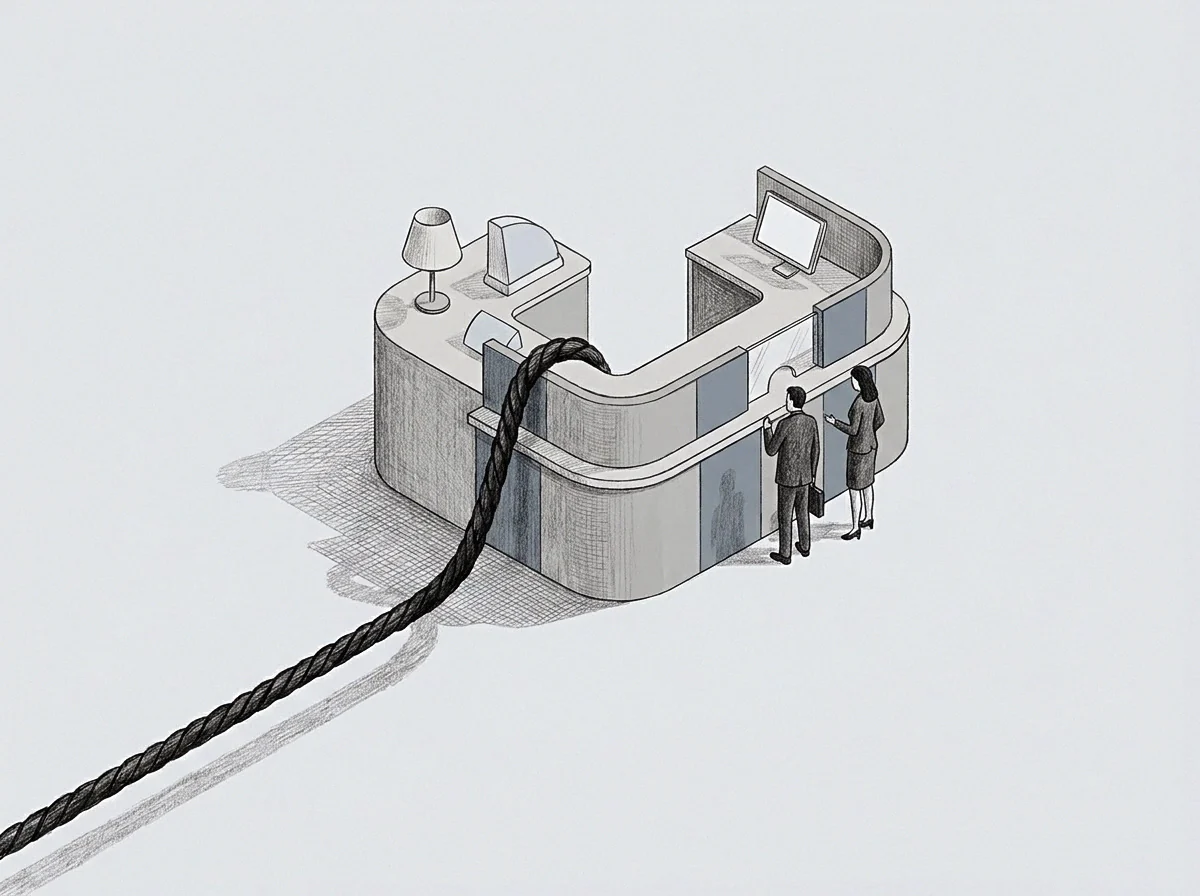
Cognitive Drift in Unrecorded Deals
Human recall functions through reconstruction rather than verbatim playback. Over multi-year operating horizons, an executive reconstructs initial agreements to match subsequent contributions. An operator who worked eighty-hour weeks naturally remembers an unconditional partnership.
The operator who handled corporate liabilities and customer acquisitions remembers a revocable bonus. Psychological research on self-serving attribution demonstrates that partners recall their own contributions at eighty percent of total corporate output while discounting the contributions of peers.

Can Memory Stand Alone in Equity Allocations?
Unrecorded terms deteriorate across calendar quarters. The human brain consolidates episodic memories by embedding emotional conclusions while discarding specific conditional clauses. In an operating company, this biological tendency ensures that spoken caveats disappear while the overarching promise of equity remains vivid.
Partners recall spoken equity promises in terms proportional to the physical exertion they gave the enterprise.
The resulting divergence leaves both parties operating in good faith while asserting irreconcilable facts. Neither party lies in the conventional sense. The discrepancy reflects thirty-six months of cognitive drift unchecked by signed share subscriptions or board resolutions.
The rule of thumb states that an unrecorded equity conversation decays in legal weight with every tax filing that ignores it.

Wall

The Corporate Form as an Evidentiary Barrier
State corporate statutes erect a firm barrier against unrecorded oral equity transfers. Corporate governance requires written board approvals, signed subscription agreements, and explicit stock issuances. When an excluded partner asserts an oral grant of common equity, corporate registries present a blank surface.
Parol evidence standards restrict the use of oral testimony to alter unambiguous written organizational documents.
Take an enterprise launched with one hundred dollars in capital stock. The corporate charter designates Partner A as the sole incorporator and director. Partner B joins three months later under an unwritten pact promising equal ownership upon product delivery.
Partner B ships the codebase. Partner A files annual corporate tax returns listing a single one-hundred-percent owner, signed under penalty of perjury. Partner B receives a Form W-2 with nominal salary and deferred wage notations.
The corporate filing history constitutes a wall that rejects the unwritten kitchen pact.
| Dispute Criterion | Asserted Kitchen Agreement | Contemporaneous Corporate Record | Evidentiary Posture |
|---|---|---|---|
| Equity Percentage | Spoken agreement for forty percent equity upon product completion. | Charter authorizes ten thousand shares, issued entirely to the incorporator. | The cap table governs legal title; the oral assertion carries an equitable claim only. |
| Vesting Condition | Unwritten milestone based on shipping the commercial platform. | Board minutes lack vesting schedules, option grants, or milestone resolutions. | The claimant bears the burden of establishing promissory estoppel. |
| Compensation Model | Deferred equity compensation in lieu of market executive salary. | Corporate payroll ledgers categorize cash transfers as sporadic employee wages. | Tax filings contradict ownership claims and support employee classification. |
| Governance Authority | Joint managerial control asserted through mutual check-signing authority. | Corporate resolutions designate the single incorporator as sole managing officer. | Banking authorization indicates agency power without establishing equity title. |
The presence of an explicit merger clause in an eventual employment agreement or consulting contract extinguishes prior unwritten commitments altogether.

Dispute

Evidentiary Proxies in Unwritten Equity Claims
When contemporaneous minutes stay silent, equity disputes turn toward circumstantial documentary proxies. The party claiming unwritten equity searches informal communication channels to substantiate the oral agreement. These secondary traces include specific artifacts generated throughout normal operations:
- Written correspondence fragments detailing ownership percentages in casual email exchanges or chat applications between founders.
- Tax return representations showing whether the claimant reported partnership income on Schedule K-1 or received employee wages on Form W-2.
- Capital contribution receipts verifying whether cash injections from personal bank accounts were booked as shareholder equity or shareholder debt.
- Third-party financing applications submitted to commercial lenders where the cap table split was formally declared under signature.
When these traces contradict each other, governance freezes. Corporate operations stall because banks, venture funds, and acquirers refuse to transact with an enterprise bearing an unquantified equity liability.
A venture with divergent founder accounts experiences an immediate operational freeze the moment external diligence begins.
The direct consequence of leaving founder promises off corporate registries is complete enterprise paralysis during institutional diligence, destroying enterprise value before legal title resolves.

Remedy
Resolving irreconcilable recollections requires abandoning oral accounts and establishing commercial alignment through documented adjustments. Parties routinely evaluate whether the claimant holds an equitable promissory estoppel action, quantum meruit claim for unpaid services, or beneficial ownership claim under constructive trust principles. Litigation consumes corporate liquidity rapidly.
Practical resolution demands creating a clean settlement agreement that repurchases the unwritten equity claim or formalizes an adjusted equity position through retroactive stock grants.
Where the parties choose separation, the enterprise structures a cash separation buyout tied to a full release of all past spoken claims. Where the parties choose continued operation, they execute a comprehensive shareholder agreement with explicit vesting schedules, superseding every prior conversation. Whether early partners can ever return to collaborative parity after realizing their internal recollections were fundamentally opposed remains an unresolved dilemma for the surviving business.