
Establishing Standard Valuation Haircuts For Unsubstantiated Retrospective Sweat Equity Claims In Enterprise Reorganizations
Standard valuation haircuts discount unverified retrospective sweat equity claims up to ninety-five percent to protect enterprise restructuring capital.

Proof
Enterprise reorganization processes enforce a structural boundary between verified financial obligations and unrecorded historical labor. When a company restructures its balance sheet under creditor pressure, participants frequently present retrospective claims for sweat equity accumulated during prior operating cycles. These claims rest on reconstructed memories of uncompensated nights, unpaid executive direction, and technical architecture delivered without formal payroll entries.
Contractual deferred compensation liabilities possess defined terms, corporate board minutes, and ledger accruals. Retrospective sweat equity claims lack contemporaneous corporate documentation, tax filings, and arms-length appraisals.
Restructuring transactions cannot absorb informal expectations without impairing fresh capital commitments. Unrecorded labor dissipates quickly. When an early operator asserts an entitlement to ten percent of post-reorganization common stock based on three years of below-market compensation, the restructuring committee encounters an evidentiary deficit.
The claimant recalls an implicit covenant promising substantial equity participation upon enterprise refinancing. The restructuring sponsor examines an operating agreement containing an integration clause and an unamended capitalization schedule that excludes the operator entirely.
Informal contributor assertions yield zero enforceable ownership when confronted with integrated corporate reorganization agreements.
The delta measures that distance. Incoming equity syndicates calculate value strictly through audited asset verification, verified cash generation, and documented intellectual property assignments. When an enterprise attempts to satisfy an undocumented claimant through unadjusted equity grants, incoming investors demand dollar-for-dollar valuation discounts or governance protections to offset potential shareholder litigation.
Valuation demands empirical support. A contribution that was never billed, recorded, or approved by contemporaneous board consent exists as an unperfected moral expectation inside reorganization proceedings.

Contemporaneous Records Against Retrospective Assertion
Documentary reconstruction of historical work performance reveals systemic divergence between what claimants recall delivering and what enterprise records substantiate. Psychological contract research confirms that individuals reconstructing past sacrifice systematically inflate both the market value and the operational permanence of their historical labor. Claimants project contemporary enterprise viability backward onto early contributions, treating survival as definitive confirmation of their historical performance.
Enterprise audits assess retrospective claims through three primary filters:
- Written corporate authorizations signed by authorized officers prior to work execution define whether labor constituted enterprise debt or uncompensated activity.
- Contemporaneous time allocations logged in project software establish baseline delivery rather than post hoc calendar summaries.
- Periodic tax filings reporting deferred compensation liabilities confirm corporate recognition of accrued financial obligations.
An undocumented contribution converts to enterprise value only when every incoming creditor accepts the dilution.

Clock
Temporal distance accelerates evidentiary decay in commercial restructuring disputes. As years elapse between initial labor expenditure and formal enterprise reorganization, documentary evidence thins while claimant valuation expectations compound. Memory magnifies past toil.
An operator who completed software development forty months prior to reorganization often reconstructs the economic worth of that code using contemporary software licensing metrics, ignoring early obsolescence and subsequent refactoring expenses.
Time weakens unwritten assertions. Restructuring advisers evaluate sweat equity claims through chronological bands, applying steep evidentiary penalties to work completed outside active audit windows. Claims arising from periods exceeding two fiscal years without written acknowledgement face severe skepticism from reorganization committees.
The claimant remembers foundational grit that sustained the enterprise. The restructuring committee identifies outdated work product that required complete replacement by salaried staff.
Unrecorded operational labor loses economic weight as the enterprise replaces initial work product with verified capital investments.
Silence inflates expectations. When an enterprise operates for extended stretches without formalizing compensatory equity agreements, both sides cultivate incompatible accounts. The contributor interprets executive silence as tacit ratification of an accumulating equity stake.
The managing partners view the contributor’s willingness to work without invoice submission as an acknowledgement that labor was supplied in exchange for general professional association or speculative upside that expired with the business downturn.

Decay Rates On Reconstructed Hours
Retrospective sweat equity claims decay in economic validity across distinct temporal tiers. Labor delivered within six months of reorganization retains moderate evidentiary accessibility through active server repositories, recent communications, and current vendor validation. Contributions situated eighteen to thirty-six months in the past suffer substantial verification loss, characterized by decommissioned software environments, departed managers, and absent objective metrics.
The freeze exposes the variance. At the moment reorganization negotiations commence, equity allocations halt. The enterprise requests definitive proof of unpaid service.
Claimants attempt retrospective reconstruction through diary entries, personal calendar exports, and selective communication threads. These artifacts fail to establish corporate assent or agreed economic equivalence. The enterprise quantifies actual economic substitution cost: what a third-party contractor would have billed to deliver equivalent output during that specific operating window.

What Evidence Survives Enterprise Restructuring Audits?
Reorganization trustees subject retrospective assertions to strict verification standards borrowed from insolvency accounting. General assertions of strategic guidance, introductory networking, and executive availability register zero asset value on enterprise balance sheets. Third-party expert analysis confirms that unrecorded executive time exhibits the highest rate of subjective inflation among all reorganization claims.
Tangible work product accompanied by verifiable intellectual property assignments survives restructuring scrutiny with minimal adjustment. A claimant who transferred source code, proprietary formulas, or registered patents retains demonstrable economic leverage. An unassigned contribution presents legal risk, forcing the restructuring entity to negotiate an intellectual property release rather than validating an unstated equity claim.
Accepting unverified historical labor at nominal value dilutes fresh investment capital and stalls debt reorganization proceedings.
Scale
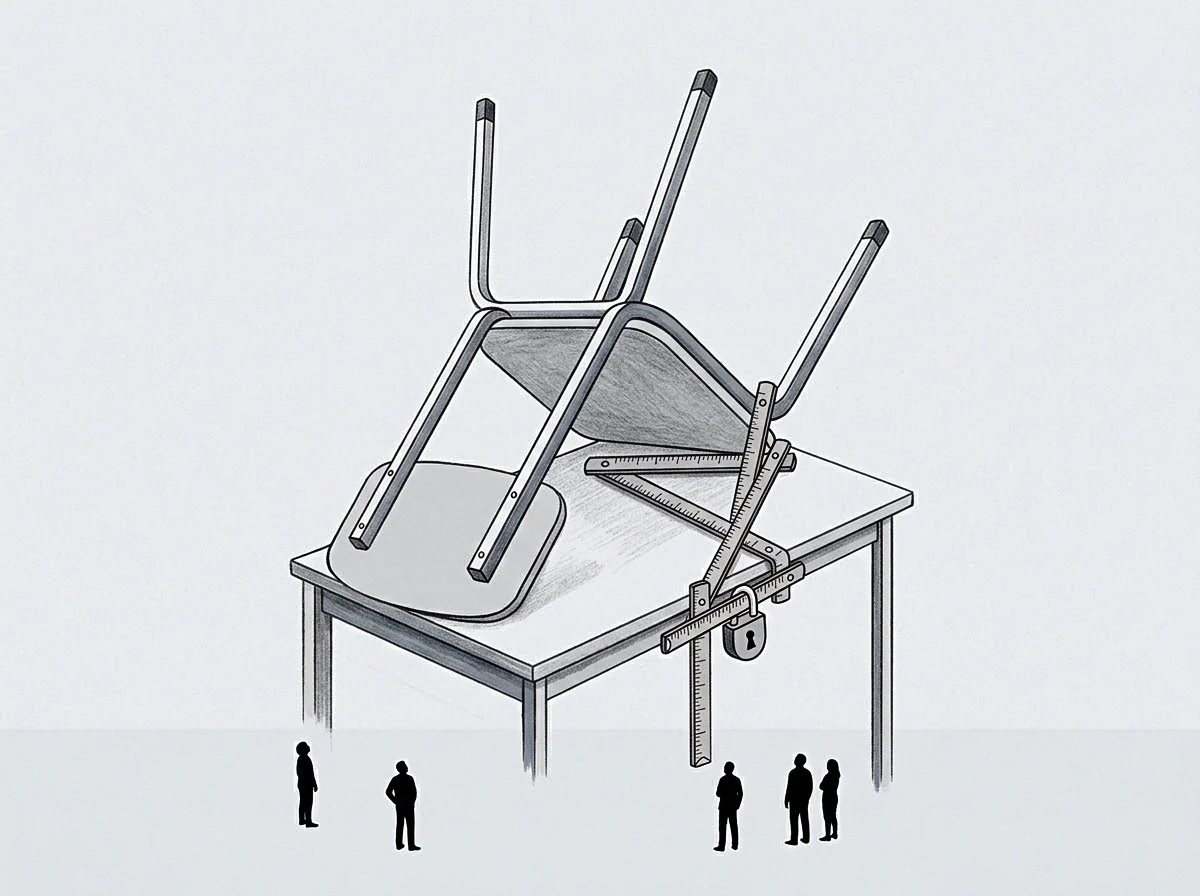
Standardized valuation haircuts convert speculative retrospective sweat equity claims into realistic enterprise obligations. Rather than engaging in prolonged litigation over remembered verbal assurances, restructuring professionals apply graded percentage reductions based on evidentiary deficiency, contribution category, and temporal distance. These standard deductions protect senior creditors and new equity sponsors while granting documented historical contributions bounded financial recognition.
The haircut schedule operates across objective verification categories. Pure retrospective claims lacking any contemporaneous paper record face baseline reductions between seventy and ninety percent of asserted fair market value. Where partial documentation exists, such as informal communications or incomplete project tickets, haircut rates moderate to forty or sixty percent.
The haircut reflects the evidentiary discount required to balance unverified historical claims against fresh cash investment.
| Contribution Category | Claimed Asset Basis | Evidentiary Requirement | Standard Haircut | Restructuring Instrument |
|---|---|---|---|---|
| Software Architecture | Market contractor billing rates | Active repository commits and IP assignment | 40% to 55% | Junior common equity or non-voting units |
| Executive Operations | Market executive compensation | Meeting minutes and third-party commercial records | 60% to 75% | Performance warrants with strike premium |
| Business Development | Attributed revenue commissions | Direct contract execution records | 70% to 85% | Contingent value rights tied to collection |
| Advisory Services | Blended consulting day rates | Calendar entries and informal written updates | 85% to 95% | Unsecured general claims tranche |
| Undocumented Sweat Equity | Subjective equity share parity | Pure recollection without formal instruments | 95% to 100% | Full disallowance or nominal settlement pool |
Documentation sets the boundary. The haircut schedule penalizes reliance on informal recollection while recognizing verifiable economic assets delivered to the company. When an enterprise reorganizes, capitalization tables cannot expand to satisfy historical sentiment.
Every percentage point allocated to an unverified historical claimant dilutes senior debt recoveries or decreases incoming operational capital.
A standard valuation haircut translates subjective historical contribution into the strict evidentiary currency demanded by recapitalization markets.
Assumptions governing this schedule depend on jurisdictional labor statutes and contractual integration standards. In jurisdictions enforcing rigid wage protections, historical sweat equity assertions may transform into statutory unpaid wage claims, bypassing reorganization equity schedules entirely. In corporate jurisdictions prioritizing integration clauses, complete absence of contemporaneous board approval results in total claim expungement.

Valuation Haircut Bands Across Contribution Categories
Contribution types diverge sharply in verifiable economic permanence. Technical output embedded in commercial products presents high verifiability, allowing restructuring auditors to assess replacement cost directly. Executive management, marketing conceptualization, and partnership negotiations resist objective post hoc valuation, justifying top-tier valuation discounts.
Take an enterprise reorganization where an early co-founder asserts a four hundred thousand dollar retrospective sweat equity claim based on two years of unpaid operational management. The company holds zero payroll accruals, zero deferred compensation agreements, and an operating agreement specifying capital contributions as the sole basis for equity issuance. Applying an eighty percent haircut reduces the recognized claim base to eighty thousand dollars.
This balance converts into junior synthetic warrants rather than dilute voting common stock, aligning legacy claims with enterprise performance.
A contractual liquidation preference waiver condition converts contested sweat equity into junior warrants conditioned on enterprise recovery.

Board
Capitalization table reconstruction represents the mechanical conclusion of enterprise reorganizations. Reorganization directors must reconcile competing ownership accounts into a single binding equity register. Paper fixes what memory shifts.
The capitalization schedule adopted by the reorganized company extinguishes informal understandings, historical correspondence, and unwritten promises made by departed executives.
Capital structures resist sentiment. When restructuring trustees finalize post-reorganization share allocations, legacy participants discover that historical sweat contributions occupy the lowest priority tier. Senior secured lenders receive debt reinstatements or senior equity.
Unsecured operational vendors claim cash distributions or structured debt notes. Unsubstantiated sweat equity contributors receive either heavily discounted junior equity or complete formal release requirements without participation.
Enterprise restructuring formalizes ownership strictly through verified legal instruments, leaving undocumented recollections outside the corporate capital base.
Restructuring enforces strict priority. The claimant who worked thirty months without pay often views the reorganization as a breach of solidarity. From the desk of the incoming capital syndicate, extinguishing ungrounded claims constitutes basic fiduciary hygiene.
Unsubstantiated claims inject ownership uncertainty, cloud voting control, and deter institutional co-investors necessary for operational recovery.
Settling retrospective claims through non-dilutive commercial instruments resolves ownership disputes without destabilizing common equity pools. Enterprise reorganizations frequently utilize contingent value rights, revenue-participation warrants, or modest cash exit distributions to extinguish legacy claims cleanly. The participant signs a comprehensive release of historical claims, ensuring that subsequent corporate financing events operate without residual equity encumbrances.
Whether early unrecorded operational labor constitutes an enterprise property right or an unperfected gift remains an open dilemma across legal reorganizations.