
Finding The Silent Gap Between Two Logged Public Key Rotations
A silent gap between logged public key rotations creates divergent founder records of authority, exposing unallocated commercial liabilities during diligence.

Seat
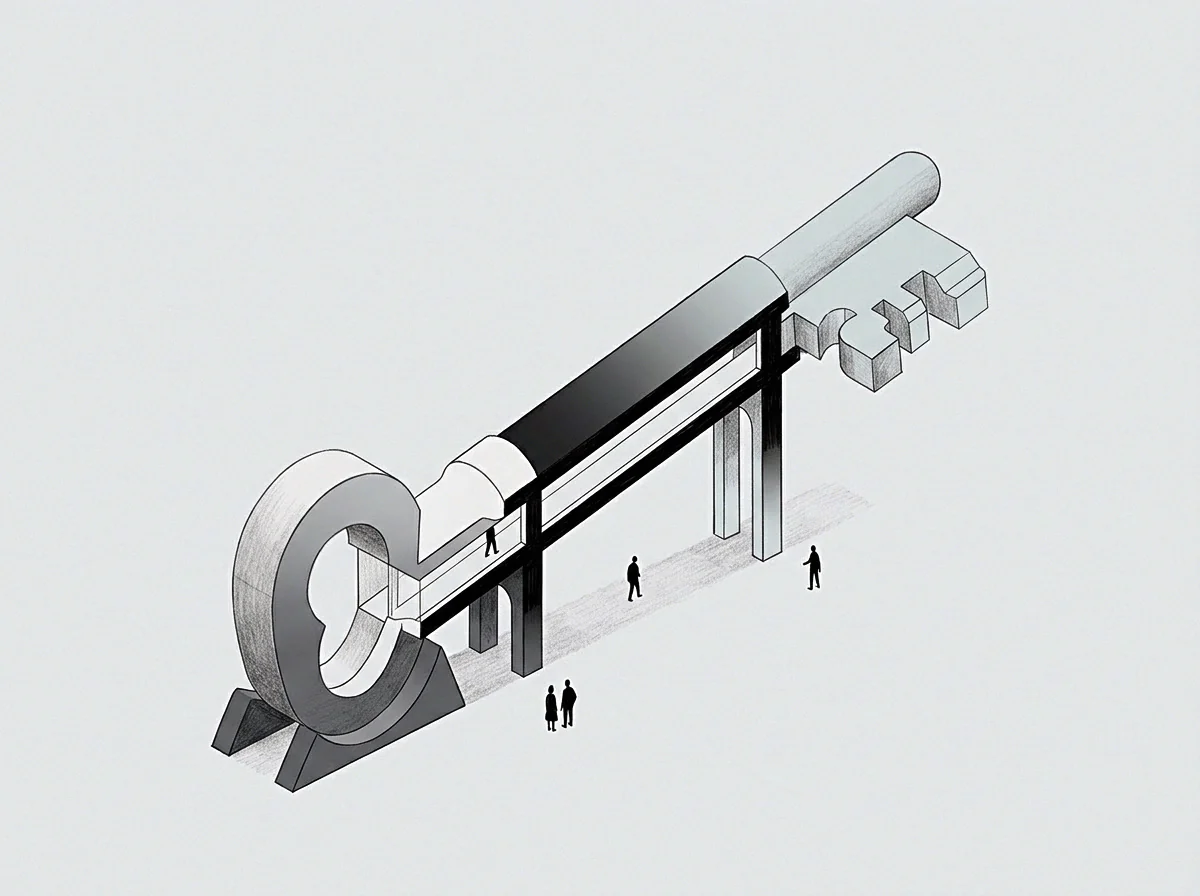
Two operators sit at one table, and each holds a distinct ledger of who governed the company during a credential migration. In a cryptographic ledger or verifiable identity registry, a public key rotation records the replacement of an old verification credential with a fresh identifier. The append-only record timestamps the initial key registration at the origin and registers the replacement key eighteen months later.
Between those two entries sits an unmonitored span of four hundred days. The technical partner treats the logged rotation entries as proof of unbroken continuity. The operating partner treats the same span as a succession of emergency handoffs, verbal delegations, and private sign-offs executed on personal hardware.
Both accounts appeared complete.
The divergence between those two versions defines the silent gap. One side examines the published transparency log and reads a clean line connecting two operational baselines. The other side consults sent messages, local terminal histories, and counterparty communications to trace thirty-six unlogged signing events.
When a dispute arises regarding who authorized a corporate obligation, the distance between the public registry and the operational reality surfaces. That distance produces an unallocated liability.
A cryptographic log verifies only the assertion presented to the witness, leaving intermediate authority disputes intact until an explicit audit forces comparison.
Three operational breakdowns routinely produce this condition in early companies:
- Unanchored Key Handover occurred when an outgoing executive transferred administrative access through a local credential file without publishing an intermediate revocation entry.
- Shadow Signing Delegation proceeded through an unlogged secondary key pair that third-party counterparties accepted on verbal assurances from the technical lead.
- Delayed Epoch Registration happened because the engineering team deferred publishing an updated public key to the shared transparency log while waiting for institutional custody integration.
The person occupying the administrative chair discovers that public key registries register cryptographic states rather than personal agreements. The operating agreement assumes that credential possession maps directly to institutional authority, yet informal reallocations of responsibility routinely outrun the cryptographic log. Silence covers the divergence.
When the records finally meet during corporate diligence or a founder separation, neither party possesses an undisputed evidentiary baseline. The safer assumption treats every unlogged interval as an unwritten commercial exposure.
Interval
Reconstruction of an undocumented operational period begins by measuring the delta between recorded cryptographic events and concurrent commercial commitments. Consider a concrete situation involving two co-founders managing an infrastructure enterprise. The company established an initial cryptographic signing key on March 1 to govern code signing, treasury disbursements, and customer identity claims.
On November 1 of the following year, the technical founder submitted a public key rotation transaction to the corporate identity registry, establishing a multi-party custody structure. The public log shows an uninterrupted line of validity connecting the two timestamps. The operational record reveals forty-two private commitments completed during the intervening twenty months using single-signature authorization stored on a personal laptop.
The following comparison details how the two accounts evaluate that eighteen-month interval across operational domains:
| Domain | Technical Registry Account | Commercial Operating Account | Evidentiary Delta |
|---|---|---|---|
| Codebase Release Authority | Single continuous root of trust verified by primary public key until logged rollover. | Interim automated deployment pipeline configured with secondary credentials by a contractor. | Six production builds distributed without root cryptographic lineage. |
| Treasury Authorization | Single operational signatory logged on registry entries. | Three verbal authorizations allowing debt commitments without hardware token presence. | Unlogged loan covenant signed under an unratified key state. |
| Customer Identity Attestation | Registry proofs show uninterrupted customer tenant verification. | Manual support overrides granted to enterprise tenants during a four-month service outage. | Thirty-two client configurations active outside documented access policies. |
| Revocation Exposure | Revocation timestamp matches the formal publishing date of the successor key. | Compromise of the local machine noted informally seven months prior to log publication. | Two hundred days of untracked signing exposure across all customer contracts. |
The technical founder asserts that third parties accepted every signature produced under the active key, demonstrating institutional validity. The commercial founder observes that counterparty contracts bound the organization to strict multi-party review standards that the private key execution violated. The log preserved nothing.
Both accounts hold logical coherence within their selected borders. The technical account validates cryptographic determinism, while the commercial account tracks institutional duty.
The duration of an undocumented key rotation interval correlates directly with the volume of unratified corporate actions accumulated by the firm.
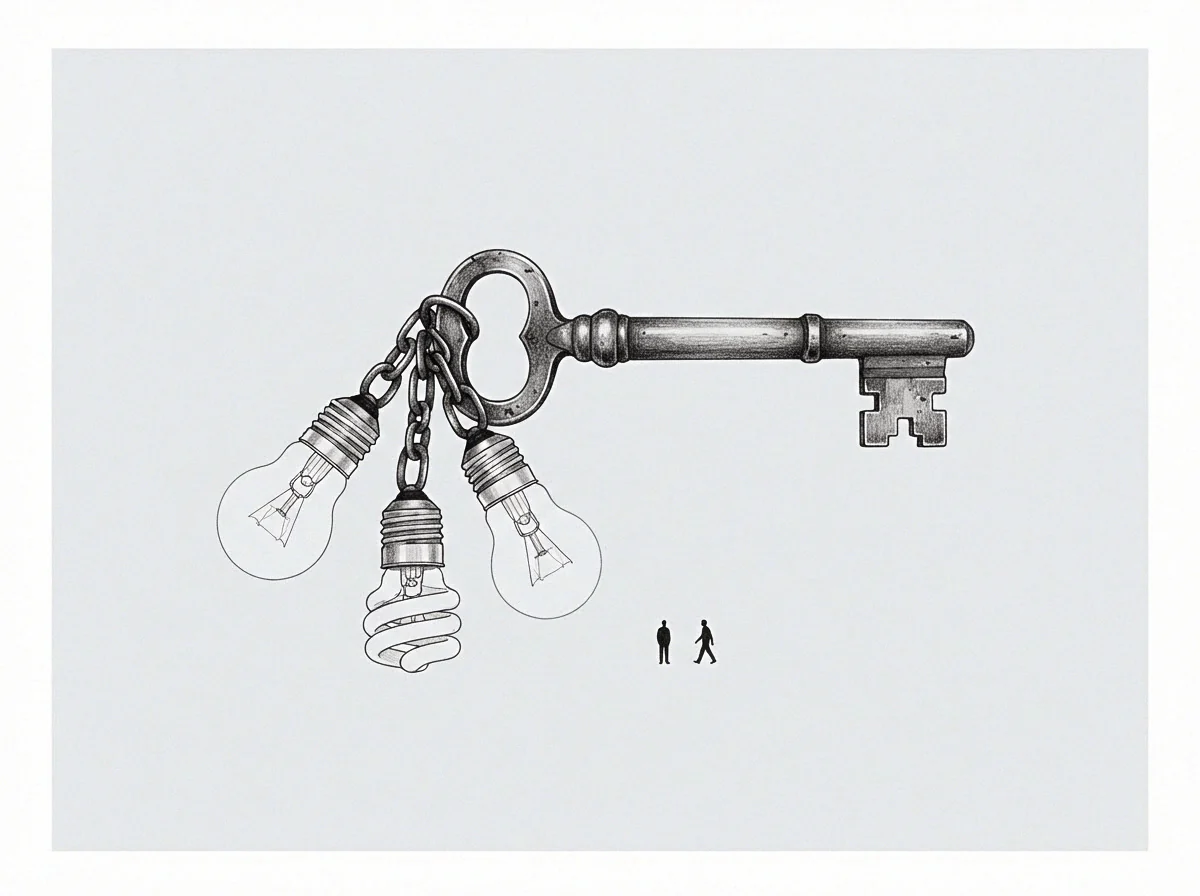
The second key arrived late. In that silent span, the company expanded its client commitments while using an authorization posture designed for early prototypes. Each operator maintained an internal count of authorized risk that never appeared in formal board minutes.
When an audit examines the interval, the technical lead describes administrative stability, while the commercial lead recounts perpetual triage. The other party states that the registry had always been accessible and that failure to inspect the public key log constituted operational negligence.
Witness
A transparency log relies on independent witness servers to attest that an append-only sequence remains unbroken. In institutional credential systems, a witness monitors the tree head of the log, cryptographic inclusion proofs, and consistency proofs between published epochs. A witness confirms only that the log operator did not present conflicting histories to different participants.
It does not inspect whether the person executing the rotation transaction maintained the corporate right to bind the entity. Two parties signed separately.

Which Signatures Survive An Unanchored Interval?
Determining the enforceability of intermediate transactions demands inspecting the chain of authority linking the initial registered key to the successor credential. If a root key experiences private compromise or informal operational handover without a logged revocation, every digital signature issued prior to the subsequent rotation remains contestable. The holder of the corporate seal claims commercial estoppel, arguing that counterparties acted in good faith upon the public key published in the registry.
Conversely, the board or an incoming investor asserts unauthorized execution, demonstrating that the operational mandate had passed to another officer months before the cryptographic rotation occurred.
The law governing corporate authority distinguishes between apparent authority and actual authority. Apparent authority persists when a company permits an external observer to believe an individual holds power, even after internal governance instruments strip that individual of real mandate. A public key registry represents a classic instrument of apparent authority.
When an enterprise leaves an outdated public key in a verifiable directory, third parties legitimately rely on signatures generated by that key. The cost of that reliance falls squarely upon the organization that failed to log the change.
A public key directory validates outward mechanical authenticity without verifying inward governance authorization.
Cognitive studies on retrospective recollection reveal that operators systematically reconstruct their memory of authority handovers to align with current financial outcomes. The technical executive recalls delegating operational execution while retaining absolute signing prerogatives. The business executive recalls receiving complete operational carte blanche during a crisis meeting in an empty office.
The written record remained silent. Both parties report high subjective confidence in incompatible timelines. This divergence leaves open the question of how an organization can bind two disparate records of authority when the underlying cryptographic mechanism permits unobserved delegation.
Shelf
Recovering the operational reality of a silent rotation gap requires assembling physical and digital artifacts that sit outside the log. These artifacts reside on local drives, within internal ticket archives, and in the margins of dated execution drafts stored on corporate shelves. When formal discovery or dispute resolution begins, three categories of evidence establish the missing institutional lineage:
- Hardware Security Module Export Archives demonstrate the exact physical possession of signing keys throughout the unlogged sequence.
- Secondary Operational Timestamps drawn from customer audit trails expose discrepancies between internal system access and the registry state.
- Corroborating Communication Logs capture the operational understandings that governed temporary credential use between founders.
Consider an engineering team that discovered an unlogged key compromise in June but delayed formal public key rotation until the scheduled annual infrastructure migration in December. During those six months, the engineering lead rotated local development credentials while leaving the root identity key published on public discovery endpoints. The commercial lead negotiated three institutional customer agreements containing warranties of continuous cryptographic hygiene.
The seat was abandoned early. One person carried the exposure.
The delta between the June discovery and the December publication represents six months of unallocated corporate breach. When the company approaches an equity financing or an acquisition, the representation and warranty schedule forces that gap into view. The acquirer demands evidence that no unauthorized entity signed commercial paper or accessed production repositories during the interval.
The technical founder points to the absence of reported incidents in the public log. The buyer notes that the log could not record events that occurred entirely outside its visibility. A specific indemnification carveout addressing undocumented credential use reallocates the financial burden to the selling founders personally.

Fallout
The terminal phase of an unmonitored credential gap arrives during structural separation or litigation. When two founders divide enterprise assets, the integrity of past intellectual property assignments, client contracts, and equity grants turns upon the validity of intermediate digital signatures. If the person who signed the intellectual property assignment used a deprecated key whose revocation was concealed until the subsequent public rotation, the transfer remains vulnerable to procedural challenge.
Authority shifted without a trace. The old key still authorized transactions.
Unrecorded credential handovers turn what should have been routine corporate governance into forensic reconstruction. Accounting for the interval requires auditing every commercial agreement, software release, and treasury transfer completed between the two logged epochs. The audit found nothing recorded.
An enterprise that permits months of undocumented signing activity exposes its transactions to repudiation by disgruntled former executives or watchful counterparties seeking contract termination. When an organization treats a verifiable cryptographic log as a substitute for contemporaneous corporate resolutions, it pays for the discrepancy in forensic fees, impaired company valuation, and fractured operational partnerships.