
Informal Officer Commitments and Unanimous Board Consent Limits
Informal executive commitments exceeding implied authority fail against statutory unanimous board consent limits, rendering unauthorized transactions voidable.

Room
An executive officer signs a distribution agreement in an airport lounge, promising twenty-four months of territorial exclusivity to secure an immediate commercial pilot. Two floors above the company headquarters three months later, the three directors sit around an oak conference table reviewing the identical term inside a venture financing covenant that expressly prohibits exclusive grants without formal director approval. The officer treated the spoken pledge as ordinary commercial dealmaking within executive purview.
The directors read the exact same commitment as an ultra vires encumbrance on corporate assets requiring unanimous board consent. Neither side consults the company minute book before the conflict becomes operational.
Divergent recollection flourishes in the space between daily operational momentum and statutory corporate governance. Executive officers routinely conduct business through informal promises, side letters, and handshakes under intense commercial pressure to close transactions. Corporate charters and state corporation statutes, meanwhile, reserve specific extraordinary actions to the board of directors.
Unanimous written consent statutes, such as Section 141(f) of the Delaware General Corporation Law, permit directors to act without a physical meeting only when every single board member signs the written instrument. When an officer issues an informal assurance touching on board-level prerogatives, two irreconcilable operational records begin running concurrently.
A corporate charter allocating exclusive licensing authority to the directorate renders subordinate executive assurances legally voidable from inception.
Corporate authority operates through distinct statutory and agency tiers that officers frequently conflate under transactional urgency.
- Actual express authority flows directly from statutory provisions, certificate of incorporation clauses, corporate bylaws, and explicit board resolutions formally enrolled in the minute book.
- Actual implied authority encompasses actions customary and reasonable for an officer holding a specific title, permitting routine contracts that preserve the ordinary course of business.
- Apparent authority exists entirely in the reasonable perception of an external counterparty, created exclusively through representations attributable directly to the board of directors rather than to the rogue agent.
Counterparties routinely discover that an executive officer lacks power to bind the enterprise to transactions categorized as extraordinary or structural. Pledges granting equity options, altering shareholder voting rights, transferring core intellectual property, or guaranteeing third-party corporate debt exceed presumptive executive authority in corporate jurisdictions worldwide. The officer holds an internal narrative of operational initiative.
The board holds an internal narrative of fiduciary oversight. The distance between those accounts remains invisible until external enforcement forces an audit of the underlying authorizations.
A simple operational guideline governs the perimeter: any commercial commitment altering the structural governance rights of shareholders stands outside executive discretion.

Mandate

Statutory Boundaries of Unanimous Written Consents
State statutory frameworks permit board action outside formal meetings under rigorous procedural constraints designed to protect absent directors. The mechanism of unanimous written consent requires every sitting director to execute the identical instrument, filing the signed counterpart with corporate records. The statutory architecture treats unanimous consent as an extraordinary substitute for deliberative meetings, demanding strict compliance rather than substantial performance.
A single withheld signature, an unnotified director, or an unsigned email confirmation invalidates the consent instrument entirely under traditional statutory interpretations.
Corporate records frequently exhibit retroactive attempts to paper over informal officer commitments using backdated unanimous consents. An officer promises an investor observer seat or an anti-dilution floor during late-night closing negotiations. Months pass, capital deploys, and corporate counsel distributes a unanimous consent resolution seeking retroactive ratification of the arrangement.
If an independent director refuses execution or conditions signature on economic renegotiation, the legal reality shatters. The company finds itself divided between an executory commercial commitment and a legally unauthorized corporate act.
The refusal of a single director to execute a written consent prevents valid corporate ratification regardless of operational consensus among the remaining board members.

Where Does Stated Authority Break Down?
The boundary between everyday executive management and board-level prerogative generates persistent transactional friction across expanding companies. Officers assume broad inherent authority by virtue of the chief executive seat. Corporate law recognizes no inherent executive authority to consummate structural transactions, issue equity securities, or encumber core productive assets without director action.
Counterparties relying solely on an officer warranty of authority accept the legal risk of non-enforcement whenever the contract touches statutory board domains.
A dispute between corporate factions exposes the structural fragility of informal dealmaking. The following comparison illustrates the legal enforceability and procedural prerequisites across customary corporate actions under standard corporate governance law.
| Corporate Action Category | Required Governance Level | Enforceability of Informal Pledge | Available Legal Remedies |
|---|---|---|---|
| Ordinary commercial supplier contracts | Executive implied authority | Fully binding on corporate entity | Specific performance or monetary damages |
| Real property multi-year leasing | Board resolution by simple majority | Voidable absent board acquiescence | Restitution or quantum meruit claims |
| Issuance of options or convertible notes | Board resolution or unanimous consent | Legally void under statutory standards | Personal breach of implied warranty of authority |
| Exclusive core intellectual property licensing | Board approval or supermajority consent | Subject to cancellation by directors | Rescission of contract and return of assets |
The counterparty in that position invariably maintains that the chief executive officer possessed apparent corporate authority to sign the transaction.

Friction

The Divergent Recollection of Board Assurances
Memory operates reconstructively rather than photographically during extended commercial engagements. Two executives participating in the same informal board discussion depart with completely divergent accounts of corporate authorization. An officer remembers a casual nodding agreement during dinner as definitive authorization to pursue a joint venture.
The non-executive directors remember that same conversation as exploratory banter conditioned on formal legal review, comprehensive documentation, and definitive written board approval.
Transactional urgency accelerates this cognitive divergence. The operating officer faces real-time market demands, treating director silence or preliminary enthusiasm as operational clearance. The director sits at an oversight remove, assuming corporate formalities remain a non-negotiable prerequisite to legal obligation.
Laboratory findings in cognitive psychology confirm that individuals reconstruct memories of ambiguous conversations to align with their forward operational commitments. The officer reconstructs the dinner as a mandate; the director reconstructs it as an unapproved inquiry.
When economic disputes arise, neither party acts in conscious bad faith. Each possesses an internally coherent narrative supported by subjective memory. The delta between those memories represents the exact operational point where corporate liability accumulates without insurance coverage.

Informal Ratification Versus Statutory Nullity
Corporate jurisprudence divides sharply regarding whether informal director acquiescence cures unauthorized officer contracts. One stream of judicial doctrine, prevalent in traditional corporate decisions, permits implied ratification when directors know of an informal commitment, accept commercial benefits, and remain silent over extended periods. Implied ratification treats director silence alongside retention of contract benefits as constructive assent, binding the company despite procedural defects.
The modern statutory trend strictly enforces structural formalities against informal director acquiescence. Delaware decisions addressing stock issuances, such as cases applying Section 152 and Section 204 of the Delaware General Corporation Law, establish that corporate acts lacking statutory prerequisites constitute void acts incapable of equitable cure through informal conduct. When corporate officers make equity promises without formal board resolutions or compliant unanimous written consents, equity cannot override the clear statutory command.
The informal commitment remains a nullity.
Take an emerging manufacturing company with three equal founders serving as sole directors. The commercial officer executes a side letter promising an early distributor fifteen percent warrant coverage to close an initial inventory run. The officer mentions the arrangement briefly during a casual coffee with the technical co-founder.
The finance director never hears the detail. The company takes the distributor cash, delivers the goods, and operates for two years until an acquisition diligence audit exposes the unissued warrants. The buyer demands cancellation of the warrant claim or escrow protection exceeding one million dollars.
The commercial officer holds an account where all founders knew of the deal and benefited from the early revenue. The finance director holds an account where the company never authorized warrant issuance, keeping the cap table pristine. The distributor holds an account of reliance upon the apparent corporate leadership.
The cost arrives not in the form of litigation victories, but in the total impairment of transaction closing capacity.
Equitable estoppel fails against a statutory mandate requiring express director resolutions for valid corporate stock issuances.

Consent
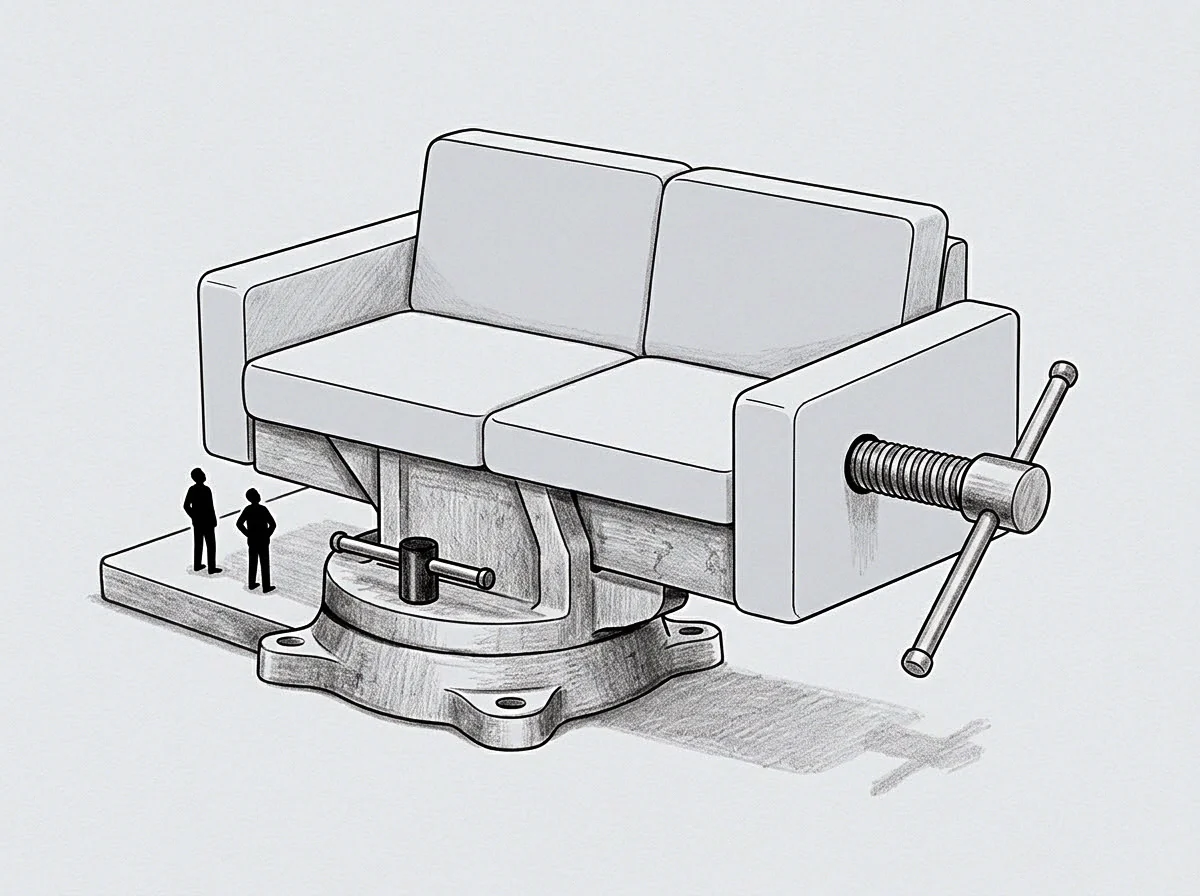
Procedural Rigor in Director Approvals
Unanimous written consent functions as a blunt binary mechanism. Every individual director listed on the corporate roster must execute the document before the action gains legal validity. Electronic delivery platforms permit rapid signature collection across geographic zones, yet they introduce evidentiary ambiguities regarding timing, delivery, and board composition.
If an interim director resigns twenty minutes prior to signature collection, or if an incoming replacement executes the consent prior to formal election, the document fails the statutory standard of absolute unanimity.
Officers attempting to bypass contentious boardroom debate frequently exploit the written consent procedure. An executive drafts a consent resolution, secures signatures from two aligned inside directors, and withholds distribution to an independent board member until transactional closing occurs. Under corporate statutes, an unexecuted unanimous consent possesses zero legal force.
The incomplete document serves solely as an evidentiary admission that the corporate action required board authorization which was never obtained.
A written instrument distributed to some directors while withheld from others constitutes an unexecuted draft possessing zero corporate authority.
When an officer signs a definitive agreement under an unexecuted or incomplete unanimous consent, the corporate entity risks internal paralysis and external liability.
- Direct contract rescission eliminates the transaction while requiring the corporate entity to restore all commercial consideration previously received.
- Personal officer liability attaches under the doctrine of breach of implied warranty of authority, exposing individual executive assets to counterparty recovery.
- Fiduciary duty litigation emerges from minority shareholders challenging the unauthorized dissipation of corporate property or dilution of shareholder equity.
The mechanical execution of the minute book represents the only defense against structural vulnerability. An unsigned consent form sitting in a digital signature queue does not protect an executive who guarantees enterprise obligations. The legal condition governing director action by written consent requires every signature on the corporate instrument prior to contractual delivery, failing which the counterparty remains entirely uncommitted.

Shelf
Corporate records survive the humans who populate boardroom chairs. Founders depart, outside investors cycle off directorates, and commercial relationships dissolve into litigation or asset acquisitions. Ten years following an executive pledge, the minute book sitting on a corporate secretary shelf or stored inside an encrypted digital repository dictates legal ownership.
The oral assurances, the unrecorded hallway compromises, and the casual emails fade into disputed recollections that fail to withstand judicial scrutiny during corporate audits.
Statutory cure mechanisms, exemplified by Delaware General Corporation Law Section 204 and Section 205, provide formal pathways to ratify defective corporate acts. These statutes acknowledge that corporate officers frequently execute stock commitments, executive compensation agreements, and structural loans without compliant board resolutions. Ratification under Section 204 requires the current board to adopt formal resolutions identifying the defective act, stating the nature of the corporate failure, and confirming the ratification vote.
If the defective act originally required shareholder approval, the ratification resolution must go before the current shareholder base for definitive voting.
The cure process carries substantial operational frictions. Filing a certificate of validation with state authorities exposes internal administrative failures to public record. Dissenting shareholders or uncooperative directors gain legal leverage to block ratification or demand economic concessions.
The cost of curing an informal officer commitment through statutory ratification routines regularly exceeds the original commercial value of the underlying deal.
A rigorous corporate governance practice prevents this divergence before transactional closing. Executive officers ensure that any promise implicating asset exclusivity, equity rights, intellectual property transfers, or debt guarantees proceeds directly through formal board channels. Unanimous written consents require complete circulation, unambiguous resolution language, and contemporaneous filing with corporate minutes before any officer executes the external counterpart agreement.
The gap between what an executive promised at an airport lounge and what the board enrolled in the corporate ledger remains unbridged until the written records are audited against external claims. The written record stands intact while the spoken promise dissolves. Whether corporate law should ultimately permit equitable judicial reformation of defective corporate acts without statutory consent procedures remains an open inquiry among corporate governance authorities.