
Quantifying Executive Resource Reallocation Induced by Unresolved Equity Disagreements
Unresolved equity disagreements divert executive capacity from customer acquisition into protective documentation and defensive governance maneuvers.

Drain
Two partners spend six months building software and customer pipelines under conflicting expectations about equity. One partner assumes an equal split discussed during an early walk between offices still holds, while the other believes later capital contributions shifted the arrangement to an eighty-twenty division. Neither puts the capitalization table into an editable document.
Day-to-day operations carry on, but executive energy shifts within weeks of the unaddressed disagreement.
Executive attention shifts into self-preservation. The partner suspecting equity dilution scales back engineering work, channeling hours into side consulting or isolating proprietary code. The partner claiming majority ownership spends evenings reviewing access logs and adjusting administrative roles across company repositories.
Both notice the friction, but daily routines absorb the drag without an immediate breakdown, disguising the loss of commercial momentum.
A deferred ownership conversation diverts executive hours into protective verification routines.
This redistribution of effort happens quietly. A chief executive concerned about dilution stops sharing raw investor notes, taking hours to draft filtered summaries that leave out key valuation details. A technical co-founder, sensing marginalization, slows down architectural documentation and keeps system access codes in a private password manager for leverage.
Time once spent closing deals or sharpening product features is consumed by managing personal exposure.
Unresolved equity splits turn operational planning into risk mitigation, delaying contract signings, stalling partnerships, and shaping company structure around internal self-defense.

Seat
Titles grant formal authority, but an unsettled cap table weakens that authority from the inside. When equity expectations break apart, a chief executive often finds the chief technology officer treating directives as optional recommendations. Operational authority rests on shared recognition of equity stakes; without clear documentation, every strategic decision turns into a turf fight over resource control.
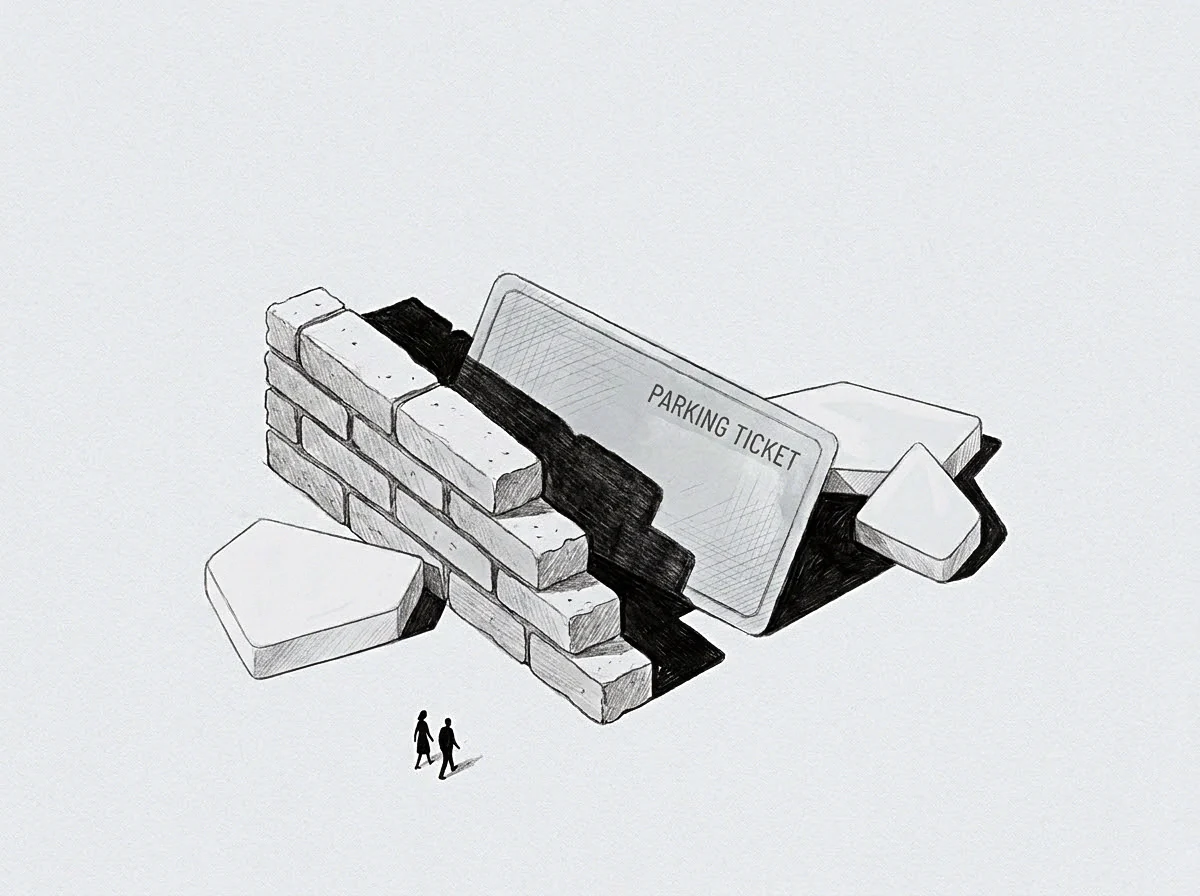
Does Unaddressed Equity Conflict Alter Daily Operational Focus
Calendar allocations show where time actually goes. Research on cognitive bandwidth during ongoing internal disputes shows that senior leaders lose between fifteen and twenty-five percent of their focused executive capacity to internal positioning and threat monitoring. Rather than evaluating market expansion, founders track internal alliances or scan Slack channels for signs that a partner is building leverage with newly hired engineering directors.
Unwritten equity terms convert leadership meetings into territorial defense sessions.
Hiring stalls under this strain. When a candidate for vice president of engineering asks about option pool allocations, discussions stall. One founder wants options to come from a shared pool, while the other insists they come out of the disputed co-founder’s share.
Interviews are pushed back, candidates receive conflicting updates, and strong hires end up turning down offers.
One partner assumes that technical execution earns half the company, while the other believes contribution without cash investment merits only twenty percent.

Metric
Measuring diverted capacity requires tracking the hours shifted from commercial goals into internal defense. Consider a two-person founding team with an implied four-million-dollar post-seed valuation, where forty percent of the equity relies on an unwritten agreement. Over forty-eight working weeks, tracking executive time highlights a steady migration of hours away from revenue generation.
This model compares weekly executive hours between teams with formal share agreements and those navigating an unaddressed equity dispute.
| Operational Category | Resolved Equity Hours per Week | Disputed Equity Hours per Week | Displaced Capacity Percentage |
|---|---|---|---|
| Commercial Customer Acquisition | 22 | 11 | 50 percent reduction |
| Product Engineering and Architecture | 28 | 16 | 43 percent reduction |
| Investor Relations and Capital Formation | 10 | 4 | 60 percent reduction |
| Internal Alignment and Redundant Verification | 4 | 19 | 375 percent expansion |
| Third-Party Legal and Advisory Consultations | 1 | 7 | 600 percent expansion |
The figures show a total diversion of twenty-nine executive hours per week from core objectives. Multiplying those hours by an executive replacement rate of two hundred fifty dollars an hour comes to seven thousand two hundred fifty dollars a week in diverted capital value. Across three quarters, that drain totals two hundred sixty-one thousand dollars in unrecovered executive payroll.

Channels of Resource Distortion
This redirected executive labor moves through three distinct channels:
- Protective Documentation involves logging routine conversations, archiving system access records, and running separate email threads to build evidence for a potential split.
- Informal Coalition Building takes up private calls and lunches spent securing the loyalty of key team leaders ahead of a formal break.
- Decisional Stalling shows up as deliberate delays on joint corporate approvals, signature authorizations, and vendor contracts until leverage is settled.
Research on founder disputes by economic sociologists shows that teams spending over fifteen percent of weekly hours on internal positioning suffer a threefold increase in product shipping delays. These findings come from survey data covering venture-backed software firms in North America between 2014 and 2021, though the pattern applies differently in single-founder structures where voting control sits with a single chair.
Persistent corporate ambiguity costs more operational capacity each quarter than the equity percentage under dispute is worth.
When ownership terms remain unsettled, execution slows in direct proportion to the time leadership spends on internal verification.

Proxy
Equity disputes rarely surface as ownership debates during daily standups. Instead, they show up as friction over small expenses, office equipment, or travel budgets. A founder who feels shortchanged on equity will block a four-thousand-dollar conference request from their partner, pointing to fiscal discipline while using procedure to manage disagreement.
In manufacturing, a machinist catches vibration long before metal fails. A slight misalignment in a rotor creates heat that spreads through the chassis. Leadership teams show the same mechanics: unaligned equity expectations vibrate through weekly management meetings while official agendas cover up the underlying friction.
Data is limited on whether informal mediation resolves these divisions or simply delays a breakup. When equity claims diverge by more than fifteen percent, case studies suggest mediation often yields surface-level truces that break down during subsequent funding rounds. Given that pattern, extended silence on ownership functions less as minor friction and more as an operational risk.

Observable Indicators of Reallocated Effort
Early-stage leadership teams display specific behavioral markers when equity differences begin consuming executive resources:
- Bifurcated Communications happen when partners stop running joint investor calls and start building separate channels with board observers.
- Delayed Cap Table Finalization occurs when one founder repeatedly postpones legal sessions scheduled to sign formal stock purchase agreements.
- Segmented Financial Visibility shows up when an executive restricts bank portal access or moves corporate funds to a separate bank.
Whether a leadership team can regain commercial speed without replacing one of the partners remains an open question in organizational research.

Draft
Resolution requires written documentation that leaves no room for selective memory. A founder seeking to stop the operational drag brings a capitalization schedule directly into corporate minutes, complete with vesting schedules and share totals. Putting terms on paper forces hidden disagreements into an explicit, manageable decision.
The fix comes from turning informal assumptions into binding legal documents. If a technical co-founder expects thirty percent based on initial prototype work, board resolutions must either record that grant or formally reject it. Clear answers restore direction in both cases: even if a rejection leads to an executive exit, an orderly departure ends the weekly thirty-hour drain on leadership focus.
A signed share agreement eliminates the shadow capacity spent on internal territorial defense.
A restricted stock purchase agreement with a four-year vesting schedule and a one-year cliff replaces subjective memory with documented terms, returning executive hours to building the business.