
Reconciling Historical Owner Labor With Successor Operating Budgets
Reconciling historical owner labor requires auditing unrecorded administrative tasks and pricing replacement personnel at market rates before budgeting successor margins.

Tally

The Invisible Operational Load
An owner steps away from an operating desk and leaves behind twenty administrative routines that appear nowhere on historical general ledgers. These duties never generated payroll entries, vendor invoices, or supervisory tickets. The business absorbed eighty weekly hours through personal stamina, weekend triage, and late evening adjustments to client schedules.
Successor management assumes historical earnings reflect true operational margin, yet the historical wage line recorded zero for the person directing logistics, signing vendor contracts, and troubleshooting equipment breakdowns at dawn.
Every commercial transition surfaces this baseline omission. Historical earnings before interest, taxes, depreciation, and amortization routinely hide uncompensated labor. When an owner acts simultaneously as lead estimator, collections officer, and facilities director, reported net margins present an illusion of operational efficiency.
The incoming buyer expects cash flow to service acquisition debt while funding identical performance levels. Replacing that single uncompensated actor requires three distinct full-time roles or two specialized managers paired with outsourced accounting services.
Replacing uncompensated historical effort requires defining specific task hours before applying current regional wage benchmarks.

Dispersed Administrative Functions
Routine operations depend on tacit procedures stored entirely in owner habits. Purchasing raw goods at favorable discounts occurs through decade-long informal relationships rather than written supplier agreements. Staff scheduling happens via verbal requests whispered in morning hallways.
Facilities maintenance relies on the owner resetting circuit breakers, clearing drainage traps, and servicing packaging machinery without billing the business for technical repair hours.
Incoming leadership quickly encounters the weight of these omitted responsibilities. The outgoing operator remembers a light supervisory routine that took three hours each morning. The incoming manager discovers fifty distinct tasks requiring forty hours of dedicated attention across five weekdays.
Reconciling this divide begins with cataloging every physical intervention performed by ownership over twelve continuous months, detailing seasonal volume surges and quarterly regulatory submissions.
Heuristic assumptions about executive capacity collapse quickly. An owner operates with equity upside as direct motivation, tolerating twelve-hour shifts without overtime compensation. A salaried employee fills a defined position governed by standard employment agreements, regional labor regulations, and specific performance descriptions.
Expecting one hired replacement to replicate three disparate roles for the salary of one operations manager produces rapid operational failure.
The business ran on unpaid endurance for a decade, and the new payroll budget must reflect current market compensation for every single hour required to keep the facility open.

Floor

Market Normalization Benchmarks
Adjusting historical profit and loss statements demands rigorous labor normalization schedules. Analysts frequently use arbitrary officer compensation estimates drawn from generic industry percentiles, producing distorted financial models. Accurate adjustments demand pricing every role at regional commercial rates.
If the owner spent fifteen hours weekly on financial bookkeeping, twenty hours on business development, and twenty-five hours on shop-floor supervision, the pro forma budget must account for three fractional compensation pools.
Corporate records rarely distinguish between equity distributions and earned compensation. The outgoing principal drew quarterly cash distributions whenever the corporate account held excess liquidity, minimizing reported wages for taxation advantages. Successor budgets cannot maintain this tax-optimized structure without understating baseline operating overhead.
| Functional Responsibility | Historical Owner Allocation | Successor Staffing Structure | Budgeted Market Rate | Financial Variance |
|---|---|---|---|---|
| Executive Direction | 10 Hours Weekly Unpaid | Fractional General Manager | $65,000 Annual Retainer | +$65,000 Line Item |
| Lead Sales and Estimating | 25 Hours Weekly Unpaid | Dedicated Account Executive | $85,000 Base Plus Bonus | +$98,000 Burdened |
| Operations Supervision | 30 Hours Weekly Unpaid | Full-Time Plant Supervisor | $72,000 Base Salary | +$86,400 Burdened |
| Accounting and Compliance | 15 Hours Weekly Unpaid | Third-Party Bookkeeping Firm | $2,500 Monthly Retainer | +$30,000 Direct Cost |
Fully burdened labor calculations incorporate payroll taxes, statutory unemployment insurance, workers compensation coverage, medical benefits, and retirement contributions. Adding these statutory and discretionary items increases base wages by twenty to twenty-eight percent depending on local jurisdiction. An owner who took sixty thousand dollars in official wages while performing jobs worth two hundred thousand dollars in open employment markets masks a substantial structural deficit.
Baseline operational viability depends on budgeting replacement headcount at open market rates before projecting future free cash flow.

Operational Capacity Gaps
Personnel transitions expose deep discrepancies between historical capability and institutional capacity. Institutional knowledge vanishes the moment the seller departs the building. Incoming staff take longer to resolve routine disruptions, leading to reduced throughput and elevated overtime across existing line employees.
Successor models must include contingency training reserves during the initial operating year to bridge this institutional learning gap.
Staffing margins contract rapidly when previously absorbed duties spill over into salaried departments. Subordinate staff who previously relied on the owner for quick dispute resolutions or immediate credit authorizations find themselves stalled. The resulting administrative friction slows order fulfillment cycles and inflates customer service inquiries, forcing the organization to hire administrative coordinators earlier than planned.
Replacing owner labor with specialized wage earners increases organizational stability while decreasing operating leverage.

Variance

Divergent Historical Recollections
Reconstructing actual historical time investment exposes profound cognitive gaps between negotiating parties. An owner looking backward reconstructs past operating routines through an idealized narrative of effortless executive oversight. Memory condenses years of frantic weekly improvisations into smooth, organized systems.
The seller recalls working thirty comfortable hours weekly, primarily playing golf with major clients and setting long-range direction. The general ledger reflects high profitability because the seller never booked thousands of hours spent troubleshooting vendor failures, packing warehouse crates during supply shortages, and auditing receivables at midnight.
Prospective operators view the same historical timeline with deep skepticism. They see a fragile structure heavily dependent on an individual who held unrecorded institutional relationships. They recognize that what the owner considered minor relationship maintenance was actually intensive client retention effort.
Cognitive studies on dispute recollection show that individuals systematically discount their own cognitive ease while underestimating the procedural friction newcomers experience in identical environments. The seller genuinely believes the operation runs autonomously; the buyer observes an engine requiring constant manual intervention.
Memory systematically condenses frantic operational triage into narratives of effortless executive oversight.

Will Replacement Headcount Exceed Historical Headcount?
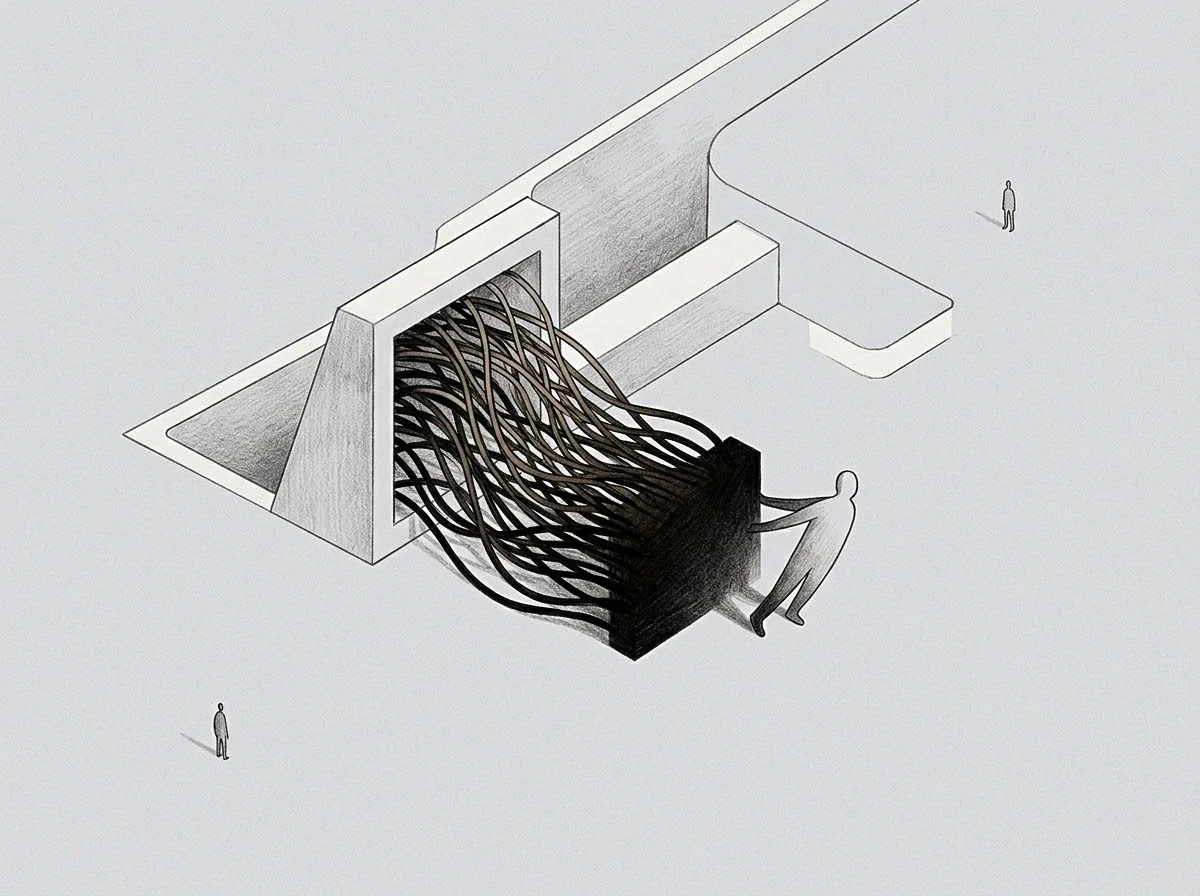
Incoming teams frequently discover that replacing one dynamic founder requires hiring multiple individuals. Founders routinely possess rare combinations of domain expertise, sales charisma, and technical mechanical knowledge acquired across decades. Finding a single candidate who commands respect on the factory floor while simultaneously managing enterprise software conversions is statistically improbable.
The successor budget must divide the founder’s former presence into discrete professional functions.
- Fractional executive staffing absorbs strategic oversight and high-level financial planning without saddling the enterprise with full executive compensation packages.
- Dedicated departmental management assumes direct supervisory control over daily workflows, enforcing written performance metrics rather than informal verbal directives.
- Outsourced specialized vendors resolve legal, accounting, and technical maintenance issues previously handled by founder improvisation, converting sporadic personal intervention into predictable fixed overhead.
The delta between perceived founder effort and required successor headcount creates significant financial tension. Historical EBITDA adjustments presented during transaction due diligence often normalize owner compensation to a single executive salary, usually around one hundred and fifty thousand dollars. The actual successor operational reality demands an executive manager at one hundred and forty thousand dollars, an estimator at eighty thousand dollars, and an outsourced accounting firm at thirty thousand dollars.
This seventy-thousand-dollar gap directly erodes projected debt service coverage ratios.
Whether incoming management can ever extract historical owner efficiency from hired professional staff remains an unresolved puzzle in middle-market enterprise integration.
Contract

Transition Services Agreements
Documentation provides the sole mechanism for reconciling the gap between remembered owner labor and successor budgetary realities. Relying on good-faith transitional cooperation inevitably leads to frustration when the former owner resents performing routine administrative tasks post-closing. A formal Transition Services Agreement defines exact hourly allocations, scope of authority, operational domains, and termination triggers.
The document establishes whether the seller serves as an active executive, a technical advisor, or a passive knowledge source.
Precise agreements specify hourly compensation rates for time dedicated beyond pre-negotiated handover windows. If the historical operator claims business development takes five hours weekly, the agreement limits compensated consulting time accordingly. When actual customer onboarding demands twenty hours weekly, the contract forces a budgetary adjustment, compelling incoming leadership to fund a dedicated sales hire immediately rather than relying indefinitely on seller subsidies.
A stated contractual term converts remembered operational habits into measurable corporate obligations.
Earnout Traps and Normalized Budgets
Contingent consideration structures like earnouts introduce severe friction when successor operating budgets expand labor expense lines. A seller working toward an earnout target wants operating expenses minimized to maximize EBITDA milestones. Successor operators must hire necessary staff to ensure institutional continuity, intentionally depressing near-term profitability to build durable capacity.
This structural conflict generates acute hostility unless labor normalization metrics are explicitly drafted into the purchase agreement.
Legal agreements must clearly state which replacement personnel expenses will be added back to earnings for earnout verification calculations. If successor leadership hires an operations director at one hundred and twenty thousand dollars to replace historical unpaid founder labor, the contract specifies whether that salary reduces the seller’s earnout payout. Ambiguity surrounding these appointments creates bitter post-sale contention, freezing collaboration when cooperation is essential.
The purchase agreement stipulates that all replacement personnel expenses replacing historical officer duties are added back to operational earnings for the purpose of calculating contingent earnout thresholds.

Surplus

Institutionalizing Tacit Workflows
Long-term profitability depends on transferring undocumented owner knowledge into standardized operating assets. The enterprise cannot sustain high cash generation if institutional knowledge remains locked in the memory of an outgoing founder. Every undocumented workflow represents an unquantified liability.
Process mapping converts intuitive owner habits into repeatable standard operating procedures that junior personnel can execute without executive oversight.
Software automation frequently absorbs historical administrative labor at lower ongoing expense than salaried headcount. Upgrading obsolete accounting software, deploying automated customer ticketing systems, and standardizing inventory tracking eliminates hundreds of annual hours previously spent on manual data reconciliation. Capital investments in enterprise software offset the recurring operating budget expansions required by professional replacement staffing.

The Realized Valuation Penalty
Businesses that fail to decouple daily operations from owner labor suffer permanent enterprise value discounts during recapitalization. Sophisticated institutional buyers immediately penalize entities where operational continuity relies on unpaid owner heroics. The historical distributions the owner extracted while skimping on professional management are effectively reclaimed by the market through lower purchase price multiples.
Every unbudgeted hour the owner worked was not free profit; it was a deferred operational expense that eventually compounds into valuation decay.
Sustainable operating margins appear only when the business generates genuine commercial surplus after absorbing full market-rate compensation for every necessary operational function. When an enterprise achieves operational autonomy, leadership compensation reflects standard corporate governance rather than personal sacrifice. The resulting financial record provides a transparent foundation for successor operating plans, debt covenant calculations, and capital allocation decisions.
Ignoring uncompensated owner contributions creates systemic cash flow deficits that trigger bank covenant defaults within twenty-four months of executive transition.