
Reconstructing Divergent Operational Claims Using Multi Party Identity System Infrastructure Metadata
Reconstructing divergent operational claims requires reconciling identity provider revocations against relying party cache timestamps across federation metadata.

Epoch
An operator sits before two open windows showing divergent system histories. On the left side, an identity assertion confirms that administrative privileges were active through the entire second quarter. On the right side, an identity provider revocation certificate shows that authorization terminated in mid April.
The person who left the arrangement holds the first file, convinced their tenure and executive authority continued unbroken until summer. The person remaining in the firm holds the second file, convinced the departure took effect sixty days earlier. Neither participant checked the shared federation endpoint during those eight weeks, and the token expired at midnight.
Divergent accounts of operational authority emerge whenever technical systems decouple authentication from immediate authorization checks. In multi party identity architectures, organizations distribute trust across distinct administrative boundaries. Identity providers authenticate individuals, while resource servers grant access according to cached assertion metadata.
When an agreement dissolves, each participant references the operational records closest to their seat. One individual cites the continuous issuance of single sign-on assertion tokens, treating persistent system access as continuous operational assent. The other cites an unannounced administrative flag set in a local directory, treating the internal designation as the sole authoritative date.
The gap between those two viewpoints represents hours of uncompensated work and months of conflicting contractual exposure.
A stored assertion token provides proof of technical passage while remaining completely silent about commercial consent.

The Stored Assertion And The Departure Record
When an operator acts on delegated authority within a shared infrastructure, multi party identity systems produce granular traces across multiple server tiers. These traces include cryptographic assertions, token exchange records, and federation metadata catalogues. The departure of a founding partner or key technical contributor rarely triggers a clean cryptographic wipeout across all federated participants simultaneously.
Instead, identity providers maintain signing keys, resource servers cache validation parameters, and client applications preserve refresh grants.
Multi party systems establish truth through cryptographic provenance rather than interpersonal consensus. An identity provider issues a signed assertion confirming user attributes, authorization scopes, and an expiration timestamp. The relying party receives this assertion, validates the digital signature against a published key set, and grants operational capabilities.
A participant relying on client-side session persistence perceives unbroken authority. Concurrently, an infrastructure administrator reviewing back-channel revocations perceives immediate termination. The operational reality fractures along the boundary separating front-channel authentication tokens from back-channel revocation metadata.
- Security Assertion Markup tokens contain explicit validity periods and audience restrictions that relying parties evaluate locally without querying the central authority at each request.
- OpenID Connect identity records carry cryptographic signatures verified against publicly hosted key sets, allowing persistent access even after an identity provider flags an internal departure.
- Federated entity configurations register trust relationships across organizations, updating at scheduled polling intervals that permit synchronization delays between separate corporate registries.
When two principals reach the exit of an arrangement, they reconstruct their operational contributions through these disparate logs. The technical founder claims operational management extended through the release date, pointing to hundreds of repository commits authenticated via personal cryptographic keys. The commercial partner claims executive separation occurred months prior, pointing to an updated company directory entry that severed formal corporate standing.
Neither party fabricated their documentation. Both parties read truthful outputs from disconnected components of an asynchronous multi party identity infrastructure. Each claims the other party acted without operational authority for sixty days.

Shelf
Public verification keys reside on remote storage racks and distributed content networks, insulated from local corporate disputes. Relying applications fetch these keys at configured intervals, caching certificates on disk to sustain low-latency signature validation. When administrators revoke an individual’s cryptographic credentials, that revocation exists merely as a local database update until published to the public endpoint.
A distributed authorization network relies on cryptographic material placed on an administrative ledge, waiting for remote servers to poll the latest state.
A multi party architecture decouples authentication from centralized real-time control to achieve resilience. In doing so, it introduces an inevitable latency delta across administrative boundaries. Consider a typical joint venture where two entities operate a shared deployment.
Partner A manages the identity provider, while Partner B manages the production infrastructure. Partner A marks an operator as inactive on Tuesday morning. Partner B configures its relying resource servers with an aggressive twenty-four-hour cache on public JSON Web Key Sets and an asynchronous token revocation cache.
The operator logs into Partner B’s production consoles throughout Wednesday, executing schema migrations and deploying microservices.
A published key rotation schedule measures the exact duration an abandoned credential remains functional inside relying systems.
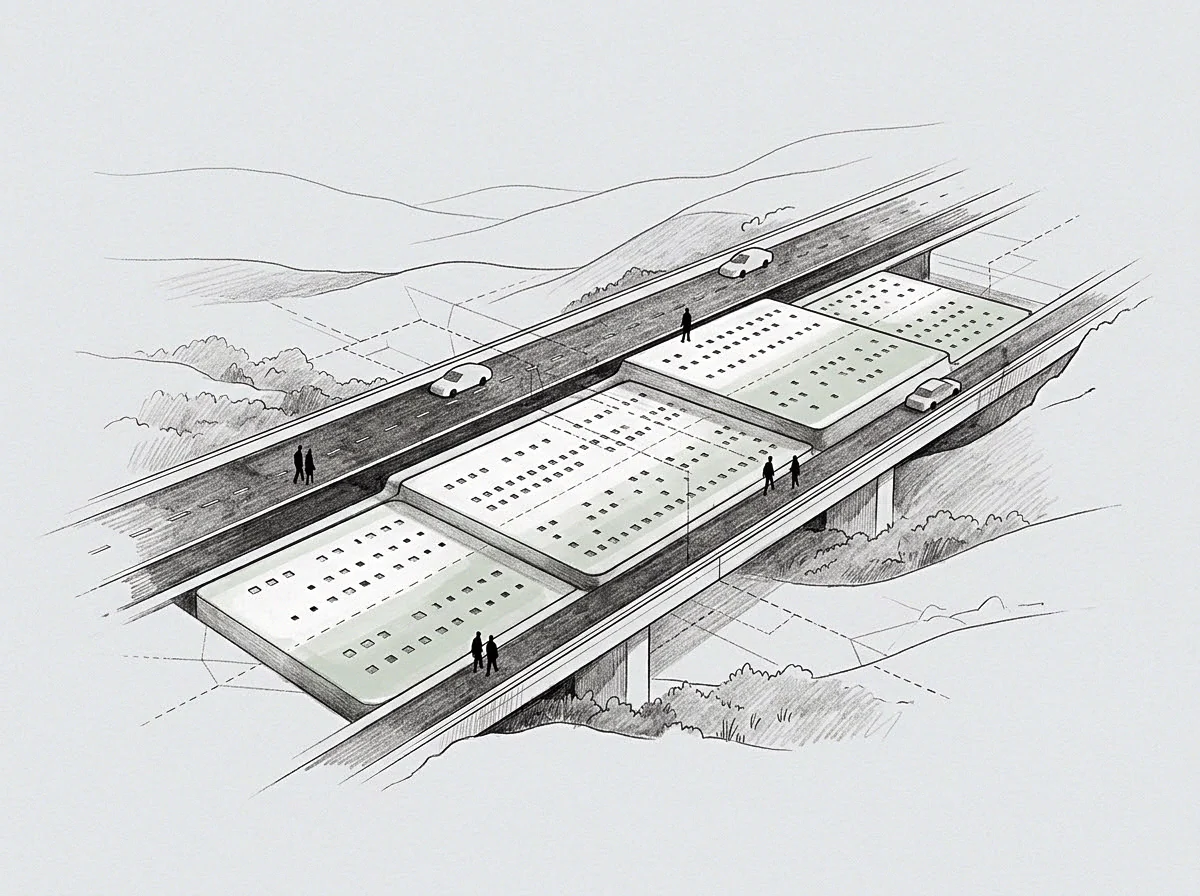
Cryptographic Artifacts In Local Storage
Stale credential caches preserve operational access across disputed departure windows. When an identity infrastructure issues short-lived access tokens supported by long-lived refresh tokens, the physical trail of authorization splits into separate files. The access token lives in memory on edge routers; the refresh token sits in client browser storage; the revocation list rests on an internal authorization server.
Reconstruction of contested actions requires precise alignment of infrastructure metadata across all three repositories. Practitioners face a recurring technical dilemma when examining this telemetry. One position maintains that operational validity ends the microsecond an identity provider updates its internal user directory, treating all downstream actions as unauthorized intrusions.
Another maintains that operational validity extends across the relying party’s published cache window, treating downstream actions as contractually authorized until relying nodes drop the cached keyset. The divergence is structural, not ethical. System infrastructure permits operations that the corporate directory has already disavowed.
This structural delay creates compounding costs when calculating vesting schedules, intellectual property assignment windows, or operational liability. The departing operator claims work product created on Wednesday belongs to the partnership because the infrastructure granted seamless access. The remaining firm claims the operator committed trespass because internal personnel databases marked them separated on Monday night.
The physical infrastructure metadata settles the technical question of authentication while revealing the governance absence that left the relying cache unsynchronized. The specific federated metadata cache timeout clause sets the exact operational boundary between authorized tenure and unapproved access.

Drift
Telemetry recorded across independent servers shows substantial divergence over extended operational cycles. Cross-organizational identity systems generate multiple concurrent audit streams: identity provider sign-in records, token introspection logs, resource server gateway traces, and distributed authorization engine decisions. When an operational dispute emerges, participants assemble these logs into competing reconstructions of who held authority, when permissions were altered, and what actions received organizational consent.
The table below documents how distinct architectural layers produce conflicting interpretations of the same operational events during a disputed separation.
| Event Stage | Identity Provider Telemetry | Federation Metadata Layer | Resource Gateway Audit Record | Divergent Operational Account |
|---|---|---|---|---|
| Initial Role Downgrade | Role scope claims reduced in database; issued tokens unaffected. | Entity descriptor remains unchanged; keys active. | Cached access token processed; full execution privileges granted. | Operator claims full standing; organization claims reduced status. |
| Credential Revocation Request | Revocation status set; back-channel notification dispatched. | CRL distribution point unrefreshed; delta CRL unpublished. | Token accepted; local cache lacks real-time revocation checking. | Operator claims system endorsed authority; firm claims deliberate trespass. |
| Federation Key Rollover | New private key activated; legacy key deleted from active tier. | JWKS endpoint serves cached signing key for twelve hours. | Gateway validates tokens with cached key until cache expiry. | Departed member claims valid authorization; firm alleges key compromise. |
| Final Infrastructure Severance | Directory entry deleted; authentication attempts denied. | Metadata descriptor purged from discovery endpoint. | Subsequent API requests rejected with cryptographic error. | Both parties agree access ceased; dispute shifts to retroactive IP ownership. |
Cross-referencing these four planes exposes the mechanical origin of conflict between partners. In an unmonitored arrangement, the identity provider log shows an administrative termination, while the gateway audit record shows twenty-two successful API transactions signed by the departing engineer’s key. The commercial partner reviews the provider log and accuses the technical founder of unauthorized data exfiltration.
The technical founder reviews the gateway audit log and asserts they were completing contractual maintenance requested by clients. Each side possesses mathematically sound evidence, and each views the other’s account as fabrication.
A distributed signature log proves an action occurred within the network without proving that the participant retained legal permission to execute it.

Reconstruction Sequence Using Federated Infrastructure Data
Reconciling these conflicting operational narratives requires a disciplined chronological procedure across multi party infrastructure metadata. The reconstruction process examines four successive technical layers to identify precisely where accounts diverged.
- Discovery document verification captures the historic endpoints, supported claims, and signing algorithms published by the identity provider during the contested window.
- Cryptographic signature validation checks the archived operational tokens against the specific public keys hosted on the federation metadata server at the recorded transaction timestamp.
- Revocation propagation analysis calculates the precise time delta between the identity provider status update and the relying party cache invalidation event.
- Resource gateway correlation matches the unique token identifier recorded in the edge proxy logs against downstream database mutation audit trails.
Each step in this sequence closes an avenue for retrospective narrative construction. When an engineer asserts they never deployed code after April 14, resource gateway correlation exposes the unique cryptographic claim token embedded in the commit payload dated April 18. When an executive asserts the engineer was barred from systems on April 10, discovery document verification proves the team failed to rotate signing keys or update federation metadata until April 20.
The cost of this divergence is measured in executive attention, engineering hours spent parsing forensic logs, and legal fees generated while litigating technical synchronization delays.
A fundamental ambiguity persists within distributed authorization architectures. When an infrastructure permits cryptographic validation through an unrefreshed cache, does the resulting system mutation constitute an authorized corporate act or an invalid operational anomaly?

Seal
Administrative agreements require hard technical anchors long before an exit occurs. Founders, partners, and external technical collaborators routinely construct operational relationships on informal goodwill, postponing the implementation of strict identity governance. They share administrative tokens, permit personal signing keys inside production repositories, and rely on default caching parameters that defer revocation checks.
When the venture succeeds or fractures, the absence of rigid cryptographic boundaries converts ordinary memory fallibility into acrimonious structural conflict.
The discipline of identity infrastructure metadata offers an objective baseline for multi party agreements. By binding operational authority to precise cryptographic lifecycles, organizations eliminate the subjective memory delta that plagues contractual dissolutions. Short token lifespans, automated back-channel revocation, and immutable federation audit feeds transform vague operational intentions into deterministic system states.
When an operator’s role shifts, the infrastructure metadata reflects that shift across all relying parties within seconds, preventing the accumulation of divergent operational claims.
Short token expiration periods eliminate the silent operational space where divergent claims of authority incubate.

Binding The Operational Baseline Ahead Of Dispute
Direct cryptographic assertion eliminates retrospective narrative engineering. Multi party identity systems provide the infrastructure components required to enforce clear commercial boundaries: short-lived JSON Web Tokens, distributed authorization registries, and cross-domain token introspection protocols. Implementing these components requires deliberate governance choices.
Principals must configure relying parties to perform synchronous status checks or enforce extremely tight caching windows on federation metadata endpoints, ensuring that an administrative change at the identity provider tier propagates immediately across every operational system.
Leaving identity federation metadata unmonitored forces organizations to resolve structural disputes through adversarial digital forensics. When technical permissions outlive interpersonal alignment, participants exploit the resulting ambiguity to retroactively claim intellectual property, operational tenure, or corporate authority. The cost of parsing gigabytes of divergent telemetry at the exit always exceeds the initial overhead of configuring deterministic identity protocols.
Aligning cryptographic lifecycles with contractual agreements removes the void wherein divergent operational memories flourish. An unrotated signing key guarantees that two people will eventually remember the same operational tenure through two incompatible records.