
Reconstructing Verbal Override Directives From Ephemeral Environment Cloud Access Logs
Reconstructing verbal overrides pairs centralized cloud control plane audit trails with network flow logs to expose human elevation inside short-lived environments.

Breach
An operator receives a verbal instruction to bypass standard validation checks during a midnight database migration, executing the production alteration directly from a short-lived staging container that dissolves twelve minutes later. Three months later, during an internal compliance inquiry, the engineering lead recalls issuing a broad mandate to preserve uptime, whereas the operator recalls a specific, unambiguous directive to drop an integrity constraint immediately. Both accounts exist in complete conviction.
The verbal directive generated zero tickets, zero chat records, and zero signed change requests. What remains is a scatter of machine records in an append-only object store, capturing identity assertion chains, elevated runtime roles, and raw network calls from compute instances that no longer exist.
Verbal override directives occupy the gap between formal infrastructure governance and operational urgency. Official policy usually demands cryptographic signatures, dual-custody authorization tokens, and immutable pull request links before a deployment pipeline allows modifications to live resources. When an unexpected system failure threatens service availability, authority shifts from written procedure to direct speech.
The words disappear the moment sound waves disperse across a room or a video call, yet the actions triggered by that phrase ripple across cloud control planes, writing entries into storage buckets before container images are scrubbed from cluster nodes.
A verbal directive leaves no direct text record, yet every execution from an elevated session leaves immutable control plane mutations.
The difficulty of this reconstruction lies in the asymmetry of intent and trace. Ephemeral cloud instances, such as automated build workers, preview clusters, and debug pods, spin up with temporary identities, perform tasks within minutes, and tear down automatically. When an operator leverages that environment to run an unlogged executive command, traditional audits encounter an immediate void: local terminal logs vanish with the node root filesystem.
The audit team observes only an unassigned privileged modification originating from a source IP address that was deallocated seventy-two hours prior. Rebuilding the spoken directive demands converting silent infrastructure signatures back into human decisions, establishing who held authority at that exact minute, what credentials were temporarily hoisted, and why the physical topology shifted without an associated pull request.

Session
Short-lived computing environments disguise administrative action beneath automated operational noise. Modern deployment platforms provision dynamic cloud resources with automated identity assignments, granting temporary instance profiles that inherit scoped permissions for sixty seconds to an hour. When an engineer accepts a spoken override order, they rarely log into a permanent jump host where keystroke logging records every command.
Instead, they run an interactive debugging container inside an existing orchestration cluster, inject their temporary developer credentials, and execute manual API calls directly against cloud platform interfaces.
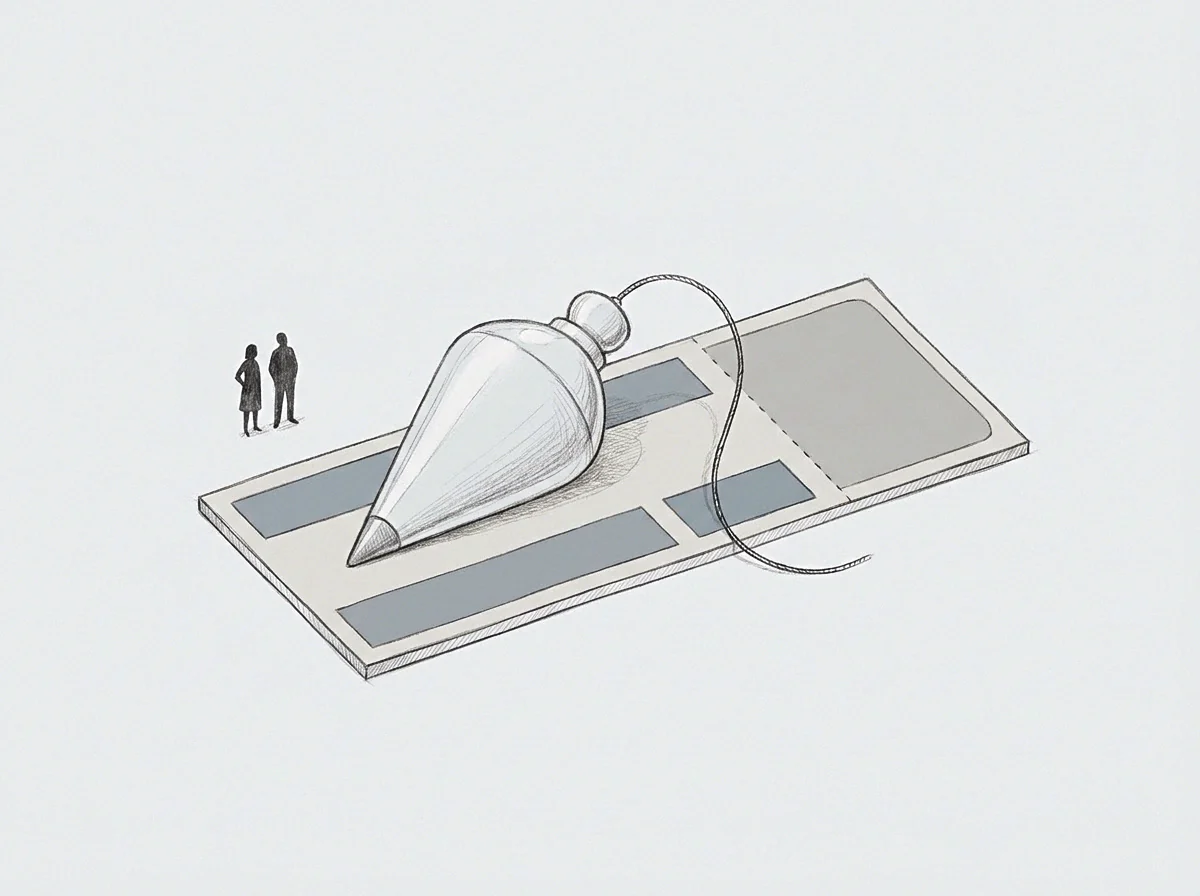
Identity Chaining and Temporary Assumed Roles
The first structural marker of a verbal override is the sudden, discontinuous elevation of an assumed role. Ephemeral execution layers typically operate via role-based access tokens issued by security token services. In standard continuous delivery workflows, these tokens request permission envelopes strictly matching predefined deployment templates.
The automated worker performs tasks with a static user agent string and a predictable sequence of API interactions: fetching configuration files, checking resource dependencies, and updating application binaries.
Under a verbal directive, that predictable pattern breaks down. An operator switches an instance from automated execution to manual shell control. Access logs record an authentication event where an assumed role issues a secondary token request, acquiring elevated permissions outside the Continuous Integration pipeline parameters.
The token contains dynamic session tags naming the engineer who ran the override command, but the access log records the API calls as stemming from the temporary compute instance rather than a corporate desktop workstation. The cloud provider log shows an assumed role identity acting through an internal cluster subnet, modifying production storage buckets or schema boundaries without referencing a valid change ticket identifier.
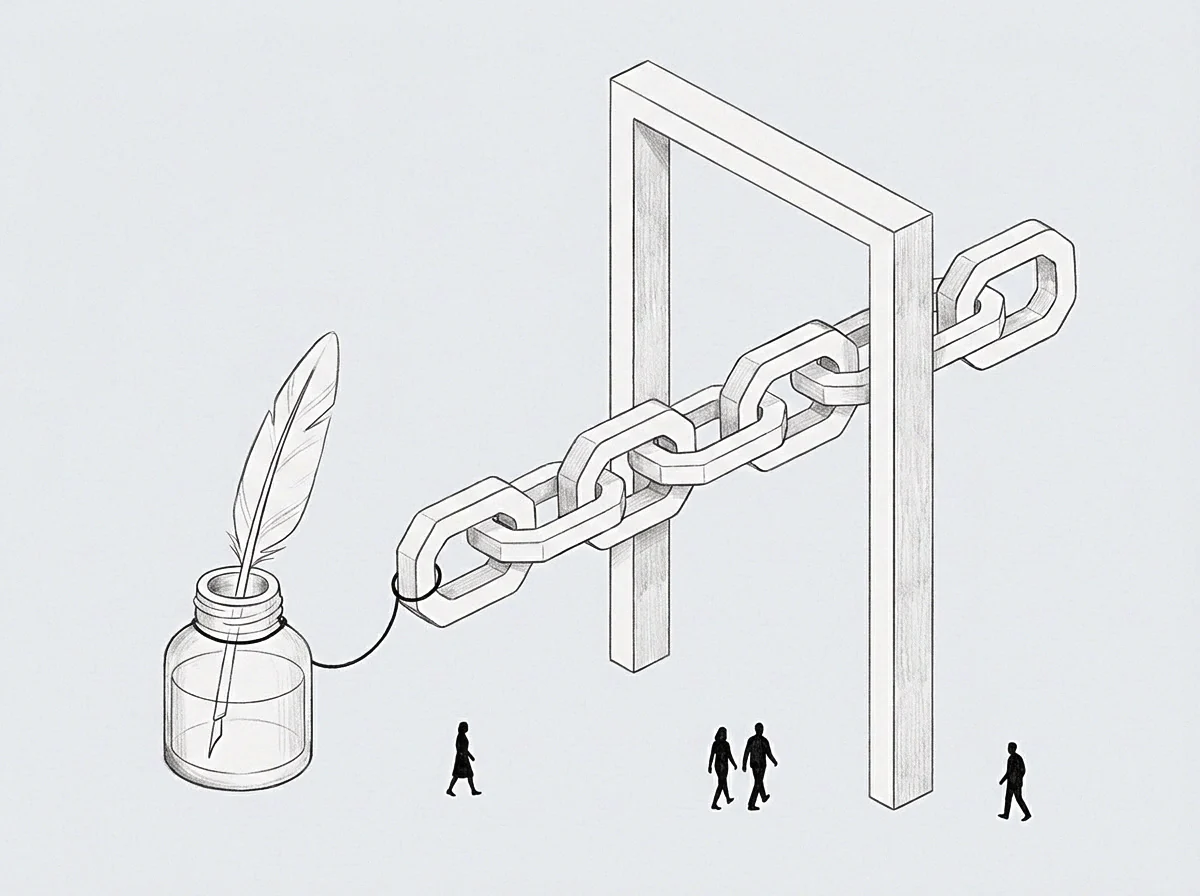
Session Metadata Divergence
A manual intervention conducted within an automated shell introduces unmistakable latency anomalies. Machine processes issue API commands with millisecond intervals between operations, following deterministic dependency graphs. A human operator reading documentation or verifying raw database responses exhibits inter-command latencies spanning several seconds to multiple minutes.
The query structure changes: automated tools pass serialized arguments with uniform field counts, whereas a human typing in an ephemeral shell repeatedly tests environmental flags, passes manual authentication parameters, and invokes diagnostic read operations immediately before executing irreversible destructive commands.
Once isolated from background traffic, the delta between automated execution logs and manual override logs is clear. The automated worker performs single-purpose tasks and exits. The manually overridden worker stays open, shows multiple session refreshes, and runs commands spanning across unrelated cloud namespaces.
This prolonged lifespan constitutes the physical signature of a human sitting in the shell, responding to real-time verbal requests rather than predefined software pipelines.
The formal written process requires recorded authorization, whereas the spoken reality demands immediate bypass of safety controls to restore service.

Trace
Cloud management planes capture every API call regardless of the ephemeral nature of the compute instance issuing the call. While the local container filesystem disappears upon teardown, the cloud infrastructure provider writes raw management logs to centralized, immutable storage pools protected by retention locks. These event records document the actor identity, the precise millisecond timestamp, the originating private IP address, the user agent, the specific API method called, the parameter payload, and the response code returned by the cloud subsystem.
Anatomy of an Elevated Override Log
Consider an operational incident occurring at 02:14 UTC on a platform reliant on auto-scaling runner instances that survive an average of seven minutes. The cloud access log captures an authentication chain linking a corporate single sign-on username to a short-lived execution container through an assumed role operation. The following event sequence captures the unauthorized modification of a managed relational database cluster during that migration window.
| Timestamp (UTC) | Assumed Identity | Event Call | Source Private IP | Parameter Extraction |
|---|---|---|---|---|
| 02:14:18.102 | ci-runner-ephemeral-8f9a | AssumeRoleWithWebIdentity | 10.0.14.88 | Federated user session linked to engineer identity |
| 02:16:44.320 | admin-override-breakglass | GetSecretValue | 10.0.14.88 | SecretId: production/rds/master_credentials |
| 02:18:02.941 | admin-override-breakglass | ModifyDBInstance | 10.0.14.88 | ApplyImmediately: true, MasterUserPassword: redacted |
| 02:22:15.512 | admin-override-breakglass | RevokeSecurityGroupIngress | 10.0.14.88 | GroupId: sg-0a91f, SourceCidr: 0.0.0.0/0 |
| 02:26:30.004 | system-lifecycle-manager | TerminateInstances | 10.0.0.1 | InstanceId: i-0e4b88a91 (Runner node deallocated) |
The table displays the critical window of manual divergence. At 02:14 UTC, the ephemeral worker accepts a federated user session, converting an automated process into a human-driven console. Over the next eight minutes, the assumed administrative identity accesses master database credentials and modifies the instance directly with immediate application rules.
By 02:26 UTC, the cloud lifecycle manager terminates the underlying instance, clearing the operating system memory, temporary disk mounts, and active session processes. The physical compute host ceases to exist, but the five rows in the centralized logging system preserve the exact sequence of administrative choices.
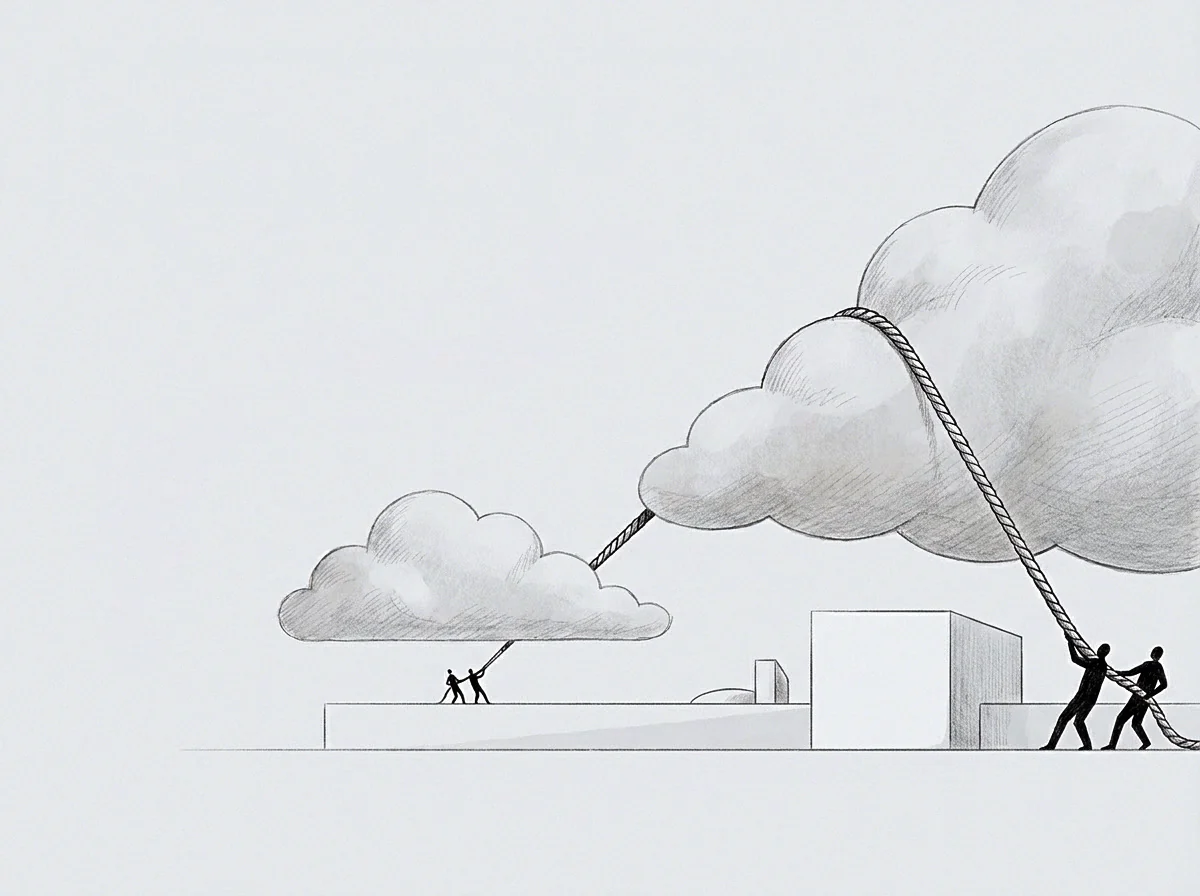
Reconstructing Network Flow Corroboration
Control plane API records capture administrative actions, but they do not record database payload manipulations, raw SQL statements, or data transformation calls executed over internal network paths. To prove the execution of a spoken directive, investigators pair cloud audit trails with VPC flow logs. VPC flow logs record raw transport layer traffic between internal cluster nodes, logging timestamps, source interfaces, destination interfaces, port numbers, packet counts, and byte transfers.
A verbal instruction to drop an index or modify database tables generates a discrete network footprint. The VPC flow logs show a high-volume transmission from the private IP of the ephemeral container (10.0.14.88) to the private endpoint of the primary database cluster on port 5432, occurring precisely between the credential retrieval call at 02:16 UTC and the security group adjustment at 02:22 UTC. Although the network log lacks the raw text of the SQL command, the combination of an administrative credential extraction event and a concurrent high-packet exchange across database ports eliminates the defense that the ephemeral instance merely ran an automated health assessment.
Where local container storage dissolves upon cluster scale-down, immutable control plane audit trails and VPC network flow records preserve administrative action sequences.
A key limitation exists within cloud audit data: log aggregation systems experience ingestion delays ranging from three minutes to forty-five minutes depending on network ingestion queues. Incident reviews that require instant cross-verification face incomplete event arrays. The missing records arrive long after the operational crisis subsides, demanding historical aggregation rather than immediate real-time capture.
Failure to pair control plane events with underlying network flow records leaves investigators unable to distinguish between an authorized configuration poll and an aggressive data plane manipulation.

Reckoning
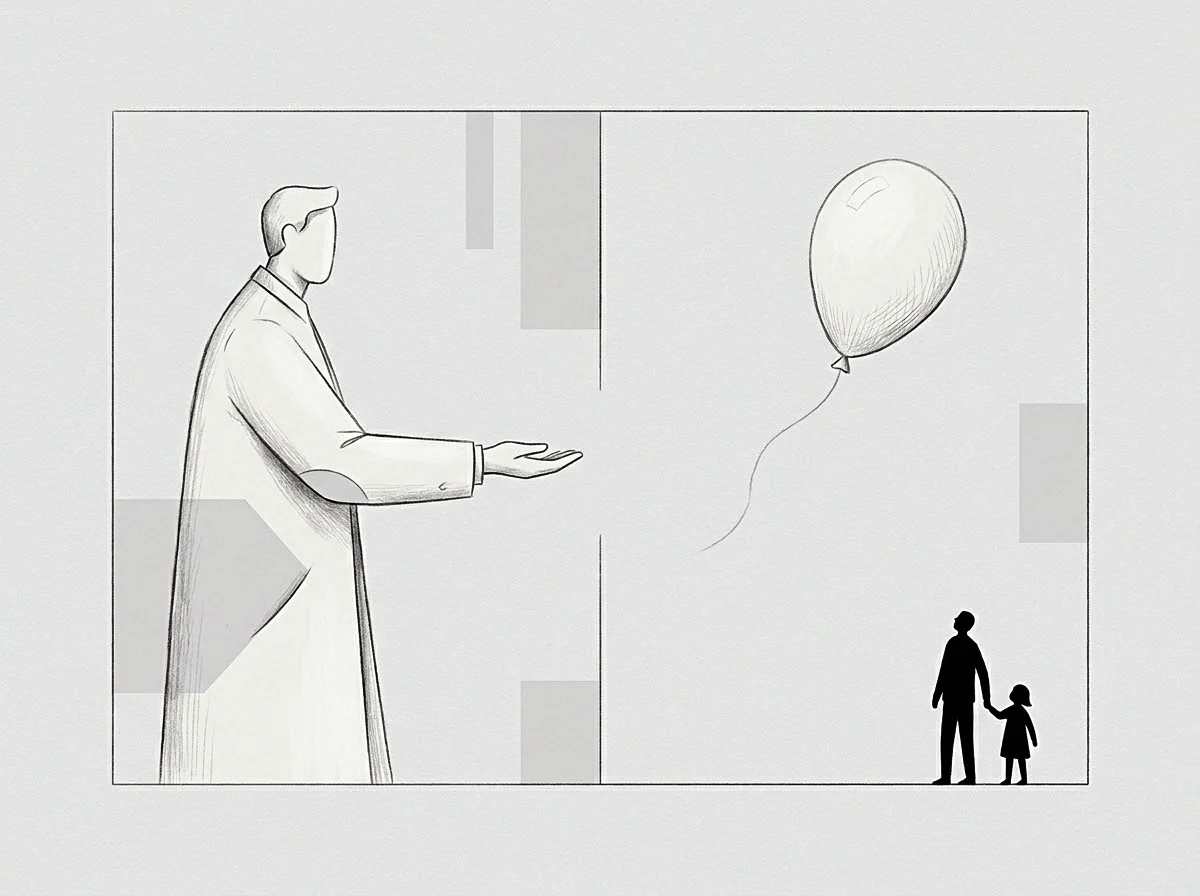
When an internal review convenes weeks after a critical production outage, two incompatible versions of the same fifteen-minute window emerge. In one account, an engineer bypassed safety policies without authorization and destabilized production assets. In the other, leadership directed the operator directly over a call to ignore safety checks, force the migration through, and resolve architectural debt later.
Both participants recall their own conduct as rational, restrained, and compliant with the operational needs of the organization.

Cognitive Divergence and Operational Memory
Memory reconstruction research consistently demonstrates that individuals rewrite their recall of crisis decisions to align with subsequent assessments of risk and blame. Under severe operational stress, human working memory processes high-level directives and granular operational actions through separate cognitive channels. A decision-maker giving orders during an active data loss event focuses entirely on the strategic outcome of maintaining system availability.
The operator executing the commands focuses entirely on the physical steps: disabling schema locks, elevating privileges, and dropping foreign key constraints.
When the post-incident analysis calculates the financial damage of compromised data integrity, the conversation is remembered on one side as a general request to investigate options, and on the other as an unequivocal order to execute the drop. Neither party fabricates the account in bad faith. Both individuals consult internal memories that have undergone retrospective rationalization, smoothing away inconsistencies to protect internal coherence.
The delta between the verbal memory and the machine log is where organizational liability settles.
Structural Indicators of Spoken Coercion
Technical evidence reveals specific structural markers that differentiate an autonomous rogue action from a pressured verbal override executed under supervisory direction. An engineer acting independently typically follows personal operational habits: testing commands in development accounts, referencing private notes, and taking incremental backups before applying destructive patches. An operator acting under verbal pressure exhibits a compressed operational cadence.
The cloud audit trail highlights this compressed cadence through specific signatures:
- Breakglass credential access occurs without preliminary environmental discovery calls, demonstrating that the operator was directed straight to a specific target resource rather than troubleshooting systematically.
- Accelerated execution intervals between privilege elevation and destructive API calls drop below thirty seconds, reflecting an operator executing commands dictated in real time over a live voice connection.
- Unusual concurrent communication traces appear in workstation telemetry, showing an active voice stream or uninterrupted conference call lasting the exact duration of the anomalous administrative session.
- Omission of safety steps such as manual snapshot generation or secondary verification routines indicates an external, urgency-driven mandate superseding standard engineering prudence.
A single person rarely chooses to drop safety barriers in isolation when standard operating procedures threaten disciplinary action for doing so. When access logs show an operator jumping through multiple administrative guardrails in rapid succession while their workstation maintains an active high-bandwidth voice connection with executive leadership, the technical trail corroborates an external verbal directive. The log records compliance with a spoken command that the speaker now prefers to forget.
The delta between what was spoken in the heat of a system collapse and what was documented in the change record represents the exact operational capacity spent to survive the hour.

Gate
To eliminate reliance on fragile human recollection and unrecorded verbal exchanges during operational emergencies, organizations implement automated gates that bind ephemeral compute environments directly to auditable control plane authorizations. During high-pressure production incidents, authority cannot float freely as unrecorded sound in an office room or over a phone call; it requires structural anchoring inside the authentication mechanism itself.

Are Ephemeral Override Actions Reconstructible Without Direct Application Logging?
Engineers frequently assume that if an application running inside a short-lived container lacks dedicated audit logging frameworks, its operational directives remain permanently untraceable. This assumption collapses at the infrastructure boundary. Every cloud workload relies on control plane interactions to acquire credentials, discover network endpoints, and reach data stores.
Shifting the capture point from the ephemeral software layer to the underlying cloud infrastructure fabric isolates the operational signature regardless of application-level log omission.
System administrators close the evidentiary gap through three mandatory engineering controls that bind ephemeral actions to clear administrative authority:
- Contextual cryptographic tokens require every temporary identity assumption request inside ephemeral pods to carry an signed external token linked to a specific incident channel identifier.
- Immutable session attestation mandates that interactive debugging shells inside orchestration clusters capture terminal input and output streams directly to a remote, write-once storage destination before granting privileged local execution rights.
- Ephemeral life limits enforce automated container self-termination upon token expiration, preventing abandoned debug containers from serving as anonymous jump hosts for subsequent manual interventions.
The implementation of cryptographic session binding alters the relationship between executive directives and technical execution. An engineer instructed verbally to drop an integrity constraint can no longer execute the action anonymously within a temporary shell. The cloud security layer blocks the command unless an authenticated incident identifier accompanies the credential request.
If an executive wishes to authorize a non-standard operation, they must provide a single-use authorization code generated by an automated incident governance service. The spoken directive transforms into a verified, timestamped transaction before the cloud control plane alters a single row of production data.
Until organizations replace spoken urgency with cryptographically bounded execution tokens, post-incident investigations will continue to arbitrate irreconcilable human recollections against the unfeeling timestamps of cloud infrastructure logs.