
Reconstructing Written Baselines from Conflicting Oral Commitments
Reconstructing a written baseline converts divergent oral memories into a binding document by auditing historical financial records and written artifacts.

Drift
An agreement signed on paper sits unchanged in a drawer while daily operations introduce unrecorded amendments. Two founders complete an initial operating agreement establishing equal profit splits, then spend eighteen months adapting roles during cash constraints. One operator absorbs full financial liability during a lean quarter, while the partner manages client relationships without salary.
A casual conversation in a coffee shop establishes an oral understanding that equity splits will adjust to reflect the cash exposure. Neither party writes down the revised percentage. The business survives the liquidity bottleneck, revenue resumes, and the partner who stabilized the balance sheet expects the equity division to show a sixty-forty split.
The other partner remembers the conversation as a temporary profit allocation that expired when client payments resumed.
Assume two operators executed an operating agreement twenty-four months ago, with one operator holding sixty percent and the other holding forty percent. Assume the minority operator contributed eighty thousand dollars in personal capital during a revenue freeze, under an unwritten understanding that the infusion converted into a ten percent equity transfer from the majority owner. The business clears the crisis, and the majority owner forwards a standard tax distribution based on the original sixty-forty cap table.
The minority owner refuses the payment, citing the verbal revision made in the office during the liquidity failure. The original baseline document exists, but two years of operational decisions rested on two distinct interpretations of a ten-minute conversation. The delta between the accounts is ten percent of the company, funded entirely by the unstated terms of the capital infusion.
Oral revisions displace written terms through incremental consensus. A short meeting produces a shared sense of alignment, yet each participant leaves with a distinct mental record of the obligations created. One side tracks the concession as a permanent structural change; the other tracks it as a conditional, short-term accommodation.
Because operations continue smoothly in the immediate aftermath, neither side requests a formal contract amendment. The original written agreement remains static, while the living arrangement mutates through every unrecorded compromise.
The original paper baseline remains legally active while daily operations run on incompatible mental transcripts.
Disputes surface when an exit, a distribution, or a third-party audit requires a definitive baseline. The friction does not stem from bad faith or sudden betrayal. It stems from the accumulation of unwritten commitments that modify core terms without updating the written instrument.
When the original document is eventually pulled from the archive, one side views it as an outdated historical artifact, while the other views it as the sole binding truth of the partnership.
The adjustment was understood by both parties as a temporary concession to preserve cash, expiring automatically once monthly revenue exceeded the baseline threshold.

Recall
Human memory processes verbal commitments as active reconstructions rather than recorded playback. Psychological research on divergent recollection demonstrates that individuals encode shared events through the lens of their own contributions and risks. In a corporate dispute, the operator who absorbed personal financial liability overweights the verbal promises made during the crisis.
The partner who contributed non-monetary effort remembers the same discussion as a acknowledgment of shared strain. Both transcripts feel absolute to the individuals holding them, and both transcripts diverge from the written document executed years prior.
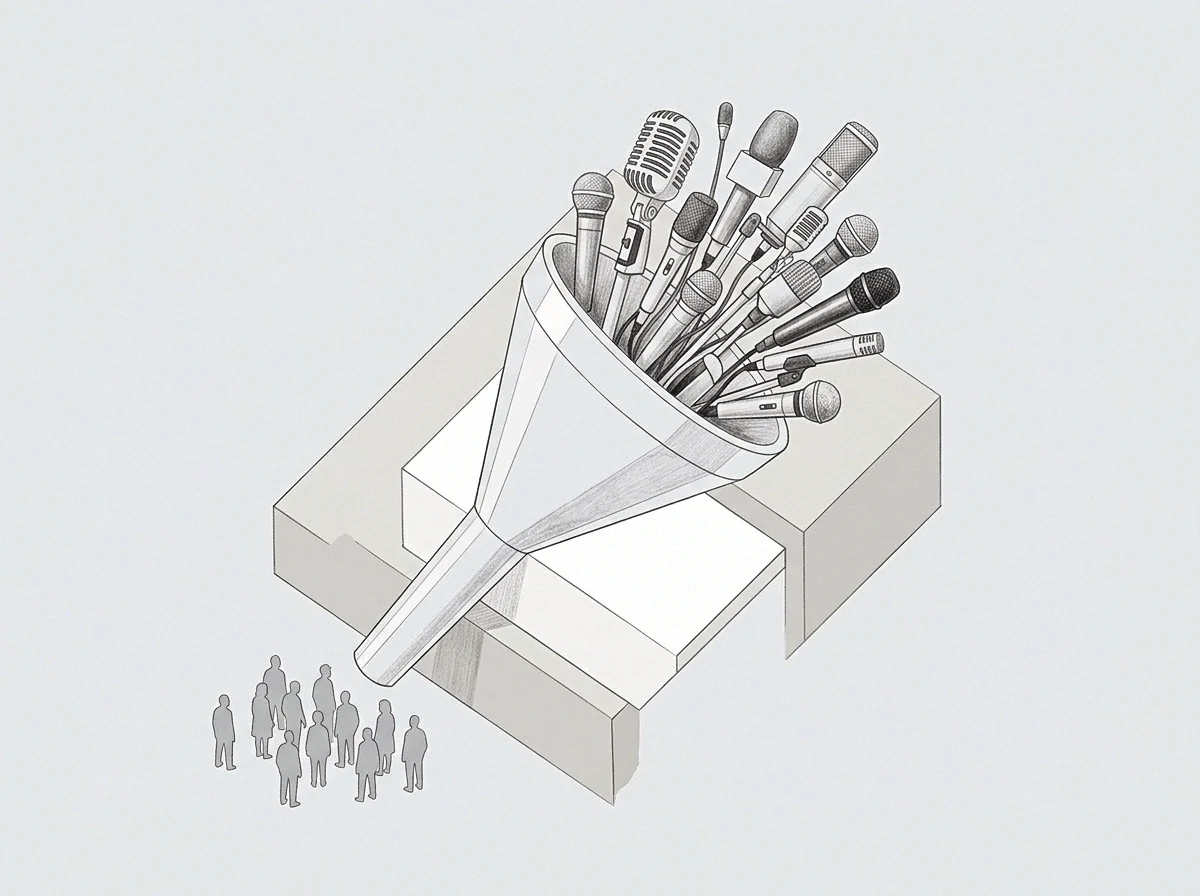
Why Do Unwritten Revisions Overwrite Documented Provisions?
Memory adapts to justify ongoing investments of time and capital. Over time, subjective recollection replaces documented baseline terms through specific operational failure modes:
- Selective Retrospective Encoding preserves memory of individual concessions while discarding the conditional triggers attached to those concessions during oral negotiations.
- Reciprocity Overestimation leads individual contributors to calculate the value of their unpaid effort at double the market rate when evaluating unwritten compensation changes.
- Contextual Erasure strips the emergency environment from an oral agreement, leaving an absolute commitment where a temporary crisis measure was delivered.
- Documentary Reluctance deters partners from requesting written amendments because formal legal drafting is perceived as an expression of distrust.
The absence of contemporary written notes allows oral commitments to expand over time. As memory retroactively aligns past conversations with present interests, the gap between the two internal records widens. The unwritten contract becomes an elastic concept, stretched by whichever party feels undercompensated under the formal written terms.
Unwritten revisions expand in memory to match the perceived value of unpaid labor.
When two partners hold opposing records of a verbal commitment, attempting to reconcile their recollections directly often hardens the dispute. Each party interprets the other side’s divergent memory as intentional deception rather than natural cognitive drift. The attention spent arguing over unrecorded sentences diminishes the operational efficiency of the enterprise.
The financial cost of resolving the divergence at the exit scales exponentially relative to the cost of drafting a one-page contract amendment when the oral promise was made.
Failing to document an oral modification leaves the business vulnerable to a complete freeze in governance when the divergent accounts inevitably clash during a liquidity event.

Ledge
Reconstructing a baseline begins by halting operational momentum to evaluate the physical evidence against the oral claims. This diagnostic pause, or freeze, isolates the original written baseline from the ongoing noise of verbal assertions. The objective is not to determine whose memory is morally superior, but to inventory every artifact that either corroborates or refutes the claimed verbal revisions.
Bank statements, email threads, text messages, cap table drafts, and historical payroll records serve as the physical substrate for reconstruction.
The diagnostic comparison places oral statements side by side with objective records to measure the structural gap between the accounts.
| Artifact Category | Evidentiary Weight | Recollection Volatility | Impact on Baseline Reconstruction |
|---|---|---|---|
| Executed Operating Agreement | High | None | Establishes the binding legal baseline prior to alleged oral modifications. |
| Contemporaneous Bank Transfers | High | Low | Verifies exact capital amounts and dates, testing claimed equity purchases. |
| Informal Chat Logs and Emails | Moderate | Low | Provides partial narrative context for unwritten operational concessions. |
| Unsigned Cap Table Drafts | Low | Moderate | Indicates ongoing negotiation without proving final mutual consent. |
| Post-Hoc Oral Testimonies | Negligible | High | Reflects current self-serving recollections rather than past agreements. |
Evaluating oral claims against bank records reveals the mechanical reality of the performance. If a founder claims a verbal agreement granted a five percent equity bonus for launching a product, the ledger must show whether compensation was adjusted accordingly at that time. A claim unsupported by contemporaneous operational behavior remains an ungrounded assertion.
The record preserves actions, and actions indicate whether an oral agreement reached mutual assent or remained an unexecuted draft.
Contemporaneous records validate operational performance even when verbal agreements remain unwritten.
The baseline freeze exposes the precise financial and structural liability created by ambiguous verbal commitments. Once the existing evidence is categorized by its objective weight, the parties can view the delta directly. This structural visibility changes the nature of negotiation from a personal contest of memory to a cold evaluation of legal and operational reality.
The inclusion of an integration clause in the original contract legally invalidates subsequent oral modifications unless those modifications are reduced to a signed writing.
Binder
Reconstructing a definitive written instrument from fragmented evidence demands a systematic synthesis protocol. Rather than relying on unstructured negotiation, the process extracts verifiable facts from historical artifacts and arranges them chronologically. This audit constructs a clear timeline of events, separating binding contractual modifications from non-binding discussions.
The result is a drafted baseline document that reflects the actual operational reality of the business while remaining grounded in legal proof.
The reconstruction workflow follows a precise sequence to convert subjective oral claims into a single consolidated instrument:
- Establish the executed baseline document as the starting anchor for all equity and governance terms.
- Catalog every financial transaction, capital infusion, and distribution executed outside the baseline terms.
- Map written correspondence directly to the non-standard financial transactions to identify stated intent.
- Isolate disputed oral claims that lack supporting documentation or operational corroboration.
- Draft an amended operating agreement incorporating only the verified structural changes.
Consider a situation where an operator claims a verbal agreement entitled them to a twenty percent profit share increase for managing an expansion project. The audit reviews payroll records, email confirmations, and vendor contracts from that period. The data shows that while the operator managed the project, the business paid a higher monthly management fee rather than altering the core equity or profit-sharing ratios.
The objective record demonstrates that the consideration for the additional work was delivered in cash, disproving the oral claim of an equity transfer.
The synthesis process converts abstract disputes into concrete choices. By filtering out uncorroborated oral claims, the scope of disagreement shrinks to specific, measurable items. The parties no longer debate two entirely different histories; they negotiate over a small set of documented ambiguities.
How much undocumented equity value can an enterprise forfeit before the cost of litigation outweighs the price of an immediate written compromise?
Accord
Settling a reconstructed baseline requires formalizing the newly agreed terms into an amended written agreement that supersedes all prior oral commitments. This step closes the gap between the two accounts and establishes a clean legal foundation for ongoing operations or exit proceedings. The execution of the amended instrument explicitly releases both parties from claims arising from past verbal statements, effectively resetting the contractual baseline to zero.
The new baseline must explicitly price the historical delta between the divergent accounts. If one party surrendered documented rights based on an unwritten promise, the amended agreement reflects that sacrifice through adjusted equity, debt notes, or structured payout terms. Ignoring the historical imbalance creates latent resentment that degrades future operational alignment.
Resolving the delta in writing validates the contributions made while eliminating the ambiguity that fueled the dispute.
Formal releases erase historical verbal commitments to establish a definitive written baseline.
Effective governance relies on the absolute primacy of the written record over human recollection. Establishing strict protocols for future contract modifications prevents the recurrence of unwritten agreements. Every structural change, equity adjustment, or compensation shift must be captured in a signed document before operational execution begins.
The discipline required to draft a simple amendment is minimal compared to the capacity burned resolving divergent oral histories years after the fact.
An integration release clause executed alongside the amended agreement terminates all prior oral commitments and limits future contractual claims strictly to the written text.
A written term drafted during a crisis preserves the partnership long after the crisis fades.