
Evidentiary Standards For Oral Cofounder Equity Claims
Oral equity claims require contemporaneous written corroboration and definite terms to overcome contract indefiniteness and establish enforceable rights.
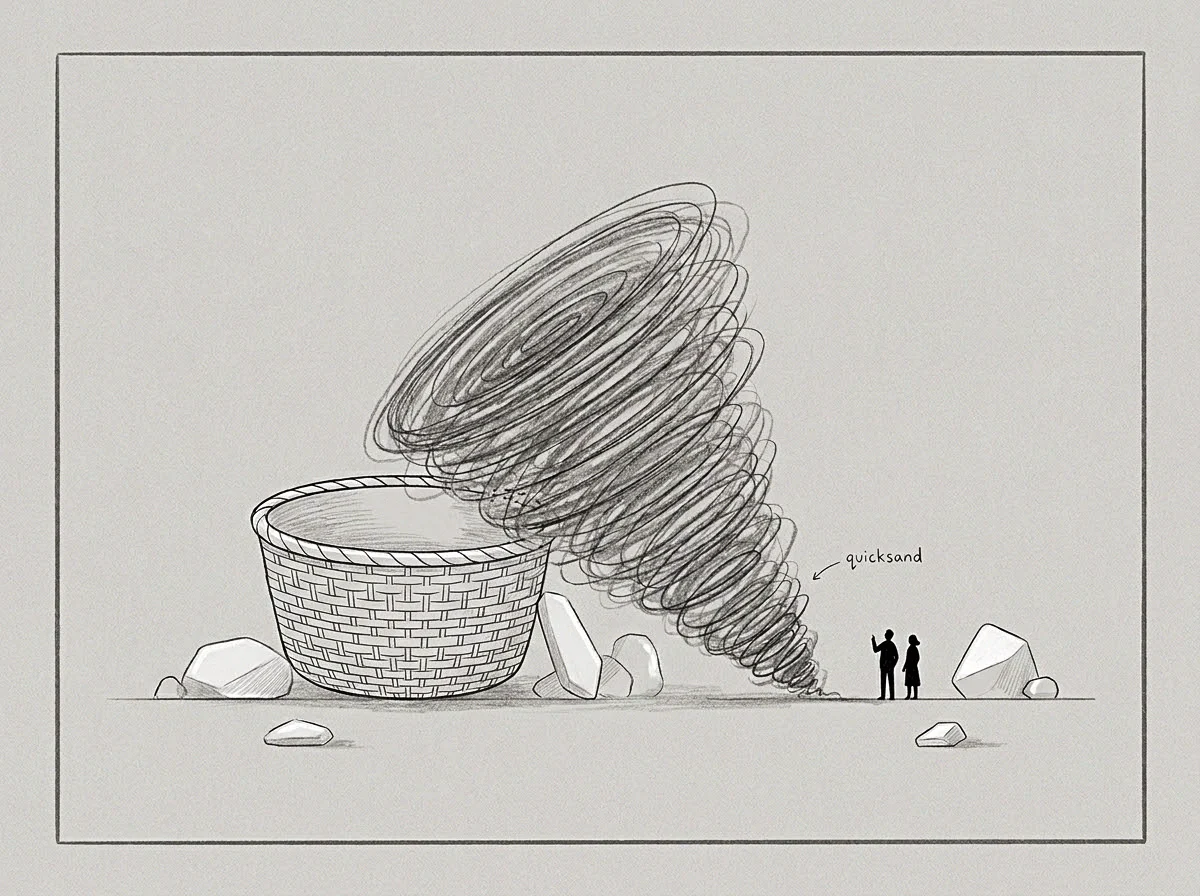
Bargain
Two builders leave an evening meeting agreeing to share the enterprise equally. One assumes the split covers every share of common stock issued over the lifetime of the entity. The other assumes the split applies to whatever ownership pool survives a financing round that has not occurred.
Both parties walked away confident. The conversation ended there. No draft circulated that night.
No signature verified what either person understood. An informal conversation regarding equity creates a high exposure to indefinite terms, because spoken words rarely address vesting intervals, forfeiture upon departure, governance rights, or dilution protections. Formal legal doctrine requires mutual assent upon all material terms to recognize an enforceable contract.
When parties speak of fifty percent over coffee, they articulate an aspiration, leaving the operating mechanics unstated.
Equity commitments without explicit vesting milestones, acceleration clauses, and clear capitalization definitions dissolve under the standard of contractual indefiniteness.
Adjudicators examining unwritten commitments look for demonstrable agreement on essential terms. An assertion that stock was promised requires identification of the exact class of shares, the purchase price, the timeline for service delivery, and the conditions under which shares forfeit back to the company. When an early contributor alleges an unwritten agreement for twenty percent of an enterprise, the defending company typically demonstrates that the parties never established whether that twenty percent meant common equity, profits interests, or options subject to four-year time vesting with a one-year cliff.
The unwritten allocation collapsed. Contract doctrine treats an agreement to agree as an unenforceable nullity. If material provisions remain open for future negotiation, the initial oral compact lacks binding force.

Threshold Elements of Legal Certainty
Enforceability in informal agreements rests on the doctrine of definiteness. State statutes governing securities transactions frequently require written subscription agreements, precluding informal transfers of unissued corporate shares. Even in jurisdictions where oral agreements to transfer personal property avoid the Statute of Frauds, the claimant bears the burden of establishing the exchange by clear and convincing evidence.
This heightened standard surpasses the typical preponderance test used in civil disputes. The claimant presents the conversation as a completed transfer. The defense presents the same event as preliminary discussions that never produced a meeting of the minds.
Nothing stood under it.
A written agreement specifying a twenty-four-month linear vesting schedule with a forfeiture clause upon voluntary termination modifies the arrangement into an enforceable property right, extinguishing the ambiguity that leaves oral pledges subject to summary dismissal.

Trace
Electronic communications written contemporaneously with early development provide the primary factual ground in ownership disputes. When an unwritten share allocation goes contested, adjudicators disregard post-dispute recollections and evaluate dated emails, instant message exchanges, commit logs, and tax filings. A message sent three days after entity formation referencing the claimant as an employee at an hourly rate directly contradicts an unwritten assertion of fifty percent co-ownership.
The cap table remained unchanged. Conversely, an email from the lead operator introducing the claimant to angel investors as an equal partner establishes factual support for co-proprietorship, though it falls short of proving an issued equity share.
A dated contemporaneous writing confirming operational status alters the evidentiary burden between parties far more effectively than retrospective personal affidavits.
Consider a worked situation involving two individuals creating an enterprise. Assume the operator incorporates a corporate entity, issuing one million shares of common stock to a solo holding entity at par value. Assume the second contributor delivers software code for twelve months without receiving a cash wage, relying on a spoken promise of forty percent common stock.
The second contributor possesses twenty-two emails where the operator uses plural possessive pronouns to describe the business, three software commits with co-author credit, and zero formal board consents authorizing equity distribution. The defending operator possesses a corporate tax filing listing a single sole shareholder, alongside corporate minutes appointing the operator as the lone director. The written corporate records show absolute unilateral ownership, while the informal digital communications show collaborative intent.
| Record Category | Corroborative Weight | Definiteness Standard | Primary Defense Position |
|---|---|---|---|
| Corporate Tax Returns and Form 1065 Schedules | Extremely high under statutory filing standards | Defines precise equity and capital percentages annually | Claimant never appeared as a partner on governmental disclosures |
| Draft Cap Tables and Investor Pitch Decks | Moderate to high for intent, low for formal title | Frequently omits vesting terms and class designations | Marketing projections prepared for prospective third-party lenders |
| Contemporaneous Electronic Messages | Moderate, establishing working relationship | Rarely defines acceleration, dilution, or voting control | Casual conversational hyperbole without corporate authorization |
| State Corporate Filings and Formations | High regarding officer status, low regarding equity | Identifies governance structure rather than share split | Director designations carry no inherent equity distribution rights |

Evidentiary Weight of Operational Artifacts
Adjudicators evaluate whether the parties acted in a manner consistent with an unwritten agreement. When an equity claimant asserts co-owner status, the defense checks whether the claimant ever exercised inspection rights, requested corporate ledgers, or signed personal guarantees for business credit facilities. The assertion lacked documentation.
If the claimant accepted sporadic payments documented as independent contractor fees without objection, that conduct undermines an unwritten partnership assertion. The company continued operating. A party claiming owner status who reports compensation on a Form 1099 as non-employee income creates a binding admission against partnership status under tax penalty of perjury, creating a substantial hurdle in arbitration forums.
The spoken words meant that equity was on the table for discussion once institutional financing closed, but no actual equity was granted at that stage.

Conduct
Unilateral action often forms the basis of equitable arguments when formal contract formation fails. Early contributors who deliver valuable work without compensation frequently invoke promissory estoppel or partial performance to bypass the absence of a signed agreement. Promissory estoppel requires a clear and unambiguous promise, reasonable and foreseeable reliance by the claimant, and unconscionable injury resulting from the broken promise.
The spoken fraction dissolved. Reliance on vague verbal statements rarely satisfies the requirement of reasonableness among sophisticated business operators, because individuals building commercial ventures understand that equity requires corporate formality, board resolutions, and state securities compliance.
Equitable claims fail when the alleged reliance consists of voluntary operational effort that could just as easily describe conventional early-stage contractor compensation.
Partial performance requires conduct unequivocally referable to the alleged oral agreement. The claimant demonstrates that the performed work makes sense only if an equity agreement existed between the parties. If an engineer writes software for twelve months without receiving cash, the claimant argues the labor proves an equity partnership.
The defense counters that the labor represents deferred compensation or sweat equity intended to be satisfied by future cash bonuses. The work created actual value. Where conduct admits two plausible commercial interpretations, the legal standard for unequivocal performance remains unmet.
- Unequivocal Performance requires actions that admit no explanation other than the existence of the specific equity ownership pact alleged by the claimant.
- Detrimental Reliance involves a material change in position, such as declining verified employment opportunities based directly upon the spoken ownership commitment.
- Corporate Authorization demands proof that the individual making the oral equity representation possessed legal authority to bind the entity to share issuances.
- Notice Of Disavowal establishes the precise calendar date when the operating group explicitly denied the equity claim, starting the statutory limitations clock.

Statute of Limitations and Latency Risks
Waiting to assert an unwritten claim until an enterprise achieves commercial traction introduces severe procedural vulnerabilities. The equitable doctrine of laches bars claims when an individual delays enforcement unreasonably, causing prejudice to the opposing party. If a collaborator departs after six months of unwritten collaboration, remains silent for three years, and asserts an ownership claim only after the company announces a multi-million-dollar funding event, adjudicators view the delay as speculative opportunism.
No corporate consent existed. The enterprise absorbed the output. The departing party bore no financial downside during the intervening period of operational struggle.
Reliance remains unprotected when the party acting on an oral pledge fails to verify the legal capacity of the promisor to issue the promised asset.

Floor
When an unwritten ownership claim collapses under contract law, the claimant falls back on restitution doctrines. The primary remedy becomes quantum meruit, an equitable doctrine allowing recovery for the reasonable value of services rendered to prevent unjust enrichment. Quantum meruit operates independently of contractual intent.
The law implies a promise to pay the fair market wage for work performed and accepted. The equity never materialized. The claimant shifts from demanding a percentage of enterprise equity to demanding monetary restitution for uncompensated labor hours delivered to the operating entity.
Restitution awards calculate historical market wages for actual services delivered, stripping away speculative enterprise equity valuations entirely.
Calculating quantum meruit requires objective economic data regarding market compensation rates at the time services were performed. The claimant presents evidence of prevailing hourly or monthly market rates for software architecture, executive leadership, or business development. The defending entity often argues that the claimant worked as an unpaid volunteer or that the services produced negligible commercial utility.
The equity split dissolved completely. A quantum meruit recovery establishes a financial recovery floor, but it denies the claimant any continuing participation in the upside value of the enterprise.
- Documenting total hours expended through verifiable electronic repository commits, calendars, and communications records.
- Applying relevant geographic market salary benchmarks for the specific roles fulfilled during the uncompensated period.
- Deducting any direct financial benefits, expense reimbursements, or corporate resources consumed by the contributor during the engagement.
- Calculating the statutory prejudgment interest rate applicable to unliquidated restitution claims from the date performance ceased.
A central uncertainty remains whether early non-technical contributions such as ideation, business introduction, and market strategy can survive a defense of zero verifiable economic value during a restitution assessment.

Toll
Unresolved ownership claims create catastrophic capitalization friction for emerging enterprises. Institutional investors, bank lenders, and acquirers conduct thorough diligence investigations before committing capital. An unwritten equity claim disclosed on a capitalization schedule or surfaced through discovery halts financing transactions immediately.
Dilution disputes freeze venture financings because investors refuse to inject money into an entity where legal title to equity remains clouded. No paper confirmed the arrangement. The company faces a choice between paying an extortionate settlement to clear title or entering costly disputed proceedings that deplete operational cash reserves.

Structural Contamination of the Share Registry
Defending an unwritten cofounder claim requires substantial legal expenditure that threatens early solvency. Legal fees in formal corporate ownership disputes routinely exceed six figures before reaching a dispositive hearing. The enterprise bears this expense out of operating cash flow, impairing product development and commercialization.
The financial drag extends beyond direct legal fees. If an adjudicator finds an unwritten partnership existed prior to incorporation, the intellectual property generated during that early period may belong to the unincorporated partnership rather than the subsequently created corporate entity. Clouded intellectual property title invalidates customer warranties and investor covenants simultaneously.

Settlement Structures and Release Formalities
Resolving an oral equity assertion requires complete transactional surrender of rights. Companies negotiating settlements with informal claimants execute comprehensive mutual releases that extinguish both equity rights and potential quantum meruit wage claims. The consideration paid for such releases generally consists of cash severance or deeply diluted non-voting common stock subject to stringent transfer restrictions.
Clean equity capitalization requires explicit written covenants that eliminate historical handshake pledges before institutional investors execute binding term sheets.
Failure to formalize early equity allocations leaves the enterprise exposed to massive capitalization disputes that routinely consume operating capital, paralyze funding transactions, and compromise ownership title.