
Proving Uncompensated Reliance and Quantum Meruit in Founder Disputes
Quantum meruit grants market-rate cash restitution for uncompensated labor when informal co-founder equity promises fail for indefiniteness.

Plea
Two builders spend eleven months constructing an enterprise software architecture under a verbal agreement to split corporate equity equally once an entity is formed. One founder then registers the Delaware corporation alone, issues all voting stock to themselves, and leaves the co-builder off the cap table. That leaves the excluded builder with a distinct legal problem.
Standard breach-of-contract claims usually fall apart because core terms like vesting schedules, share classes, or governance rights were never pinned down. Instead, litigation in these cases turns to equitable remedies: promissory estoppel to address detrimental reliance, and quantum meruit to recover the fair market value of unpaid work.
Promissory estoppel requires proof of a clear promise that reasonably led someone to act to their detriment. The claimant must show a concrete shift in position, like walking away from a salaried job or spending personal funds on business expenses. Without a written equity grant, courts examine whether day-to-day operations pointed to a binding commitment or just ongoing negotiations.
If the record indicates only an intention to agree later, courts will not write an equity agreement the founders never drafted.
Quantum meruit rests on principles of unjust enrichment, independent of contract terms. The claim argues that the business accepted valuable work under conditions where keeping it without pay would be unfair. It does not yield company stock or a cut of future valuation.
Instead, courts calculate what it would have cost to hire someone for the same technical or commercial work at prevailing market rates.
A claim for quantum meruit yields market-rate cash restitution when an informal equity promise fails for indefiniteness.
Founders frequently confuse expectation damages with restitution. Expectation damages aim for the current dollar value of the promised equity share. Equitable claims, by contrast, cap recovery at the direct financial loss or the baseline value delivered to the company.
Asking for a percentage of equity through reliance claims without written terms often leads to outright dismissal.

File
Verbal assurances remembered after the fact hold little weight in court. What matters are contemporaneous records from the period in question, which establish the timeline and the baseline value of services. Emails, commit logs, timestamped task boards, vendor filings, and bank transfers provide the physical evidence of a shared effort.
Dates on these documents reveal whether early work was a speculative investment or compensated labor.

Documenting Actionable Reliance and Service Value
Building a viable equitable claim requires gathering operational records that verify both the underlying promise and the work done. If one founder repeatedly references equity splits in writing and the other remains silent while work continues, courts often read that silence as tacit agreement.
- Written Assurances documenting explicit commitments regarding pay, equity splits, or executive roles in the planned entity.
- Financial Wire Records tracking personal funds spent on domain names, cloud hosting, filing fees, or hardware prototypes.
- Version Control Repositories detailing commit timestamps, code contributions, system architecture, and asset volume over the development period.
- Third-Party Disclosures such as grant applications, pitch decks, or banking paperwork that explicitly name the individual as a co-founder.
- Opportunity Cost Logs showing formal resignations, turned-down job offers, or documented lost consulting income while working on the venture.
Timestamps are critical for establishing sequence. Work done before any documented conversation about equity is typically viewed as voluntary or exploratory. Labor performed after explicit discussions of stock allocation helps build a case for detrimental reliance under promissory estoppel.
Contemporaneous records fix the operational timeline that memory routinely alters during equity disputes.
When electronic records show that a founder accepted work while encouraging expectations of stock, courts rarely accept the defense that the labor was a gift. Even a simple written note stating that formal equity agreements will follow a funding round can turn an informal arrangement into actionable reliance.

Weight
Valuing reliance involves two distinct legal measures: quantum meruit restitution and promissory estoppel damages. Quantum meruit looks at what the company received, asking what an arm’s-length firm would have paid for equivalent engineering, design, or management work. Promissory estoppel looks at what the worker lost by relying on an unkept promise.

Valuation Metrics in Equitable Compensation Claims
The choice of valuation model dictates the ultimate award. The following table contrasts how courts weigh competing damage theories when early founder relationships break down before formal contracts are signed.
| Evaluation Criteria | Quantum Meruit Restitution | Promissory Estoppel Reliance |
|---|---|---|
| Primary Focus | Objective market value of services imparted to the entity. | Out-of-pocket costs and verifiable lost opportunities. |
| Valuation Basis | Standard hourly or salary compensation for equivalent roles. | Forborne salary, declined job offers, and direct expenditures. |
| Role of Speculative Equity | Excluded entirely from compensation calculations. | Excluded unless equity valuation is proven with certainty. |
| Evidentiary Benchmark | Market rate surveys, contractor invoices, expert witness testimony. | Tax returns, written job offers, bank transfer records. |
| Impact of Business Failure | Recovery remains available if services provided baseline benefit. | Recovery depends strictly on proof of personal financial detriment. |
Courts routinely reject speculative future valuations when calculating restitution. An early startup with zero revenue cannot be valued against unexecuted term sheets from prospective investors. Instead, damages are tied to hard economic data from the period when the work took place.
Baseline calculations for quantum meruit often rely on testimony from compensation consultants. These specialists analyze salary data for software architects or commercial leads in the same region, adjusting for early-stage startup risk. The result reflects standard market wages, excluding any speculative equity upside.
Courts calculate restitution from established market wage baselines rather than unliquidated venture valuations.
Any payments made to the worker during the project are deducted from the award. Living stipends, expense reimbursements, company credit card usage, or partial cash payments reduce the total restitution balance dollar for dollar.
Wedge
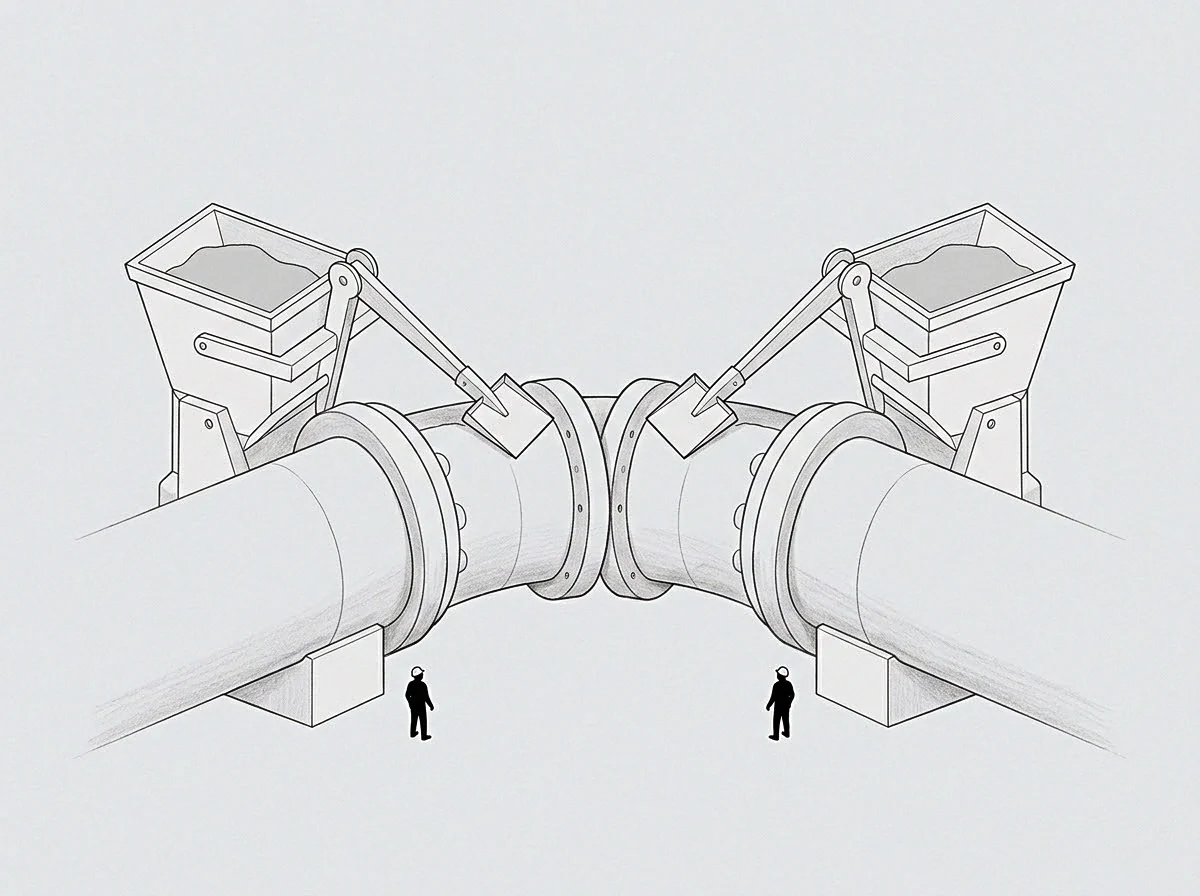
Founders facing reliance claims usually argue that pre-incorporation work amounted to preliminary negotiation, with both sides taking on the risk that the project might fail. Under this view, uncompensated work is treated as voluntary, high-risk effort rather than billable service.

Why Do Courts Reject Unwritten Pre-Incorporation Promises?
Informal verbal agreements often fail when tested against standard statutory and contractual rules. Missing these basic requirements can sink a claim before it ever reaches a full trial on damages.
The Statute of Frauds provides a key defense whenever an oral equity promise involves a timeline longer than a single year. An unwritten deal tied to a standard four-year vesting schedule with a one-year cliff cannot be completed within twelve months. Because courts enforce statutory rules against unwritten multi-year contracts, claimants are forced onto non-contractual paths like quantum meruit.
Indefiniteness is another common flaw in oral equity promises. Telling a co-builder they will get a “standard co-founder share” leaves essential details wide open, including voting rights, dilution protections, IP assignment terms, and board seats. Courts will not supply missing terms that founders left unwritten.
Defendants also raise the defense of laches when an excluded builder waits to file a claim until the startup secures funding or reaches commercial traction. Courts view silence during early high-risk development skeptically if claims are asserted only after outside capital reduces the risk.
In this defense, building an initial software prototype to test market demand is framed as voluntary effort undertaken without an expectation of cash pay.

Award
Resolving an uncompensated reliance dispute typically alters company capitalization through a judgment or settlement. A successful quantum meruit claim creates an immediate cash liability for the entity or individual founders. If the startup lacks cash to pay, the debt can force corporate restructuring, asset sales, or liens against core intellectual property.

Judicial Determination and Offset Mechanics in Final Recovery
Courts balance financial recovery to prevent windfalls or double counting. The total award reflects billable hours at market rates, minus any stipends, fees, or perks the claimant drew from the company during development.
Intellectual property often becomes the decisive point in final recoveries. If the excluded builder authored core software or filed patents before incorporation without signing formal IP assignments, the startup lacks clear title to its tech stack. Courts may grant joint IP ownership or block the company from using unassigned code until the money judgment is cleared.
Unassigned software intellectual property provides significant leverage when seeking cash restitution settlements.
Settlements following quantum meruit disputes almost always require full liability releases and clear IP transfers. The company pays cash or issues a small non-voting equity grant in exchange for undisputed ownership of its tech and full dismissal of all claims.
What financial percentage of future enterprise liquidity events remains exposed when early contribution disputes end in unrecorded cash settlements?