
Recovering Wages From Defunct Startup Equity Agreements
Statutory wage claims override unvested equity promises in startup dissolutions by converting deferred labor into personal officer obligations under labor law.

Statute
An equity distribution agreement frequently functions as a financial substitute for cash salary in early corporate ventures. When a enterprise fails, those holding equity instruments discover that share certificates carry zero preference during liquidation proceedings. The legal framework governing employment, however, distinguishes sharply between investor risk and worker compensation.
Under federal statutes such as the Fair Labor Standards Act alongside state labor codes, statutory minimum wage and overtime obligations exist independently of corporate charter terms or private agreements.
Employment law prevents workers from waiving mandatory cash compensation. A agreement signed by an worker accepting stock options, unvested shares, or profit interests in lieu of statutory minimum salary violates statutory wage protections. Equity promises hold zero monetary priority.
If the corporate entity becomes defunct, the contractual promise of future equity yields no asset value, whereas the statutory right to back pay for hours worked remains an active legal debt.
When an equity agreement replaces mandatory salary, labor law treats the arrangement as an unpaid wage violation regardless of signed waiver terms.

Statutory Wage Floors Overriding Contractual Waivers
Labor protections set an absolute price floor under human labor. A venture participant categorized as an worker under legal tests retains statutory rights to cash wages for every hour spent operating the venture. Private contracts attempting to defer cash pay below mandatory wage levels until a liquidity event occurs operate outside statutory protections.
Distinguishing exempt executive status from non-exempt worker status dictates the recovery threshold. Executive exemptions mandate both specific operational duties and a guaranteed cash salary basis. Paying an operator purely in equity voids the executive salary exemption under federal regulations, exposing the entity to retroactive back-pay claims for minimum wage and overtime compensation for all hours logged.

Equity Allocation as Unenforceable Wage Substitution
Unissued stock promises cannot extinguish accrued payroll liabilities. When an entity dissolves without paying accrued cash salaries, equity holders seeking wage recovery must show that their daily work established an employment relationship rather than a pure investor partnership.
Courts apply economic reality tests to evaluate operational control, profit share, and capital contribution. Participants who executed operational directives under managerial supervision retain wage claims despite holding title as co-founders or equity recipients. Failing to establish cash wage compliance leaves corporate managers exposed to back-pay penalties when equity assets dissolve.

Ledger
Corporate financial records document the structural hierarchy of business obligations. In corporate dissolution, liabilities clear according to statutory priority rather than internal preference. Secured debts backed by perfected security interests collect first, followed by administrative expenses, statutory wage claims, general trade obligations, and finally equity allocations.
Unperformed equity agreements reside at the bottom of this distribution hierarchy.
Converting an equity dispute into a wage recovery action requires auditing historical accounting books to identify formal payroll accruals against informal profit-share promises. Written compensation terms that specify a fixed cash rate with a temporary payment deferral create a recognizable wage debt. Verbal statements promising future equity percentages fail to establish a financial debt on the corporate balance sheet.
Labor statutes supersede private equity terms. When payroll records show recorded wage concessions without signed, legally valid salary reduction documentation, the unpaid balance registers as accrued wage liabilities. Corporate insolvency does not erase wages.
Under federal bankruptcy rules, administrative wage claims enjoy priority status up to statutory monetary limits for pay earned within one hundred eighty days prior to liquidation filing.
Deferred compensation contracts lacking explicit wage payment schedules collapse into general unsecured debt during corporate liquidation.

Wage Claim Classification in Corporate Insolvency
The distinction between contractual equity claims and statutory wage claims determines financial recovery chances in bankruptcy court. An equity holder claiming unissued shares holds an unsecured contingent claim with zero recovery in insolvent proceedings. A worker claiming unpaid cash salary holds a priority claim that collects before general commercial creditors.
Structured wage payment deferrals face operational hurdles during asset liquidation proceedings:
- Unsecured Status converts unrecorded wage deferrals lacking formal payroll documentation into lower-tier trade debt.
- Statutory Priority Caps restrict federal bankruptcy wage priority to established inflation-adjusted monetary thresholds per individual worker.
- Subordination Clauses inside investor financing documents sink contractual deferred compensation below senior lender claims.

Unsecured Equity Claims Against Liquidation Proceeds
Liquidation proceeds rarely reach past secured creditor liens. When senior lenders enforce blanket security interests over bank accounts, physical assets, and intellectual property, the corporate entity drops to zero liquid capital. Claimants relying solely on stock purchase agreements hold zero recourse against secured asset proceeds.
Strategic recovery depends on demonstrating that unpaid compensation constitutes non-waivable statutory wages rather than general contractual debt. General unsecured debt sits at bottom. Once characterized as statutory back pay, the obligation shifts from a contractual equity breach into an active labor code violation.
The business entity executed standard equity grant documentation without cash salary provisions, satisfying all contractual equity obligations before operational shutdown.

Officer
The corporate form generally insulates individual shareholders and directors from corporate commercial debts. State labor laws, however, routinely pierce this corporate shield for unpaid payroll obligations. Statutes across multiple jurisdictions define employers to include corporate officers, managing directors, and operating managers who exercise operational control over employment decisions and payroll disbursements.
Unpaid minimum wage creates individual liability. Corporate officers who decide to route remaining cash flow to commercial vendors while leaving worker payroll unpaid commit statutory wage violations under state labor acts. This statutory mechanics transfers debt enforcement directly from the insolvent corporate shell to the personal assets of managing individuals.
Statutory wage claims attach to corporate managers personally long after corporate equity certificates become valueless.

Who Bears Personal Liability for Unpaid Startup Wages?
Individual personal exposure for unpaid wages depends on statutory definitions of operational control. Officers who control corporate checkbooks, approve payroll schedules, or negotiate employment arrangements qualify as statutory employers. Personal liability under state laws such as New York Labor Law or California Labor Code survives corporate bankruptcy, because corporate bankruptcy discharges corporate debts without erasing individual officer statutory liabilities.
The corporate shield fails for wages. When an entity shuts down operations, statutory liability enables unpaid workers to pursue bank accounts, real property, and personal assets owned by corporate officers who directed company operations. State labor boards enforce cash floors.
| Recovery Mechanism | Legal Basis | Target Entity or Person | Priority Level | Recovery Boundary |
|---|---|---|---|---|
| Equity Breach Claim | Contract Law | Defunct Corporate Entity | Equity Tier (Lowest) | Limited to zero residual asset value |
| Corporate Bankruptcy Wage Claim | Bankruptcy Code § 507(a)(4) | Bankruptcy Liquidation Estate | Priority Unsecured Debt | Capped at statutory federal wage limit |
| Individual Officer Wage Liability | State Labor Code Statutes | Personal Corporate Officers | Direct Personal Obligation | Full statutory back pay plus penalties |
| Fraudulent Transfer Action | Uniform Voidable Transactions Act | Transferee Investors or Officers | Avoidance Recovery | Restricted to value of transferred assets |

Individual Officer Exposure Under State Labor Codes
State labor statutes apply joint and several liability onto corporate executives for unpaid salary and liquidated damages. Certain state codes classify intentional failure to pay earned wages as a misdemeanor criminal offense alongside civil personal liability. Managers who offered equity allocations to dodge cash wage payments face personal statutory exposure when the entity defaults on cash payroll commitments.
Evaluating an officer liability claim requires identifying who held signing authority over payroll accounts during the work period. Managing directors who prioritized equity distributions or investor debt payments over mandatory cash wages meet statutory thresholds for personal wage claims. Personal officer assets become collectible targets through administrative enforcement orders or direct state court litigation.
The executive officer indemnification clause inside corporate bylaws becomes legally void against statutory wage enforcement actions seeking personal back-pay penalties.

Clock
Statutory wage recovery operates under rigid statutory limitation periods. Filing delays destroy wage claims regardless of the clarity of the underlying statutory violation. The timeline for bringing back-pay actions begins on the date wages were legally due, not on the date the startup officially dissolved or declared insolvency.
Administrative filing windows require fast assertion of rights. Federal claims under the Fair Labor Standards Act enforce a two-year limitation period for standard violations, extending to three years for willful statutory breaches. State labor codes enforce limits ranging from two to four years, but administrative board complaints often impose much shorter notice deadlines following employment termination.

Statutory Limitation Windows for Wage Recovery
Dissolution proceedings start the filing window. Workers waiting for a potential business turnaround while accepting ongoing unissued equity promises continuously run down their statutory recovery clock. Once the limitation period expires, statutory wage protections vanish, leaving claimants with useless contractual equity remedies.
Notice obligations demand immediate legal action upon corporate shutdown:
- Formal written wage demand served on corporate officers detailing accrued minimum wage arrears.
- Administrative complaint submission to state labor commissioners prior to corporate tax status forfeiture.
- Civil lawsuit filing naming personal corporate officers before state statutory limitation windows close.

Administrative Filing Deadlines Prior to Dissolution
Filing administrative claims before corporate entity charter revocation simplifies recovery. State labor boards handle administrative complaints against active or recently dissolved corporate entities without requiring upfront court filing fees. Waiting until state authorities forfeit corporate charters for unpaid franchise taxes increases legal costs by requiring entity revival proceedings before initiating administrative enforcement.
Unperformed equity yields no cash recovery. Prompt administrative filing triggers state enforcement mechanisms that issue binding wage assessments against responsible officers. Establishing formal administrative wage orders early preserves priority standing across subsequent corporate insolvency proceedings.
Statutory wage recovery deadlines run continuously from the original missed pay date regardless of ongoing private equity renegotiation talks.

Reconversion
Converting a failed equity relationship into a enforceable monetary debt requires systematic legal steps. Claimants must pivot away from equity ownership language and assert statutory worker status. This shift involves documenting hours worked, calculating statutory minimum wage and overtime baselines, and identifying responsible individual officers who authorized operational work without cash compensation.
Written salary terms establish the base rate. Claimants begin by gathering operational proof including email directives, code repositories, work logs, and written communications demonstrating daily supervision. This evidence substantiates employee status under statutory tests, disabling corporate defense arguments that labeled workers as non-employee partners or independent contractors.
An unvested share agreement generates no financial value inside an insolvent business while a wage violation claim retains administrative enforceability.
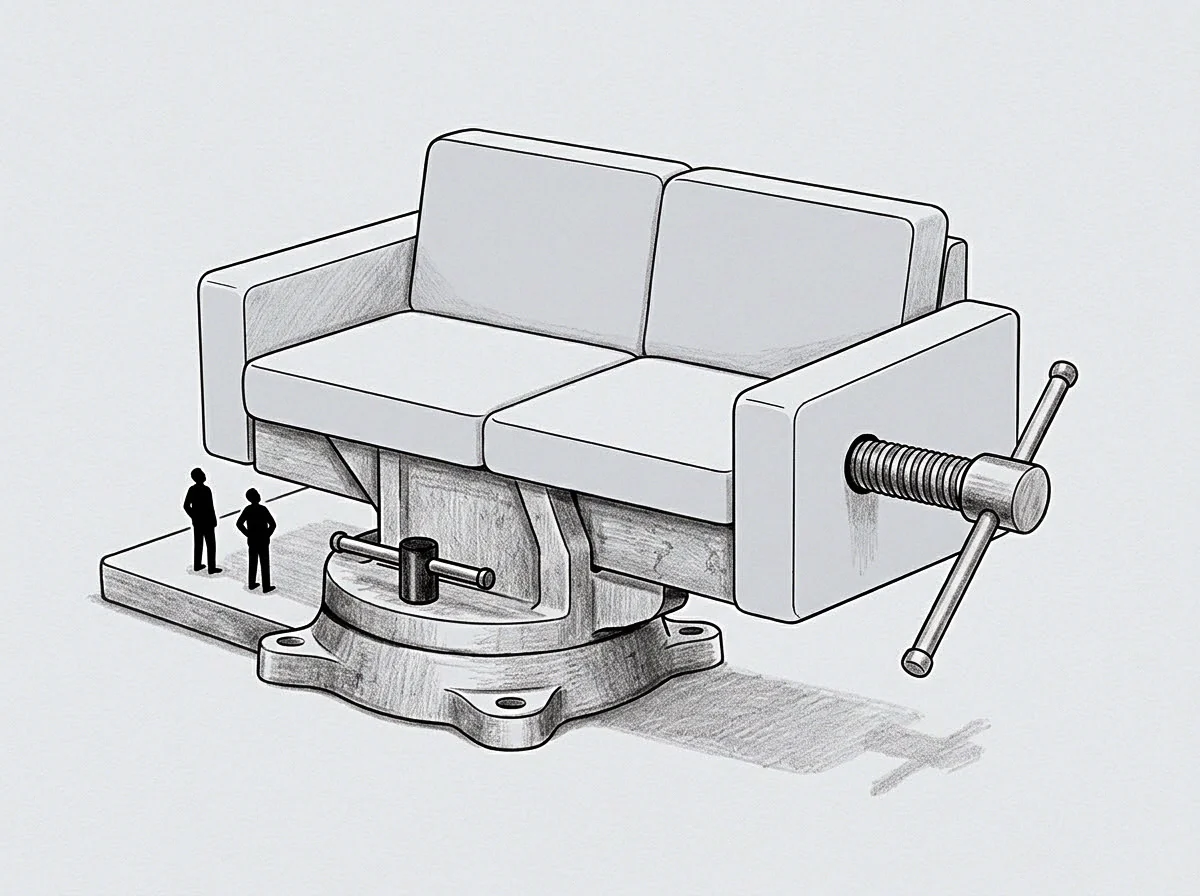
Converting Defunct Equity Agreements into Monetary Demands
Calculating the monetary demand requires applying statutory wage baselines to documented working hours. Where written contracts specified a cash salary that was unilaterally converted into deferred equity without worker consent, the full contract rate forms the back-pay demand basis. Where work occurred purely under equity promises, state minimum wage and overtime laws dictate the floor calculation.
Statutory back pay survives asset liquidation. Claimants issue formal statutory demand letters to both the corporate entity and managing officers personally. The demand outlines specific statutory violations, accrued back pay calculations, mandatory statutory interest rates, and applicable civil liquidated damages under statutory labor provisions.

Filing Administrative Labor Complaints Against Dissolved Entities
Submitting administrative wage complaints to state labor departments initiates formal investigation processes. Labor enforcement agencies possess broad investigatory authority to subpoena corporate books, inspect bank records, and interview managing officers. State agency determinations issue binding administrative judgments against both entity and personal officer assets.
Individual managers remain personally subject to debt. Administrative enforcement bypasses costly corporate bankruptcy litigation by creating direct personal judgment liens against operating officers. When corporate stock options convert to zero financial value upon business failure, statutory labor claims provide the primary mechanism to recover cash value for past labor executed inside defunct corporate structures.
Settlement negotiations with former corporate officers move fast once personal statutory exposure is formally asserted. Officers facing direct personal liability under state labor codes routinely elect to settle back-pay claims out of personal funds rather than defend enforcement proceedings that carry statutory mandatory attorney fee awards and potential criminal misdemeanor penalties.