
Constructing Cryptographically Verifiable Documentation Repositories Against Contested Ownership Assertions
A repository commits cryptographic hashes of dated contributions to immutable ledgers, proving authorship without relying on reconstructed memory.

Anchor
Two people leave a basement room in October with sixty percent of an equity distribution assigned to one desk and forty percent assigned to another in spoken agreements alone. The technical contributor builds the entire backend architecture over eighteen months without a written operating agreement. Capital arrives in the second spring.
The commercial partner then asserts that technical contributions represented merely outsourced tasks, claiming ninety percent ownership and citing undocumented conversations from the first month. The technical partner produces timestamps from a personal machine, but the commercial side argues the system clock was altered after the valuation rose.
Unrecorded intentions dissolve under commercial pressure, and unverified hard drives invite claims of backdating once recollections diverge. A cryptographic digest binds a file to a digital stamp through a one-way mathematical function. Running an engineering document, patent draft, or specification memo through an algorithm such as SHA-256 yields a unique string tied to that precise byte sequence.
Publishing that calculated string to a public ledger establishes that the exact document existed at that calendar second, settling the chronological order without disclosing proprietary text prematurely.
A cryptographic hash function commits an arbitrary volume of documentation to a fixed hexadecimal string when applied to the underlying byte sequence.
Assume an engineering partner produces twenty system architectural drafts over twelve months. Under ordinary working conditions, private notes sit within local directories or commercial cloud repositories, both vulnerable to claims of backdating or administrative alteration. Constructing an immutable proof sequence demands specific components operating in concert:
- Cryptographic hash strings generated directly from original files fix the contents without leaking internal trade secrets.
- Decentralized timestamp commitments append calculated digests into distributed blocks that prevent subsequent chronological manipulation.
- Cryptographic signatures apply private keys held by contributors to confirm individual authorship.
- Merkle tree structures aggregate thousands of operational entries into a single verifiable root digest.
When an operator neglects to anchor these records publicly, every later assertion of intellectual contribution degenerates into a credibility dispute that consumes hundreds of hours and leaves asset titles permanently exposed to litigation.
Seal
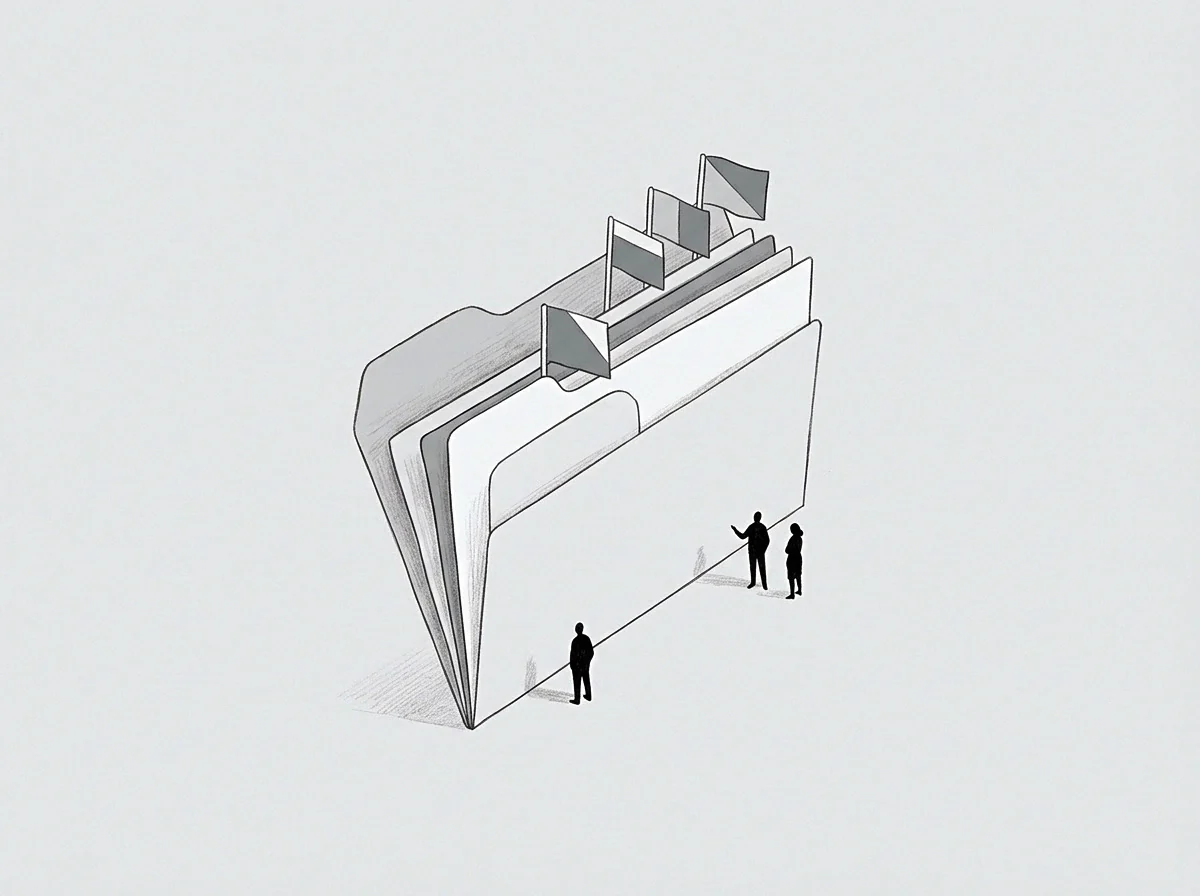
Applying a digital signature to a file ties personal identity directly to the underlying data. The author creates an asymmetrical mathematical pair: a private key held secretly and a public key circulated openly. When the private key signs the data digest, anyone holding the corresponding public key can verify that the author created the file.
A solitary signature confirms the signer, yet it leaves the calendar date open to challenge. Because system clocks remain under local control, internal file timestamps carry little weight during disputes over early corporate formation. Verifiable attestation couples the private key signature with a decentralized consensus entry.
An RFC 3161 trusted timestamp authority offers one avenue, but it depends on the operational survival of a single commercial entity. Anchoring the calculated hash inside a public blockchain block removes reliance on institutional longevity, using block height to establish a boundary before which the documentation unquestionably existed.
An altered byte within a hashed specification produces a completely disparate digest, destroying the correspondence with the recorded public stamp.
Consider two engineers collaborating across three separate software modules. Each commit, architectural drawing, and specification document generates an individual cryptographic hash. Rather than committing every separate string to a public chain, the system builds a hierarchical tree of hashes, pairing adjacent data digests repeatedly until a single top string remains.
That root enters a public transaction. Any individual entry proves its inclusion within the top string through a compact chain of intermediate hashes, keeping verification costs minimal while securing hundreds of records simultaneously.
The operative contract term states that any unanchored contribution remains legally presumption-free regarding creation timing, transferring the evidentiary burden onto whoever failed to generate the public cryptographic commitment.

Dispute
Human recollection operates through reconstruction rather than retrieval from pristine storage. Research on autobiographical recall indicates that individuals reconstruct historical events to align with current financial incentives and immediate perspectives. Under experimental conditions involving retrospective attribution across business arrangements, subjects systematically inflate their historical workload and strategic influence as the perceived asset value increases.
This reconstructive drift rests on foundational findings within cognitive psychology, evaluated across controlled adult populations exposed to post-event misinformation and altered outcome knowledge. The observed inflation of contribution disappears only when participants confront contemporaneous written records produced during the initial operational period. What would destabilize this finding is reproducible evidence showing that commercial founders maintain stable, unbiased recall of unwritten agreements across multi-year periods, an outcome that has never appeared in clinical evaluations.
Is An Unbroken Log Sufficient Alone?
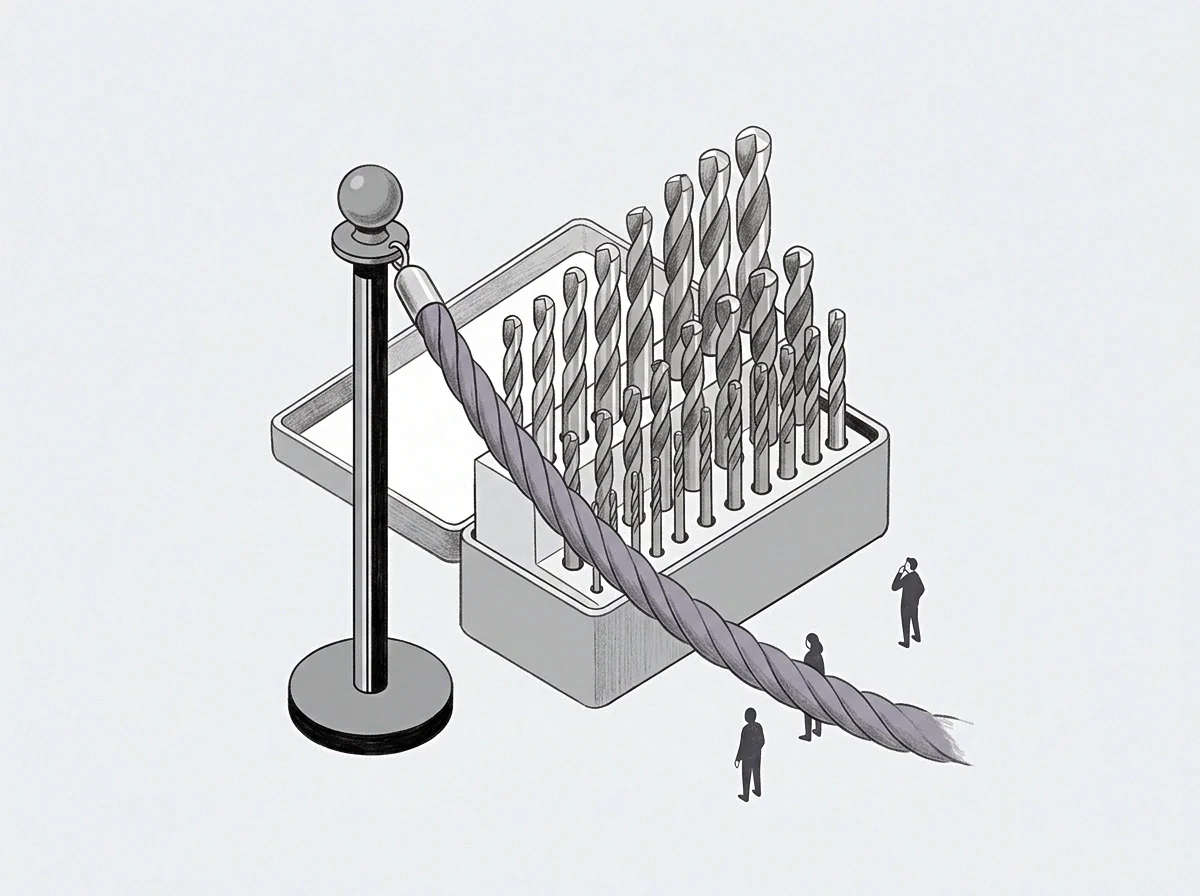
Technical teams often presume that presenting an unbroken cryptographic record terminates all ownership conflict immediately. A cryptographic hash proves only that a specific file existed at a specific moment in the possession of the private key holder. It does not establish that the author possessed legal authority to develop the asset, nor does it prove that the ideas originated without external contribution.
An author could take an uncredited spoken concept from a partner, write it into a specification file that evening, and generate a valid public timestamp. The mathematical record confirms prior possession of the file, not its contractual or collaborative origin.
This limitation marks the boundary where technical certainty meets human ambiguity. In rural boundary surveying, granite corner stones carved with chisel marks outlast hand-drawn paper deeds by centuries, yet the physical presence of the stone does not reveal whether the surveyor placed it ten feet past the legal boundary line during an unrecorded storm. The physical mark anchors location, while ownership requires an underlying legal covenant.
When technical records lack accompanying written governance, the counterparty exploits the gap by asserting that the recorded work was performed on behalf of an implied partnership.
The oral understanding assumed that all work performed during those twelve months remained entirely shared property regardless of who held the private keys.

Registry
Choosing an infrastructure for documentation storage determines whether verification remains viable across decades. Centralized databases and private repositories offer operational speed, yet they retain single points of failure and administrative vulnerability. An administrator can edit records, modify directory permissions, or shut down servers during an internal dispute.
Storing documents across distributed repositories, backed by cryptographic proofs anchored on independent public blockchains, creates resilience against unilateral tampering.
| Storage Strategy | Tamper Resistance | Third-Party Reliance | Verification Cost in Hours | Durability Over Time |
|---|---|---|---|---|
| Local Version Control | Low | Minimal | High | Fragile |
| Centralized Notary Service | Moderate | Complete | Moderate | Vulnerable to Vendor Closure |
| Public Blockchain Anchoring | Extremely High | None | Minimal | Permanent |
| Hybrid Merkle Repository | Extremely High | Minimal | Low | Highly Resilient |
A repository designer pairs private storage with public commitments. Raw source code, meeting transcripts, and cap table models remain encrypted within decentralized file systems or private servers, while only the Merkle roots and public key signatures enter the open block space. This separation preserves operational privacy while guaranteeing unalterable proof of sequence and content.
When external auditors or opposing counsel request proof, the contributor provides the raw file alongside the Merkle path, allowing verification in seconds using basic command-line utilities without exposing proprietary internals.
The simplest protocol that anchors records outside the control of either partner outlasts any sophisticated internal tracking system.

Audit
Executing an evidentiary review transforms a technical archive into defensible proof against competing ownership claims. The process pulls cryptographic hashes directly from original repository commits and traces them through intermediate Merkle proofs to the specific public block transaction.
A founder who constructs an immutable verification pipeline protects the venture from unfounded ownership claims during later investment rounds. When an early claimant emerges asserting undocumented co-founding status, the venture presents an unbroken sequence of cryptographically stamped contributions that delineate technical origins with mathematical certainty. The cost of generating these commitments involves minutes of automated script execution during routine commits, whereas defending against an unanchored ownership claim consumes capital, executive attention, and investor goodwill.
The person holding mathematical proof spends minutes demonstrating fact while the claimant spends weeks reconstructing intention.
Whether future legal forums will accept cryptographic proofs as self-authenticating evidence without requiring supporting witness testimony remains an open operational question across international corporate jurisdictions.