
Contemporaneous Note Taking Discipline and Discovery Exposure in Corporate Deadlock
Contemporaneous notes establish factual timelines against memory drift but become fully discoverable adversary evidence unless strictly managed under legal privilege.
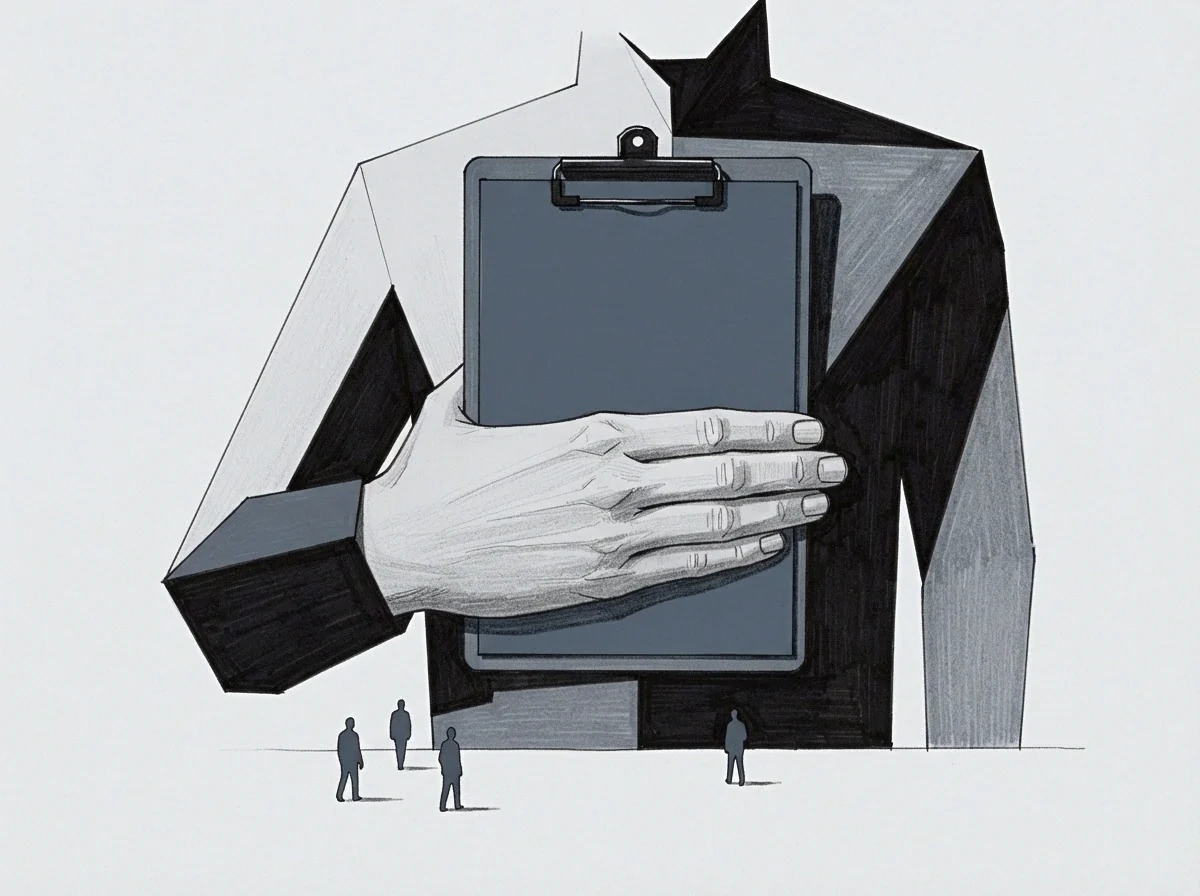
Hand
Two owners sit across a board table with fifty percent voting rights apiece, watching the enterprise stall. Deadlock rarely begins with formal notices. It starts when one owner senses that capital distributions, hiring approvals, or strategic votes are being withheld to force an equity sale.
That realization prompts an immediate reaction: open a private notebook or encrypted file and record every conversational slight before the afternoon ends.
The hand records the date, the hostile gesture, and the broken operational agreement. It feels like self-defense. Writing down an unwritten betrayal provides immediate private relief, anchoring a pattern of behavior that would otherwise remain slippery.
The entry fixes a sequence that memory begins altering within forty-eight hours.
Memory reconstructs past encounters to serve current positions. A disputed conversation about intellectual property assignment drifts into self-justifying accounts on both sides within weeks. The contemporaneous entry anchors the hour, the exact phrase spoken, and the specific agenda item abandoned.
A dated line written on the day of an altercation limits retrospective drift once commercial alignment breaks.
That private notebook also creates an immediate hazard. An owner who documents a co-director during deadlock builds an evidentiary archive. In statutory dissolution actions or claims alleging breach of fiduciary duty, that archive loses its privacy.
Opposing counsel can demand production of personal notes, electronic devices, text threads, and private memoranda touching enterprise governance.
Notes intended to prove an adversary’s bad faith often reveal the author’s own calculated maneuvers. Every venting comment, emotional assessment, and tactical speculation written late at night becomes fully inspectable by the opposing party.
An owner stays quiet at the meeting while preparing an escape route.

Desk
Evidentiary Architecture of Real Time Notation
The legal utility of a private record depends on formal rules of evidence. When commercial disputes enter a statutory proceeding, private notes carry no inherent authority. Notes constitute hearsay when offered to establish the truth of their own assertions.
Federal and state rules permit contemporaneous notations into evidence only under strictly circumscribed exceptions.
Under the doctrine governing past recollection recorded, an author must establish that the notation occurred while the event was fresh in mind, that the writing accurately reflected their knowledge at that instant, and that independent memory no longer retrieves the precise details. If an author remembers the conversation clearly, the document cannot serve as an independent substantive exhibit; it functions only to refresh recollection on the witness stand.
Corporate records maintained in the ordinary course of business enjoy broader admissibility under the business records rule. Personal diaries kept on an office desk rarely qualify. A business record requires regular operational maintenance, a duty of transmission, and no motive of litigation preparation.
A private record assembled during an ownership impasse carries a presumption of litigation preparation that forfeits the business record hearsay exemption.
When an owner writes selectively, documenting only a partner’s failures while omitting their own obstruction, the tribunal discounts the artifact. Selective retention destroys credibility.

Cognitive Divergence and Retrospective Narrative
Cognitive psychology measures significant drift in how people reconstruct high-stakes negotiations. Studies evaluating recall accuracy in adversarial partnerships show that unrecorded conversations experience fifty percent narrative variance within six months. Each party genuinely recalls an entirely distinct distribution agreement with equal subjective certainty.
A contemporaneous notation breaks the stalemate of competing memories by demonstrating that a specific claim was voiced on a specific afternoon. Its value remains bounded: a note proves what the writer recorded, not that the opposing director agreed to the statement.
Under statutory inspection standards, producing a personal journal waives confidentiality over adjacent entries covering the same operational topic.

Line

What Survives An Adversary Evidentiary Audit?
Discovery demands in corporate deadlock leave few written artifacts untouched. Once statutory dissolution or derivative claims commence, broad discovery subpoenas reach personal cloud storage, private phone applications, and handwritten desk notebooks. Owners often assume their personal notes remain shielded by the work product doctrine.
The work product doctrine shields materials prepared solely in anticipation of litigation under attorney direction. An owner’s personal venting ledger, kept before hiring litigation counsel, fails this threshold. Personal journals are discoverable fact documents, leaving candid remarks about enterprise valuation, customer dissatisfaction, or operational shortcuts exposed to adversary inspection.
Unfiltered notes often surrender a position before depositions begin. A director might write down an internal calculation: willing to accept two million to walk away, though fair market value stands at five million. Opposing counsel uses that single line to cap enterprise buyout demands during court-ordered mediation.
The line between protected legal coordination and unprotected factual documentation depends on counsel engagement. Notes prepared at the specific request of an attorney to inform legal analysis gain qualified protection. Notes jotted down during executive meetings to preserve an owner’s personal leverage remain entirely unshielded.
Work product protection requires formal legal anticipation directed by retained counsel rather than an individual instinct toward personal vindication.
The disclosure of non-privileged notes creates severe vulnerability in corporate deadlock actions:
- Unfiltered motive entries expose underlying intent, allowing an opposing owner to argue bad faith governance or improper corporate freeze-outs.
- Valuation admissions establish damaging baseline equity figures that contradict formal appraisal positions advanced during buyout valuations.
- Selective documentation gaps indicate bad faith record creation, suggesting the author deliberately concealed mutual operational compromises.
- Spoliation vulnerabilities arise if the writer deletes entries after dispute escalation, triggering adverse evidentiary inferences by tribunals.
Whether an informal digital ledger stored on private hardware withstands a forensic spoliation motion when automatic sync features delete historical edits remains an unstable determination across jurisdictional districts.

Date
Disciplined recordation differs systematically from emotional journal keeping. An effective contemporaneous log behaves like an operational log rather than an emotional diary. Entries strip out adjective-heavy interpretations of the counterparty’s attitude and focus entirely on verifiable objective markers: attendance, motions tabled, operational expenditures vetoed, and formal requests ignored.
The medium matters. Handwritten notebooks offer room for adversary claims of retroactive page insertions unless bound and dated consecutively. Digital tools on centralized systems face alteration allegations unless anchored by immutable digital timestamps or cryptographic hashes.
Forwarding an objective factual summary to corporate legal counsel or through immutable email protocols creates a defensible chronological anchor.
| Documentation Vehicle | Evidentiary Classification | Discovery Exposure | Vulnerability Factor |
|---|---|---|---|
| Personal Spiral Notebook | Past recollection recorded | Full disclosure required | Vulnerable to charges of retroactive fabrication and backdating |
| Unilateral Memo to File | Hearsay statement | Full disclosure required | Presumed self-serving when generated without opposing distribution |
| Attorney-Directed Incident Log | Protected work product | Qualified protection | Privilege waived if factual narratives blend with unguided business musings |
| Neutral Executive Email Summary | Party opponent admission | Shared enterprise file | Adversary silence functions as contested acquiescence rather than assent |
The discipline demands recording what occurred without editorial flourish. Writing that an owner stormed out of the boardroom records subjective anger. Writing that the co-owner departed at two fifteen without voting on payroll approval provides concrete factual evidence.
Log only the operational facts that an indifferent witness standing beside the desk could independently confirm.

Cost
Record-keeping carries a substantial administrative and strategic cost. An owner who spends two hours each evening constructing a documentary brief against a partner drains cognitive capacity and attention away from corporate operations. The enterprise stagnates because both equal shareholders divert energy from customer acquisition toward documentary warfare.
The relational cost exceeds the hourly drain. Once an owner adopts a strict note-taking posture, natural collaboration vanishes. Every interaction stiffens.
The other partner notices formal pauses, deliberate email confirmations of mundane hallway discussions, and the sudden end of informal problem-solving. Mutual paranoia takes root.
The counterparty responds with reciprocal record-keeping. Both sides cease operating the company, directing energy toward staging evidentiary traps for upcoming judicial dissolution hearings. The firm bleeds market share while its governing owners assemble parallel file cabinets.
A founder who handles real-time documentation improperly builds the exact evidentiary scaffold used by opposing counsel to force a discounted buyout.