
Documenting Early Negotiation Warnings into Commercial Contracts
Translating observed negotiation friction into express contractual covenants, condition precedents, and indemnities protects deals against verbal drift.

Fault
Pre-contractual discussions reveal operational friction before legal commitments bind the parties. A counterparty hesitates over delivery dates, deflects queries regarding technical headcount, or offers contradictory verbal accounts of data ownership. These behaviors function as structural strain indicators.
When the final agreement fails to reflect these tensions, the resulting commercial contract leaves the principal unprotected against the very failure patterns observed across the table. Reconstructive memory quickly alters recollections of early calls, replacing noted hesitation with assumed alignment.
Parties routinely enter negotiations assuming commercial goodwill will correct interpersonal friction once capital changes hands. This assumption repeatedly collapses under operational pressure. An evasive response during preliminary discovery indicates an unstated operational constraint.
Commercial terms drafted in response to such evasion convert an informal suspicion into an enforceable protective instrument. The discipline begins by recognizing the discrepancy between oral assurances and documentary silence.
A verbal assurance contradicted by a schedule omission identifies the precise boundary of a counterparty’s operational willingness.
Contractual risk originates during the preliminary exchange of assumptions. The failure to memorialize negotiation friction produces predictable breakdowns across several distinct operational categories.
- Unresolved Capacity Deficits emerge when a supplier confirms a delivery schedule during oral discussions while refusing to bind headcount or shift availability inside the statement of work.
- Evaporating Authority Discrepancies occur when an executive negotiates substantive commercial points without holding corporate power to execute binding covenants.
- Unaccounted Reliance Dependencies surface whenever one party predicates pricing upon technical dependencies that the receiving business has neither confirmed nor agreed to support.
Leaving these early warnings unrecorded exposes the commercial enterprise to full operational default without contractual recourse, forcing the injured party to absorb the financial loss of post-closing friction that was observed weeks before signature.

Conversion
Negotiation signals demand mechanical translation into definitive legal covenants. A commercial operator detects evasiveness concerning regulatory filings during preliminary discovery calls. Treating that evasion as personal quirk forfeits the legal utility of the observation.
The protective move converts the observed friction into an express condition precedent or an itemized representation. Objective verification replaces subjective confidence.

Contractual Mapping of Preliminary Divergence
Commercial drafting transforms informal observations into operational terms. When a vendor downplays third-party licensing dependencies in preliminary meetings, the responding contract team drafts explicit negative covenants barring reliance on undisclosed software modules. The oral omission dictates the textual boundary.
Each warning pattern observed in negotiation yields an exact contractual counterpart designed to allocate the financial burden of default to the party creating the ambiguity.
Contractual terms function as instruments of verification. They force counterparties to assign financial consequences to their informal representations. If a counterparty insists during a meeting that a supply chain bottleneck will resolve within thirty days, the drafted provision places financial penalties on day thirty-one.
The willingness to accept the drafted penalty reveals whether the verbal statement reflected actual operating reality or persuasive rhetoric.
A contract protects value by pricing the specific operational evasions that occurred during preliminary talks.
Drafting these instruments forces commercial honesty into the room. A counterparty facing a financial liability tied directly to their verbal claim either revises the projection downward or signs an enforceable indemnity.
The operational delay will resolve before deployment, making detailed schedule covenants an unnecessary obstacle to closing.
Sheet
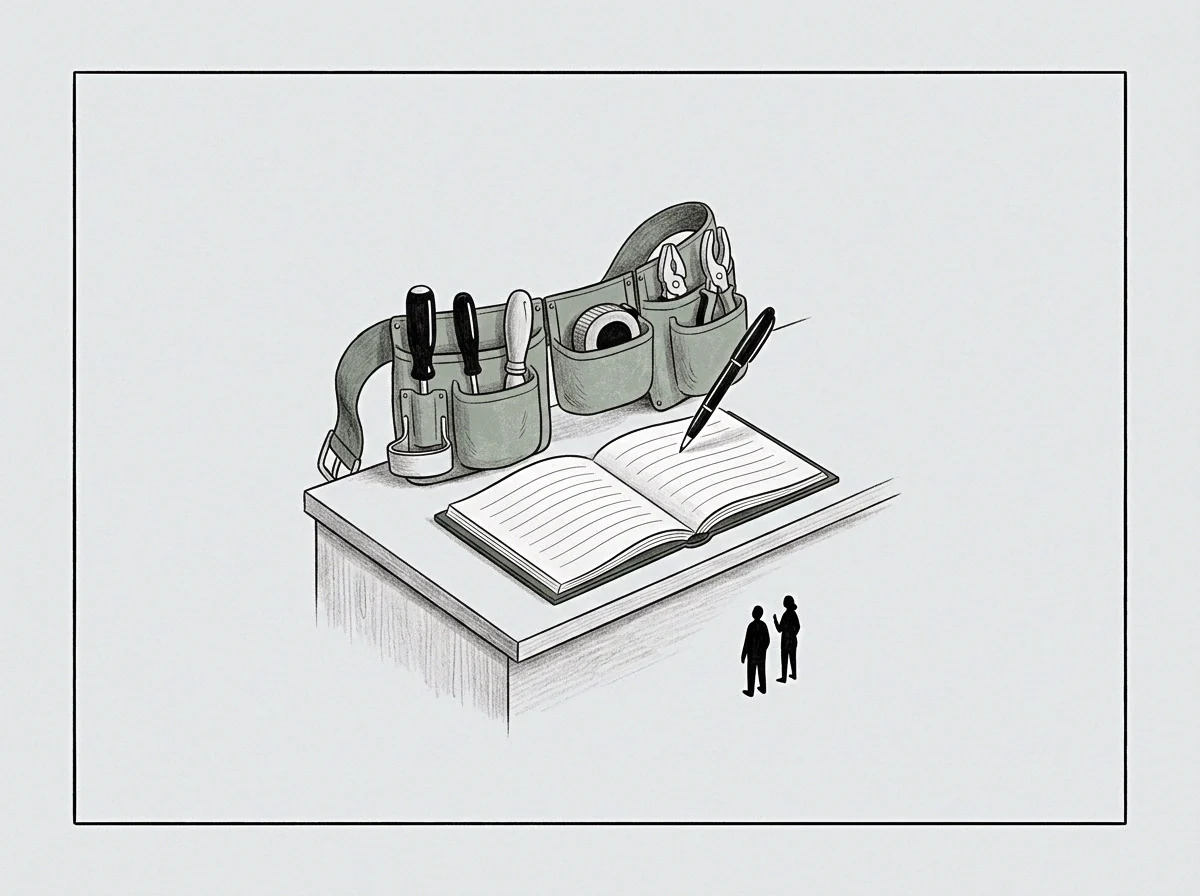
Term sheets, memorandum drafts, and negotiating matrices constitute the physical record where early friction first leaves documentary tracks. These instruments record what each party requested, what was rejected, and the exact date an issue surfaced. Comparing early drafts against the final contract uncovers abandoned safeguards and creeping liabilities.
The draft record exposes changes that memory glosses over during expedited closing routines.
Comparative Analysis of Friction Signals
A systematic comparison reveals how pre-contractual tension maps directly to operational provisions in the definitive agreement.
| Observed Negotiation Friction | Presumed Commercial Meaning | Definitive Contract Instrument | Operational Protective Effect |
|---|---|---|---|
| Repeated pushback against specific delivery milestone definitions | Internal capacity bottlenecks or unallocated engineering resources | Tiered condition precedent tied to verifiable delivery stages | Withholds progress payments until performance passes independent acceptance testing |
| Reluctance to schedule audit meetings or disclose sub-tier vendor lists | Third-party dependencies with volatile pricing or regulatory exposure | Broad audit representation and mandatory sub-vendor indemnification | Allows immediate inspection rights and direct indemnity for third-party supply failure |
| Unilateral deletion of service level compensation clauses from early drafts | Anticipated operational failure or inadequate system redundancy | Direct price offsets and pre-agreed service credits with termination triggers | Ensures operational defaults immediately reduce payable invoices without separate claims |
| Vague verbal assertions of intellectual property pedigree without registration documentation | Disputed provenance, contested contractor assignments, or open-source contamination | Special representation with uncapped indemnity and survival carve-out | Insulates the buyer from third-party infringement defense fees and ownership challenges |
Draft versions tell a sequential story. Redlines reveal where a counterparty sought to dilute standard warranties, remove objective standards, or introduce ambiguous discretion into performance metrics. The documentation designer traces these redlines systematically.
Every rejected warranty indicates an area where the counterparty knows its performance carries elevated operational risk.
A negotiation matrix documents the evolution of contentious terms across drafts. The operator records the specific reason a party gave for rejecting a protective clause. If the supplier claimed the clause was legally redundant, that specific assertion is referenced directly inside the interpretive preamble or schedule disclosures.
This paper trail establishes intentional allocation of responsibility.
The inclusion of an express condition precedent tied to third-party vendor consents shifts the entire operational and financial burden of transactional closing back to the counterparty asserting regulatory readiness.
Clause
Operative contractual provisions isolate and neutralize the hazards uncovered during negotiation. Standard boilerplate agreements fail because they operate on generalized commercial assumptions rather than the specific behavioral friction observed across the bargaining table. The drafting team builds targeted clauses that address observed evasions directly.
Specific performance triggers replace generalized commitments to commercial effort.

Integration and Exclusion Provisions
Standard merger clauses state that the written contract supersedes all prior verbal statements, drafts, and discussions. In transactions where preliminary warnings exposed operational weaknesses, a blind merger clause harms the cautious party by wiping out the counterparty’s prior assertions. The drafting team addresses this risk by attaching formal disclosure schedules that incorporate specific pre-contractual representations into the body of the agreement.
The integration clause is narrowed to preserve specific reliance statements.
Targeted warranties convert unverified assertions into enforceable guarantees. When a seller claims software code contains zero third-party open-source libraries, that statement becomes a specific warranty accompanied by an express indemnity carved out from standard liability caps. This mechanical structure prevents the seller from using contractual liability limitations to avoid the consequences of an inaccurate preliminary claim.
A liability cap without explicit carve-outs for pre-closing representations leaves deliberate misdirection unpenalized.
Contractual protection requires an ordered sequence of enforcement mechanisms designed to respond to specific negotiation discoveries.
- Escrow Holdback Mechanisms secure dedicated funds to cover liabilities identified during the disclosure process until operational stability is proven in production.
- Specific Indemnification Triggers establish immediate, non-discretionary reimbursement obligations for losses arising from contested negotiation topics, operating outside standard deductible baskets.
- Unilateral Termination Windows grant the observing party the contractual right to exit the relationship without financial penalty if specified pre-closing disclosures prove inaccurate upon deployment.
These structured provisions remove ambiguity from operational execution. The commercial actor does not rely on post-closing persuasion or relational pressure to secure compliance. Contractual mechanisms automate the financial consequence the moment performance departs from the negotiated standard.
The fundamental structural question remains whether sophisticated counterparties will accept tailored indemnity provisions that directly penalize the specific evasions they sought to conceal during preliminary discussions.

Bound
The physical boundaries of the executed contract define where negotiation friction transitions into legal reality. Contract drafting constitutes a physical act of bounding liability. The sheets of paper, initialed schedules, and executed annexes determine what survives the closing conference.
Once the signature blocks are complete, undocumented warnings become legal non-events. The record holds only what the parties committed to paper.

The Cost of Documentary Precision
Documenting negotiation warnings requires substantial investment of billable hours, drafting time, and commercial goodwill. Counterparties push back against highly specific covenants, accusing the cautious party of bad faith or excessive bureaucracy. This friction is a necessary transaction cost.
The hours spent negotiating precision represent an upfront premium paid to prevent years of protracted operational disagreement.
A business that refuses to pay the documentary cost pays a significantly higher price later in operational disruption, disputed invoices, and defensive renegotiation. Memory reconstructs past events favorably, convincing participants that everyone shared an identical understanding of performance standards. The dated, unadjustable text of the contract dispels this retrospective illusion.
The text remains invariant when memories diverge.
The contract provides clarity because it records the exact commercial compromise reached between two self-interested parties under specific conditions. It freezes the boundary of responsibility at a single moment in time. When operational disputes arise, the parties return to the physical document to determine who bears the financial loss.
The signed line fixes the obligation that oral conversation leaves fluid.