
Documenting Operational Assumptions Before Leaving Early Executive Seats
Early executive departures create divergent operational accounts that consume institutional capacity unless assumptions are formally documented before exit.

Version
When an early executive departs an organization, the operational disruption stems from a divergence between two distinct accounts of reality. The departing executive maintains an internal narrative built around unstated trade-offs, informal agreements, and provisional compromises made under early constraints. The remaining founders and board members maintain a parallel narrative constructed from visible deliverables, expenditures, and performance metrics.
During active operations, daily interactions conceal the distance between these two versions, creating an appearance of alignment because ongoing activities require immediate coordination rather than historical reconciliation.
The departure ends the deferral of that reconciliation. Once an executive vacates a seat, the operational authority that translated unwritten assumptions into daily execution disappears. The remaining leadership team inherits active projects stripped of their context.
A software vendor contract structured with escalating volume tiers reads as an unaccountable budget overrun to a chief financial officer who was never informed of the underlying pricing strategy. An engineering road map prioritized toward enterprise features reads as a misdirection to a product lead who understood the priority to be consumer software.
The departure of an early executive converts tacit operational choices into explicit organizational disputes.
The distance between these two accounts carries practical expense. Reconstructing the rationale behind undocumented operational decisions consumes executive capacity, delays product launches, and forces forensic audits of workflows. Organizations frequently attempt to resolve these discrepancies by scheduling informal exit interviews or brief status calls.
These interactions rarely bridge the gap because they occur after the operational context has shifted: the departing officer responds from detached recollection, while the remaining team asks questions driven by immediate friction.
A review of an unannotated handover folder reveals the core problem: operational choices were executed without recorded direction, consistent structure, or written justification.

Wall

Divergent Recollection and Cognitive Reconstruction
Cognitive psychology shows that human memory operates as a reconstructive process rather than an exact retrieval system. When individuals recall shared historical events, they reconstruct details to match their current position, perspective, and professional standing. In early executive environments where operational decisions occur under high velocity and structural uncertainty, this reconstructive tendency operates continuously.
During an executive’s tenure, hundreds of operational assumptions remain tacit, governing resource trade-offs, risk tolerance, vendor selection criteria, and performance baselines. As time passes, the departing executive remembers strategic decisions as deliberate choices executed under clear mandates. The remaining leadership remembers those same decisions as improvised responses to drift or operational default.
Neither account is dishonest; both represent genuine cognitive reconstructions of a shared past filtered through divergent roles and incentives.
Memory retroactively aligns past operational ambiguity with present organizational incentives.
The shift that occurs when an executive gives notice creates an immediate barrier to honest documentation. The moment an exit is announced, defensive reasoning increases on both sides. The departing executive acts to protect professional reputation and validate personal contributions.
The remaining leadership acts to protect organizational assets and assign accountability for existing operational deficiencies. This posture constructs a barrier that prevents effective knowledge transfer unless structured documentation protocols exist prior to the announcement.
Unexamined operational assumptions manifest as specific structural failures across distinct functional areas when an executive departs:
- Unstated Capacity Margins occur when an executive manages operational throughput by overworking staff beyond sustainable limits without documenting the temporary nature of the staffing balance.
- Implicit Vendor Mandates emerge when agreements regarding pricing discounts, service-level exceptions, or scope extensions exist solely in private messaging threads between the executive and third-party vendors.
- Informal Performance Baselines arise when key performance indicators are evaluated against informal, moving targets rather than written operational definitions shared across the leadership team.
- Unregistered Technical Debt accumulates when architectural shortcuts are accepted by the departing leader without logging the mandatory remediation schedule in public project repositories.
Allowing an executive to leave without systematically auditing and documenting these operational assumptions results in permanent institutional capability loss, elevated team turnover, and prolonged organizational inertia as successors attempt to navigate invisible operational constraints.

Clause
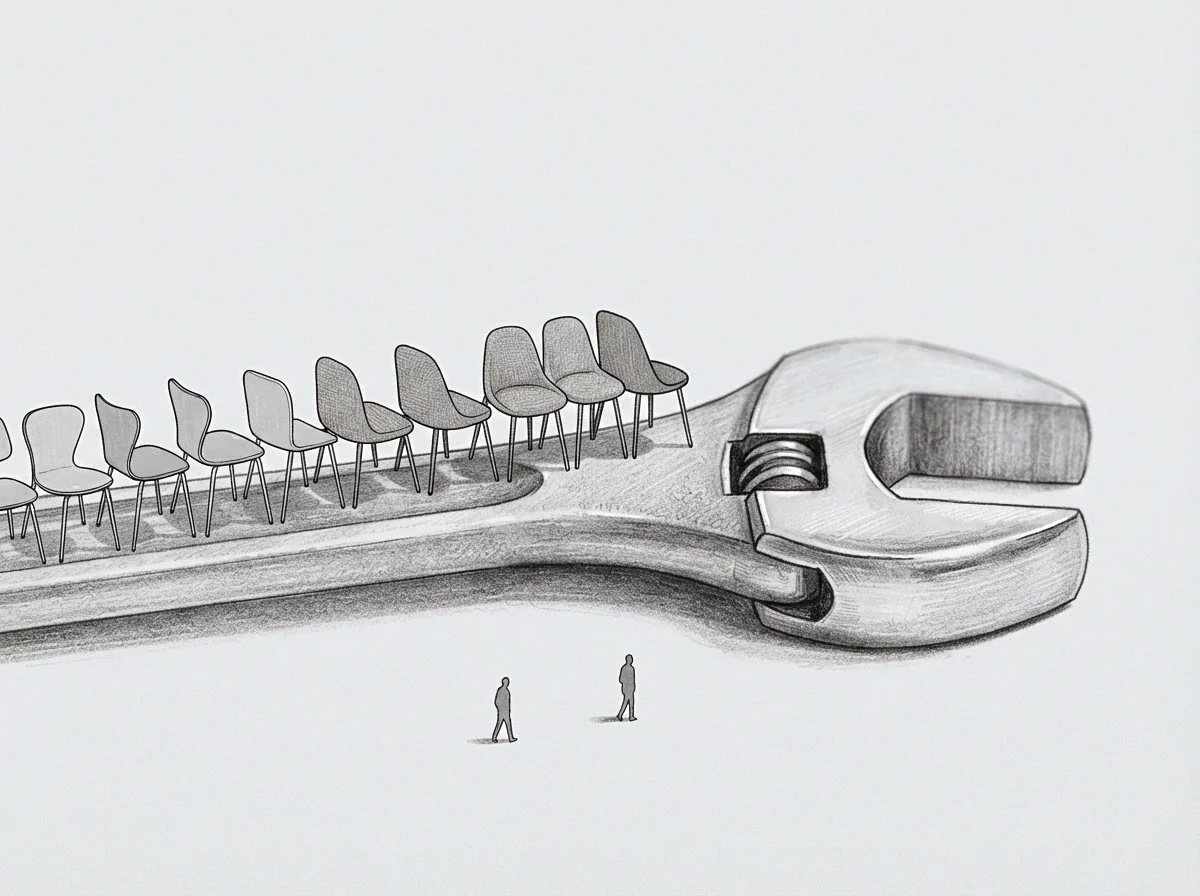
What Remains Unstated When the Executive Leaves?
Documenting operational assumptions requires converting tacit understandings into explicit written clauses before the exit process begins. A written term creates a single reference point that replaces divergent recollections. When an organization relies on remembered commitments, it invites ongoing dispute regarding the scope of executive authority and the ownership of operational output.
The process of formalizing operational assumptions must focus on areas where implicit understandings traditionally diverge. The table below outlines the contrast between implicit operational assumptions and formalized documented records across critical executive domains.
| Operational Domain | Implicit Operational Assumption | Formalized Documented Record | Organizational Impact at Exit |
|---|---|---|---|
| Authority Limits | Executive assumes full spending autonomy within overall department budget boundaries. | Explicit tier-based approval thresholds tied to vendor commitments and contract duration. | Prevents unauthorized long-term financial commitments discovered post-departure. |
| Resource Allocation | Staffing distributions adjusted fluidly based on informal daily priorities. | Documented capacity models mapping headcount directly to specific strategic initiatives. | Eliminates disputes regarding understaffed core functions vs over-resourced initiatives. |
| Vendor Commitments | Pricing and scope concessions negotiated via undocumented verbal agreements. | Centralized contract repository detailing non-standard terms, renewal dates, and scope boundaries. | Avoids unexpected vendor price increases or service reductions upon leader departure. |
| Performance Metrics | Success evaluated against informal qualitative assessments of effort and activity. | Standardized quantitative key performance indicators with agreed calculation formulas. | Provides objective criteria for evaluating departmental performance post-exit. |
| Documenting assumptions transfers knowledge from individual memory into institutional records. | |||
To operationalize this transfer, leadership must establish explicit documentation standards for executive handovers well before any departure occurs. This documentation must address not only current operational status, but the historical assumptions that produced current configurations.
Written terms transform volatile personal recollections into stable institutional knowledge.
A comprehensive handover record includes an explicit operational assumption clause stating that all unrecorded side agreements, informal budget adjustments, and unwritten operational mandates are invalid unless formally logged in the corporate repository prior to the final departure date.

Clock
The period between an executive’s departure announcement and their final day in the office represents a rapidly shrinking window for operational capture. Once notice is served, the departing executive’s attention to the organization drops precipitously. Simultaneously, the remaining team’s focus shifts from collaborative execution to risk mitigation and successor selection.
Executing a structured documentation protocol before the exit transition takes full effect requires a disciplined sequence of operational steps:
- Initiate a comprehensive operational inventory within forty-eight hours of departure notice, mapping all active projects, vendor relationships, and team delegations assigned to the seat.
- Conduct structured assumption-mapping sessions focused exclusively on identifying unwritten rules, informal vendor modifications, and undocumented technical or operational trade-offs.
- Publish a standardized handover memorandum detailing current departmental status, active risk factors, upcoming contract renewals, and resource allocation models.
- Perform a joint review of the handover memorandum involving the departing executive, remaining executive leadership, and designated operational successors.
- Archive all verified operational documentation in a centralized corporate repository with restricted editing access to establish a definitive historical baseline.
Documentation protocols must run on fixed schedules rather than voluntary executive compliance.
Executing this sequence ensures that the organization captures vital operational context while the departing leader is still available to clarify ambiguities. Delaying this capture process until the final days of employment consistently results in incomplete handovers, ambiguous documentation, and severe operational drift following the executive’s departure.
An operational rule governs the exit process: document assumptions when decisions are made rather than attempting to recover them during the final week of tenure.

Record
When an executive departs without aligning operational assumptions, two incompatible records persist indefinitely. The departing leader retains a personal memory of dedicated execution thwarted by organizational dysfunction, shifting priorities, and unsupportive peers. The remaining organization retains an official narrative of an executive who operated with administrative opacity, created unnecessary operational complexity, and left behind an unmanageable legacy.
This structural divergence affects future leadership seats. Successors entering the vacant role inherit a fractured operational environment where existing team members hold lingering loyalties or resentments based on undocumented past practices. Without a clear, documented record of past assumptions, the new executive spends months uncovering hidden operational constraints rather than driving strategic initiatives forward.
The failure to document operational assumptions before early executive departures remains an expensive structural vulnerability in growing companies. While formal legal contracts govern equity vesting, severance terms, and intellectual property ownership, the daily operational mechanisms that determine organizational performance remain largely unwritten. Organizations continue to pay a high cost in team capacity and leadership hours for treating operational documentation as an optional administrative task rather than an essential risk management discipline.
Executive transitions consistently drain institutional capacity until leadership mandates the formal documentation of operational assumptions as standard operating protocol.