
Reconciling Spoken Commercial Promises With Cryptographic Record Evidence
Spoken commercial promises drift through reconstructive memory while cryptographic records remain mathematically fixed, requiring immediate hashed documentation.

Voice
An oral promise between commercial actors expresses a flexible intent, while a cryptographic digest records a single mathematical state. Spoken commitments depend on mutual assent held in human memory over time. A digital record, by contrast, is an unalterable string produced by a hashing algorithm on a specific payload at a given moment.
Conflating these two forms of evidence creates immediate vulnerability in commercial agreements.
Human recollection actively reconstructs past events rather than recording them precisely. Research in cognitive psychology confirms that post-event information, later negotiations, and shifting commercial incentives alter how an earlier conversation is remembered. A partner tends to recall the verbal agreement that best aligns with their current risk position, even though confidence in memory correlates weakly with accuracy, often shifting within months.

Epistemic Drift in Oral Commercial Commitments
When two founders discuss a revenue split or equity vesting schedule over dinner, both leave the table with distinct mental models. Without immediate written codification, those models drift further apart as months pass while each party internally reinforces its own version of the deal terms.
Commercial misunderstandings stem from distinct mental models formed during identical conversations.
The gap between what was spoken and what is remembered widens during periods of organizational stress. Capital constraints or operational failures increase the incentive to re-interpret earlier terms. An oral assurance that royalty payments would stay capped at five percent easily transforms, in a licensor’s memory, into a temporary tier subject to quarterly revision.
Without a contemporaneous physical record, proving which version reflects original intent becomes impossible.
Subsequent discussions often compound the error. Every unrecorded attempt to clarify an earlier promise adds another layer of reconstructive memory over the original event. Over time, participants lose clear recall of the original conversation and substitute the narrative shaped by more recent negotiations.
The conversation concluded with an understanding that equity allocations remained subject to future operational metrics.

Ledger
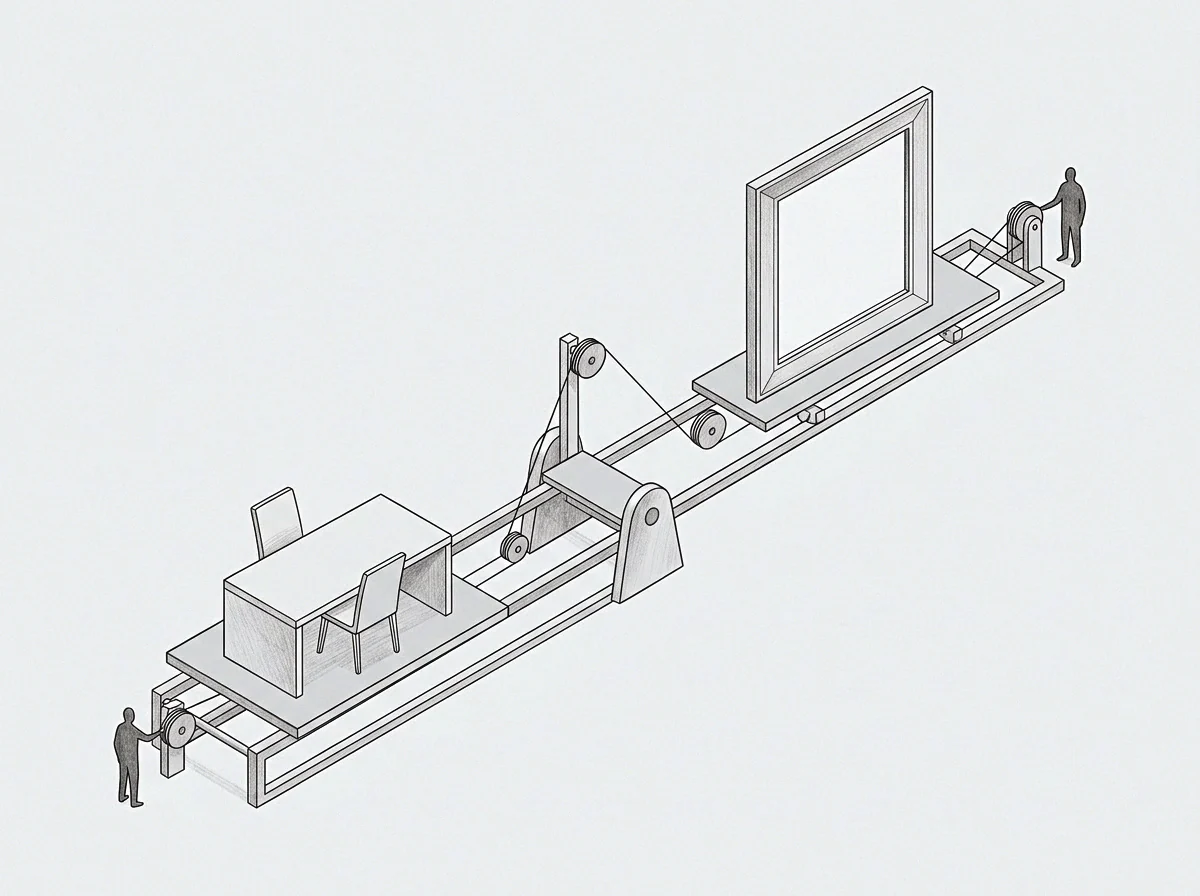
Digital evidence built on cryptographic principles relies on immutable state transitions rather than human memory. When an actor signs a JSON payload with a private key or commits a file hash to a public blockchain, the action creates a verifiably permanent anchor. The payload content cannot be altered without changing the calculated hash output anchored by the timestamp.
Cryptographic primitives establish three main properties for commercial evidence: origin authenticity, content integrity, and non-repudiation. An asymmetric signature proves key possession at execution, while a SHA-256 hash guarantees that no bytes changed after entry creation. The block header or timestamping authority then anchors the entry in a chronological sequence that prevents retrospective backdating.
Cryptographic Verification Mechanics
Deploying cryptographic records requires formal protocols to link human identities to key pairs. Without an established key management policy, a party can claim their private key was compromised or used without authorization, undermining non-repudiation. Technical proof holds, but operational governance fails.
- Asymmetric Key Signatures establish non-repudiation by tying a digital transaction to the key holder, verifying origin without exposing the private key string.
- Cryptographic Hash Digests generate fixed-length identifiers from arbitrarily large payloads, enabling instant detection of changes to contract drafts or technical specifications.
- Merkle Tree Accumulators batch thousands of operational events into a single root hash, permitting efficient verification of individual records without exposing adjacent data.
A cryptographic signature proves key possession at a specific timestamp but cannot establish whether the signer acted under duress or misunderstanding.
The mathematical certainty of a cryptographic hash chain can create a false sense of security. While the hash proves what data existed at a given moment, it cannot explain why that data existed, how the parties understood its terms, or whether a parallel verbal agreement superseded the written payload.
Cryptographic evidence provides absolute verification of digital state, but verifying digital state is not the same as verifying complete commercial intent.

Rift
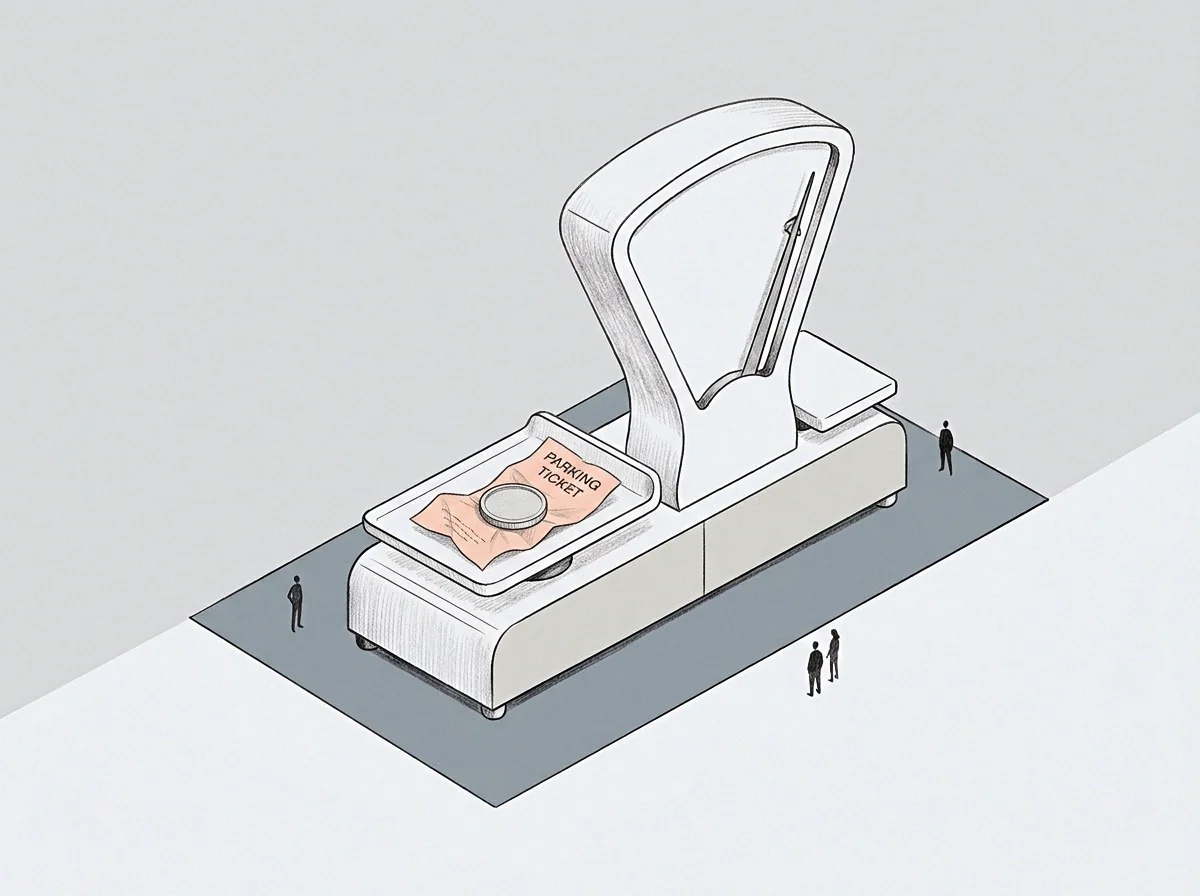
Structural divergence occurs when spoken promises contradict the plain text of cryptographically signed payloads. In early-stage ventures or technical partnerships, parties frequently agree on operational changes verbally while leaving smart contracts, code commits, or digital signature registries unaltered. Automated cryptographic code then enforces terms that one or both parties orally agreed to forgo.
Which Record Overrides Spoken Assent When Hashes Differ?
Resolving contradictions between verbal promises and cryptographic evidence requires examining contract integration alongside technical execution mechanics. Legal evaluation focuses on whether the digital artifact was intended as a final expression of terms or merely as an execution tool. Where a signed payload contains explicit integration language, oral evidence faces severe admissibility hurdles under the parol evidence rule.
| Criterion | Spoken Commercial Promise | Cryptographic Record Evidence |
|---|---|---|
| Mutability | High; subject to memory drift and re-interpretation | Zero; cryptographic hash changes if single byte moves |
| Temporal Precision | Low; bounded by general recollections of dates | Exact; anchored by block timestamps or authority stamps |
| Contextual Adaptability | High; fluidly incorporates informal nuance and trust | Low; strictly interprets explicit payload structure |
| Evidentiary Weight in Dispute | Weak; depends on witness credibility and corroboration | Strong; verifiable via public key math and hash checks |
Consider two partners in a software engineering firm. Partner A orally promises Partner B a ten percent bonus from equity reserves if a major milestone finishes before June. The underlying smart contract governing token distributions remains hardcoded to release tokens strictly on a four-year schedule without milestone overrides, and Partner A fails to update the smart contract logic or execute an on-chain administrative transaction.
The project reaches its milestones ahead of deadline, and Partner B requests the extra token allocation based on the verbal promise. Partner A points to the deployed smart contract, asserting that the automated code represents the entire agreement. Partner B holds a clear recollection of explicit oral terms, while Partner A relies on the unalterable execution of the cryptographic ledger, producing a dispute that costs thousands.
Spoken modifications to automated execution routines remain non-binding until written into the underlying code payloads.
The financial and operational damage from this friction routinely exceeds the technical cost of updating the cryptographic record. When verbal trust collides with immutable execution, parties can spend months resolving disputes while attempting to translate human conversations into terms technical systems recognize.
Failing to update cryptographic configurations immediately after agreeing to verbal changes forces the automated ledger to enforce terms the parties promised to abandon.
Clause
Reconciling spoken assurances with digital records requires deliberate contractual design. Operators avoid legal and operational gaps by embedding integration mechanics into written contracts and digital workflows, forcing oral modifications into digital form before taking legal effect.

Structural Integration of Verbal and Digital Terms
A legal framework must explicitly define the hierarchy between human dialogue, written agreements, and automated cryptographic execution. If a master service agreement establishes that on-chain records govern execution, verbal promises hold no legal force. Conversely, if the agreement ranks signed written amendments above automated code execution, the cryptographic record functions merely as a revocable instrument.
Incorporating formal digital amendment procedures ensures that casual conversations never override structured ledger allocations.
Operators use disciplined workflows to capture oral promises before they fade into disputed memory. The following sequential process binds spoken commitments to verifiable digital records:
- The oral discussion takes place, producing an informal summary of modified commercial terms.
- One participant drafts a precise text memorandum containing the exact terms, dates, and affected operational parameters.
- Both parties digitally sign the memorandum using authenticated private keys associated with their verified commercial identities.
- The cryptographic hash of the signed memorandum enters a persistent block timestamping service or immutable registry.
- The underlying technical operational parameters or smart contract logic update to match the newly hashed specification.
Incorporating a strict cryptographic modification clause within master agreements removes ambiguity regarding whether an unrecorded conversation altered a venture’s terms.
Under a mandatory digital signature clause, any purported oral modification lacking a corresponding cryptographic signature on a hashed memorandum remains void and unenforceable from the moment it is spoken.

Clock
Time exerts opposite pressures on human memory and cryptographic records. As days pass after a commercial meeting, human recall degrades while cryptographic evidence retains absolute fidelity. This divergence creates compounding dispute risks unless reconciliation occurs immediately after verbal interactions.

Temporal Decay and Reconciliation Costs
The time required to document a verbal commitment increases linearly, whereas the cost of resolving an unrecorded dispute increases exponentially. Drafting a signed digital memorandum thirty minutes after a conversation consumes minimal operational attention. Reconstructing that same conversation twelve months later during an equity dispute consumes hundreds of hours in legal counsel, technical auditing, and lost focus.
Maintaining cryptographically anchored records requires consistent operational routines. Operators who record daily decisions into a timestamped, signed repository build a continuous evidentiary record that protects the venture against reconstructive memory drift over time.
This level of recordkeeping requires discipline that short-term enthusiasm rarely sustains. When business pressures escalate, teams routinely abandon documentation routines and fall back on informal verbal promises. The resulting gap between fast-moving conversations and static digital records reopens the exact operational exposure the system was designed to close.
How can commercial architectures remain flexible enough to accommodate rapid verbal negotiations without sacrificing the evidentiary certainty provided by cryptographic records?