
Resolving The Evidentiary Limit Between Contemporaneous Metadata Files And Unstated Informal Working Understandings
Metadata verifies the computational moment of file creation, whereas unstated working understandings require separate bilateral documentation to possess legal weight.
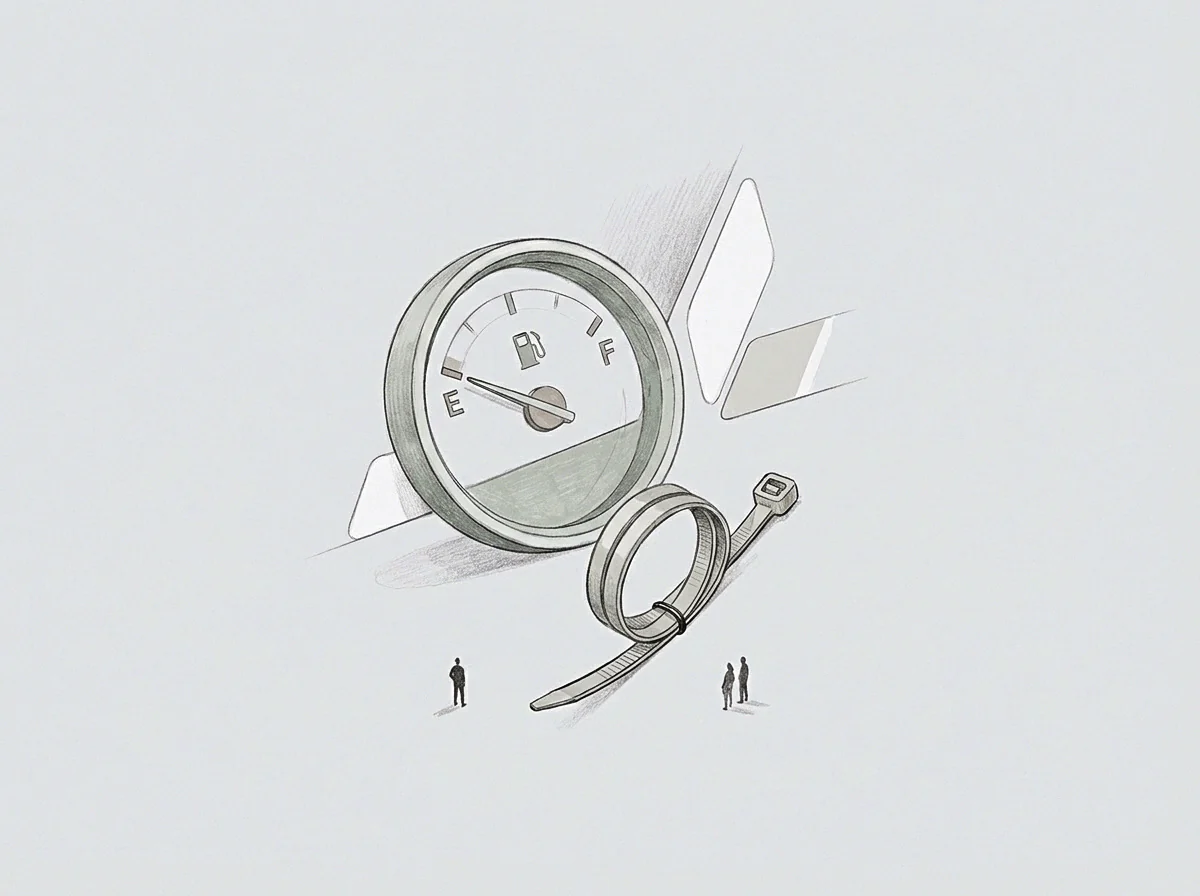
Clock
A software commit timestamp records 03:42 UTC on an October Tuesday. The file contains eleven hundred lines of application code defining how revenue distributes between two technical collaborators. One collaborator worked through the night, pushed the branch to a remote repository, and went to sleep assuming the uploaded configuration governed the project.
The other collaborator woke at seven, saw the notification, and assumed the verbal agreement struck over coffee two afternoons earlier remained the governing baseline. That conversation had outlined an equal split regardless of repository volume. The machine registered the exact second the file entered storage, while the working relationship carried an unstated understanding that ran in the opposite direction.
Operational logs record computational events. A file server stores creation dates, modification epochs, file sizes, and cryptographic checksums without evaluating whether human consensus accompanied the write operation. The person sitting at the terminal produces a verifiable record every time an editor saves changes to persistent storage.
That record shows that data existed in a particular configuration at a designated second, but it shows nothing about whether anyone else accepted the contents. The partner who never opened the pull request left no digital trace on that branch, operating instead on memory, recollections of tone, and an assumption of mutual goodwill.
A digital timestamp confirms physical submission to a server while leaving the assent of the other party unverified.
Disputes emerge when day-to-day friction forces the parties to examine their baseline. The collaborator who maintains the repository points to the file tree: the file exists, the history confirms author identity, and the version tree demonstrates consistent technical labor over eight continuous months. The written record showed forty commits.
The partner counters with recollections of a shared conversation where both agreed to protect parity above technical output. Each participant treats their source as decisive. The technical collaborator views the code as a self-authenticating agreement; the other views silence as assent to the verbal conversation.
When conflict arrives, unilateral metadata fails to bind the absent participant:
- Unilateral File Generation creates technical verification of authorship without establishing that the recipient assented to the underlying allocation.
- Chronological Persistence records the passage of operational work across calendar months, yet fails to supplant unstated equity expectations held by non-technical participants.
- Cryptographic Hashing fixes the internal integrity of an electronic document at rest while leaving the external commercial bargain unresolved.
File systems preserve byte counts and server headers without capturing spoken conversations. The engineer who writes a specification inside a private branch creates an artifact that feels binding because it is explicit, legible, and mechanically verifiable. The collaborator who receives the output reads the work through an unwritten bargain developed through casual check-ins, lunch meetings, and unspoken compromises.
The digital record demonstrates what one actor executed in isolation. It demonstrates neither negotiation nor acceptance. The written record showed no assent.
A verbal check-in during a hallway walk had already postponed that milestone until the following quarter.

Trace
File signatures authenticate file creation down to the millisecond. In an operational dispute, digital forensics reconstruct the sequence of actions with high precision: investigators recover hard drive sectors, inspect access control lists, and extract exchange logs between servers. These procedures reveal who touched a file, from which internet protocol address the connection originated, and what changes occurred between successive revisions.
The machine environment creates an exact narrative of physical data processing, but the operational reality of a business partnership takes place outside that environment.
Operating environments produce forensic artifacts through automated background operations. When two operators collaborate, one frequently maintains administrative control over corporate servers, source control systems, and communication channels. This person possesses the capability to generate contemporaneous records at zero marginal effort.
The other operator directs sales, customer acquisition, or vendor logistics, leaving traces in ephemeral telephone calls, private physical meetings, and informal text exchanges. Over a year of execution, the administrative operator accumulates thousands of timestamped records, while the non-administrative operator accumulates personal recollections supported by fragmented conversational notes. The administrative partner mistakes system logs for operational authority.
Attaching cryptographic hashes to unilateral working drafts without shared written acknowledgment converts internal records into contested advocacy during operational splits.
Digital attributes differ from spoken accords across verification vectors. The evidentiary power of a contemporaneous file rests on mathematical verification: if a hash function yields a matching hexadecimal output across two decades, the underlying data suffered no post hoc manipulation. The unstated working understanding rests on cognitive reconstruction, relational trust, and reciprocal forbearance.
An administrative file proves that its author formulated a specific position on a specific afternoon; it does not prove that the counterparty abandoned a competing position. Forensic certainty describes the artifact, never the bilateral covenant.
| Evidentiary Dimension | Contemporaneous Metadata Files | Informal Working Understandings |
|---|---|---|
| Creation Source | Automated server operations and local software editors | Spoken exchanges, body language, and shared assumptions |
| Temporal Precision | Millisecond timestamps calibrated to universal coordinated time | Approximate calendar windows subject to memory drift |
| Verification Mechanism | Cryptographic hashing and server access logs | Mutual testimony, situational conduct, and corroborating witnesses |
| Bilateral Consent | Absent unless accompanied by external digital signatures | Presumed present by participants until contradicted by action |
| Vulnerability To Revision | Immutable once locked into distributed version control | Reconstructed dynamically during every retrospective conversation |
| Remediation Expense | Technical analysis costs and forensic data extraction fees | Relational breakdown, operational paralysis, and legal exposure |
Forensic audits across municipal procurement and corporate intellectual property disputes establish that adjudicators privilege verifiable server-side hashes over uncorroborated oral recollections whenever commercial fraud is alleged. This evidentiary standard rests on systematic case surveys within commercial arbitration venues handling trade secret theft. The finding would move if evaluators in corporate dissolutions systematically accepted late-stage oral recollections over verified server-side hashes lacking reciprocal digital signatures.
Contemporaneous records retain an evidentiary ceiling. A document created unilaterally, dated automatically, and stored privately acts as personal advocacy rather than mutual contract. The author preserves proof of personal contemplation; the business partner remains bound only by obligations consciously assumed.
The commit message recorded sixty characters. The partner never inspected the repository history until the venture faced dissolution. Across four logged edits, the operator assumed the quiet accumulation of technical documentation would resolve any subsequent allocation debate.
That assumption ignores how commercial agreements function. A private record provides security against one’s own faulty memory, but it provides zero protection against a counterparty who never conceded the terms recorded in the file.
An unrecorded consensus yields to a verifiable timestamp whenever an external third party demands tangible verification.

Room
Unspoken pacts accumulate inside physical offices and side channels. Two founders sit across an oak table, discussing equity distributions, dilution boundaries, and work hour expectations while sketching diagrams on discarded napkins. The body points to discomfort before the voice articulates an objection: a tightening jaw, a delayed response, or a glance toward the window signals that one participant rejects the split.
The discussion moves forward without anyone correcting the friction. Each participant leaves the encounter convinced that the unresolved issue resolved in their own favor. The napkin ends in the trash bin, and the memory of the conversation begins its predictable transformation.
What Survives The Automated Log?
Spoken agreements vanish the moment participants leave the conversation. The human brain does not function as an optical disc player retrieving pristine historical recordings. Cognitive psychology demonstrates that human recollection reconstructs past occurrences using contemporary desires, present stresses, and narrative convenience.
When a founder recalls an agreement made eighteen months earlier, the recollection incorporates every financial worry and resentment that developed in the intervening period. The founder remembers fifty percent because fifty percent reflects their current valuation of their historical effort; the other founder remembers thirty percent for the identical psychological reason.
Two partners leaving the same meeting carry divergent operational horizons that harden into irreconcilable certainties over thirty days.
Shipbuilders in nineteenth-century timber yards marked waterlines directly onto green oak hulls with iron scribes, knowing that chalk rubbed off in damp air and memory dissolved when winter storms delayed delivery. The iron mark held when workers disagreed on the draft depth. Modern corporate operators abandon that discipline, replacing physical scribing with casual assumptions that goodwill will resolve structural ambiguity.
Laboratory evaluations of small engineering cohorts tracking verbal task allocation over six-month deployment cycles demonstrate that unwritten milestone recollections diverge by more than forty percent within sixty days of project initiation. This cognitive drift occurs across corporate teams regardless of educational background or mutual affection. The finding would move if prospective diary methods demonstrated stable recall of unwritten equity and operational milestones in high-stress operational environments without documentary prompts.
The human organism optimizes memory for present survival rather than archival accuracy. The partner who insists on an unstated understanding is not fabricating history; that partner is reporting an altered cognitive state with complete internal sincerity.
Disputes multiply across unstated terms. When the technical founder discovers that the commercial founder claims parity based on unwritten understandings, the technical founder reveals the private metadata repository. The local machine retained thirty drafts.
The commercial founder reacts with profound betrayal: quietly documenting work without inviting the other party to execute the document reads as covert hostility. The document proves that the engineer anticipated conflict months before the commercial partner realized an operational split existed. The written record showed two revisions.
Relational trust collapses immediately, turning what was once a collaborative venture into an evidentiary competition between one person’s digital record and another person’s emotional narrative.
Neglecting the rift between system records and informal covenants surrenders months of productive attention to protracted relational paralysis.

Line
Resolving the split between machine logs and unspoken compacts demands structural demarcation. An operator cannot rely on ambient goodwill to clarify obligations. Relying on private metadata creates an illusion of legal readiness while leaving operational partnerships exposed to contested ownership claims.
The discipline of the record demands that every meaningful operational understanding cross the boundary from private memory into shared, unadjustable text. The transition from informal consensus to binding operational architecture requires deliberate documentation design.
Reconciling Objective Metadata And Tacit Reliance
Establishing durable protocols prevents post hoc reconstructive assertions. A contemporaneous file proves valuable only when the author submits the record to the counterparty immediately upon generation, allowing the digital timestamp to mark both creation and receipt. The partner who receives a written summary of an oral understanding must acknowledge receipt in writing or register an immediate dissent.
Silence leaves no server log. In the absence of an explicit response, the document author remains vulnerable to the counterparty asserting an alternative verbal agreement. The documentation designer eliminates this vulnerability by establishing bilateral verification habits at the outset of the venture.
A dated entry written during the event resolves disputes that unwritten goodwill multiplies.
Drafting the addendum took forty minutes. The operational partners execute the memo via cryptographically verified electronic signatures, anchoring the digital file to a shared public key infrastructure. Real-time bilateral micro-confirmations do not eliminate all informal relational drift, because private psychological expectations frequently evade written capture even when participants agree to procedural logging; under this uncertainty, the operator maintains a weekly dated log of substantive scope adjustments, accepts that informal interpretations will persist at the margins, and relies on the dated line only when an explicit operational contradiction occurs.
The digital file preserved the raw bytes.
Operational partners protect their arrangements by translating oral expectations into plain text. The written record showed zero exclusions. The practice requires three operational elements:
- Immediate Bilateral Transmission ensures that unilateral file generation transitions into mutual documentary notice within twenty-four hours of an oral conference.
- Explicit Exception Windows establish a contractual duration during which a recipient must dispute the recorded summary before the contents govern operational execution.
- Cryptographic Anchoring ties the final negotiated plain-text statement to immutable decentralized timestamps that neither party can manipulate after execution.
A contemporaneous bilateral confirmation clause strips unrecorded verbal discussions of operational standing and binds subsequent performance solely to timestamped digital revisions.