
System Integrity Protocols For Preserving Electronic Evidence Boundaries
Preserving electronic evidence boundaries requires isolating live volatile state, intercepting hardware write paths, and anchoring cryptographic file digests.

Fence

Separation of Volatile State from Active Execution
Data preservation divides into two distinct operational targets: the raw bitstream residing inside non-volatile media, and the active operational envelope containing memory registers, processor cache, and peripheral bus allocations. Treating stored files as sufficient proof overlooks the execution perimeter where the operating system validates or modifies those files. When an investigator touches a running machine, the kernel immediately writes page swaps, updates file access times, and shifts memory pointers.
Volatile state capture requires an unalterable operational perimeter established before mounting media or querying process tables. Metadata reflects local execution. The live footprint alters during observation unless execution freezes at the hardware abstraction layer.
The boundary of electronic evidence defines where systemic autonomy ends and evidentiary isolation begins. If an automated script executes on a running host to collect log entries, that collection utility overwrites dynamic memory space, displacing process traces and network socket tables. Establishing an unbreached perimeter requires diverting input-output channels to secondary media through hardware mechanisms.
An external physical tap or dedicated memory imaging bus isolates volatile buffers without issuing write commands through the host operating system.
A write command issued to an unisolated host permanently overwrites memory artifacts within physical memory pages.
A typical scenario clarifies the operational boundary. An operator identifies unauthorized access across a production cluster hosting relational transactions. The operator can log into the command shell to inspect active daemons, or sever network connectivity while freezing processor execution.
Choosing shell access activates process identifiers, updates shell history, and flushes temporary directories into unallocated blocks. The file altered instantly. Isolating the cluster through physical transmission cuts preserves memory maps intact, while allowing direct memory access interrogation across PCIe interfaces.
The boundary holds because the host processor never executes code belonging to the observation tool.
Establishing this containment perimeter forces trade-offs between continuous corporate availability and evidentiary admissibility. Halting system processes stops transactional flow, yet running inspection binaries inside the target environment contaminates the kernel namespace.
The stated condition of raw memory isolation requires complete physical separation of capture devices from the host storage buses.

Clock
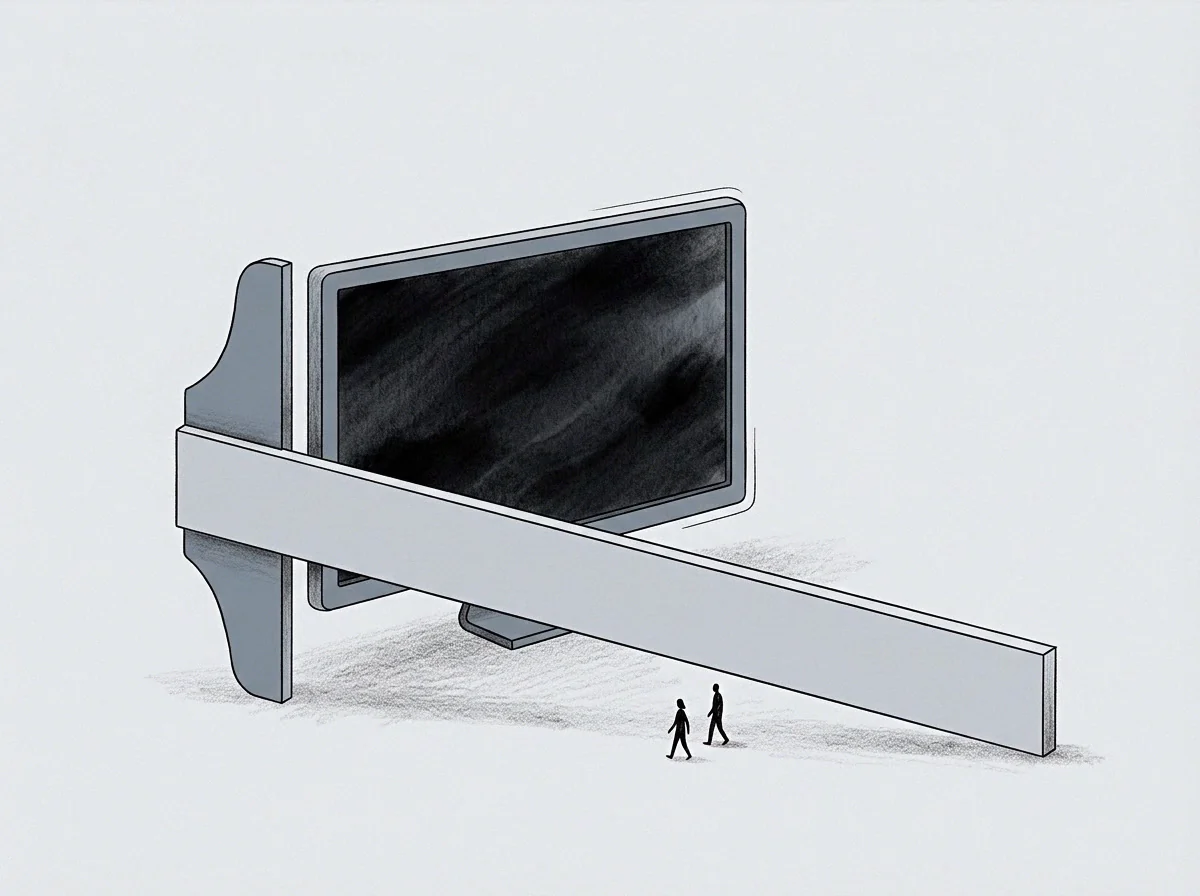
Temporal Sequencing Across Distributed Environments
Digital records derive evidentiary weight from verifiable chronological ordering. A log file with disconnected timestamps fails to establish whether a payload executed prior to an administrative credential adjustment. In distributed architectures, system clocks drift due to quartz crystal thermal oscillation and virtual machine scheduling delays.
Clocks advance unevenly across circuits. Without cryptographic synchronization protocols, relative event ordering disintegrates under legal or operational review.
Network time protocols correct clock drift by exchanging packets with authoritative stratum servers, yet standard synchronization daemons introduce vulnerabilities into evidence perimeters. An attacker gaining administrative access alters local offset settings or intercepts synchronization datagrams to backdate directory creation stamps. Secure evidence protocols deploy cryptographically verified time distribution models where each synchronization pulse carries an asymmetric signature from an external reference clock.
This practice produces an unbroken chronological baseline across disconnected servers.
| Evaluation Criterion | Monotonic Hardware Counters | Cryptographic Network Time Protocol | Local Operating System Clocks |
|---|---|---|---|
| Hardware Drift Sensitivity | Unaffected by local operating system adjustments | Corrected dynamically across distributed nodes | High vulnerability to crystal thermal variance |
| Host Manipulation Resistance | Immune to administrative shell commands | Protected through cryptographic packet signatures | Zero protection against administrative override |
| Cross-Node Correlation | Requires manual offset baseline computation | Provides microsecond coordination across nodes | Unreliable across distinct hypervisor hosts |
| Evidence Retention Overhead | Minimal processor and storage footprint | Generates continuous verification receipts | Negligible resource usage with null evidentiary value |
Relying on software-derived timestamps creates an evidentiary vulnerability. When hypervisors suspend and resume virtual machine instances, guest operating system clocks lag behind real physical duration. Time drifts under heat.
The resulting event logs display outward chronological impossibilities, such as replies recorded before requests arrive. Resolving these discrepancies requires correlating host-level monotonic counters with network flow records. Monotonic counters advance solely forward with clock cycles, eliminating the risk of backward manual adjustments.
A chronological record unsupported by signed external synchronization tokens invalidates multi-host incident sequencing.
Establishing distributed sequence boundaries demands unalterable log generation at the point of origin. When storage sub-systems queue incoming writes, cache write-back policies can scramble transaction timing relative to real-world occurrence. Protocol definitions must mandate flush-to-disk commands alongside synchronized monotonic ticketing for every security-relevant transaction.
Failure to bind distributed event records to a verified external time source allows opposing analysts to dismantle the causal order of recorded events.

Digest
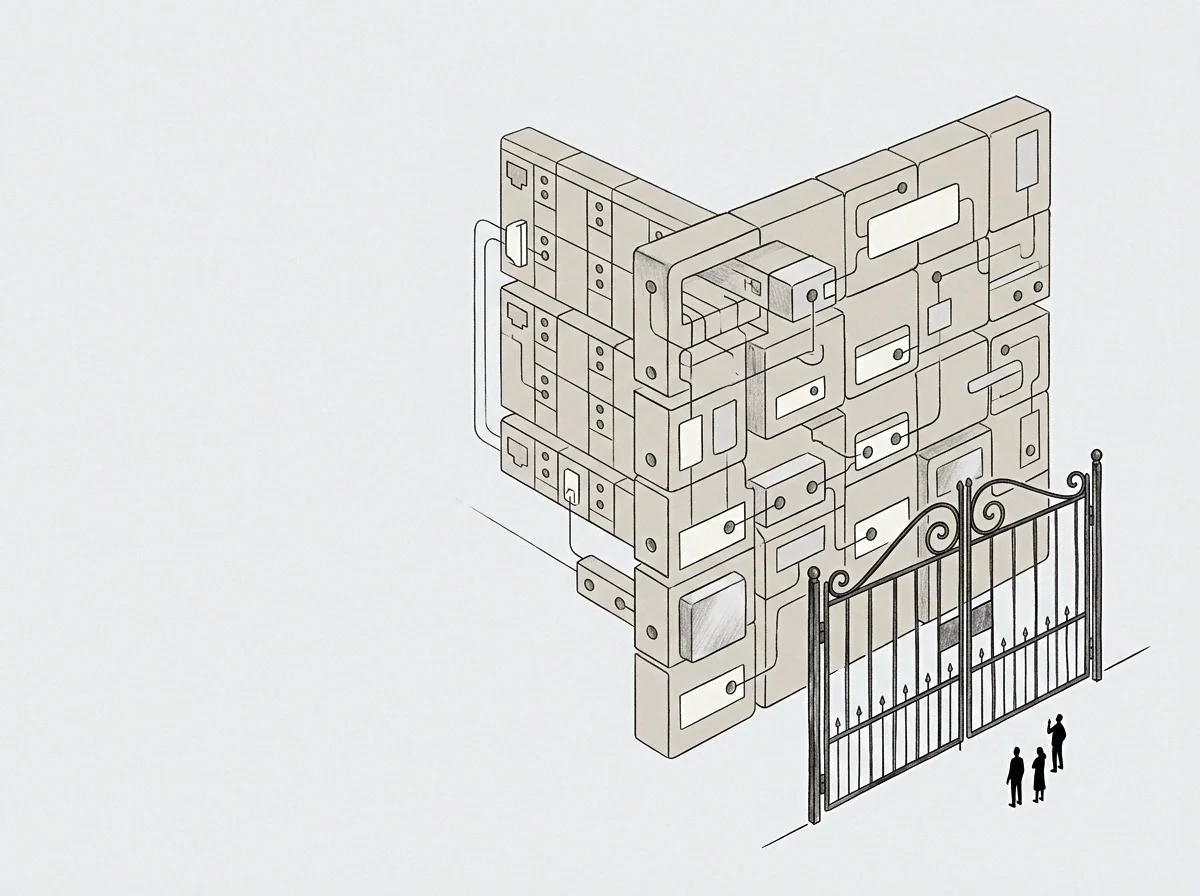
Mathematical Verification of Content Immutability
A digital file lacks inherent physical permanence; its bytes change without leaving mechanical scratches on magnetic platters or flash memory cells. Mathematical verification functions as the evidentiary lock. By processing arbitrary bitstreams through deterministic hashing algorithms, systems generate fixed-length cryptographic digests.
If a single bit in a terabyte image flips from zero to one, the calculated digest shifts unpredictably. The digest remains fixed. Hashing algorithms provide content verification across transfers, archives, and forensic handling phases.
Selecting algorithms requires adherence to collision resistance parameters. Older algorithms, including MD5 and early SHA variants, allow intentional collisions where two divergent source streams yield identical summary values. Modern protocols deploy SHA-256 or BLAKE3 algorithms, often pairing two distinct algorithmic families to neutralize theoretical vulnerabilities.
Collisions destroy mathematical proof. Calculating parallel digests at the exact millisecond of raw disk acquisition establishes the initial integrity baseline, serving as an immutable reference against subsequent processing steps.
- Cryptographic Hashing Algorithms execute deterministic mathematical compressions that produce fixed-length outputs, establishing proof that underlying evidentiary media experienced zero post-acquisition manipulation or file-header degradation.
- Merkle Tree Structures aggregate independent data blocks into hierarchical parent hashes, enabling rapid mathematical verification of isolated segments without requiring re-computation of the entire dataset.
- Hash-Based Message Authentication Codes integrate secret cryptographic keys with message digests, confirming both internal record integrity and originating system authenticity across transmission interfaces.
Hashing alone fails to prove when a record existed. It proves solely that the data matches the state evaluated during the hashing calculation. To bind content to a specific chronological moment, protocol architectures combine cryptographic digests with public key infrastructure timestamping.
A designated timestamping authority receives the digest, appends an authenticated time value, and signs the resulting composite token with an asymmetrical private key. This structure proves the data existed in that precise configuration before the timestamp signature occurred.
An authenticated mathematical digest establishes content invariance while remaining completely indifferent to transmission context.
Consider an enterprise database containing disputed commercial transactions. An exported backup file yields a valid SHA-256 hash matching an administrative inventory sheet. The transaction table inside that file reveals zero structural corruption.
The opposing counsel states that the hash merely verifies an altered database was imaged correctly, leaving the authenticity of its initial generation unproven.

Wall

Hardware-Level Isolation and Write Blocking
Software controls remain vulnerable to kernel-level tampering, malicious drivers, and corrupted firmware layers. Preserving an electronic evidence boundary requires physical and hardware-level enforcement mechanisms that intercept transmission requests before signals reach storage media. Hardware write blockers sit between target media and analysis workstations, suppressing write signals at the controller level.
Registers retain state under current. The analysis machine reads every sector with zero risk of transmitting modification commands.
Storage interfaces utilize specific command sets, including SCSI, SATA, and NVMe protocols. Software-based write protection depends on operating system flags, which malicious routines or misconfigured mounting scripts can bypass. Hardware interceptors operate through specialized microcontrollers running hard-coded firmware.
When the host workstation issues write, erase, or repartition commands, the hardware write blocker intercepts the instruction and returns a write-protect status response or silently drops the command packet. Hardware write blockers intercept writes.

Does Bus Interception Prevent Memory Contamination?
Direct Memory Access channels bypass standard operating system memory protections by permitting high-speed peripheral components to access physical RAM directly. An analyst attaching an interrogation unit across a high-speed peripheral bus risks initiating memory transfers that overwrite unallocated registers. Storage controllers rearrange sectors silently.
Modern protocols require bus isolation interfaces that physically sever bi-directional data pins, restricting peripheral operations exclusively to read cycles. The interface rejected the command. Hardware locks must physically constrain the write line on the transmission circuit.
Physical disk controllers introduce further complications through internal sector remapping and wear-leveling algorithms. Solid-state media controllers automatically shift data between physical flash cells to balance cell degradation, operating independently of host commands. When unpowered solid-state drives sit in evidence vaults, internal controllers can reorganize blocks upon subsequent power-up through garbage collection routines.
Preserving solid-state boundary integrity requires dedicated forensic imaging stations that disable background controller maintenance commands during raw bitstream acquisition.
Hardware isolation that permits bi-directional signaling across storage interfaces leaves media integrity open to complete disqualification.

Anchor
Immutable Distributed Registries for Chronological Sealing
Local logs stored on standard server media are subject to deletion, truncation, and administrative manipulation. Preserving system integrity boundaries requires exporting event data to immutable external logging destinations that reject modification commands. Write-once, read-many hardware repositories, append-only distributed storage engines, and public cryptographic registries provide durable anchors.
A silent ledger proves nothing. External sealing mechanisms strip local host administrators of the privilege to alter recorded execution traces.
Log forwarding architectures must isolate outbound network traffic from incoming control vectors. Forwarding agents stream structured syslog records across unidirectional data diodes that physically permit photons or electrical pulses to travel in one direction only. The recording system cannot be compromised through the network link connecting it to the production environment.
Once received, the destination platform binds incoming log streams into Merkle trees, periodically anchoring top-level root hashes to external, distributed ledgers. Records outlast volatile recollection.
A cryptographic anchor published to a distributed registry establishes verifiable permanence that local administrative privileges cannot revoke.
Assume an engineering lead manages an access-control system across automated deployment pipelines. The lead notices authorization tokens issued outside standard release schedules. If audit logs remain on the deployment server, the holder of root credentials can rewrite the authentication records and purge the system journal.
Assume instead that the access daemon transmits structured tokens through an unalterable streaming pipeline that publishes hourly Merkle roots to an external public ledger. The administrator can erase the local log files, but the external ledger retains the root hash generated prior to the deletion.
The boundary between verifiable evidence and disputed testimony rests on where the system boundary is placed. If the verification protocol terminates at the local disk controller, the evidence remains vulnerable to claims of administrative contamination. If the verification boundary extends to include cryptographic digests sealed into independent, write-once destinations, the record achieves institutional durability.
Whether future quantum computing advances will break the historical validity of currently deployed asymmetrical hash trees remains an open engineering question that current protocol designers must evaluate.