Meaning
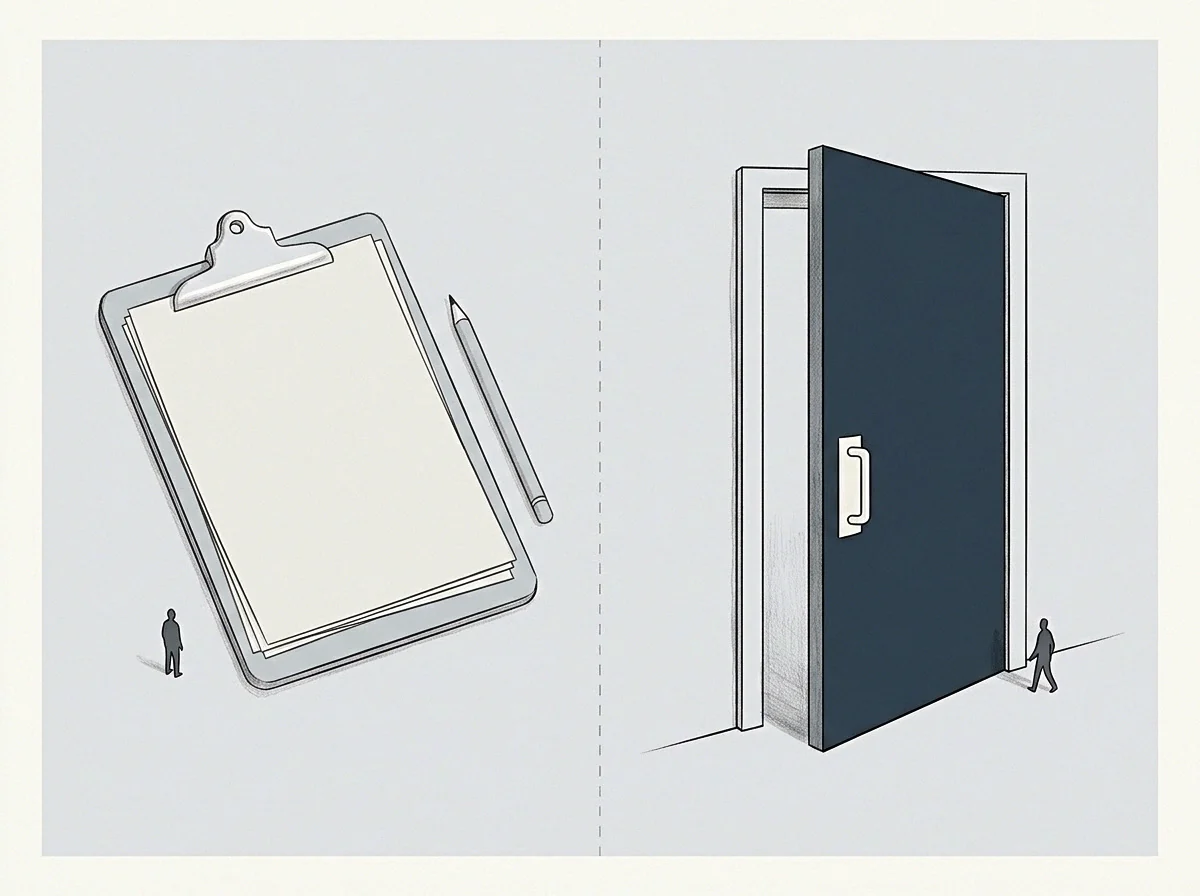
A structural gap designates an absence of required linkages between operational layers that prevents information or authority from flowing through an organization. A structural gap creates a dead zone where responsibility remains undefined because no role holds the mandate to bridge the divide. Organizations rely on these segments to isolate functions, yet such isolation frequently results in silos that halt decision processes.
Process Friction
The occurrence of a structural gap forces participants to recreate work because data fails to transfer across unit boundaries. Personnel identify the condition when inputs at one stage vanish before reaching the next station. This disconnection costs hours of labor and reduces the reliability of records kept by different teams.
Documentary Divergence
Records reflect the existence of a structural gap through inconsistent dates or disjointed entries in sequential logs. Analysts detect the condition by comparing the output of a preceding role with the initial input of the following role. When these values fail to align, the documentation lacks the continuity required for a complete audit trail.
Resolution Cost
Correction of a structural gap demands the formal creation of a new interface or a specific mandate for an existing role to act as a bridge. The effort to bridge the division consumes capacity that would otherwise serve production goals. Because the removal of the separation requires a shift in internal architecture, the gap persists until a founder explicitly redefines the organizational structure.