
Determining Retrospective IP Ownership Delta Between Historical Custom And Written Severance Mergers
Retrospective ownership deltas emerge when written severance merger clauses extinguish informal historical creation customs without explicit asset exclusions.

Habit
Informal custom governs the creation of early intellectual property, but an integration clause in a departure agreement extinguishes anything left unwritten. While building, contributors pass repositories, technical designs, architecture, and brand concepts across personal machines without formal paperwork or recorded attribution. The arrangement works well enough while everyone is building together.
At departure, however, the separation agreement introduces an integration or merger clause declaring that the written document supersedes every prior conversation, course of dealing, and unwritten practice. What historical habit permitted and what the signed text assigns rarely match, producing a retrospective gap.
Early collaboration rarely establishes clear lines of ownership. Contributors commit code from personal accounts, build components outside normal hours, and treat shared repositories as common property without signing immediate assignment paperwork. Over time, individuals develop different assumptions about who owns what.
One assumes the venture holds every right by implied consensus, while another treats pre-existing scripts, individual tools, and modular utilities as personal property lent to the project for convenience. As long as progress continues, silence keeps the arrangement functional.
Informal collaboration treats contribution as shared attribution, whereas a merger clause converts historical silence into corporate title.
The gap stays invisible until someone leaves. At that stage, separation paperwork introduces standard definitions of assigned technology, broad releases, and integration covenants. The departing builder signs to secure equity vesting, severance pay, or cash consideration, accepting language that cancels all prior discussions, informal permissions, and unwritten understandings.
The signature on the page extinguishes the historical practice.

Informal Allocations Against Documented Title
Historical practice relies on unspoken consent. When an engineer introduces an existing codebase into a company without a formal contribution agreement, common law principles of implied license and copyright authorship produce a fragile balance. Under default copyright rules, the contributor retains title to the original modular assets, granting the company only an implied, non-exclusive license to use the software.
The business, meanwhile, proceeds on the assumption that anything pushed to its repositories belongs entirely to corporate equity.
Unwritten licenses survive only while both parties stay aligned. Once commercial tension emerges, the lack of documentation generates conflicting legal claims. The company claims equitable ownership based on corporate equipment, payroll stipends, and shared milestones.
The departing engineer claims retained authorship, pointing to commit logs, personal timestamped archives, and off-hours creation records. Both positions remain coherent within their own premises.
The informal consensus holds until the paperwork arrives.

Merger
A written severance agreement draws a closed boundary around the commercial relationship. The operative device within the instrument is the merger clause, which explicitly supersedes prior representations, informal covenants, and historical conduct. Applied to technical assets, the clause works retrospectively, cutting off the unwritten permissions that previously let contributors treat proprietary code as shared utility.
The executed agreement pulls all prior technical output into a single bundle of assigned assets.
Legal integration eliminates oral history. If an engineer previously had permission from colleagues to reuse internal routines across personal freelance projects, executing an integrated separation agreement dissolves that right. The merger clause binds the departing builder strictly to the language on the page, regardless of any oral approvals granted during development.
An integrated separation agreement extinguishes unwritten technical permissions the moment the text is signed.
Severance agreements typically pair the merger clause with an omnibus assignment of inventions, sweeping unassigned historical contributions directly into corporate ownership. A builder signing what appears to be a routine release can inadvertently assign all title to patches, tools, and configurations created across their entire tenure.

Mechanics of the Integration Clause
The legal effect of a merger provision depends on whether the integration is partial or complete. A fully integrated clause bars all extrinsic evidence of prior or contemporaneous agreements covering the same subject matter. For intellectual property, that standard carries three concrete consequences for historical practice:
- Extinguishment of Oral Consents dissolves any informal permission granted by co-founders to reuse fragments of the codebase.
- Consolidation of Assigned Property pulls disparate historical contributions into corporate ownership through standard invention assignment language.
- Supersession of Course of Dealing invalidates longstanding habits of sharing tools across outside client projects.
Signing an integrated release with an express invention assignment clause that includes past-tense conveyance permanently reallocates unwritten authorial rights to the company.

Drift
Retrospective exposure builds up quietly in the years before separation. Consider two builders who run a software platform for four years without initial intellectual property assignment agreements. The technical lead incorporates a data pipeline module built two years prior to founding the company.
Over the next four years, the team customizes, refines, and expands the engine directly inside the corporate repository. Day to day, the company treats the pipeline as internal infrastructure, while the author still regards the original codebase as personal property lent to the business without charge.
At year four, the technical lead departs under a negotiated severance agreement containing a standard merger clause, a general release, and a retroactive assignment of all work product created during the term of service, against a payment of sixty thousand dollars. One year after departure, the company enters an institutional investment round requiring formal diligence. Due diligence exposes two conflicting positions: ownership of the entire platform codebase by the company, versus retention of the core data engine on the grounds that it predated the company and was maintained rather than authored as a work made for hire.
The gap between operational habit and the written merger becomes a commercial dispute. The company interprets the retrospective assignment and merger clause as capturing all source code found in the repositories, while the departing builder reads the agreement as covering only code created during employment, leaving pre-existing libraries exempt. The dispute turns on whether checking pre-existing code into company repositories constituted a transfer of title or an informal, terminable license.
| Asset Category | Historical Custom Assumption | Written Severance Merger Scope | Operational Ownership Delta |
|---|---|---|---|
| Pre-existing Code Libraries | Personal title retained; implied royalty-free license to venture | Captured through broad definition of assigned company technology | Loss of individual exploitation rights outside corporate consent |
| Off-Hours Tooling & Scripts | Builder retains title; built on personal machines without tracking | Explicitly swept into work-product definitions through severance terms | Extinction of personal claims over ancillary automation workflows |
| Shared Architecture Designs | Joint communal asset for open collaborative reuse | Exclusive proprietary asset assigned solely to the corporate entity | Prohibition of architectural cloning in subsequent commercial ventures |
| Informal Brand & Trade Dress | Attributed to collective effort with mutual rights of reference | Absolute assignment of goodwill and marks to company control | Loss of individual portfolio display and trademark reuse rights |
The financial gap widens when the valuation of the business rises. In this scenario, the financing round stalls until the departed builder signs a supplemental quitclaim assignment. The builder demands four hundred thousand dollars in equity value to execute the corrective documents.
That figure represents the cost of the gap between informal custom and the incomplete scope of the original severance language.
One position relies on an oral understanding that the personal codebase remained independent; the other holds that the compensation package covered every authorial claim.
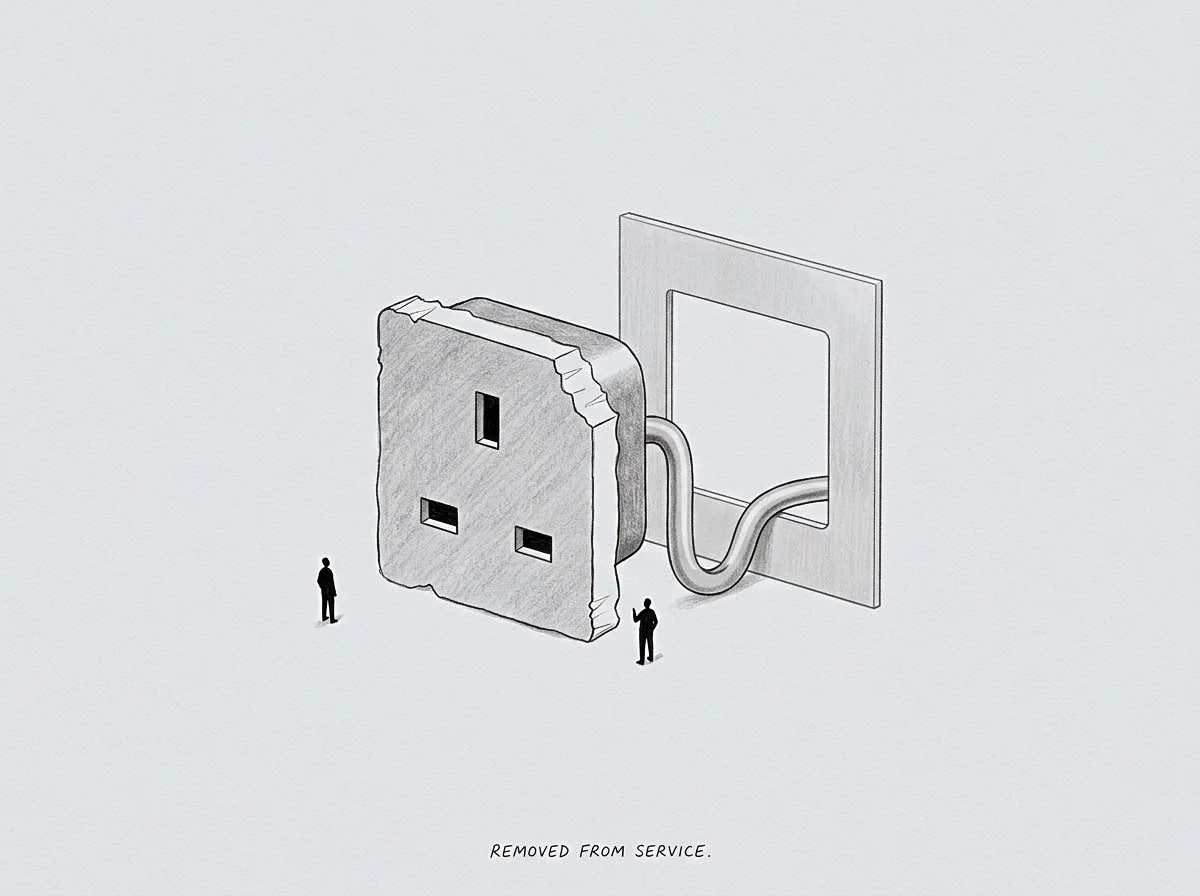
Floor
Resolving retrospective ownership disputes depends on the digital trail left during early development. When a merger clause conflicts with an alleged historical custom, legal review turns to timestamps, commit histories, and documented exclusions. Recollection tends to reshape past events around current commercial interests, leaving repository logs and signed documents as the reliable basis for determining ownership.
The main legal obstacle to asserting retained historical rights against an integrated agreement is the parole evidence rule. Where an agreement explicitly assigns all intellectual property authored by a contributor to the company, external emails, chat logs, and verbal promises cannot be introduced to vary the written text. An exception arises when the contract includes an exhibit of excluded inventions.
Without an itemized schedule attached directly to the agreement, the broad language of the merger sweeps unlisted technology into corporate hands.
An exclusion schedule attached to an integrated agreement provides the practical defense against retrospective intellectual property capture.
Failing to audit historical custom before executing a severance merger creates costs for both sides. The company risks clouding its title in ways that stall future financings, while the departing engineer risks forfeiting core tools needed for future commercial work. When gaps are left unaddressed, resolving them later during due diligence proves expensive.

Title
Securing clear title requires aligning historical practice with the written integration before signing. The company and the departing contributor have to replace working assumptions with explicit categories, cataloging every codebase, modular script, and architectural blueprint generated before and during the engagement. Each asset then requires explicit classification: assigned, licensed, or excluded.
A thorough inventory prevents retrospective claims. The departing contributor identifies any modular tools developed prior to the company and ensures they appear on an exclusion schedule, typically paired with a non-exclusive license back to the business. In turn, the company confirms that all proprietary code written during the relationship is assigned directly, without relying on default legal assumptions or informal understandings.
Handled this way, the merger clause integrates a documented set of facts rather than extinguishing an unexamined practice.
What often remains unresolved across technical separations is the threshold where incremental, off-hours modifications to personal code convert the underlying asset into corporate property.