
Evidentiary Weight of Digital Traces in Unwritten Multilateral Disputes
Digital traces in unwritten disputes record execution steps while leaving commercial ownership open to retroactive cognitive reconstruction.

Trace
Three participants build a software platform over eighteen months without an operating agreement. Chat platforms log thousands of messages, repositories hold thousands of code commits, and calendar servers record weekly coordination calls. When external capital arrives and the valuation rises, each participant claims a different unwritten share: forty percent, forty percent, and thirty percent.
The total exceeds one hundred percent because each person pieced together an account of past equity promises from informal exchanges. The activity logs prove active work, but state nothing about economic ownership or voting rights.

Ambient Artifacts and Spontaneous Documentation
Without formal contracts, electronic messages and logs accumulate as administrative residue. Messages, task boards, pull requests, and payment transfers generate timestamped records automatically, which participants often mistake for binding consensus. Studies in legal informatics confirm that informal digital records capture daily execution while omitting commercial terms.
An operator writing code assumes commit volume creates equity rights, while a business lead managing introductions assumes calendar invites prove equal partnership. Each participant interprets the shared repository selectively, reading technical metadata as legal proof.
While the digital record stays fixed, recollections of verbal meetings drift. A late-night deployment conversation is remembered by an engineer as a promise of equal equity, while the operations lead recalls it as a bonus tied to revenue targets. Because no written term was executed, chat messages surrounding that meeting become the primary reference during later conflicts.
The engineer cites a message confirming a smooth launch as proof of performance, while the operations lead cites the lack of any equity mention in that thread to argue no equity was granted.
Unwritten disputes turn on this evidentiary gap. When parties compare accounts during an exit, the disagreement is rarely about missing work, but about conflicting interpretations of the same electronic records. The difference between these accounts dictates the financial cost of final negotiations.
Recorded timestamps across shared channels indicate initial agreement to an equal equity division from the first month of build activity.

Stack
Digital environments aggregate several types of electronic records during software development. Each category carries a different level of evidentiary authority when evaluated in legal or formal dispute settings.

Layering Technical Log Data Against Verbal Agreements
System logs, chat archives, and financial records carry unequal evidentiary weight in unwritten disputes. Code repositories track technical output without establishing corporate authority. Financial transfers show capital contributions but leave equity percentages ambiguous.
Asynchronous chat messages record informal sentiment, leaving them open to selective interpretation.
| Artifact Category | Structural Completeness | Temporal Integrity | Inferential Limitation |
|---|---|---|---|
| Asynchronous Messaging Logs | High content density with fragmented contextual scope | High timestamp precision across distributed servers | Fails to prove formal commercial assent or governance consent |
| Version Control Commits | High technical specificity regarding file modifications | Cryptographically anchored sequence of code changes | Measures technical labor without proving equity distribution |
| Shared Document Comments | Moderate structural context tied to draft materials | Variable historical integrity subject to account deletion | Captures negotiating positions rather than finalized terms |
| Payment Gateway Activity | Complete financial transaction records | Bank-validated transaction timestamps | Distinguishes debt from equity only when explicit memos exist |
Relying on informal digital traces creates severe evidentiary imbalance. The participant who controls platform administration holds complete access to chat exports, repository permissions, and server logs, while others hold only local copies or fragmented threads. In later disputes, the admin controller can extract message snippets to frame the relationship as independent contracting rather than equity partnership.
Research in electronic discovery confirms that control over primary infrastructure shapes dispute outcomes long before formal proceedings begin.
An unwritten agreement evaluated through digital footprints yields as many structural interpretations as participants holding search access.
Take three builders who operate for two years without a written agreement. The technical builder contributes ten thousand lines of code logged in version control. The commercial lead manages sales through phone calls confirmed only by calendar entries.
The investor transfers funds through personal accounts with blank memo lines. When a dispute arises, the technical builder claims seventy percent equity based on commit volume. The commercial lead claims fifty percent based on customer contracts.
The investor claims primary debt seniority based on wire transfers. The digital traces prove each person worked, but validate none of their equity claims.
The absence of an explicit written contract leaves each participant free to project their preferred economic arrangement onto the shared electronic archive.
An explicit contemporaneous record of non-binding intent anchors informal project chats as reference evidence and excludes speculative equity claims.

Proof
Reconstructing legal intent from casual digital footprints requires clear evidentiary standards. Memory is reconstructive rather than a strict recording, so when disputes emerge, participants retroactively reinterpret past messages to fit current financial interests.

Inferential Limits of Code Commits and Message Logs
Participants in unwritten ventures often overestimate the protection informal messaging provides. A thumbs-up emoji in a team channel might be viewed by one partner as ratification of an equity split, while the sender meant only to acknowledge receiving a draft document. Legal standards and arbitration panels evaluate digital records against objective criteria for contract formation: informal messages show receipt of text, whereas legal assent requires clear agreement on equity percentages, vesting schedules, and governance rights.

How Do Asymmetric Digital Footprints Distort Unwritten Agreements?
The volume of digital records a participant creates rarely matches their actual ownership share. In engineering-heavy projects, technical co-founders generate extensive commit histories and ticket updates. Non-technical co-founders leave far fewer traces, doing most work in calls and unrecorded meetings.
When conflicts arise, technical founders point to commit counts as evidence of majority ownership, confusing operational activity with equity.
Studies on attribution in collaborative projects show that individuals consistently overestimate their contribution to shared outcomes. Faced with ambiguous records, participants naturally disregard messages that contradict their narrative while highlighting those that support it.
- Selective search retrieval isolates supportive statements while omitting reservations expressed in spoken discussions.
- Asynchronous message density reflects personal communication habits rather than economic ownership or risk.
- Repository commit count measures file modification frequency without establishing commercial valuation or governance rights.
Two participants can hold opposing accounts, each fully supported by a selective reading of the same Slack archive. Participant A searches for “partner” and finds forty instances over twelve months. Participant B searches for “contractor” and finds twenty instances over the same period.
Neither search resolves the dispute because no written terms were set when work began.
Asymmetrical record generation converts passive communication tools into instruments of retroactive equity inflation.
Unwritten allocations collapse under scrutiny. The party claiming an unwritten equity promise carries the burden of proof, which ambient digital traces rarely satisfy. Messages confirm that collaboration occurred, but fail to establish partnership boundaries.
Upon legal review, informal chat archives are typically classified as ongoing negotiation rather than a binding contract.
Relying on raw chat history as definitive contract proof prolongs disputes and drains financial reserves.

Gap
The gap between memory and digital records widens over time. Early on, participants put in long hours without setting a formal structure, assuming shared effort will translate to a fair split later. As the venture matures and generates revenue, these implicit assumptions surface during equity discussions.

The Divergence Between Passive Records and Shared Intent
Reconciling unwritten arrangements reveals the limits of retrospective evidence. Digital traces show what was done, not what was intended. An engineer might spend six months refactoring code without written authorization; repository logs document the work in detail, but if the rest of the group viewed the refactoring as unnecessary technical debt, the logs do not prove an entitlement to equity.
They document labor while leaving commercial value disputed.
Timestamped activity logs establish presence in a project but leave commercial terms unstated.

Reconstructing Shared Intent From Fragmented Communications
Resolving disputes without written contracts requires mapping digital traces against verifiable baseline actions during forensic evaluation.
- Participant accounts diverge as time passes between operational work and formal exit negotiations.
- Digital records show execution events without recording equity allocations or voting rights.
- Informal resolution attempts fail when parties evaluate evidence using different platforms.
A participant who believes they were promised thirty percent of a company based on an old chat message may discover at an exit that the capitalization table reflects five percent. The period following this discovery becomes a freeze stage: operations stall while legal counsel evaluates chat exports, commit logs, and bank records. This period highlights the economic distance between memory and what can be formally proven.
Because the initial arrangement lacked formal terms, digital repositories archived actions rather than intentions, leaving all participants to absorb the resulting loss of hours and attention despite the operator’s daily updates.
In multi-party conflicts without signed terms, contemporaneous baseline documentation carries far more weight than thousands of post-hoc chat exports.

Margin
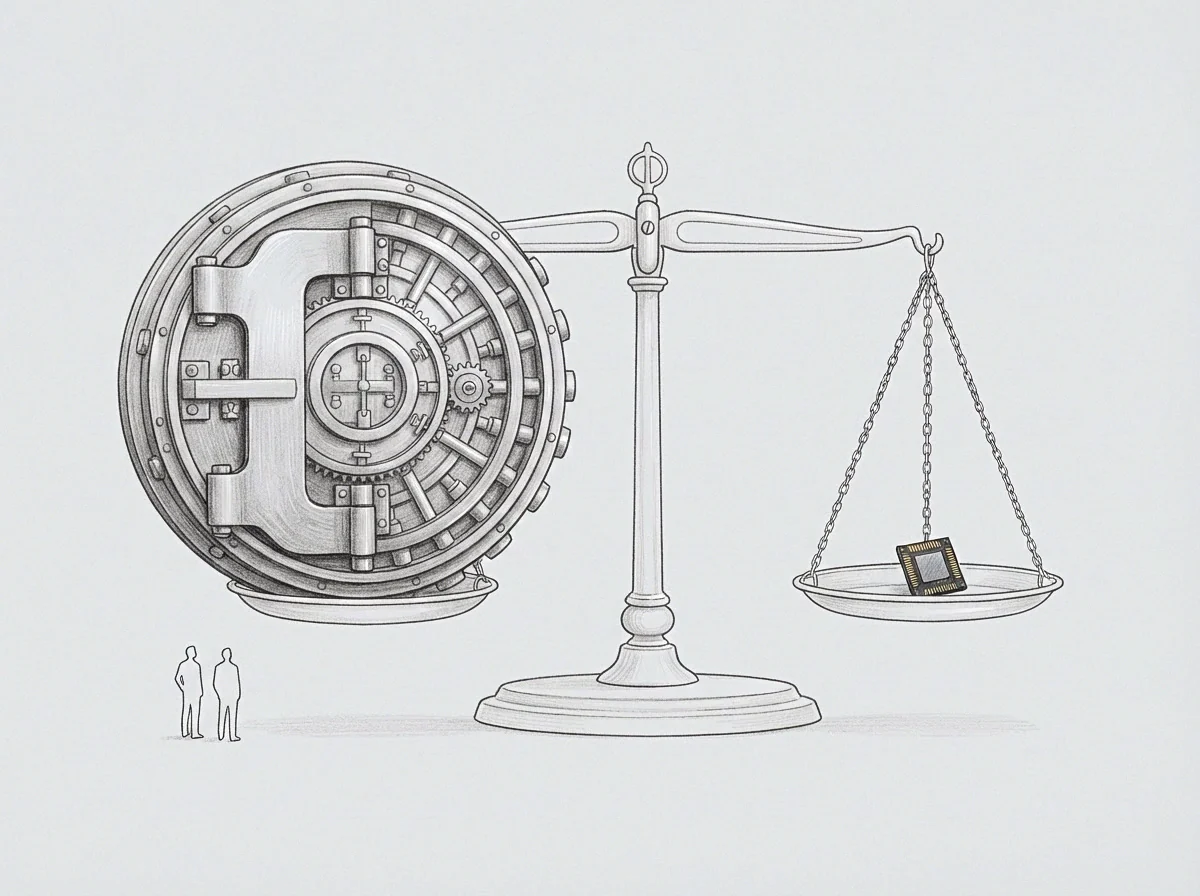
The cost of resolving unwritten disputes rises sharply near monetization. When a venture receives a buyout offer or prepares for an investment round, institutional buyers demand clear capitalization tables and formal liability releases. Unresolved claims backed only by informal digital traces freeze transactions and force emergency negotiations.
Settling Disputed Ownership Before Liquidity Events
Participants in unwritten arrangements face heavy discounts when attempting to monetize disputed equity. A claim that might have a fifty percent chance of success in prolonged litigation is often discounted by eighty percent in emergency negotiations before closing. Investors will not fund companies carrying unresolved equity claims from former collaborators, forcing claimants backed only by message traces to accept a fraction of their claim or risk sinking the entire transaction.
Unwritten multilateral arrangements extract their highest financial fee at the exact moment of asset monetization.
Establishing explicit written terms, even late in a venture, stops compounding ambiguity. A single signed agreement defining equity splits and releasing past claims replaces thousands of ambiguous chat messages with one binding record. Until executed, every message sent across team channels adds evidentiary noise to future legal disputes.
Memory yields to immediate incentives when an unauthoritative chat archive meets an exit, where the operational freeze fixes the final economic delta.
The unaddressed legal question remains whether platform telemetry can ever override explicit verbal disclaimers preserved only in unrecorded phone calls.