
Informal Commercial Contract Modifications And Verbal Amendments In Business Disputes
Informal modifications fail against written restrictions unless documented reliance or continuous course of performance establishes an enforceable waiver.

Anchor
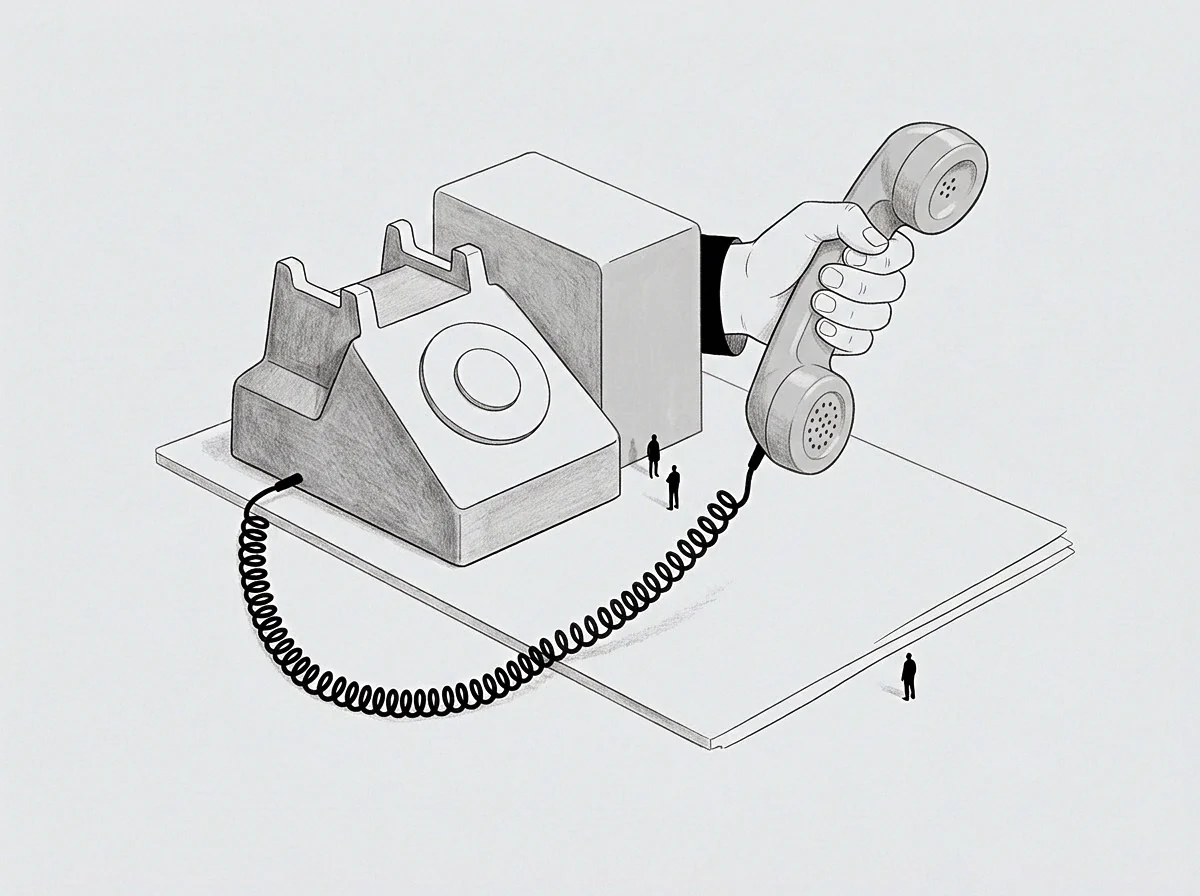
A supplier delivers thirty thousand specialized steel housings under an executed agreement specifying sixty-day payment terms, forty-eight-hour rejection windows, and a strict requirement that changes occur solely through formal written instruments. Four months into performance, raw material prices surge twelve percent, prompting the supplier to request an immediate seven-dollar unit price increase during a twenty-minute telephone call with the buyer’s procurement director. The buyer’s director agrees that the pricing adjustment reflects market conditions, urges the supplier to keep shipments moving without interruption, and promises to reflect the adjusted amount on subsequent authorizations.
The supplier bills the revised unit rate for three consecutive months. The buyer pays two billing cycles at the higher rate, withholds payment on the third cycle, and subsequently demands a full refund of forty-two thousand dollars based on the unaltered baseline contract.
Every commercial arrangement contains two simultaneous histories: the executed text preserved in files and the working sequence of concessions granted over phone calls, casual emails, and field discussions. That discrepancy remains dormant while operations run smoothly, only surfacing when margin pressures force a re-examination of signed instruments. The baseline contract fixes commitments against informal deviations, while oral modifications reflect operational adaptations to unforeseen pressures.
When the two collide, one party relies on verbal assurances while the other asserts the original documented terms.
An executed commercial writing preserves original entitlements against undocumented operational adjustments until performance acts supersede documented terms.
The core dispute centers on how legal mechanisms treat oral agreements made after executing a contract that contains a no oral modification clause. Commercial statutes generally acknowledge the freedom of parties to alter contractual commitments through mutual consent, yet protect transaction certainty by enforcing restrictions on unwritten variations. This tension produces unpredictable outcomes in disputes.
One party treats a telephone commitment as an operative amendment, while the counterparty categorizes that same conversation as an informal accommodation, fully revocable until reduced to a formal rider.

The Two Accounts in Operational Flux
Disputes over unwritten adjustments rarely stem from dishonesty. They emerge because commercial operators keep distinct internal records of the same exchange. An operations director views an agreed price increase as a necessity to keep production on schedule, assuming performance validation occurs through subsequent deliveries and electronic confirmations.
A procurement executive tracks that same exchange as an interim concession subject to formal corporate review and approval. Neither party verifies the other’s perspective at the time, allowing the disparity to expand quietly over weeks of performance.
The gap between accounts represents unhedged commercial exposure for the performing party. When a supplier continues production based on verbal assent alone, it absorbs price risks without securing enforceable protections. The buyer retains dual optionality: accepting continuous material flow while keeping the contractual right to enforce original baseline figures.
This divergence stays invisible until cash flow stalls or market conditions deteriorate, at which point the exit conversation reveals that the shared understanding was an illusion held by two parties operating under contradictory assumptions.
The dispute crystallizes around operational records created alongside verbal conversations. A single email stating that shipments will proceed under discussed pricing creates evidentiary ambiguity: one side reads it as written confirmation of a binding amendment, while the other sees an informal delivery status update without contractual force. Commercial law provides distinct paths for resolving this friction, depending on whether common law rules or commercial sales codes govern the transaction.
A rule of thumb holds that the party relying on an undocumented adjustment bears the entire financial exposure of evidentiary ambiguity.

Gate
Formal written agreements frequently erect procedural barriers designed to invalidate unwritten adjustments. The private statute of frauds, embodied in no-oral-modification provisions, aims to prevent casual workplace conversations from eroding negotiated commercial terms. Under traditional common law doctrines, these clauses faced systematic resistance.
Common law tribunals maintained that parties possessing the power to contract retain the concurrent power to modify that contract orally, irrespective of prior written restrictions. Mutual intent at the time of subsequent modification was deemed sufficient to override earlier procedural limitations.
The widespread adoption of statutory commercial codes altered this balance. Section 2-209 of the Uniform Commercial Code explicitly validates clauses excluding modification except by a signed writing. Under this regime, an unwritten price adjustment or altered delivery timetable fails as an enforceable amendment if the underlying contract mandates formal execution.
The statutory rule stands firmly against casual verbal concessions, requiring the party seeking to enforce an informal variation to find an applicable legal exception.

Statutory Exceptions and Equitable Countermeasures
Strict enforcement of no-oral-modification clauses frequently creates harsh outcomes when one party performs substantial work relying on verbal directions. Commercial jurisprudence addresses this friction through equitable doctrines that circumvent procedural barriers:
- Equitable estoppel prevents a party from asserting formal contractual rights after intentionally inducing detrimental reliance through inconsistent verbal representations or conduct.
- Promissory estoppel binds a commercial promisor when an unambiguous oral promise induces substantial, foreseeable reliance by the promisee, rendering enforcement necessary to prevent gross injustice.
- Statutory waiver mechanisms treat an ineffective verbal modification as an operational waiver of baseline terms, provided the relying party demonstrates clear performance reliance.
- Course of performance principles interpret ambiguous post-execution interactions through repetitive patterns of accepted performance, establishing practical modifications of original terms through continuous commercial acquiescence.
The distinction between an oral amendment and an equitable waiver carries direct financial consequences. An amendment represents a permanent alteration of contractual commitments, requiring mutual assent and binding both parties indefinitely. A waiver represents the intentional relinquishment of a known contractual right.
Under commercial codes, an executory waiver remains revocable upon reasonable formal notification, provided retraction does not impose unjust reliance costs on the performing party.
A commercial waiver remains subject to unilateral revocation until detrimental reliance locks the altered performance into place.
The performing party often discovers this legal distinction only after a relationship breaks down. An oral agreement to extend delivery schedules by thirty days may initially function as a waiver, but the buyer retains the power to retract it for future cycles by serving formal written notice. Detrimental reliance stands as the main obstacle to retraction.
To block it, the contractor must demonstrate tangible investments, procurement shifts, or financial outlays made specifically because of the oral concession.
Consider the structural comparison between traditional common law jurisdictions and modern statutory commercial frameworks regarding informal modifications:
| Legal Framework | Enforceability of Oral Clauses | Consideration Requirement | Evidentiary Threshold | Revocability of Oral Concessions |
|---|---|---|---|---|
| Common Law Rules | Vulnerable to subsequent oral modification by mutual intent | Mandatory new consideration required for enforceable adjustment | Preponderance of evidence showing clear oral assent | Permanent if valid modification; revocable if bare license |
| Uniform Commercial Code | Statutorily protected under Section 2-209 provisions | Good faith standard substitutes for traditional consideration | Signed writing required unless waiver demonstrated | Revocable upon reasonable notice unless reliance exists |
| Restatement of Contracts | Enforceable subject to detrimental reliance exceptions | Fairness adjustment for unanticipated operational circumstances | Clear and convincing showing of reliance actions | Binding to the extent reliance renders injustice unavoidable |
An operator under common law principles faces an additional hurdle: the pre-existing duty rule. Under this doctrine, a promise to complete an obligation already legally required cannot serve as valid consideration for an altered price. Even if both executives agree to a higher unit rate during a meeting, the modification fails without independent consideration, such as accelerated delivery schedules, altered packaging requirements, or restructured liability terms.
The commercial sales framework abandons this technical rule, replacing formal consideration tests with a statutory standard of commercial good faith. Under sales standards, an informal modification requires an authentic commercial motivation, such as unexpected market shifts, operational disruptions, or supply chain escalations. An extortionate demand for increased fees, extracted under threats of a work stoppage, fails the good faith test regardless of verbal assent.
Validity hinges on the commercial context surrounding the concession.
The clause restricting oral modifications changes operational dynamics by transferring the burden of proof entirely onto the party seeking to validate the unwritten change.
Shift
Detrimental reliance transforms an unwritten statement from an unenforceable exchange into an enforceable baseline. The doctrine operates through promissory estoppel, bypassing traditional contract formation requirements. When an owner tells an engineering contractor that specialized excavation protocols will be compensated at cost-plus rates rather than fixed fees, the conversation initiates an operational shift.
The contractor mobilizes equipment, alters labor rosters, and incurs material expenses based on that conversation. The owner cannot later invoke the written change-order clause to deny payment for completed work.
The legal mechanism demands more than operational performance alone; it requires a detrimental change of position directly attributable to the verbal assurance. If the contractor would have executed the same excavation under its baseline scope, reliance is absent. The adjustment must induce actions the contractor was not otherwise obligated to undertake, altering its financial or operational position because of the verbal direction.
Operational reliance requires tangible financial or logistical commitments that exceed the performance boundaries defined in the original executed agreement.
Disputes in reliance cases turn on whether that reliance was objectively reasonable. Counterparties often argue that relying on an unwritten assurance is inherently unreasonable when the contract explicitly warns that verbal amendments carry no legal effect. Certain jurisdictions adopt this position, barring equitable claims whenever a commercial entity disregards a clear no-oral-modification clause.
Other jurisdictions balance procedural clarity against practical fairness, permitting reliance claims where an established course of dealing led the performing party to expect informal resolutions.
The gap between reasonable reliance and carelessness measures the cost of undocumented assumptions. A subcontractor expending significant capital based on a hallway conversation with a junior project manager acts without reasonable commercial justification. Conversely, an operator acting on explicit verbal instructions from an executive vice-president during an emergency supply disruption presents a viable reliance position.
Speaker authority, operational urgency, and past payment patterns dictate whether the unwritten modification holds.

Course of Performance as Modification
Contract terms often shift through behavioral drift rather than overt verbal promises. Course of performance describes the repeated behavioral patterns established under an active contract. When a purchaser routinely accepts deliveries on the twentieth of each month despite a contract specifying the first, the schedule shifts through conduct.
Accepting non-conforming performance repeatedly without objection creates an inference of waiver or informal modification.
This drift exposes the limits of static written agreements. The rule requires repeated occasions for performance, knowledge of the non-conformity, and an opportunity to object. If a non-conforming tender is accepted without protest over successive cycles, the baseline contract recalibrates to reflect operational practice.
Restoring original enforcement standards requires clear, formal notice retracting the waiver before future delivery obligations mature.
Operational risk emerges when relationships rely on informal flexibility. Commercial teams frequently resolve friction through verbal adjustments and practical workarounds, bypassing formal change-management procedures to avoid delay. This approach functions while project margins remain comfortable.
When financial strains appear, the party holding written protections retreats behind the language of the executed text, characterizing previous flexibility as unauthorized departures from binding standards.
At the conclusion of such an arrangement, operational accommodations function as temporary courtesies rather than permanent revisions of binding rights.

Record
When an informal commercial dispute escalates, resolution turns entirely on objective documentation. Memory of an unwritten conversation is inherently unreliable, subject to reconstruction and self-interest. Two executives present at the same meeting often describe the outcome with equal conviction while presenting irreconcilable versions of agreed terms: one remembers definitive authorization for higher unit rates, while the other recalls exploratory dialogue contingent on board approval.
This divergence reflects standard cognitive reconstruction rather than deliberate deception. In high-stakes environments, professionals recall ambiguous discussions in ways that match their operational needs and exposures. The party needing authorization remembers vague statements as definitive agreement, while the party holding the budget recalls non-committal pleasantries.
Without contemporary written records, resolution mechanisms rely on external conduct rather than verbal testimony.

Contemporary Electronic Documentation
Modern commercial litigation rarely relies on uncorroborated verbal statements alone. Cases center instead on informal electronic trails: emails, text messages, internal memos, and chat logs. Under the Uniform Electronic Transactions Act and electronic commerce statutes, an informal email exchange can satisfy writing and signature requirements if it contains clear assent and originates from an authorized account.
The central legal issue is whether informal email exchanges constitute an integrated amendment or preliminary negotiation. An email noting that proposed numbers look workable fails to establish a binding modification. An explicit instruction directing a contractor to proceed immediately under revised schedules functions as a binding written modification, even if formal legal riders are never drafted.
The distinction rests on direct operational commitment versus preliminary discussion.
Digital communications have altered how informal disputes unfold. Project teams frequently manage operations through instant messaging, agreeing on delivery dates, scope exclusions, and fee adjustments in chat threads without legal review or corporate oversight. When disputes arise, forensic discovery uncovers these fragmented discussions to demonstrate that formal contract procedures were abandoned through continuous practice.

Authority and the Doctrine of Apparent Agency
An informal amendment remains invalid if the individual granting the concession lacked legal authority to bind the enterprise. Dispute resolution distinguishes between primary forms of legal authority:
- Actual authority exists when an agent possesses explicit corporate authorization, via bylaws, board resolutions, or designated employment charters, to modify contractual obligations.
- Apparent authority arises when a principal’s outward manifestations lead a third party to reasonably believe that the operational agent possesses power to modify agreements.
- Subsequent ratification occurs when executive leadership accepts the economic benefits of an unauthorized informal modification with full knowledge of the underlying adjustment.
Apparent authority presents distinct evidentiary challenges. When a lead field engineer authorizes unpriced structural adjustments, the contractor assumes the engineer speaks for the project owner. If the underlying contract requires an officer’s signature for modifications, the engineer’s verbal instruction lacks actual authority.
The contractor must then prove that the project owner’s conduct reasonably led the contractor to believe the engineer had authority to override written provisions.
Corporate liability for informal commitments requires proof of executive manifestations rather than the self-serving assertions of field personnel.
The dispute frequently hinges on operational conduct. If the project owner regularly attended progress meetings where the field engineer authorized changes that were subsequently paid without objection, apparent authority and reasonable reliance are legally established. Conversely, if the contractor relied solely on the engineer’s verbal assertions while ignoring explicit contractual terms, the claim for additional payment fails, leaving the loss with the party that failed to verify actual authority.
What remains unsettled in commercial practice is the precise degree of informal documentation required to permanently override an explicit change-management protocol.

Weight
The financial impact of an unwritten modification dispute rarely stops at the direct dollar adjustment in unit rates or milestones. Secondary costs, including legal fees, suspended operations, inventory carrying charges, and damaged commercial relationships, often exceed the disputed rate increase. When a party discovers at project completion that two conflicting versions of performance exist, leverage shifts to the party holding the written instrument.
The performing party must then weigh writing off the adjustment against pursuing litigation under equitable reliance doctrines.
Take a manufacturing agreement for two million custom plastic components at three dollars per unit, structured with a strict no-oral-modification clause. If supply shortages increase production costs by forty cents per unit, prompting an oral agreement between executives to adjust the price to three dollars and forty cents, the supplier manufactures and delivers the complete order over nine months. If the buyer then pays three dollars per unit and disavows the oral adjustment upon final payment, the supplier carries an unhedged gap of eight hundred thousand dollars, wiping out operating margins and turning a profitable contract into a substantial loss.
The Resolution Calculation
Deciding whether to resolve or contest an informal contract dispute requires evaluating documentary evidence, jurisdictional rules, and performance records. The party relying on an oral modification must overcome three evidentiary hurdles:
- Clear evidentiary proof establishing the precise terms, conditions, and pricing agreed upon during the informal conversation.
- Substantial detrimental reliance proving actions undertaken specifically because of the oral concession that would not have occurred under original terms.
- Objective commercial justification demonstrating good faith, operational necessity, and fair commercial conduct throughout the modification process.
If any of these evidentiary pillars fails, the dispute collapses back onto the baseline written text. Legal tribunals remain skeptical of commercial entities that fail to secure written instruments. When sophisticated corporate parties, experienced counsel, and detailed initial contracts are involved, unwritten concessions are routinely categorized as non-binding accommodations rather than enforceable contractual revisions.
Prudent commercial practice requires procedural discipline when handling informal adjustments. When operational urgency demands a verbal agreement, written confirmation should follow immediately. A concise email outlining the terms, referencing the conversation, and requesting prompt notice of any disagreement establishes a contemporaneous record, converting a verbal exchange into documented communication before performance investments lock in financial risk.
A failure to document an informal commercial adjustment transfers pricing and operational risk entirely to the performing party, leaving its capital unprotected when the relationship fractures.