
Measuring Equity Share Variance Between Partner Memories Over Multiyear Periods
Equity share variance over multiyear periods results from cognitive memory decay and self-serving reconstruction in the absence of executed cap tables.

Claim

Initial Equity Distributions And Mental Representations
Two founders complete an unwritten equity agreement during the initial months of an enterprise. Each person retains a distinct mental representation of that distribution across subsequent operational quarters. An unstated baseline creates an immediate divergence between subjective ownership recollection and commercial reality.
One partner recalls a static fifty percent grant rooted in early operational parity, while the other remembers a dynamic arrangement where percentages shift based on capital calls, functional delegation, and time allocations.
Unstated baseline percentages diverge into incompatible ownership models whenever operational parity yields to specialized division of labor.
The gap between these retained percentages widens across multiyear horizons. Field research on egocentric attribution reveals that individuals routinely overestimate their individual contribution to joint outputs by twenty to forty percent. This arithmetic excess compounds when partners evaluate historical contributions through current valuation metrics, replacing the initial conversation on each side with a reconstructed agreement that mirrors present operational strain.
Operational reality forces a comparison when formal capitalization schedules require execution before an equity financing round or corporate transaction. The spoken understanding from thirty months prior fails to provide an unambiguous mathematical conversion. The first conversation reveals that the other partner expected forty percent of the total enterprise equity for early technical architecture, leaving sixty percent for operating execution.

Floor

Documentary Baselines And Written Thresholds
Memory operates as an active reconstruction process rather than a static recording medium. The psychological contract forms the operational floor of early partnerships, yet informal understandings lack the structural durability of dated written instruments. When partners negotiate initial equity splits without executing formal share issuance documents or restricted stock purchase agreements, the absence of written boundaries permits continuous retrospective revision.
Each partner tracks personal inputs with high fidelity while remaining blind to the unseen labor carried by the other seat.
Multiyear operational duration alters the subjective weight of early capital versus prolonged operational sweat equity. Research in cognitive psychology demonstrates that episodic memory decays rapidly over twenty-four months, while semantic justifications strengthen around self-serving narratives. The person contributing early cash capital recalls an immutable purchase of risk-adjusted equity.
The person executing operational growth over subsequent years recalls a dynamic arrangement where ongoing exertion gradually dilutes early passive investment.
- Cap Table Formation establishes an immutable equity allocation at an exact calendar date, removing retrospective ambiguity from partner recollections.
- Time-Based Vesting Provisions impose a structured four-year schedule that protects the enterprise against premature departures and misaligned historical assumptions.
- Milestone Acceleration Triggers calibrate ownership changes against verifiable commercial achievements rather than conversational projections.
- Preemptive Capital Adjustment Terms define explicit dilution rules across successive internal financing notes and external investment cycles.
Unrecorded equity assumptions create catastrophic disputes during liquidation events, where unwritten understandings invalidate historical consensus and force costly legal severance before proceeds distribute.

Drift
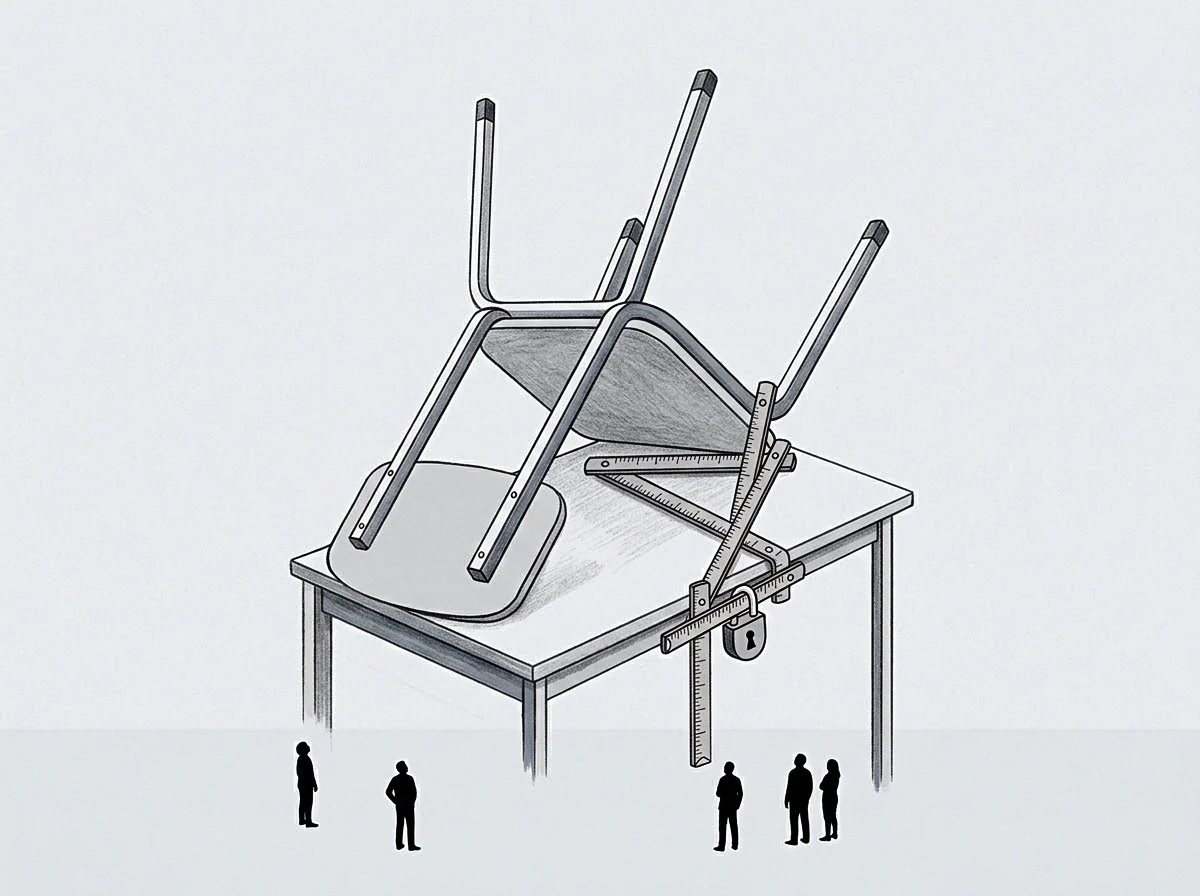
Systematic Divergence Across Multiyear Operating Cycles
The rate of memory drift accelerates when an enterprise transitions through major commercial inflection points. A company navigating product launches, hiring rounds, and revenue stabilization subjects its founders to sustained stress. The cognitive load carried by operators limits their capacity to record conversational adjustments.
Unilateral decisions made in isolation become framed by the actor as heroic preservation of enterprise value, while the same decisions are interpreted by the counterparty as unauthorized deviations from the original division of ownership.
Retrospective ownership claims expand in direct proportion to unrecorded operational crises resolved by an individual partner.
Measuring this variance across multiyear intervals requires contrasting subjective recollection against dated operational evidence. Capital contributions, signed commercial contracts, code repository commits, and board resolutions serve as external markers against which subjective recall can be measured. When these objective markers are placed beside partner testimonies, the structural gap between independent memories becomes quantifiable.
| Operating Milestone | Documented Equity Distribution | Founder One Stated Memory | Founder Two Stated Memory | Observed Delta |
|---|---|---|---|---|
| Inception Agreement | 50% Equal Split (Unexecuted) | 50% Static Parity | 50% Static Parity | 0% Net Variance |
| Year One Product Launch | 50% Equal Split (Informal) | 60% Technical Premium | 50% Equal Split | 10% Divergence |
| Year Two Capital Infusion | 65% / 35% Capital Adjustment | 70% Majority Stake | 50% Protected Split | 20% Divergence |
| Year Three Pivot | 65% / 35% Operating Ledger | 75% Executive Control | 45% Retained Floor | 30% Divergence |
| Year Four Liquidity Event | 70% / 30% Final Cap Table | 80% Asset Dominance | 40% Legacy Entitlement | 40% Net Discrepancy |
The drift documented in this progression demonstrates how uncalibrated recollections accumulate systemic error and compound annually over extended operating periods. Early ambiguities generate widening chasms that resist informal resolution. Left unaddressed, the discrepancy between memories threatens corporate capitalization stability and investor confidence.
What specific evidentiary standard can reconcile two divergent partner narratives when no contemporaneous documentation exists to corroborate either historical account?

Span

Cognitive Erasure And The Decay Of Structural Context
The passage of time erodes the contextual nuances that accompanied early commercial trade-offs. An initial equity discount conceded in exchange for deferred compensation or flexible hours is forgotten once the enterprise achieves profitability. The partner who received the concession recalls only the absolute equity percentage, discarding the operational conditions that justified the discount.
The granting partner retains a vivid memory of the conditional nature of the equity, viewing unfulfilled operational obligations as grounds for automatic forfeiture.
A verbal agreement decays into its most self-serving components as operational complexity increases.
Longitudinal studies on commercial dispute generation show that temporal distance diminishes recall accuracy for negative personal concessions while preserving recall of positive personal achievements. Partners remember the risks they absorbed and the personal capital they deployed, but systematically forget the parallel sacrifices made by peers in adjacent functional seats. This asymmetric memory decay ensures that multiyear retrospection produces two incompatible historical narratives, each internally consistent and mathematically irreconcilable.
- Contemporaneous Written Memoranda preserve the precise commercial context of early equity trades, fixing the conditions that governed historical concessions.
- Periodic Capitalization Reviews mandate annual partner audits of equity distributions, closing memory discrepancies before multiyear drift compounds.
- Formal Equity Ledger Ratification executes signed corporate resolutions that replace informal partner recollections with legally enforceable capitalization records.
Informal agreements made in early operational phases must be converted into formal legal instruments before multiyear growth obscures the original intent of the partners.

Rule

Contractual Governance And Memory Reconciliation
The resolution of equity share variance rests upon the decisive substitution of subjective memory with definitive legal architecture. Formal operating agreements, voting trust arrangements, and equity vesting schedules function as mechanical anchors that preempt retrospective narrative drift. When partners bind themselves to a single corporate document, individual recollections cease to hold legal or commercial authority.
Formal documentation fixes equity rights by superseding historical recollection with dated contractual terms.
Implementing an annual capitalization schedule audit allows partners to reconcile emerging differences in real time. Rather than allowing informal understandings to ferment over five years of grueling enterprise execution, founders confront the delta between expectations and contractual realities on a structured cadence. This governance hygiene insulates the corporate entity from catastrophic partner deadlock during institutional capitalization events.
A comprehensive integration clause in a ratified shareholder agreement explicitly supersedes all prior oral representations, informal notes, and remembered promises, establishing the executed contract as the sole repository of partner equity entitlements.