
Preserving Early Electronic Chat Records For Startup Formations
Systematic export of raw chat metadata prevents divergent recollections of early equity commitments before formal incorporation documents exist.
Vault
Two co-founders examine a messaging workspace fourteen months after initial technical development began. The repository contains thousands of lines of asynchronous chat, code snippet feedback, structural decisions, and equity discussions. No legal entity existed when these messages were sent.
No formal intellectual property assignment had been drafted, and no cap table had been finalized. The informal chat server operated as the sole ledger of contribution, intent, and agreement.
Unstructured Communication Before Entity Formation
Early project alignment frequently unfolds across informal digital channels where informal commitments are made without legal oversight. One builder contributes architectural code based on a chat thread promising an equal equity split. A second builder interprets that same thread as a conditional offer tied to full time employment after seed funding.
The gap expands rapidly. Neither account is tested while development proceeds, because both participants view the chat server as an accurate shared memory. The informal messaging environment disguises deep structural divergence behind daily technical execution and casual confirmation messages.
When entity formation arrives, the historical record consists of scattered conversations across multiple platforms. Slack channels, Discord servers, Telegram threads, WhatsApp chats, and direct text messages hold fragmented pieces of one shared arrangement. Context evaporates without metadata.
Without a single continuous archive, each builder selects specific message screenshots that support their respective recollection of the initial equity arrangement.
A messaging platform tier change automatically purges unexported chat histories and permanently alters the evidentiary record of early technical contributions.
Asymmetric Administrative Control Over Workspace History
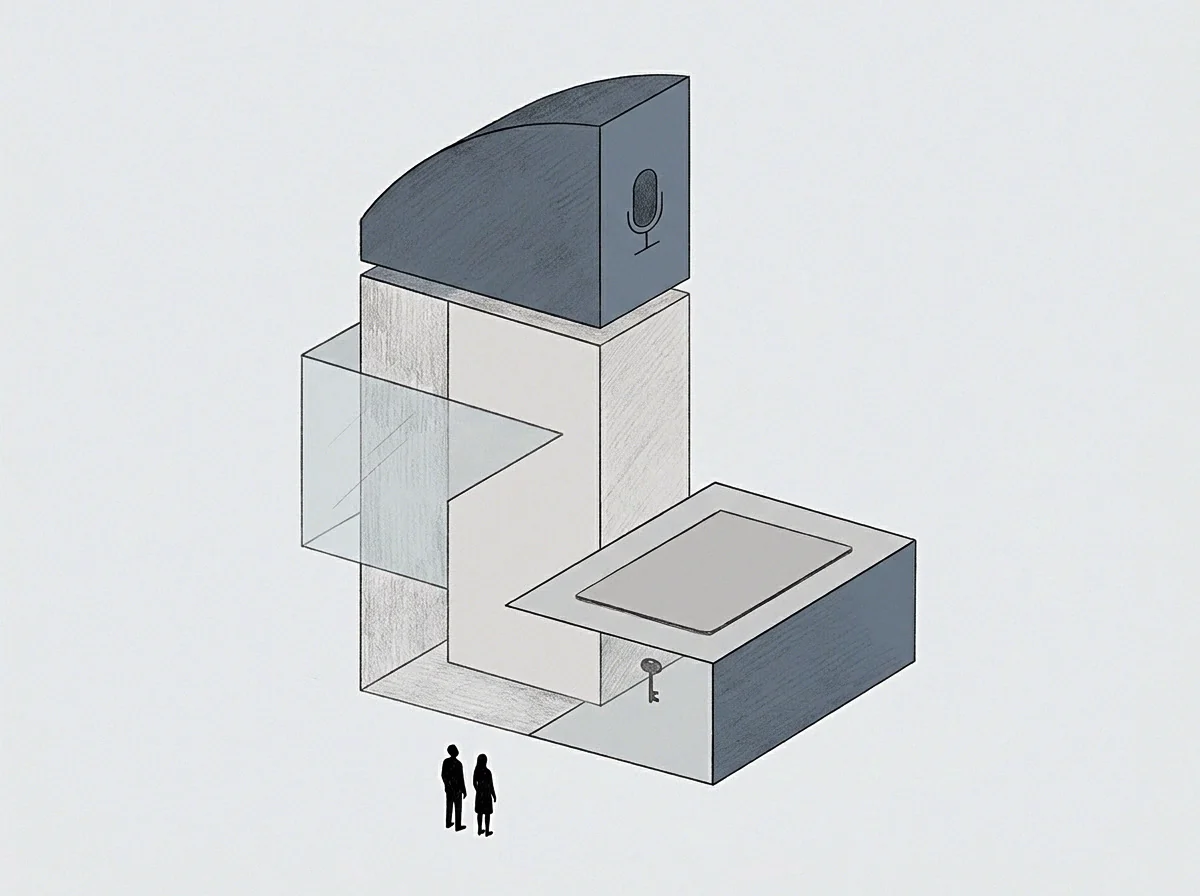
A single builder routinely holds full system ownership over early Discord servers or Slack channels. That administrative account controls user access, channel visibility, retention settings, and bulk data export functions. Administrative control determines visibility.
The administrator can convert public channels to private status, deactivate contributor accounts, or alter retention parameters from unlimited history to a rolling thirty-day deletion window.
Non-administrative contributors operate under an assumption of continuous access. When relational friction occurs prior to incorporation, the administrative founder can revoke workspace credentials within seconds. The excluded builder loses direct access to the entire record of their technical contributions and verbal agreements.
The primary documentary evidence remains controlled by the party with opposing financial incentives during equity allocation disputes.
Failing to extract raw workspace archives before account tier changes or administrative lockouts leaves the non-admin partner with zero documentary leverage during valuation negotiations.
Span
The temporal distance between early technical contributions and official entity registration creates significant evidentiary decay. As months elapse between the first line of code discussed in chat and the execution of corporate formation agreements, the primary communication channels undergo platform updates, subscription tier shifts, and administrative reconfigurations. The original workspace context collapses into isolated fragments.

Why Do Platform Migrations Destroy Early Equity Evidence?
Service tier changes routinely purge historic message databases without warning. Unpaid communication tiers frequently enforce message count caps or temporal retention ceilings. Storage policies purge data.
When a growing team shifts from a free Slack tier to a paid plan, or downgrades back to a free tier, messages older than ninety days drop behind access paywalls or undergo automated deletion. The account diverges early.
Unannounced API changes across chat platforms further complicate retrospective preservation. Export tools that functioned during initial product design may fail during entity formation, outputting corrupted JSON files or missing media attachments. When platform software updates alter database schema formats, historical thread relationships collapse into unformatted flat files that obscure who initiated specific architectural proposals.
- Ephemerality Overwrites occur when default platform retention windows automatically delete historic threads after ninety days without administrator awareness.
- Administrative Exclusion happens when the workspace owner revokes access permissions following an operational disagreement, denying the secondary contributor access to message histories.
- Contextual Disconnects emerge when exported plain text files omit threaded replies, leaving technical contributions detached from their originating specifications.
- Visual Screen Tampering manifests when parties submit modified graphical captures that lack cryptographic timestamps or validating metadata structures.

Cognitive Reconstruction of Undated Technical Contributions
Human memory converts vague text exchanges into precise legal obligations over extended periods. Memory reshapes informal terms. In early technical builds, a message stating a willingness to help build the prototype converts in the author’s memory into a locked commitment for twenty percent founder equity.
Conversely, the workspace administrator remembers that same message as a casual contractor inquiry.
Without immutable timestamped archives, both parties reconstruct historical conversations to align with current financial self-interest. The psychological contract drifts while the software architecture stabilizes. When two founders review a missing chat history, each claims absolute certainty regarding verbal commitments that occurred eighteen months prior.
The absence of preserved records transforms a factual inquiry into a credibility dispute where both participants hold genuinely held, mutually exclusive recollections.
“The informal messages in the early Slack channel reflected preliminary discussions rather than binding equity allocations.”
Wire
Digital messaging protocols transmit payload bundles containing structural metadata alongside message text. Raw platform communications carry significantly more data than the visible text displayed inside a client interface. Capturing this underlying structural metadata provides the factual foundation needed to withstand legal scrutiny during intellectual property audits.
Technical Attributes of Evidentiary Metadata
System logs capture precise universal timestamps and author identifiers for every published string. Screenshots lack structural proof. A visual screen capture records visible pixels, which can be modified using browser inspection tools within seconds.
A complete JSON payload, however, records the unique user ID, client application version, server receipt timestamp, thread parent ID, and edit history digest.
Exports establish time boundaries. When a chat message references an attached source code file, the metadata preserves the exact file hash, upload timestamp, and channel destination. This technical link connects the informal discussion directly to the code commit preserved in a repository.
Without the underlying JSON payload headers, proving that a specific conversation preceded a technical breakthrough remains difficult.
Exporting raw database files preserves message payload headers only when cryptographic checksums verify the custodial transfer.
JSON Payload Structure and Custodial Integrity
Raw database dumps preserve nested thread hierarchies that visual screen captures flatten. When an enterprise or platform export executes, the platform generates structured JSON or CSV files containing the full platform state. Preserving these raw files maintains the complete relational tree of the conversation, demonstrating whether a proposal was accepted, ignored, or explicitly rejected by project collaborators.
Maintaining custodial integrity during data extraction prevents subsequent spoliation claims. Extracting files directly through platform administrator API keys generates complete data payloads. Applying a SHA-256 cryptographic hash function to the exported data bundle immediately upon extraction establishes an immutable file fingerprint.
Storing this hash value in a independent ledger proves the exported chat records have not been altered or selectively edited following extraction.
Raw database dumps preserve legal evidentiary weight while visual screen captures provide subjective illustrative context.

Log
Systematic export procedures turn ephemeral chat streams into verifiable historic documentation. Choosing the correct preservation method determines whether early communications serve as valid legal evidence or unverified assertions during corporate formation and intellectual property assignment.

Preservation Methods and Evidentiary Integrity
Comparing archive methods reveals distinct tradeoffs between evidentiary completeness, security against modification, and the administrative effort required to execute the export.
| Preservation Method | Metadata Retained | Tamper Vulnerability | Custodial Effort |
|---|---|---|---|
| Visual Screenshots | Visible Text, Display Names | High (Pixel Manipulation) | Low (Manual Capture) |
| Platform Standard JSON Export | Timestamps, User IDs, Threads | Moderate (Local File Edits) | Moderate (Admin Privileges) |
| Cryptographic Custodial Archive | Full Headers, Hash Digests, Payload Metadata | Low (Immutable Ledger Anchor) | High (API Automated Pipeline) |

Anatomy of a Chat Export Failure
Take two engineers who built a core algorithm while communicating on an enterprise Slack channel for eighteen months; assume one engineer owned the workspace credential while the second held no administrative access. The workspace tier lapsed after twelve months, automatically enforcing a ninety-day retention window. When the uncredentialed engineer requested proof of intellectual property contribution during equity split negotiations, seventy percent of the foundational architectural discussions had been permanently purged by the platform.
The workspace owner presented a single file of isolated plain text summaries, claiming sole authorship of the core architecture. The non-admin engineer possessed only local visual screenshots, which lacked system timestamps and user identification headers. Written terms freeze recollection.
Metadata anchors ownership claims. Because the original JSON payloads were never exported, the parties had no shared technical baseline to evaluate contribution levels. The record remains split.
- Execute complete JSON workspace exports at quarterly intervals prior to formal legal incorporation.
- Generate SHA-256 cryptographic hash digests for every exported chat payload bundle immediately following extraction.
- Store payload archives in dual-custody cloud storage repositories accessible by all founding team members.
- Attach export checksum manifests as schedules within early intellectual property assignment agreements.
Visual screen captures confirm message text while raw database exports confirm system state.
Including a validated SHA-256 chat payload manifest as a schedule to the founder equity purchase agreement legally shifts the burden of proof to any party alleging unrecorded oral modifications.

Record
Integrating early chat archives into foundational governance documents closes the evidentiary gap permanently. When early technical conversations and informal milestone agreements are preserved, hashed, and cited within legal entity formation papers, the scope for future historical disputes narrows significantly.

Formalizing Chat History at Equity Grant Execution
Attaching verified export manifests to founder stock purchase agreements transforms informal chat history into explicit legal references. Instead of relying on vague recitals regarding past services, the agreement references a specific cryptographic hash representing the complete archived history of the project’s early messaging channels. Early alignment requires verification.
This integration establishes an unambiguous timeline of intellectual property creation and equity commitments. If a founder later asserts that an additional equity grant was orally agreed upon in chat on a specific date, the parties cross-reference the hashed archive bundle for that period. The presence or absence of explicit confirmation within the preserved JSON payload resolves the assertion without relying on competing personal recollections.
Unanchored chat archives leave equity splits exposed to divergent historical reconstructions at entity formation.

Establishing Immutable Repositories for Formation Records
Long term preservation relies on multi-party access permissions across independent cloud storage accounts. Placing exported chat bundles in a single administrator’s private drive reproduces the original power asymmetry that creates evidentiary risk. Founding teams establish joint custody by depositing hash-verified archives into shared cloud repositories where deletion actions require multi-party consent.
When external investors perform due diligence prior to initial financing rounds, presenting cryptographically anchored chat archives demonstrates clean intellectual property chain of custody. Investors verify that all early contributors have formally assigned their work and that no outstanding equity promises linger in unexamined Slack channels or Discord threads. The structured archive proves that early informal communications have been fully reconciled and superseded by executed legal contracts.
When the founding team attaches cryptographic hash manifests of early workspace exports to their initial intellectual property transfer agreements, the historical record of contributions remains complete on both sides.