
Determining Inchoate Asset Value in Partnership Dissolution
Inchoate asset valuation in partnership dissolution discounts contingent earnings using completion risk factors and documented historic development costs.
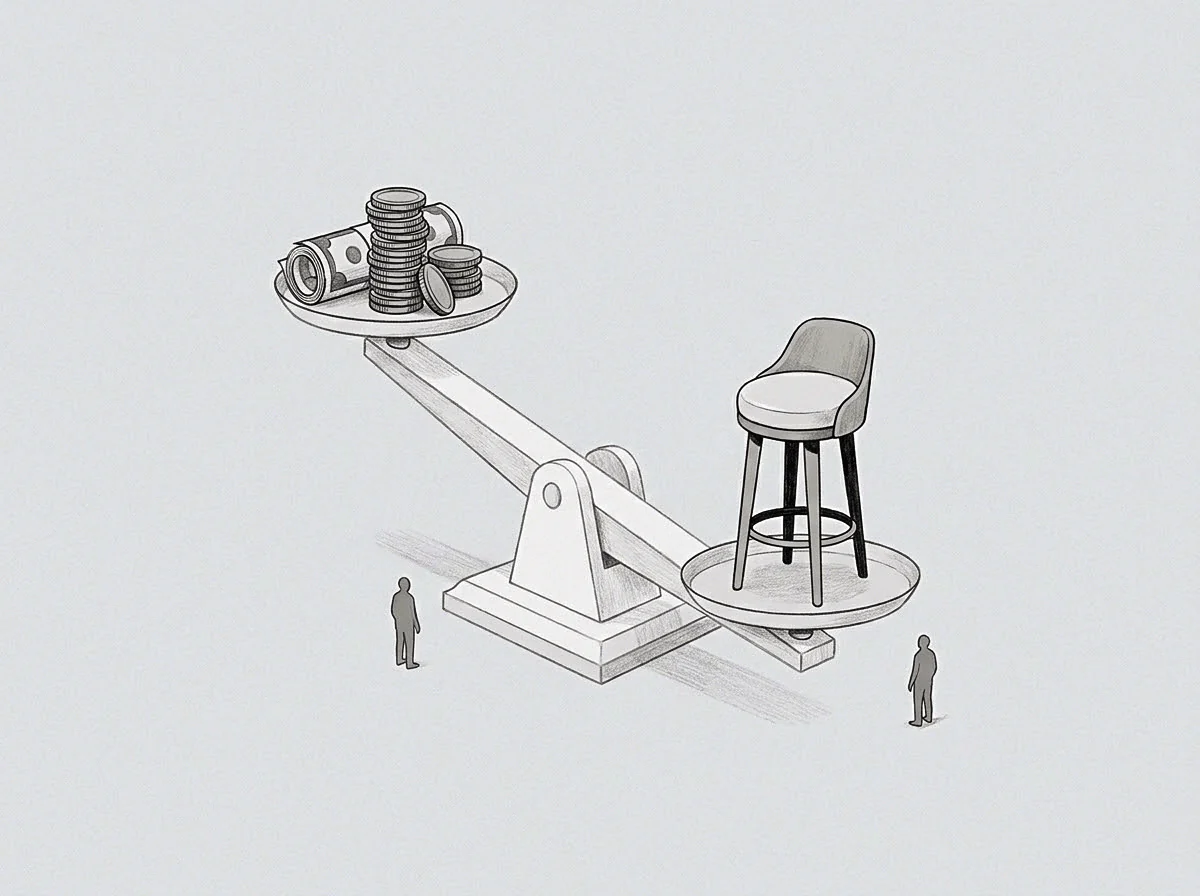
Basis
Partnership liquidations frequently conflate fully realized balance-sheet equity with partial developments that possess potential but lack completed legal form. Fully realized assets consist of executed contracts, accounts receivable, and patented technologies that carry measurable historical earnings. Inchoate assets exist as unfinished work, non-binding enterprise pipeline leads, unfiled proprietary schematics, and nascent customer goodwill.
These early-stage holdings lack present cash flow, severable market title, or completed counterparty obligations at the moment partners decide to separate.
When partners dissolve an entity, disputes emerge regarding whether inchoate developments constitute quantifiable capital or speculative intent. The partner leaving the firm often views spent labor as accumulated asset equity. Conversely, the partner remaining in the entity views unfinished work as an operational liability requiring future capital investment to achieve commercial viability.
Distinguishing Realized Capital From Contingent Opportunities
Commercial partnerships build two distinct categories of economic holding over time. Realized capital includes bank balances, collected fees, signed subscription commitments, and physical equipment. Contingent opportunities include verbal client promises, active proposals, prototype software code, and unbilled research hours.
A common valuation error occurs when partners treat contingent opportunities as realized capital during settlement negotiations.
Inchoate assets remain dependent on future performance, external market conditions, and continued operational spending. The valuation of an inchoate asset hinges on whether the economic right exists independently of the individuals who conceived it. If an early software prototype cannot function without the ongoing labor of the departing engineer, the asset holds little standalone enterprise value for the remaining business.
Inchoate intellectual property retains valuation only when historical engineering logs confirm functional viability before partnership dissolution.

The Burden of Grounding Incomplete Assets
When a partnership dissolves, claims made against speculative future revenues depend on tangible development records. Courts and forensic accountants reject unverified partner assertions regarding prospective enterprise value. The legal burden rests entirely on the claimant asserting that an incomplete development possesses measurable economic worth.
Grounding an inchoate claim requires documentation established before dissolution notices arrive. Historical time tracking, client correspondence, raw material receipts, and code commits serve as primary evidence. Without these records, an inchoate asset collapses into an unfounded claim that carries zero weight in partnership accounting.
Overvaluing undeveloped rights forces the acquiring partner to pay cash dividends on speculative returns that may never materialize.
Desk
Physical documentation and digital historical logs establish what was actually built prior to notice of departure. Forensic evaluators begin an assessment by auditing recorded inputs rather than relying on partner recollections. The operational record reveals whether work was completed for the entity or pursued as informal exploration.
Unfinished developments vary in their degree of legal and financial maturity. Evaluators categorize inchoate items by examining evidence files left on the desk of the partnership. Concrete records separate valid work in progress from ungrounded claims of enterprise growth.
- Unexecuted Client Letters of Intent non-binding agreements that lack enforceable fee commitments represent speculative pipeline rather than realized enterprise equity.
- Unpatented Technical Specifications early engineering schematics without filed provisional patents carry zero liquidation value past documented development hours.
- Unbilled Consulting Work in Progress accrued hours spent on pending client deliverables remain contingent assets until formal invoices are accepted by counterparties.
- Unmonetized Customer Data Repositories user databases collected without active subscription revenue models function as operational liabilities rather than transferable capital assets.

Physical Logs and Software Commit Historiography
Determining whether an asset exists requires tracing work hours directly to measurable outputs. In technology partnerships, version control repositories provide an objective timeline of intellectual property creation. Commit histories timestamp when lines of code were authored, modified, or validated.
Software updates pushed after the date of dissolution notice are excluded from the liquidation pool.
The code commit log prevents departing partners from claiming ownership over software developed after separation. The audit isolates true costs. If development stalled months prior to dissolution, the underlying asset suffers a steep obsolescence discount.
Historical activity logs replace subjective claims of effort with precise operational records.

Accounting for Sunk Engineering Hours
Partners frequently invest significant personal time into projects that remain unfinished at liquidation. Financial accounting standards distinguish between research expenses and capitalizable development assets. Costs incurred during preliminary exploratory phases are classified as operational expenditures and cannot be added back to asset balances during buyout calculations.
Labor turns into a capital asset only after technical feasibility is documented. The asset remains unfinished. When a partner spends eight months developing a product that fails to reach working prototype status, those hours reflect spent capacity rather than balance-sheet equity.
Sunk labor costs do not automatically create asset value.
Unbilled consulting hours without signed client retainers collapse into unrecoverable personal expenditure during asset divisions.
A work-in-progress cap clause limits post-dissolution payouts to documented developer hours spent before formal filing.
Metric
Quantifying partial developments relies on isolating historical sunk expenses from unearned commercial upside. Traditional valuation techniques designed for mature enterprises fail when applied to early-stage inchoate assets. Discounted cash flow forecasts often rely on unsupported revenue growth rates, producing inflated enterprise values that distort settlement terms.
Financial appraisers rely on three main methodologies to determine fair value for incomplete assets: the historical cost approach, the reproduction cost approach, and the probability-weighted option pricing model. Each model applies explicit risk haircuts based on the completion stage of the project.
| Asset Classification | Valuation Methodology | Required Baseline Record | Applied Risk Discount |
|---|---|---|---|
| Unbilled Work in Progress | Historical Cost Basis | Verified Time Logged | Zero to Ten Percent |
| Non-Binding Client Pipeline | Probability Weighted Cash Flow | Signed Letter of Intent | Fifty to Eighty Percent |
| Unfinished Software Prototypes | Reproduction Cost Less Atrophy | Code Commit History | Forty to Seventy Percent |
| Unmonetized Brand Goodwill | Excess Earnings Method | Historical Profit Margin | Eighty to Ninety-Five Percent |

Which Discount Rates Apply to Unfinished IP?
Valuation experts employ modified cash flow models to calculate present net worth for incomplete inventions. Future cash flows generated by an unfinished asset carry execution risk, market adoption uncertainty, and capital requirements. Standard corporate discount rates of ten to fifteen percent are insufficient for inchoate technology assets.
Appraisers apply venture discount rates ranging from thirty to sixty percent to adjust for completion risk. The projection holds no cash. If an unfinished product requires two million dollars in additional capital to reach commercial launch, that future expenditure is deducted from the gross present value before splitting equity between partners.
A executed non-binding letter of intent converts to zero balance-sheet equity when customer acquisition costs remain unbonded.
Standard Risk Discounts Across Asset Classes
Financial evaluators categorize partial developments by their proximity to revenue generation. Unbilled work in progress for active client contracts receives the smallest risk discount because the underlying service agreement is legally binding. Early-stage customer pipelines receive high risk haircuts due to counterparty cancellation rights.
The model rests on assumptions. Proprietary inventions without regulatory approvals or working prototypes incur severe valuation discounts. When evaluating brand equity built through social channels without direct monetized sales, evaluators often write down the asset value to zero, treating marketing build-up as an operational expense incurred during past operating cycles.
What remains unsettled is how courts will assign risk multipliers to artificial intelligence algorithms trained on joint data sets when key data engineers depart.
Term
Contractual buyout provisions define how partners split revenues that materialize months after operations cease. Well-drafted partnership agreements contain explicit terms governing contingent assets, specifying allocation formulas for work initiated during the partnership but billed afterward. Without written terms, liquidating partners face prolonged litigation over trailing revenues.
Operating agreements often establish earn-out mechanisms that defer payment on inchoate assets until real cash is collected. Cash flows remain contingent. Deferring payouts protects the continuing entity from paying upfront cash for assets that may ultimate fail in the market.
- Inspect primary source repositories to verify the exact completion date of all technical software deliverables.
- Separate historical baseline development expenditures from future projected operational funding requirements.
- Apply probability-weighted completion factors to all contingent sales agreements pending partner signatures.

Contractual Buyout Mechanisms and Stated Terms
Partnership agreements establish specific triggers for valuation calculations during a breakup. A common provision mandates an independent appraisal of work in progress, with costs shared equally between separating parties. Another standard clause sets a fixed cap on trailing revenue claims, terminating all financial ties twelve months after dissolution.
The signed contract fixes the boundary. When agreement terms specify that unbilled client proposals belong exclusively to the partner who closes the account, general partnership property claims over those prospects are extinguished. Written agreement terms eliminate ambiguous verbal commitments made during early growth phases.

Separating Ongoing Performance From Past Contribution
A common dispute emerges when continuing operations generate fees from work initiated prior to dissolution. The departing partner argues that early contributions made the sale possible. The remaining partner asserts that post-dissolution sales efforts and operational execution carried the deal across the finish line.
Forensic accountants resolve this tension by unbundling past contributions from ongoing operational expenses. The audit separates historical business development costs from post-dissolution closing costs. If a deal required six months of closing efforts after the partnership dissolved, the departing partner receives a reduced percentage that reflects only the initial origination value.
Partners routinely mistake projected software roadmaps for completed commercial products when drafting buyout demands.
The departing partner created the underlying technology, so half of every future enterprise licensing deal belongs to them regardless of who closes the sale.

Door
Final settlement agreements transform contingent future claims into fixed cash obligations or clean severance releases. Dissolution closes the door on joint operational rights, forcing partners to choose between immediate lump-sum buyouts or structured deferred earn-outs. A complete severance requires resolving all rights in partial developments before bank accounts are closed.
Accepting a flat lump-sum payout transfers completion risk entirely to the partner continuing the business. The continuing partner assumes the financial burden of finishing incomplete work. In exchange, the departing partner forfeits rights to upside surprises if the inchoate asset achieves market success.
Establishing Floor Valuations for Severance Agreements
Liquidating a partnership demands clear boundaries around what each party takes. Evaluators establish a floor valuation based strictly on verified historical cost inputs, setting the minimum cash baseline for settlement negotiations. The court demands a baseline.
Sunk development costs represent the lowest defensible asset value when market adoption remains uncertain.
If historical cost inputs exceed potential market returns, the asset carries negative economic value. In such cases, the floor valuation drops to zero, and the developing partner must absorb the loss. Establishing a clear floor prevents partners from bargaining over imaginary valuations.

Unfounding Projected Futures at Termination
Stripping away optimistic revenue forecasts leaves only verifiable historical balance-sheet items. Partnership dissolutions force a realistic accounting of what was built versus what was merely promised. The operational record overrides recollection.
Unfounding speculative claims protects both parties from building settlement terms on projected futures. The exit agreement records actual assets transferred, releases contingent liabilities, and terminates joint ownership of incomplete work. Once signed, the record replaces memory, settling partnership rights permanently.
An asset without executed contracts or functional code yields zero present liquidated valuation.