
Unilateral Digital Timestamps In Commercial Disputes When Later Conduct Directly Conflicts With Stated Terms
Unilateral digital timestamps prove file immutability but remain legally subordinated when subsequent mutual performance conflicts with stored written terms.

Clock
Cryptographic hash generation fixes a digital file’s state at a single point in time, preserving a record of what was written. A party seeking to establish the historical existence of specific commercial terms often submits an automated electronic timestamp as proof of an agreed arrangement. The technical architecture guarantees that the stored text has seen zero modification since the timestamping event, but technical immutability operates independently from contractual consensus.
A digital file stored in isolation proves only what one party drafted or possessed on a given date; it cannot establish mutual assent.

Unilateral Cryptographic Logging Mechanisms
A single party can generate a cryptographic hash of a document and post it to a public blockchain or digital ledger without notifying the counterparty. This process produces verifiable proof of file integrity, mathematically tying the contract draft’s byte sequence to a specific point in time. In business disputes, the drafting party introduces the entry to show that certain terms, pricing schedules, or delivery specifications existed before a disagreement arose.
The evidentiary value of that record extends strictly to its own data. It confirms that the drafting party held those words on that date, but says nothing about whether the counterparty ever received, reviewed, or agreed to them.

Operational Execution Against Digital Records
In practice, staff fulfill orders against incoming purchase requests rather than checking stored server files. Daily operations generate a separate trail of warehouse receipts, payments, and informal emails. An enterprise might hold a timestamped master document specifying thirty-day payment terms while its accounting department routinely accepts payment at sixty days without default notices.
When a dispute emerges, that gap between the static electronic baseline and operational practice creates legal friction. Analysis must examine whether the original record retained its authority or gave way to informal terms established through ongoing conduct.
An anti-waiver clause shifts the burden of proof back to the performing party, protecting the recorded terms until a formal written amendment is executed.

Conduct
Commercial relationships evolve through routine operational choices, settled invoices, and deliveries. When disputes reach formal review, the inquiry weighs how the parties acted alongside whatever text was produced at the start. How staff actually performed shows what the parties understood the arrangement to be.
Where sustained practice directly contradicts an earlier timestamped file, adjudicators routinely find an implicit waiver or an unwritten contract variation.

Waiver Through Continued Operational Performance
Accepting partial shipments or modified services without protest establishes a pattern that weakens earlier written terms. A buyer who repeatedly accepts late deliveries without invoking contractual penalties loses the practical ability to enforce those delivery dates retroactively. Contract law protects the reasonable expectations created by consistent behavior: an unexercised right, even if anchored in an immutable timestamp, becomes difficult to enforce after months of non-enforcement.
| Dimension | Unilateral Digital Timestamp | Bilateral Operational Conduct |
|---|---|---|
| Creation Source | Single party internal server or hash ledger | Mutual physical performance and exchanged communications |
| Evidentiary Primary Role | Proves precise data state at a recorded time | Proves actual commercial intent and legal modification |
| Effect of Conflicting Action | Subordinated when counterparty demonstrates reliance | Overrides written terms through course of performance |
| Waiver Vulnerability | High when performance ignores stored conditions | Low when sustained active performance matches practice |

Implied Variance in Commercial Execution
Repeated transactions carried out under altered conditions establish an enforceable course of dealing. When a developer delivers software builds under revised specifications that differ from a timestamped requirements document, and the client accepts and deploys them without complaint, that operational pattern displaces the earlier record. Commercial law recognizes that businesses adjust terms as practical constraints arise, and those ongoing adjustments carry more weight than static, unilateral records.
Accepting deliveries without complaint over six months renders internal system timestamps irrelevant to the working agreement.

Proof
Adjudicators evaluate commercial evidence by comparing contemporaneous records against subsequent performance. The burden of establishing that a unilateral entry governs an agreement rests on the party seeking enforcement. While cryptographic logs establish data preservation, they require corroborating evidence of mutual assent before they control contract interpretation.
A party attempting to enforce a timestamped document against contrary conduct faces steep evidentiary hurdles.
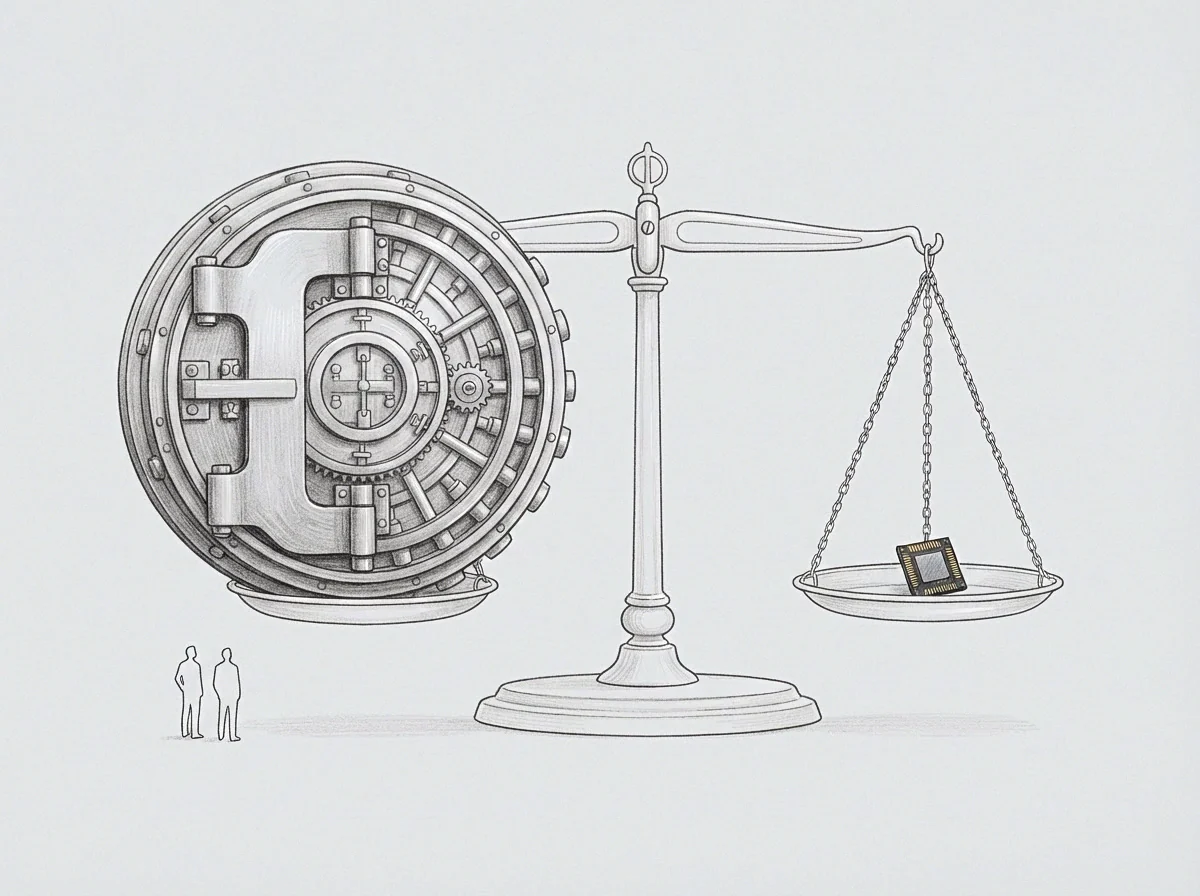
Does Cryptographic Verification Override Operational Acquiescence?
Commercial decisions consistently show that technical immutability does not equal legal enforceability. A party cannot rely on a hash ledger to nullify months of documented contrary conduct. The inquiry focuses on whether the counterparty knew of the timestamped draft and whether its actions signaled agreement.
Where the counterparty acted in direct opposition to the stored file with the originating party’s tacit acceptance, technical verification offers little defense against a claim of implied contract modification.
A digital timestamp confirms the exact contents of an unadjusted file when the system logs it, provided the counterparty received notice of those contents.

Evidentiary Asymmetry in Unilateral Recording
A digital log produced entirely within one party’s private software environment functions as an internal note rather than a binding contract. Because unilateral records carry inherent asymmetry, adjudicators view them skeptically when offered as conclusive proof of an agreement. The counterparty had no oversight or verification access at the time of creation, leaving the timestamped file an uncorroborated assertion unless external evidence supports it.
- Asymmetrical Data Preservation prevents one party from unilaterally imposing recorded terms that the counterparty never had the physical ability to inspect or verify.
- Operational Contradiction occurs when routine billing, shipping, or communication records demonstrate that both entities explicitly departed from the recorded electronic document.
- Silent Acquiescence fails to establish legal consensus when an enterprise stores updated terms internally while remaining silent during active business discussions.
- Evidentiary Substitution takes place when courts replace stale initial digital records with the physical reality of completed payments and accepted deliveries.
Relying on internal cryptographic records while accepting contrary operational practices creates costly exposure, as legal fees and discovery costs compound during hearings over oral modifications.

Estoppel
Equitable doctrines protect parties that alter their position in response to a partner’s conduct. When a company leads a supplier to believe that strict enforcement of a timestamped specification is unnecessary, equitable estoppel prevents that company from abruptly reversing course. The law does not permit formal electronic records to operate as an ambush against a counterparty that acted on verbal assurances or established working patterns.
An unexercised reservation of rights clause loses force when daily operations continually accept non-conforming performance without written objection.

Detrimental Reliance on Modifying Practices
A vendor who adjusts manufacturing runs to accommodate verbal requests incurs direct expenses based on managerial conduct. If the buyer later rejects the modified goods by pointing to an earlier timestamped baseline, adjudicators assess the financial harm to the vendor. Detrimental reliance shifts the legal exposure: the party that induced the change cannot invoke cryptographic proofs to escape financial responsibility.
Commercial courts privilege what parties routinely do over what one party quietly writes down.

Equitable Reconciliations of Stated Terms
Contract disputes often turn on whether enforcing recorded provisions would penalize a party that acted in good faith. Adjudicators weigh the interest in holding parties to written terms against the need to prevent unfair surprise. When an enterprise projects flexibility through day-to-day conduct, equitable principles hold it to the modified practice, subordinating the static record to the course of dealing.
Debate continues over whether automated smart contract triggers can successfully enforce original timestamped parameters when human managers waive non-performance through outside channels.

Vault
Defensible record architectures require bilateral acknowledgments that keep pace with operational changes. Unilateral logs remain vulnerable to claims of waiver, estoppel, and course of performance unless supported by mutual sign-offs. Sound contract administration captures agreed changes as they happen, rather than leaving them to be reconstructed from server logs.

Bilateral Verification Protocols
Shared signing workflows ensure that both parties validate document changes as they happen. Dual-key authorization avoids the evidentiary defects of unilateral logging by establishing clear proof of notice and mutual assent. When operational practices shift, updating agreements jointly preserves legal enforceability over the course of the contract.
- Transmit the digital digest of any proposed contract variance to the counterparty through an authenticated communication channel.
- Require written acknowledgment or digital signature from an authorized representative before implementing the operational shift.
- Reconcile operational deviations weekly against the master ledger to ensure stored terms match actual performance.
A single signed assent email refutes an entire ledger of unilateral server hashes.
When daily practice diverges from stored electronic terms, prompt written alignment prevents the original record from losing all legal force.