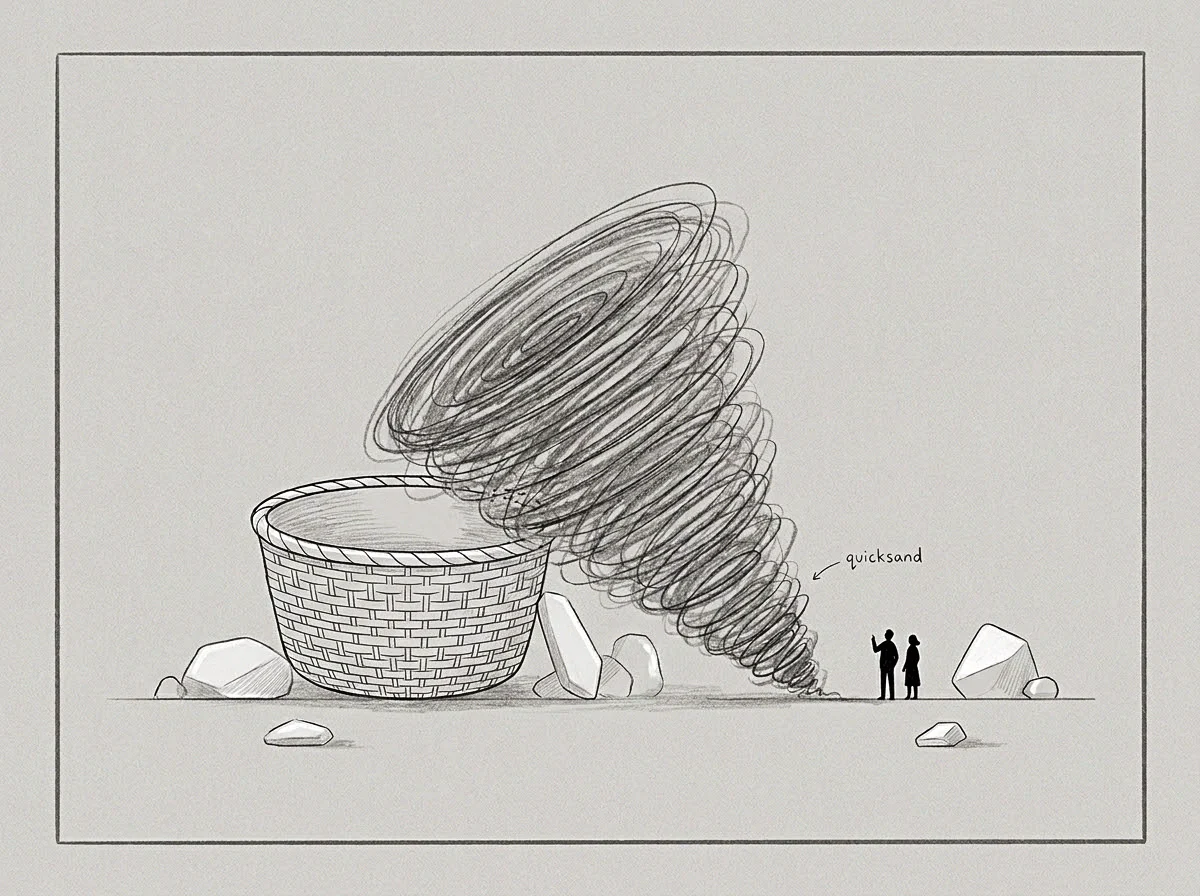
The body points, the record proves. A record is written where it cannot be adjusted afterwards, dated, and kept by someone who was there. The memory of an arrangement is not the record of it.
Early stage communication preservation establishes an immutable evidentiary record of intent, countering cognitive drift and protecting informal equity grants.
Contemporaneous written records preserve initial equity agreements while uncompensated labor creates restitution claims under unjust enrichment doctrine.
Early chat records document contemporaneous discussions but lack corporate authority, vesting mechanics, and definitive terms required to transfer equity.
Adverse operational possession of intangibles ripens into possessory title when an operator maintains exclusive, open custody beyond statutory wind-down limits.
Asset ownership disputes following administrative corporate dissolution resolve through documentary title audits, statutory wind-up rules, or receivership.
Server maintenance logs prove uncapitalized equity contributions by establishing immutable timestamps of infrastructure labor that created property value.
Unilateral records establish contemporaneous internal intent but cannot substitute for bilateral consent when a counterparty explicitly refuses retroactive approval.
Mutual capital verification protocols establish multi-signatory confirmation, documented terms, and mandatory cooling periods before shifting corporate assets.
Contemporaneous internal memos provide critical evidentiary weight by anchoring events to verified timestamps before retrospective reconstruction alters recall.
Unilateral operational preservation during governing deadlock requires an unalterable contemporary dossier proving formal notice exhaustion, asset peril, and direct disbursement.
Corporate privilege belongs to the entity, blocking former directors from accessing the legal advice needed to prove good faith without specific contracts.
Contemporaneous personal notes kept by managing directors become discoverable company records during internal investigations and expose executives to waiver.
Corporate attorney-client privilege in executive sessions requires isolating legal advice from business debate through bifurcated minutes and non-lawyer exclusion.
Contemporaneous uncirculated notes establish a director's subjective belief of solvency when formal board minutes fail to capture detailed commercial reasoning.
Contemporaneous notes establish factual timelines against memory drift but become fully discoverable adversary evidence unless strictly managed under legal privilege.
Ephemeral message spoliation transfers the evidentiary burden onto the destroying party through adverse inferences that enforce unwritten governance claims.
Evidentiary drift measures the percentage and structural divergence between time-stamped informal communications and formal equity claims made years later.
Informal chat records establish contributor intent, which formal grant documents reconcile by defining capitalization bases, vesting, and dilution terms.
Informal messaging archives resolve equity disputes by establishing verified chronological records of intent that supersede reconstructive human memory.
Verification drops occur when peer commitments signed under fresh keys arrive before clients receive and anchor the corresponding rotation certificates.
Six fields, each writing its own terms
The terms are written where they belong. Each field holds three desks, and every entry a desk writes raises the terms it uses, each term given a meaning, a mechanism and the places it appears. The record on these pages stays first person and hand made; the fields grow the nomenclature.